

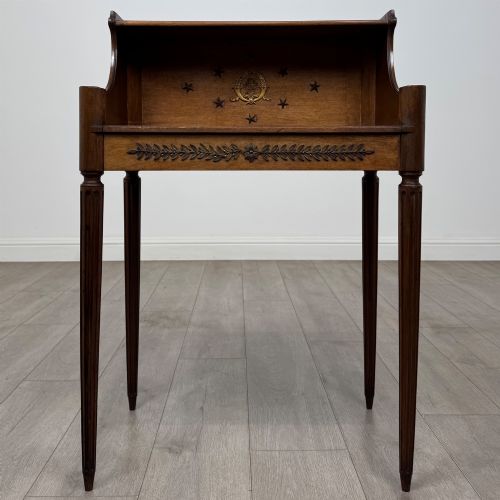
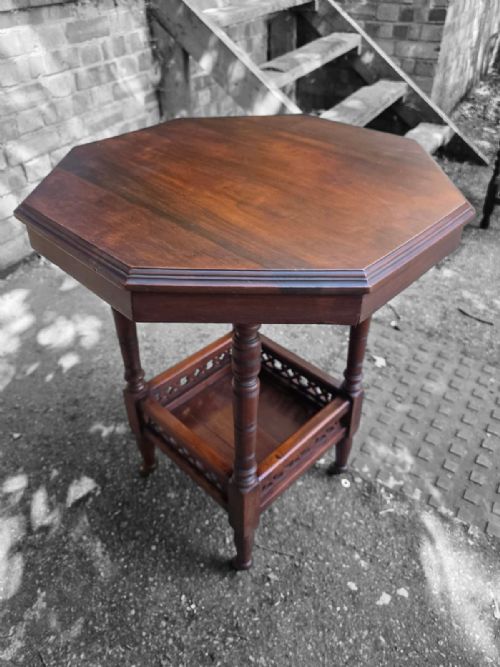
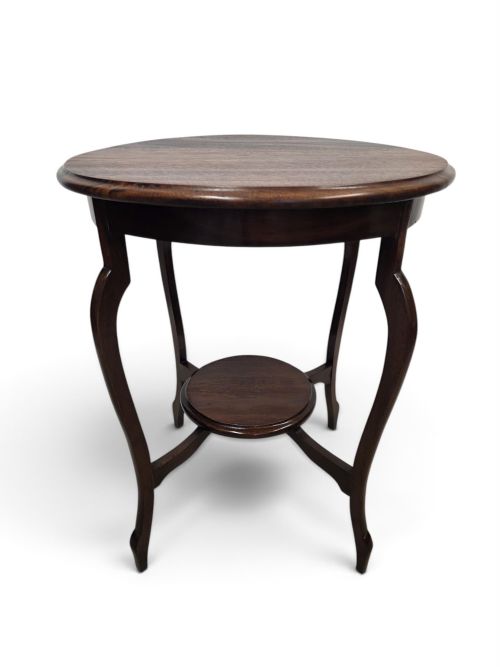
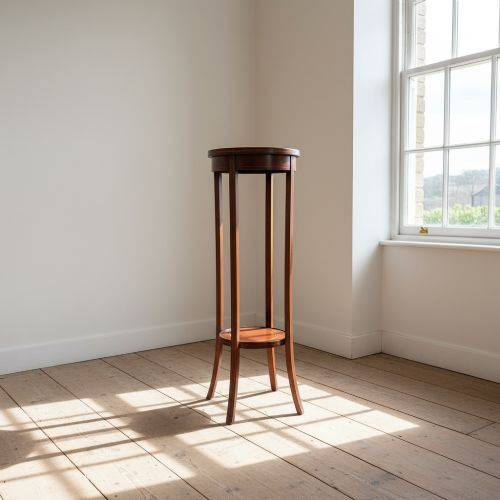


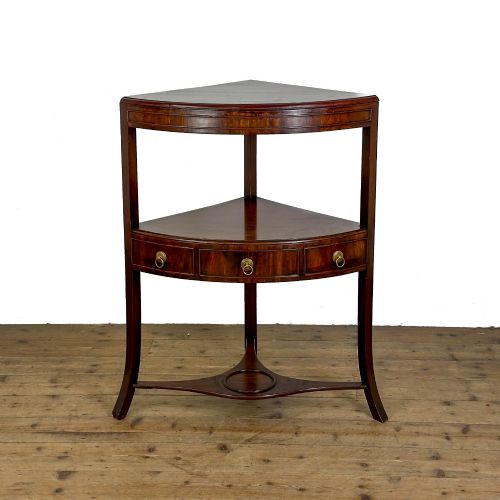
Brown Mahogany Plant Stand
A brown mahogany plant stand brings architectural height and rich timber grain to a corner, holding a vase or fern with quiet dignity.
Brown Mahogany Plant Stand
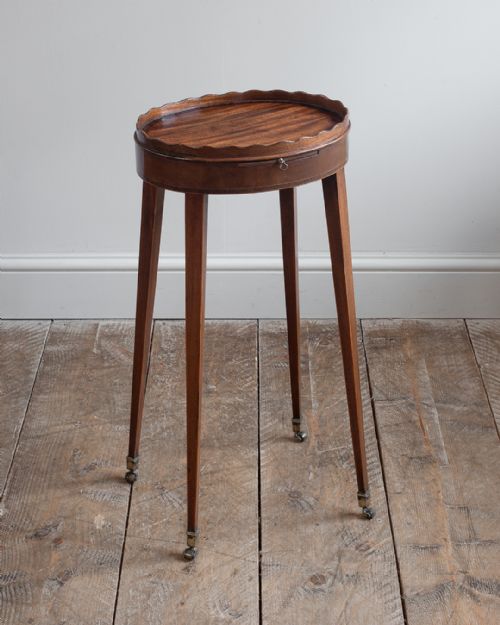
A brown mahogany plant stand is an elevated surface designed to display indoor foliage, decorative urns, or busts at eye level. When searching for this phrase, collectors encounter forms ranging from slender Edwardian torchieres and jardiniere stands to heavier Victorian tripods and Georgian urn stands.
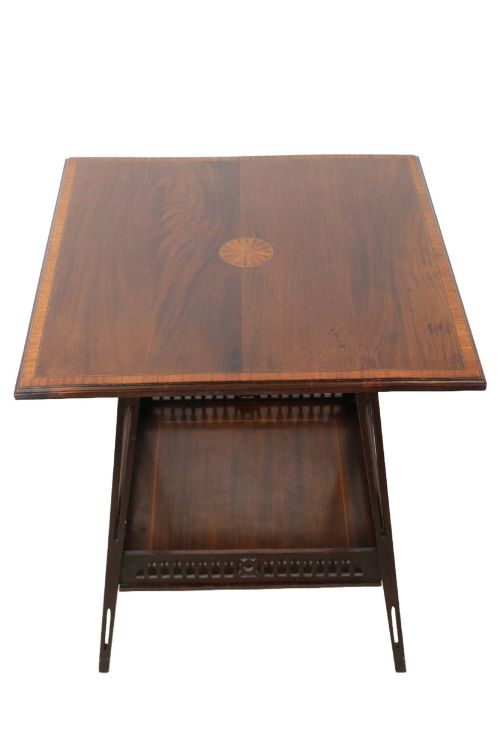
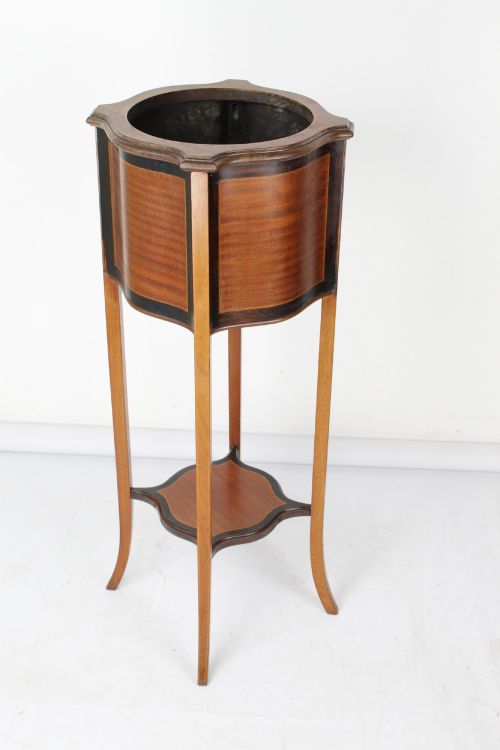
The pieces on this page span several distinct eras, with Edwardian examples appearing most frequently alongside Georgian and 19th Century specimens. Makers across these periods utilised rich mahogany timber, often pairing the primary wood with contrasting stringing or brass mounts to create functional display furniture.
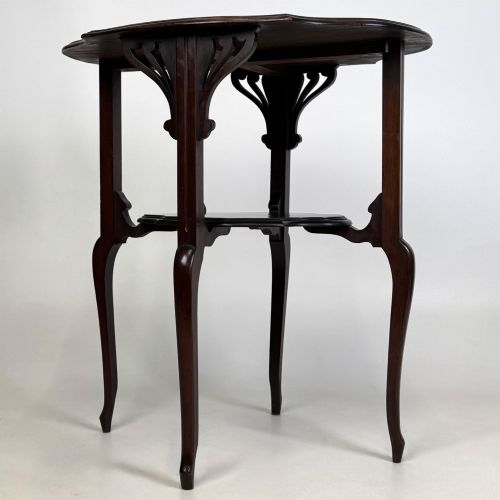
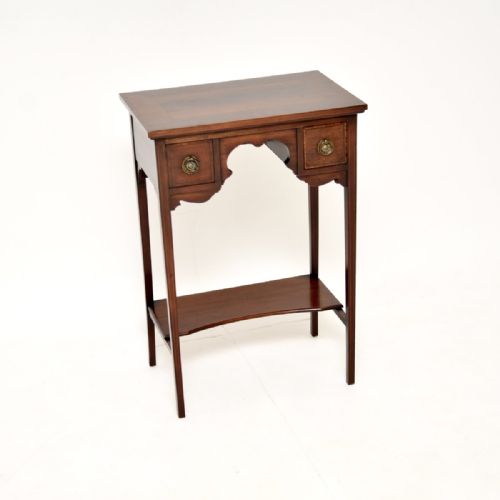
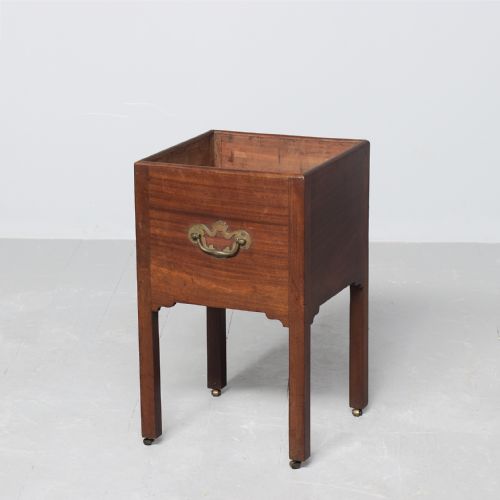
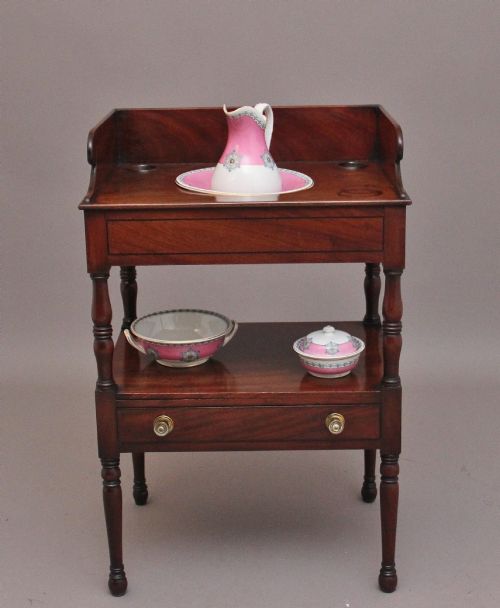
Object types frequently overlap under this heading, encompassing plant stands, pedestals, plinths, jardiniere stands, and torchieres. Buyers will notice that many of these tables double as occasional or lamp tables, reflecting how domestic interiors adapted small furniture over the decades.
Materials and construction
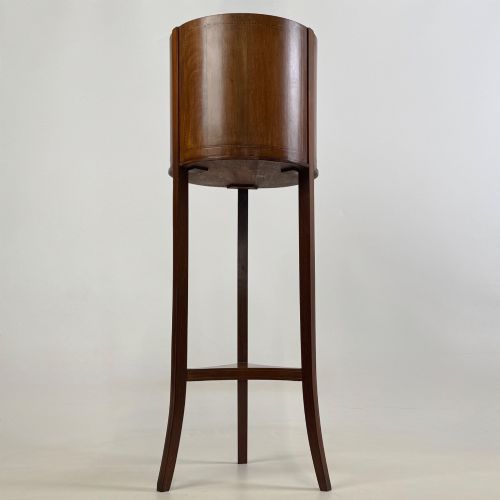
Cabinet makers relied primarily on mahogany for its strength and deep, warm colour, frequently turning it on a lathe to form sturdy pedestals and barley twist columns. Tripod bases provide structural stability for narrow, tall forms, distributing weight evenly across three splayed legs.
Surface decoration often incorporates boxwood and satinwood inlay, creating delicate geometric or floral patterns along table edges and friezes. Brass details, such as gallery rails or liners, appear on select pieces to protect the timber and add metallic contrast to the dark wood.
Listings feature mahogany, satinwood, and boxwood inlay across Edwardian, Georgian, and Victorian periods.
Judging the work
Quality rests upon the crispness of the turning on the central column and the tightness of the joinery where the legs meet the shaft. Superior examples maintain strict vertical alignment without the lean that develops in lesser pieces subjected to uneven weight.
The choice and execution of timber figure heavily in overall merit, particularly where book-matched mahogany veneers or precise boxwood inlay display the maker's skill. Finer items retain their original brass fittings and surface patination rather than bearing heavy modern refinishing.
Trevor Page & Co
The Brown Mahogany Plant Stand Glossary
- Jardiniere
- An ornamental stand or container specifically designed to hold a plant or flower pot. These often feature metal liners to catch water runoff.
- Torchere
- A tall, slender stand or candlestick holder adapted to elevate a vase, bust, or lamp. They typically rest on a narrow tripod base to save floor space.
- Urn Stand
- A small, often antique table designed to support a tea urn or decorative vessel. They frequently date from the Georgian period and possess delicate proportions.
- Stringing
- A narrow strip of contrasting wood inlaid into the surface of a larger piece of furniture. It creates fine decorative borders on Edwardian tabletops.
- Tripod Table
- Any small table supported by a central pillar resting on three feet. This construction prevents wobbling on uneven floors.
Brown Mahogany Plant Stand: Frequently Asked Questions
What is a plant stand?
A plant stand is a piece of elevated furniture designed to lift pots, vases, or sculptures off the floor and into the room. They provide a vertical accent in empty corners and improve light exposure for greenery.
Most traditional examples feature a round or multi-sided top supported by a central pillar and three legs. Their compact footprint makes them practical for smaller spaces.
How do I date a plant stand?
Dating relies on examining the timber, construction joints, and decorative style of the piece. Georgian and Victorian items tend to feature heavier turned columns and solid mahogany construction, while Edwardian versions frequently incorporate light boxwood inlay and Sheraton revival motifs.
Looking underneath the top reveals tool marks and screw types that help confirm the era of manufacture. Original brass fittings and the depth of the timber patination also offer clear chronological clues.
Can I use these for modern pots?
These stands easily accommodate modern plant pots, provided the weight remains balanced over the central shaft. Using a protective saucer underneath your pot prevents moisture rings from marking the antique polish.
Their sturdy tripod and pedestal designs easily handle the weight of standard indoor houseplants. They add natural warmth and height variation to contemporary room layouts.
What is the difference between a torchiere and a plant stand?
A torchiere is traditionally a taller, more slender column originally intended to hold a light source or torch. Plant stands are usually slightly broader and lower, built to support the wider base of a jardiniere or flower pot.
In practice, antique dealers often use the terms interchangeably because both forms serve the same decorative display function in a room.