

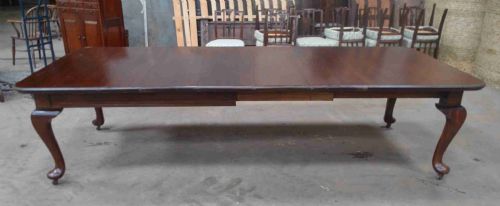
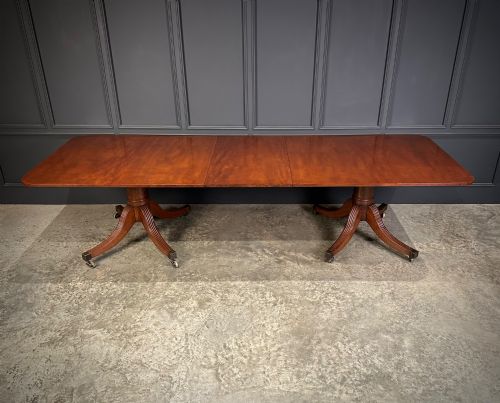
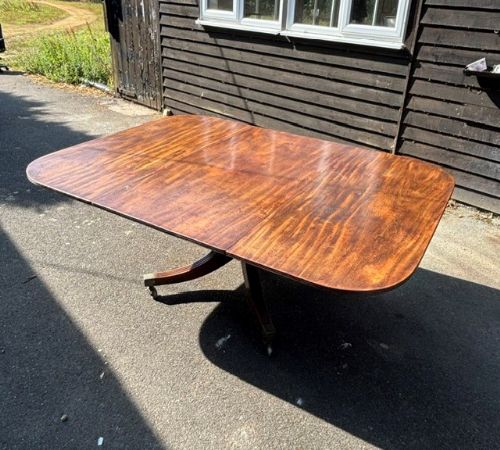
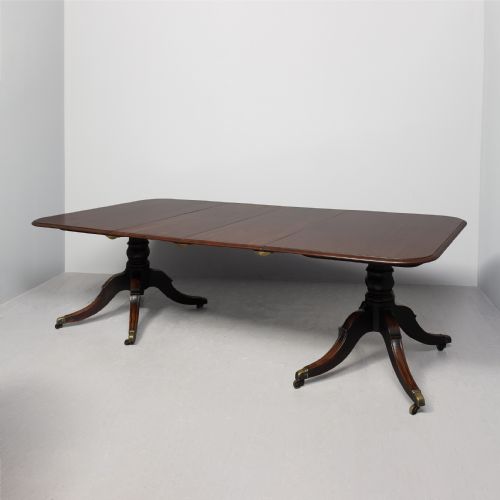
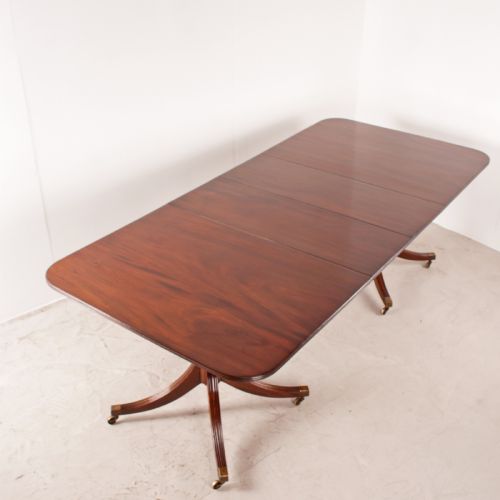
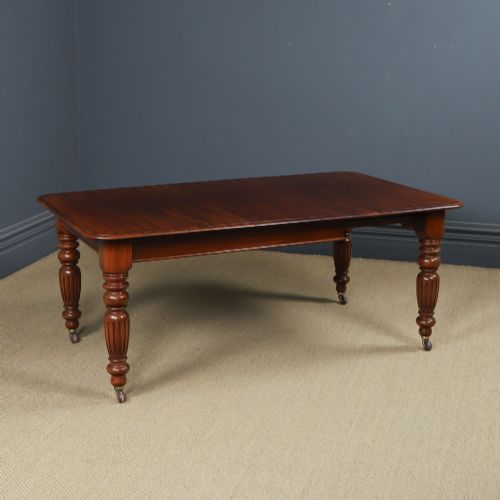
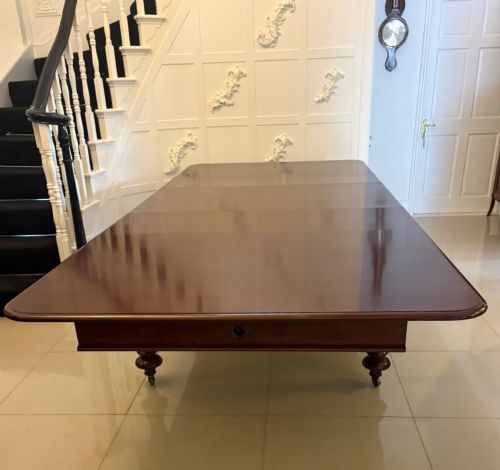
Brown Mahogany Extending Table
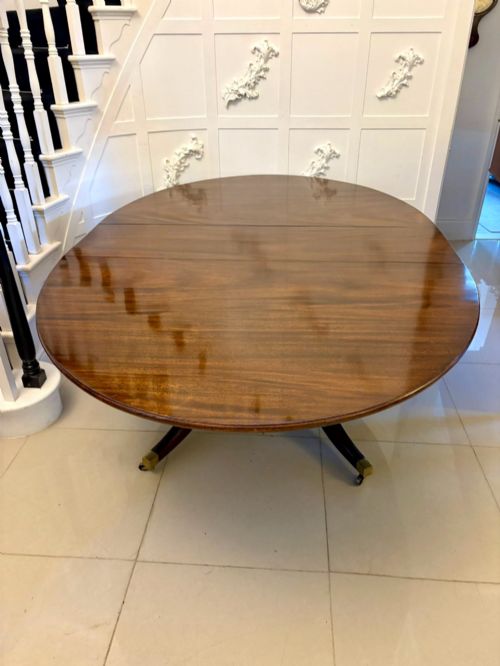
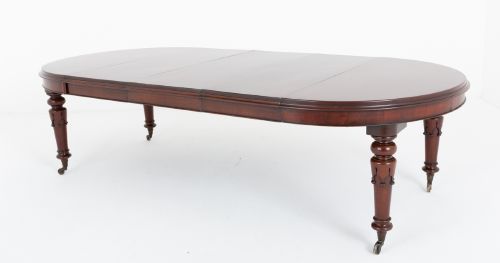
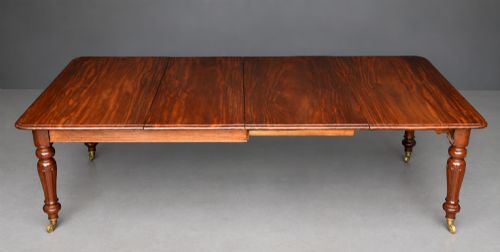
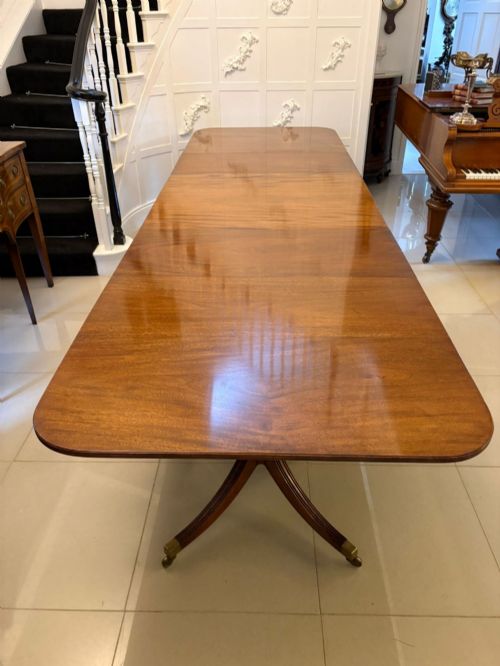
A brown mahogany extending table brings practical grace to large rooms, offering a sturdy surface that expands for guests.
Brown Mahogany Extending Table
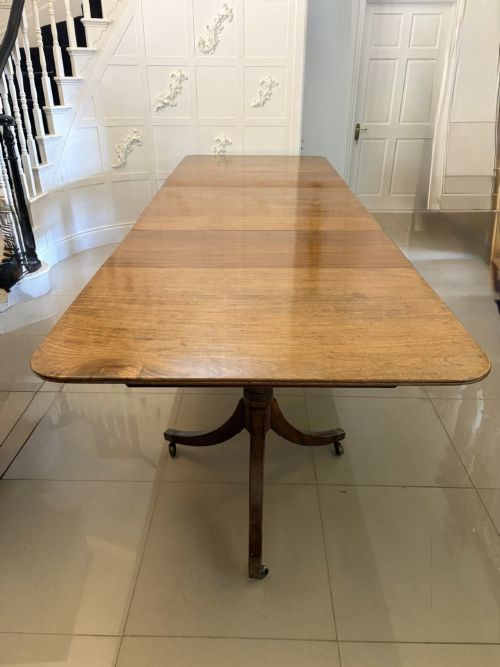
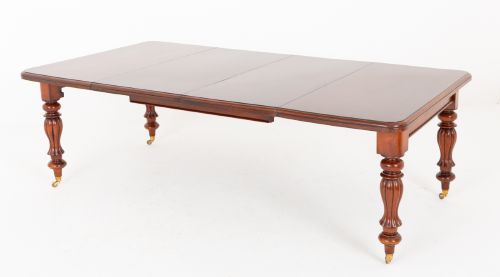
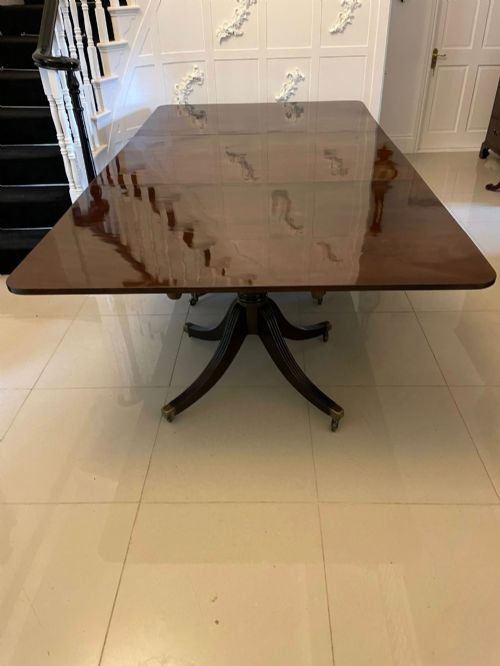
A brown mahogany extending table is designed for dining and assembly, providing a expansive wooden surface that grows with the addition of leaves or pull-out mechanisms. When exploring this selection, buyers encounter formats ranging from two-pillar and three-pillar pedestal bases to drop-leaf and draw-leaf variants.
The pieces span periods including Georgian, Regency, William IV, Victorian, and Edwardian eras, alongside later revivals from the 1920s and 1930s. These tables serve dining rooms by accommodating anywhere from six up to twenty-two seats depending on the structural scale.
Originating predominantly from British cabinet-making traditions, these dining tables often incorporate figured timbers and brass fittings. The forms prioritise adaptability, allowing a compact daily footprint to transform into a lengthy banquet surface.
Materials and construction methods
Cabinet makers utilised solid mahogany and figured mahogany veneers applied over secondary timbers to construct the tops and pedestal bases. Timber selection focused on rich grain patterns, which were polished to a warm finish.
Structural integrity relied on brass castor wheels, metal fixing brackets, and timber runner mechanisms that allowed the sections to pull apart smoothly. Additional leaves were dropped into the central gap and secured with brass clips or wooden pins.
Decorative touches such as reeded legs, gold leaf accents, ceramic inserts, and ormolu mounts appeared across specific Regency and revival pieces. Leather or fabric upholstery sometimes complemented associated dining sets.
Distinctions in construction and timber quality
The character of the mahogany timber itself sets examples apart, with highly figured grain patterns commanding greater visual depth than plain stock. The depth of the colour and the clarity of the French polished surface reflect the original skill applied in the workshop.
Mechanical precision dictates daily utility, visible in how smoothly the extension leaves align and how stably the pedestals bear weight when fully loaded. Robust brass castor fittings and solid pillar turnings indicate a higher grade of manufacture from the period.
Thomas Butler·Wylie and Lochead
The Brown Mahogany Extending Table Glossary
- Mahogany
- A durable tropical hardwood known for its deep reddish-brown colour and fine grain. It forms the primary structural and visual material for these tables.
- Pedestal
- A central column support resting on splayed legs, commonly used in multi-pillar dining tables to allow maximum legroom for seated guests.
- Extending leaf
- A removable section of timber inserted into the middle of the table to increase its overall length.
- Reeded
- Carved parallel convex moulding lines decorating table legs or pillar supports, frequently seen on Regency pieces.
- Draw-leaf
- A table design where extension leaves are stored underneath the main top and pulled out from the ends when needed.
Brown Mahogany Extending Table: Frequently Asked Questions
How do multi-pillar extending tables work?
Multi-pillar tables utilise a system of separate pedestals that support the main top sections as they are pulled apart on wooden runners. Additional leaves drop into the newly created gap in the centre.
Brass clips or wooden pegs underneath secure the leaves together to maintain a flat and stable surface for dining.
What periods do these dining tables cover?
The listings encompass items from the Georgian and Regency periods through the William IV and Victorian eras, alongside Edwardian examples. Later twentieth-century revivals from the 1920s and 1930s also appear.
Each period brings distinct stylistic cues, such as reeded legs on Regency pieces or heavier pedestal turns on Victorian tables.
How many people can these tables seat?
Seating capacity varies widely based on the number of pillars and extra leaves included with the table. Smaller versions accommodate six guests comfortably.
Larger three-pillar and multi-leaf formats can extend to seat sixteen, twenty, or even twenty-two people for large gatherings.
Are chairs included with these tables?
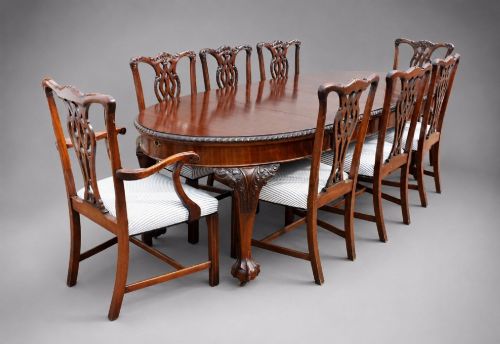
Certain listings offer complete dining sets that pair the extending table with a matching group of chairs, such as sets of eight or twelve. Other entries provide the table as a standalone piece.
Buyers should review individual descriptions to confirm whether seating is part of the offering.