



Brown Mahogany Double Chest
A brown mahogany double chest brings architectural presence to a bedroom, offering stacked storage in richly grained timber.
Brown Mahogany Double Chest
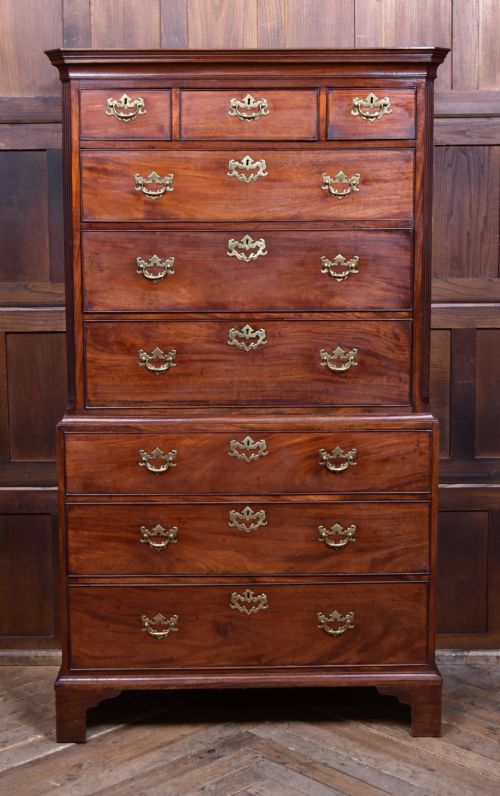
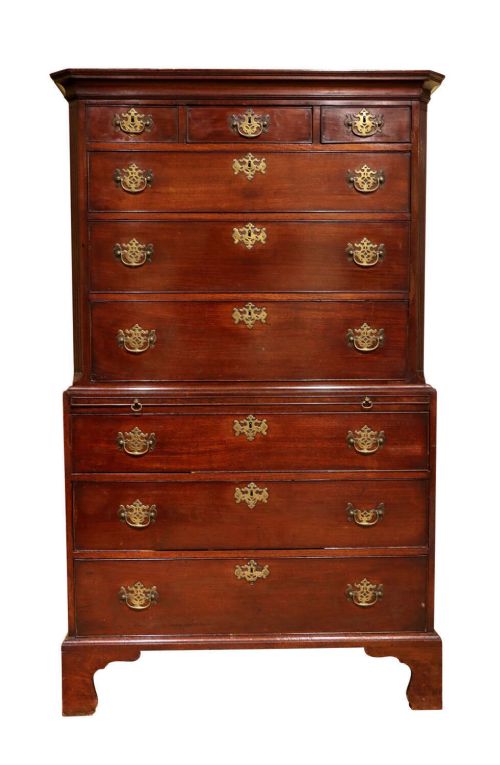
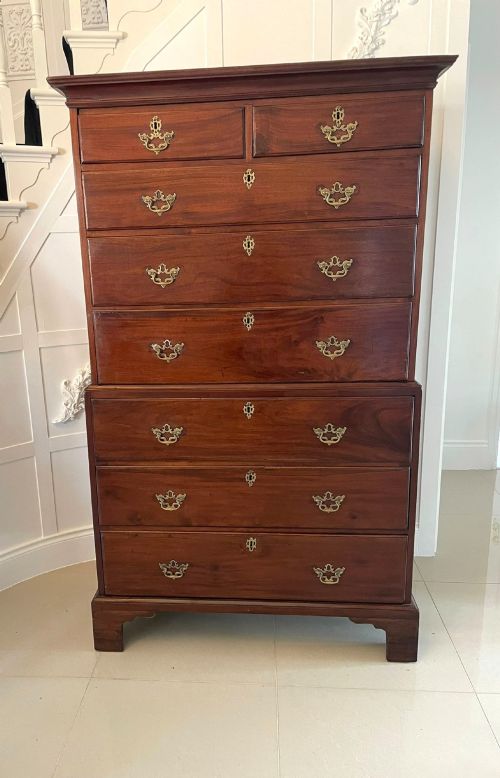
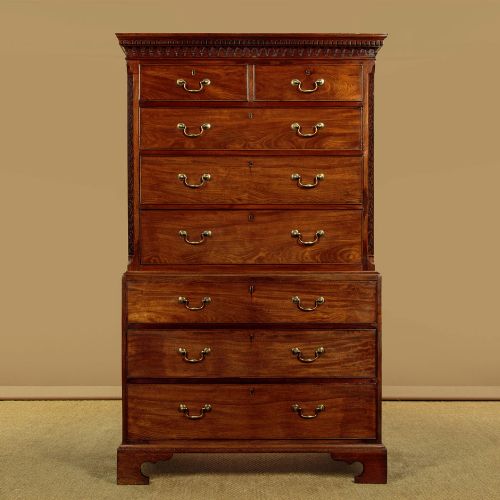
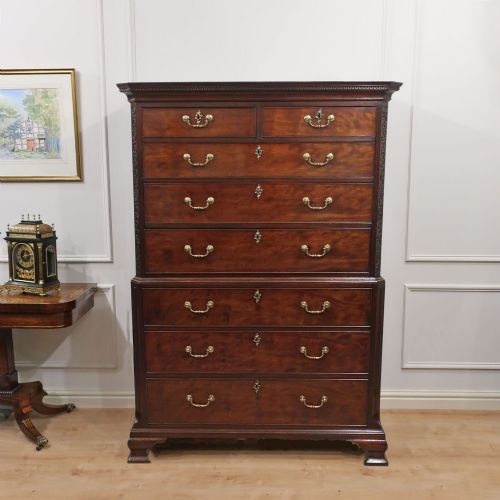
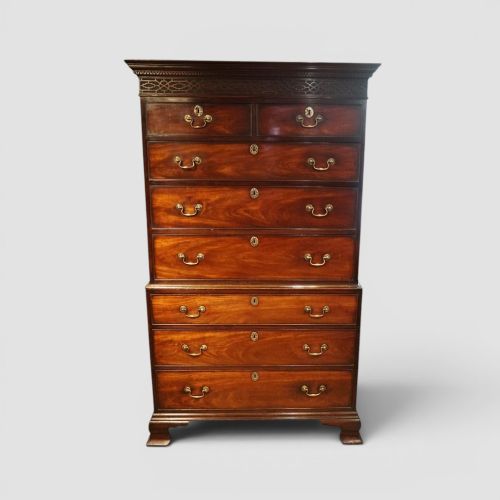
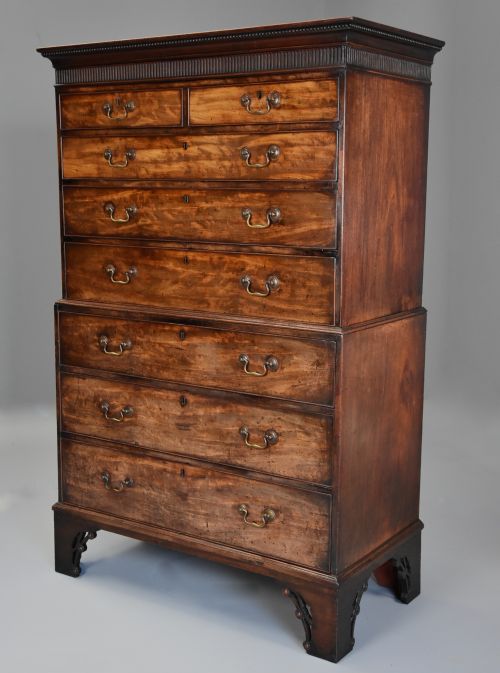
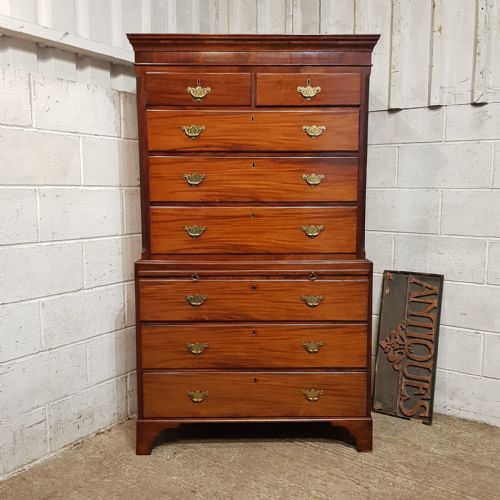
A brown mahogany double chest, commonly known as a chest on chest or tallboy, is a substantial piece of furniture designed to maximise vertical storage. These pieces consist of an upper chest of drawers stacked securely upon a deeper lower section, creating a towering profile. The form predominates in Georgian and 18th-century designs, though examples extend into the Regency and Victorian periods.
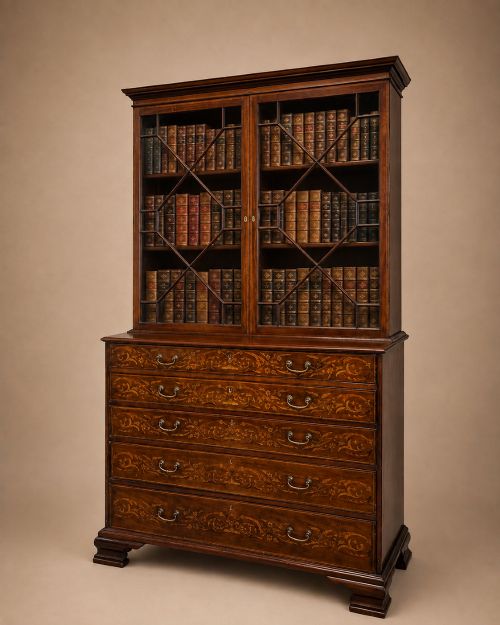
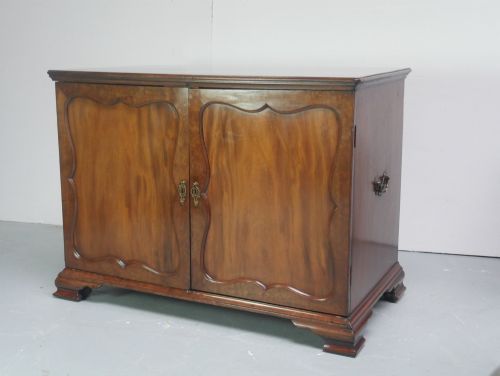
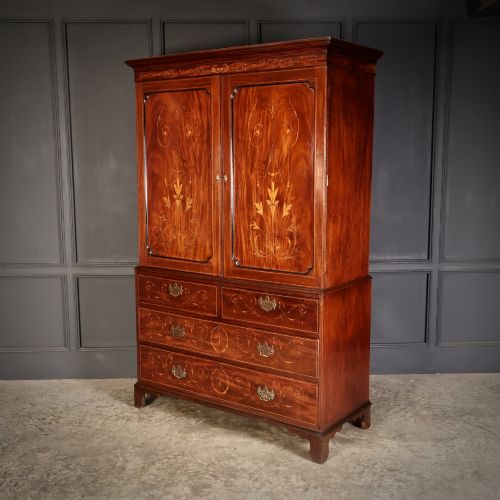
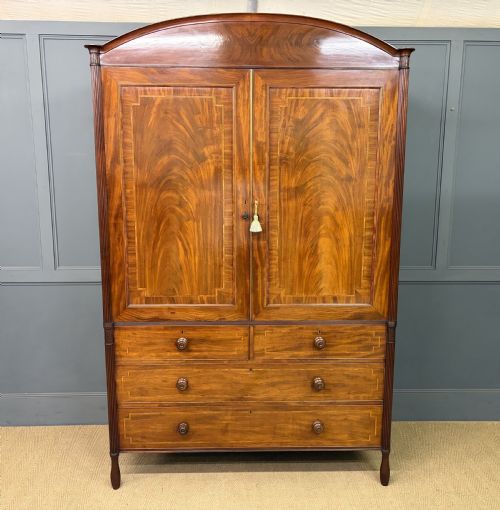
Buyers searching for this phrase encounter numerous variations, from plain provincial pieces to refined George III examples fitted with delicate cornices. Some iterations incorporate a secretaire drawer equipped with a writing surface, while others function as linen presses with upper cabinet doors enclosing sliding trays. Proportions alter between flat fronts and bow-fronted designs, but the stacked two-part construction remains the defining characteristic.
Materials and Construction
Cabinetmakers utilised dense mahogany as the primary timber, frequently selecting figured or flame veneer for drawer fronts to create deep optical movement. Secondary woods such as oak appear in drawer linings and internal framing, providing structural stability for the heavy stacked sections. Brass hardware, including original pierced drop handles and escutcheons, secures the operational points of the drawers.
Joinery relied on precise dovetail construction for the drawers and robust framing for the upper and lower carcases. Decorative elements such as blind fret cornices, marquetry inlay, and satinwood banding were applied to elevate the surface design. Polish was built up through hand-rubbed wax, bringing out the warm brown tones and natural grain patterns of the timber.
Periods represented span from the 18th century through the Georgian, Regency, and Victorian eras.
Distinguishing Quality
The degree of refinement in the timber selection dictates the visual impact, with figured mahogany and symmetrical flame veneers commanding greater presence than plain stock. Crispness of execution in details like blind fretwork or stringing reveals the skill of the original workshop. Furthermore, the retention of original brasses and unblemished surface patination preserves the integrity of the piece.
Proportion and scale separate standard regional examples from sophisticated metropolitan commissions. Well-balanced cornices and harmonious drawer graduations create a cohesive silhouette that lesser pieces miss. The smoothness of the internal drawer operation and the tightness of the structural joints further indicate the original standard of craftsmanship.
The Brown Mahogany Double Chest Glossary
- Chest on chest
- A tall storage unit comprising two distinct cabinet sections stacked one directly upon the other. This form doubles the capacity of a standard low chest without claiming additional floor space.
- Tallboy
- An alternative descriptor for a chest on chest, frequently applied to taller vertical storage furniture. The term encompasses both drawer-only configurations and those featuring upper cupboard doors.
- Blind fret cornice
- A carved ornamental band fixed along the top edge of the upper section, imitating pierced tracery without cutting entirely through the wood. It adds textural depth to the upper moulding.
- Secretaire drawer
- A top drawer in the lower section of the upper carcase that pulls down to reveal a fitted writing desk with small compartments and pigeonholes. It combines storage with a compact bureau function.
- Patina
- The deep sheen and mellow colour developed on the surface of the mahogany over centuries through light exposure, handling, and waxing. It serves as a visual marker of age and authenticity.
Brown Mahogany Double Chest: Frequently Asked Questions
How do I date a chest on chest?
Dating relies on examining construction techniques, timber choices, and decorative details like cornices or bracket feet. Georgian pieces often display fine dovetailing and oak linings, while Victorian iterations feature heavier proportions.
Hardware placement and the style of brass handles provide further chronological markers. Original elements correspond to the prevailing aesthetic of the late eighteenth or early nineteenth century.
Where were tallboys placed in a home?
These tall units stood primarily in principal bedrooms or dressing rooms to house folded linens, garments, and personal items. Their vertical format suited rooms with limited floor space.
In grander houses, they complemented matching dressing tables and wardrobes. Their height also allowed them to serve as architectural focal points against large bedroom walls.
Are the upper and lower sections attached?
The upper carcase rests securely upon the lower section using gravity and locating mouldings rather than permanent mechanical fixings. The weight of the top chest keeps it stable.
This two-part construction was originally designed to ease transport through narrow stairwells and doorways. Moving the furniture requires separating the two halves.
How do I care for antique mahogany?
Maintain the wood by applying natural beeswax sparingly and buffing with a soft cloth to preserve the surface sheen. Avoid placing the furniture in direct sunlight or near heat sources.
Consistent indoor humidity prevents the timber from splitting and keeps the veneered surfaces stable. Gentle dusting with a dry cloth protects the historic polish.