




Brown Kurdish Wool Rug
These brown kurdish wool rug examples bring authentic nomadic craft and dense tribal character straight to your floor.
Brown Kurdish Wool Rug
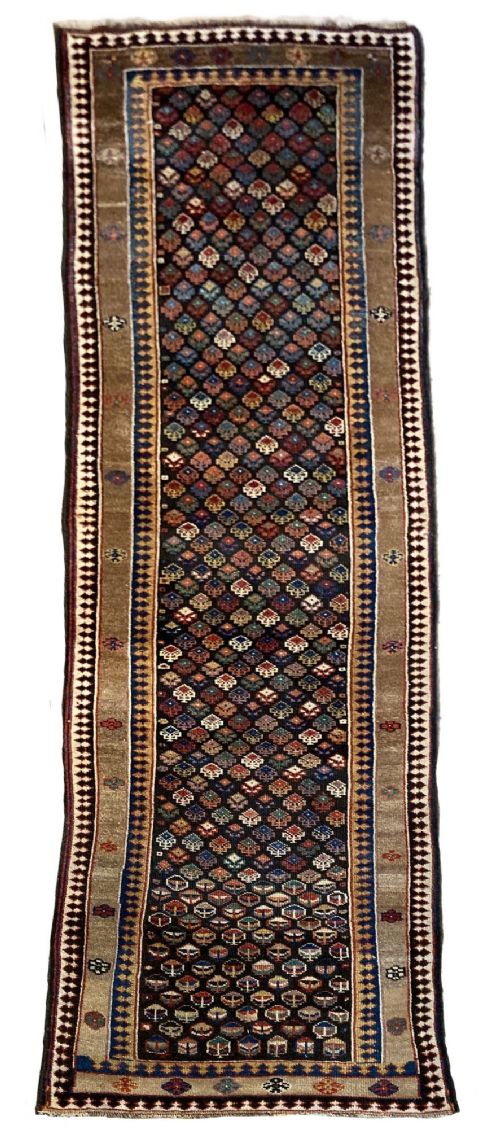
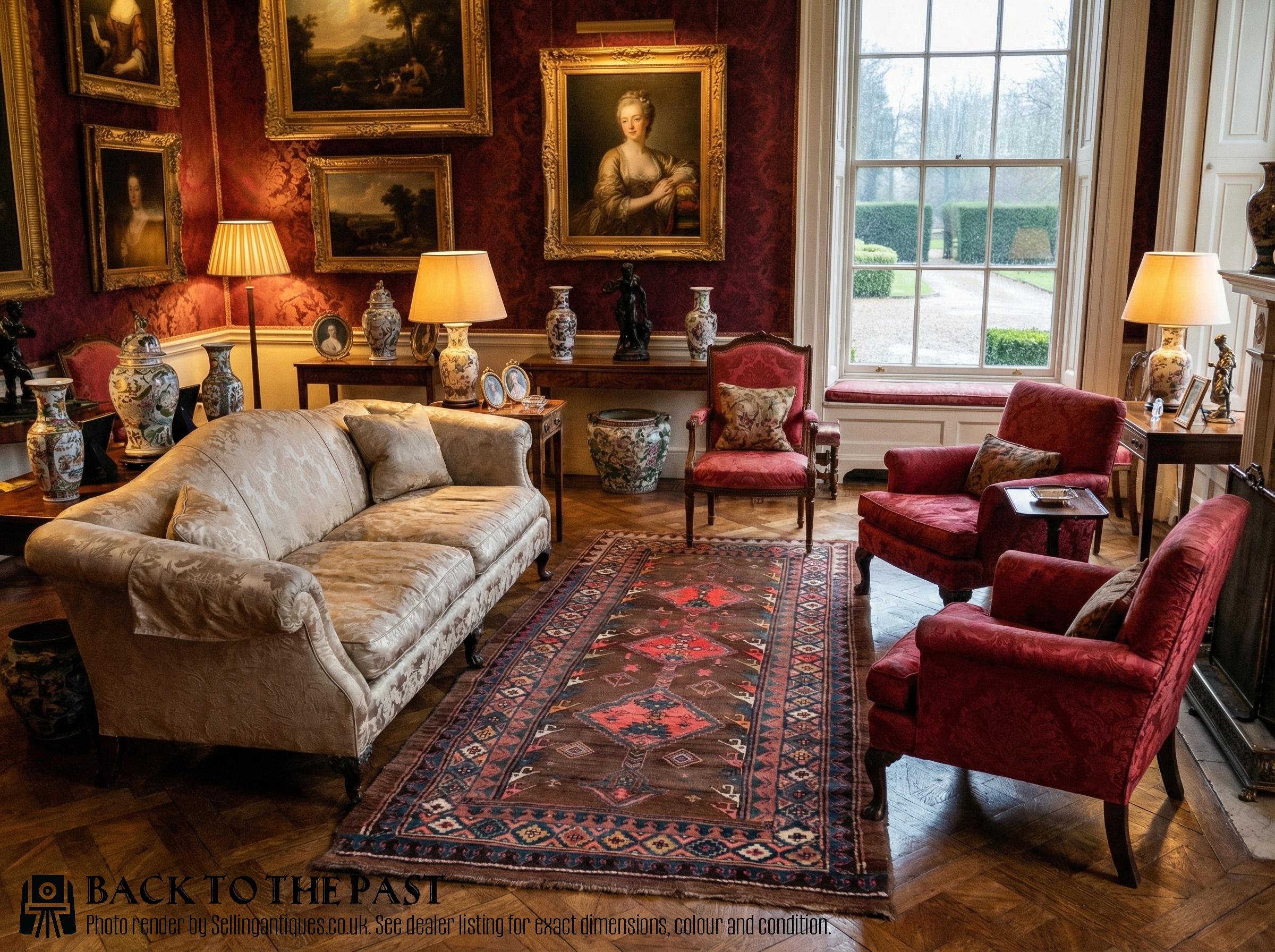
A brown kurdish wool rug delivers the robust utility and geometric artistry of tribal weavers from the rugged highlands of north west Persia. These pieces arrive in formats ranging from broad area carpets and kelleh formats to elongated narrow runners designed for hallways.
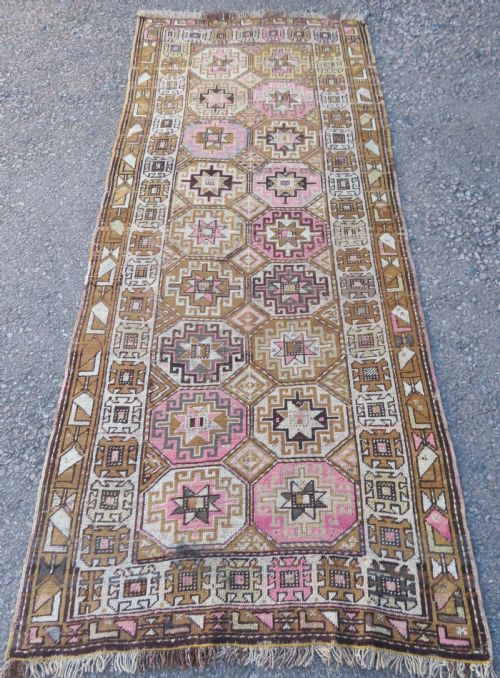
Most examples originate between the late nineteenth century and the early decades of the twentieth century, reflecting traditional village weaving traditions. You encounter specific regional identifiers like Kolyai or Bidjar alongside tribal family pieces bearing latch hook medallions and Memling guls.
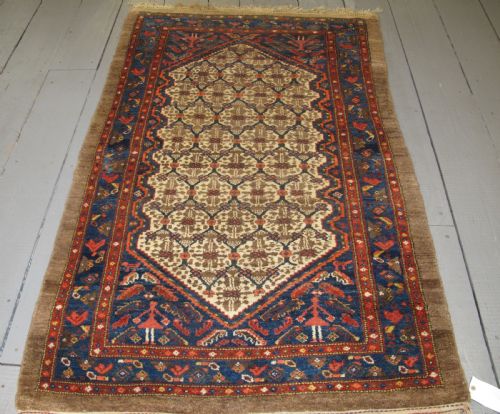
Makers utilised familiar local iconography, sometimes depicting birds perched on trees or repeating geometric motifs across deep earthy fields. Each rug serves as a durable floor covering built by pastoral communities for practical warmth and domestic use.
Construction and Materials
Weavers relied primarily on wool and hand-spun wool for the pile, yielding a heavy, resilient surface capable of withstanding generations of foot traffic. Cotton foundations frequently provide the structural warp and weft for these north west Persian carpets.
Natural dyeing methods produced the characteristic rich brown tones and contrasting geometric details that define the aesthetic of these tribal textiles. Hand-knotting techniques bound the fleece tightly to the foundation, ensuring long-term durability for daily use.
Materials documented across these pieces consist exclusively of wool, cotton, and hand-spun wool.
Assessing Quality and Execution
Knot density and wool preparation determine the crispness of motifs like latch hook medallions and Memling guls across the field. Superior execution shows in the precise handling of fine hand-spun fleece and the stable alignment of long narrow runner formats.
The depth and nuance of the natural brown palette separate standard village production from exceptional tribal weaving. Well-preserved edges and minimal pile loss maintain the structural integrity inherent in nineteenth-century Kurdish workshop traditions.
The Brown Kurdish Wool Rug Glossary
- Kelleh
- A large format rug traditionally proportioned longer than a standard area carpet but wider than a narrow hallway runner.
- Memling Gul
- An octagonal tribal design motif featuring hooked edges, commonly found repeated across Anatolian and Persian village weaving.
- Latch Hook
- A stepped geometric motif used to outline medallions and borders in tribal rugs, creating a dynamic serrated edge.
- Runner
- An elongated narrow carpet format specifically woven to fit corridors, hallways, and staircases.
- Warp
- The vertical foundation threads stretched tightly on the loom before knotting begins.
Brown Kurdish Wool Rug: Frequently Asked Questions
How do I clean a antique rug?
Vacuum gently without using a rotating brush bar to protect the hand-spun wool pile from unnecessary friction and fibre loss.
Professional specialist cleaning is essential for addressing deep dirt or spills to safeguard natural dyes and fragile cotton foundations.
Are these rugs suitable for hallways?
Many examples on this page are narrow runners specifically produced in nineteenth and early twentieth century Persia for heavy corridor use.
Ensure you place a quality rug underlay beneath the piece to prevent slipping and reduce everyday wear on the wool.
What is a Memling gul?
This geometric motif is an octagonal shape decorated with hooked projections, originating from traditional tribal weaving practices in the Near East.
It appears frequently in Kurdish and Caucasian rugs as a central repeating element across the field.
How do I date these textiles?
Dating relies on assessing material characteristics, including the use of hand-spun wool, natural dye palettes, and structural wear patterns consistent with the nineteenth and early twentieth centuries.
Stylistic markers such as specific tribal medallion layouts and regional drawing styles also help narrow down the period of manufacture.