
Brown Kneehole Desk
A brown kneehole desk offers compact writing storage with pedestals flanking a central recess, uniting historic cabinet-making with practical home study.
Brown Kneehole Desk
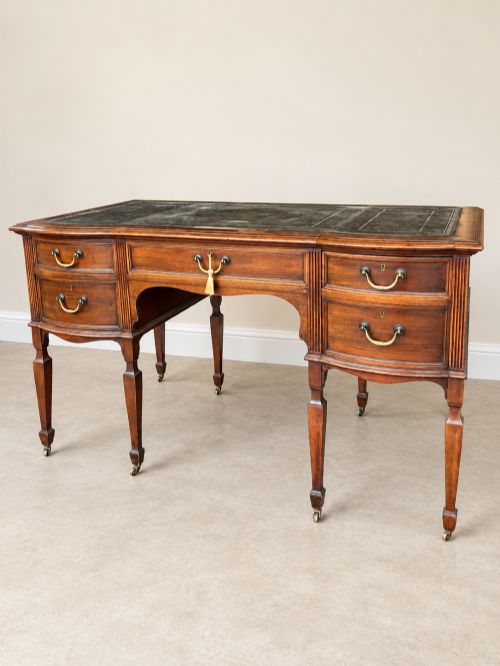
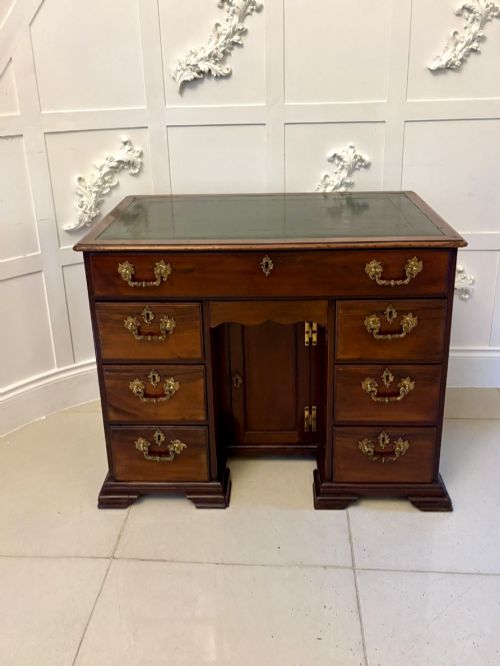
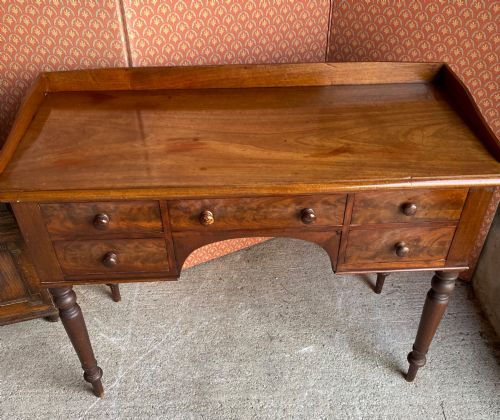
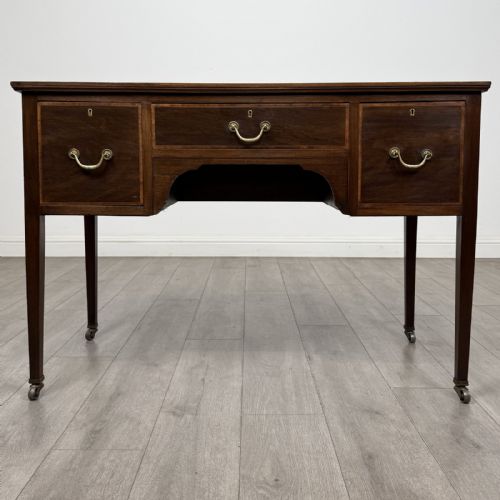
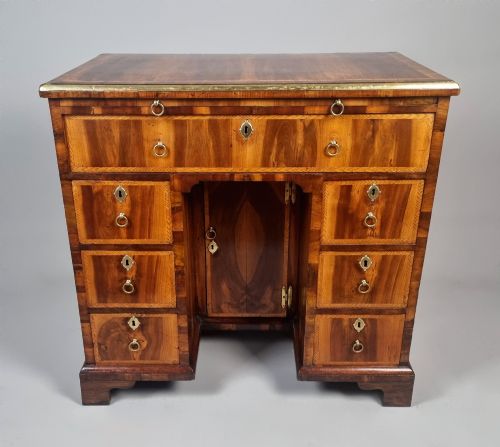
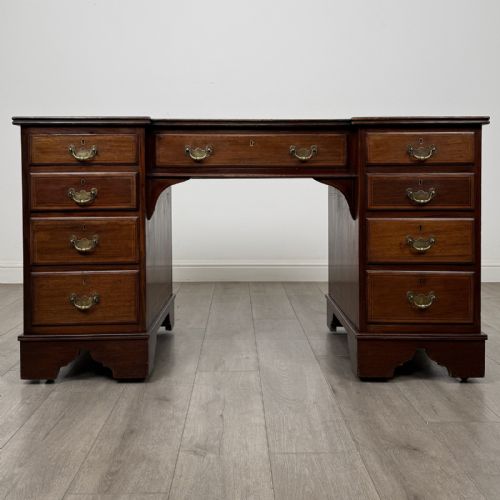
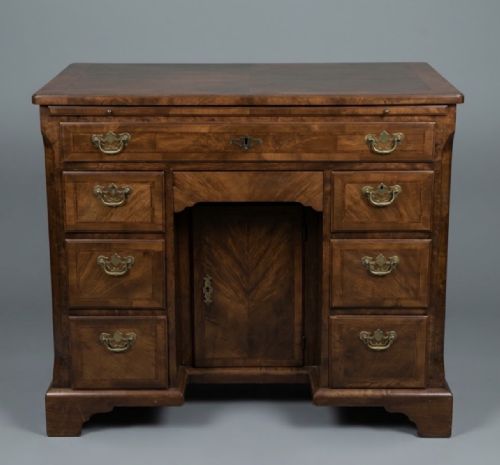
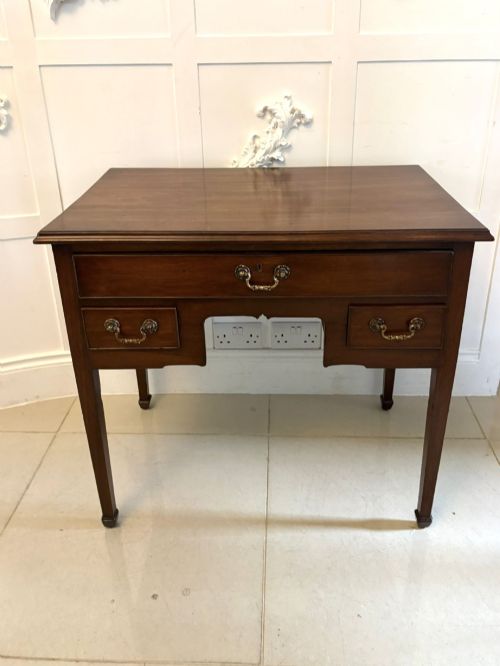
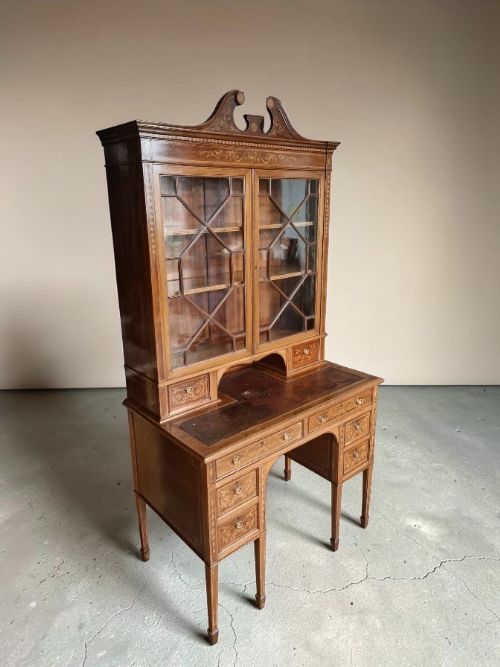
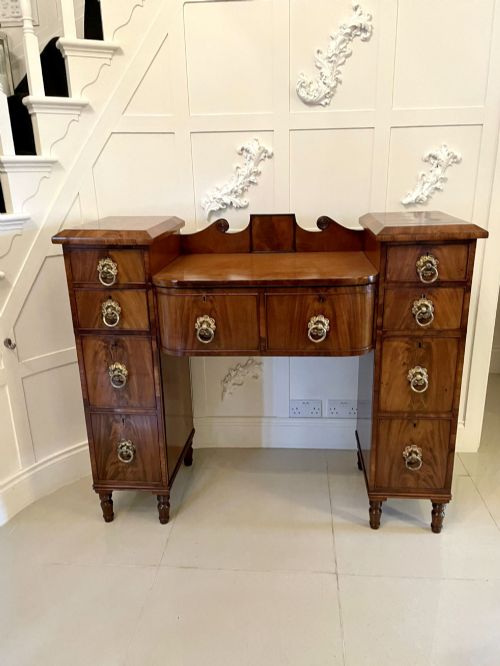
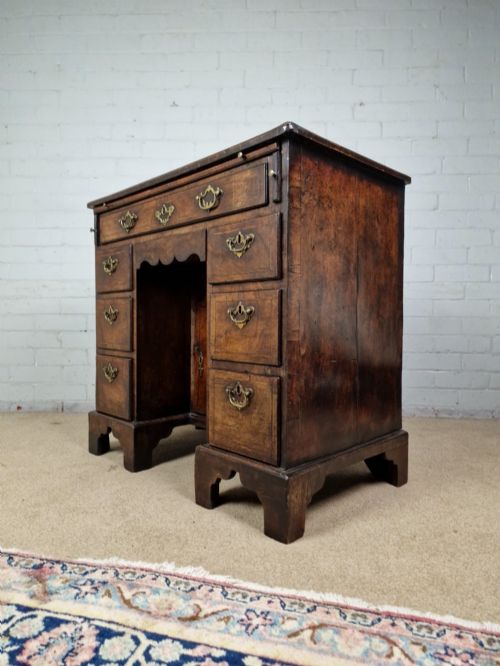
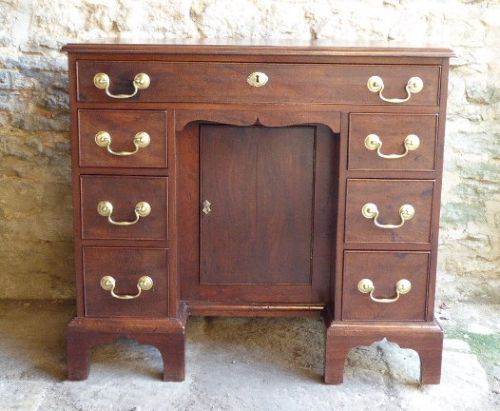
A brown kneehole desk is a utilitarian writing surface featuring a central cupboard or drawer set back beneath the tabletop, flanked by pedestals of smaller drawers. This configuration emerges strongly across the Georgian, Victorian, and Edwardian periods, utilising timber frames scaled for domestic study or dressing rooms.
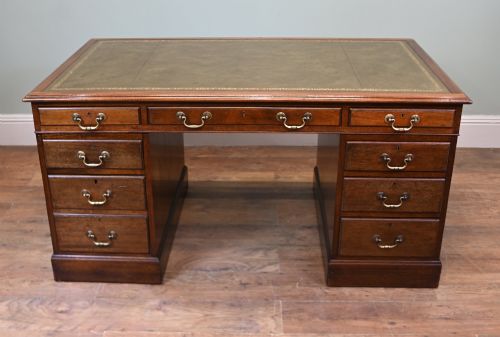
Buyers on this page most frequently encounter mahogany and walnut versions dating from the eighteenth century onward. These range from compact Georgian pedestal examples to larger Victorian and Edwardian variations fitted with leather writing surfaces and multiple drawers.
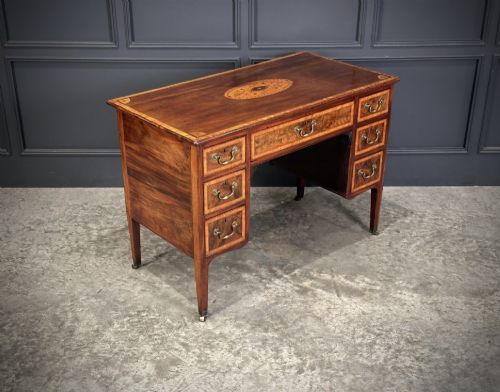
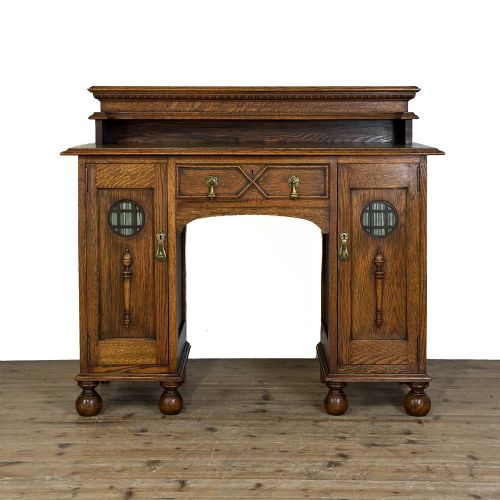
The layout accommodates a seated writer while concealing paperwork within banks of side drawers. Simpler oak and burr walnut iterations also appear alongside marquetry inlaid designs originating from the nineteenth century.
Markers of standard
Quality separates through the selection of figured timber veneers, the crispness of inlaid marquetry work, and the integrity of secondary woods used inside drawer linings. Superior examples exhibit tightly grained mahogany or burr walnut paired with original brass drop handles and well-preserved leather inserts.
The refinement of internal joinery and drawer construction distinguishes high-workshop output from standard commercial production. Subtle carving on pillars or plinths further elevates the visual standard across Georgian and Victorian iterations.
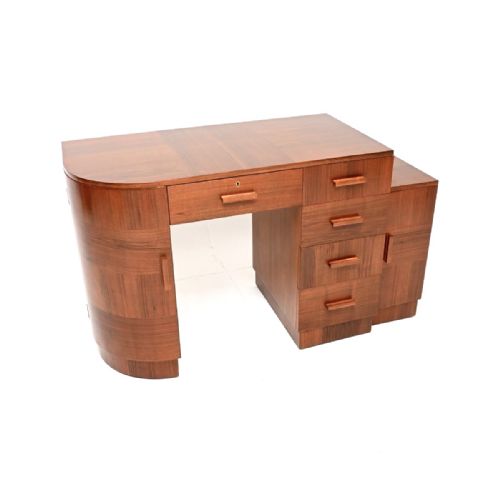
Period styles represented include Georgian, Regency, Victorian, Edwardian, and Art Deco.
Trollope & sons·Maple & Co·Wylie & Lochhead Glasgow
The Brown Kneehole Desk Glossary
- Kneehole desk
- A writing table featuring a central recess beneath the top, flanked by two pedestals containing small drawers. This compact arrangement maximises storage while allowing the user to sit squarely before the surface.
- Pedestal desk
- A heavy freestanding writing table supported by two vertical columns of drawers resting on the floor. These units provide extensive archive space within domestic or office environments.
- Dovetail
- A joinery technique utilising interlocking wedge-shaped fingers to bind drawer corners securely together. It remains a hallmark of sound antique cabinet-making.
- Marquetry
- The art of applying decorative veneer pieces onto a structural surface to form geometric or pictorial patterns. It appears frequently on eighteenth and nineteenth-century writing furniture.
- Escutcheon
- A protective brass plate surrounding a keyhole that prevents timber wear from repeated key usage. These fixtures often reflect the period style of the desk.
Brown Kneehole Desk: Frequently Asked Questions
What is a brown kneehole desk?
A brown kneehole desk is a traditional wooden writing table featuring a central recessed space for the legs, flanked by two vertical banks of drawers. These pieces provide compact storage for correspondence and documents.
Cabinet-makers historically produced them in mahogany, walnut, and oak for use in private studies, libraries, and bedrooms.
How do I date a kneehole desk?
Dating relies on observing timber choices, construction techniques, and hardware styles across different eras. Georgian examples often display fine mahogany veneers and bracket feet, while Victorian versions incorporate heavier pedestals and inset leather tops.
Internal drawer construction, such as hand-cut dovetails and secondary woods, offers further clues to the manufacturing decade.
Where were these desks used?
These desks served primarily in domestic studies, home offices, and private chambers for letter-writing and estate management. Their modest footprint allowed them to sit comfortably against walls or within smaller parlours.
Some variants double as dressing tables, featuring central kneeholes designed to accommodate a person sitting before a mirror.
Are writing surfaces original?
Many desks retain their period leather or baize writing inserts, though replacement panels are common due to centuries of daily wear. Original surfaces often show characteristic patination, scuffs, and gilt tooling.
Evaluating the surrounding timber moulding helps determine whether a leather top has been renewed or preserves its original state.
How do I care for antique wood?
Maintain antique wooden surfaces by dusting with a dry cloth and avoiding placement near direct heat sources or strong sunlight. Occasional application of quality wax feeds the timber and preserves the natural lustre.
Protect inset leather tops from moisture and sharp objects to maintain the finish over years of daily use.