
Brown Inlay Chest Drawers
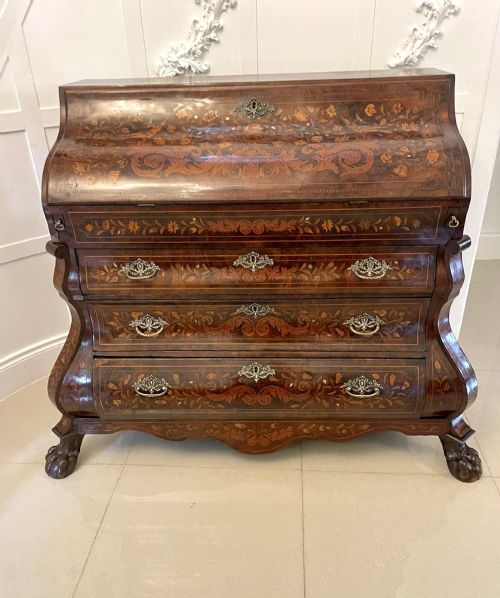
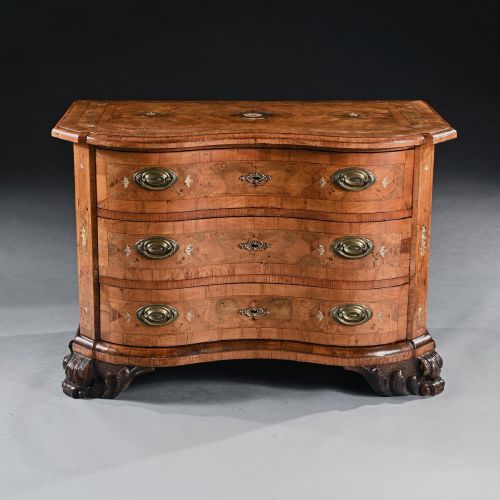
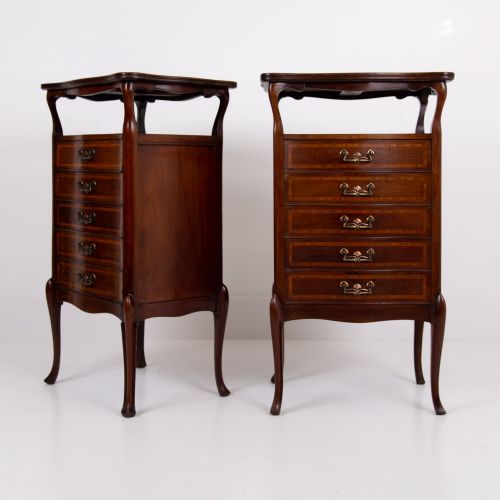
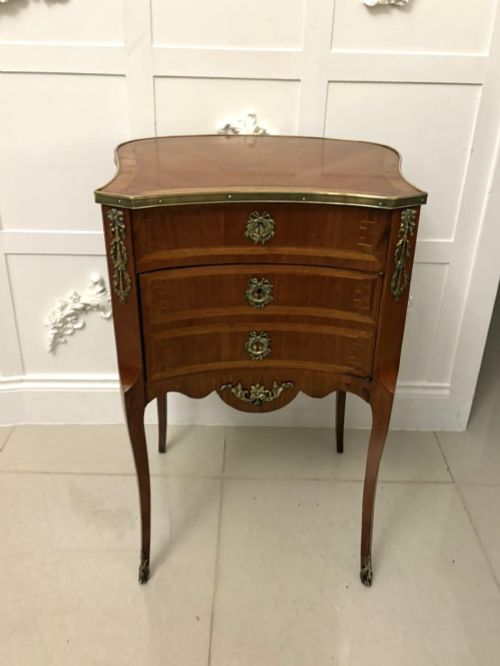
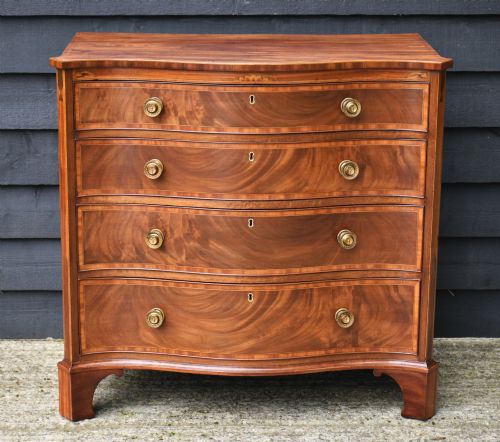
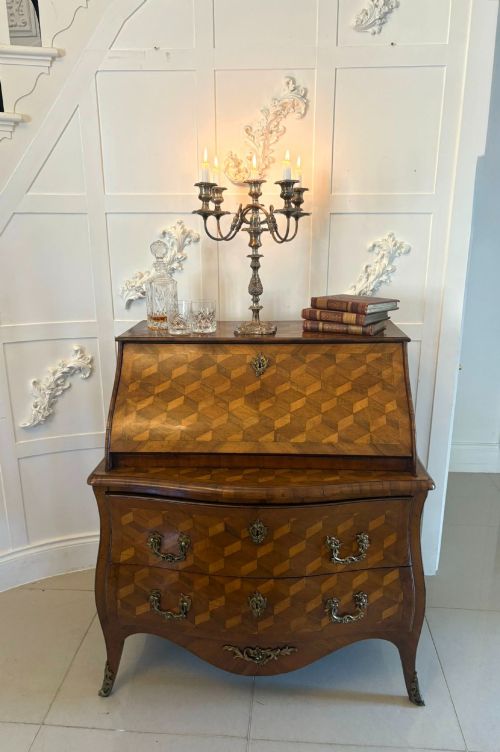
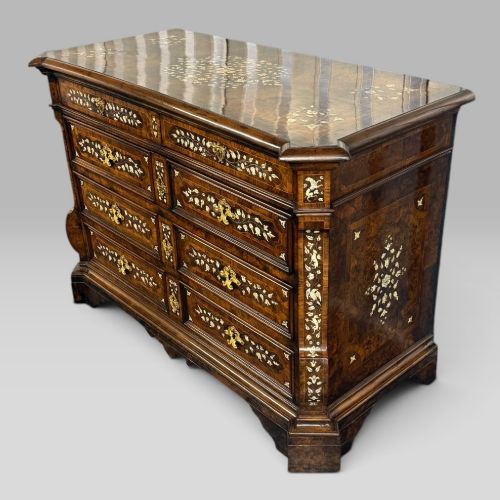
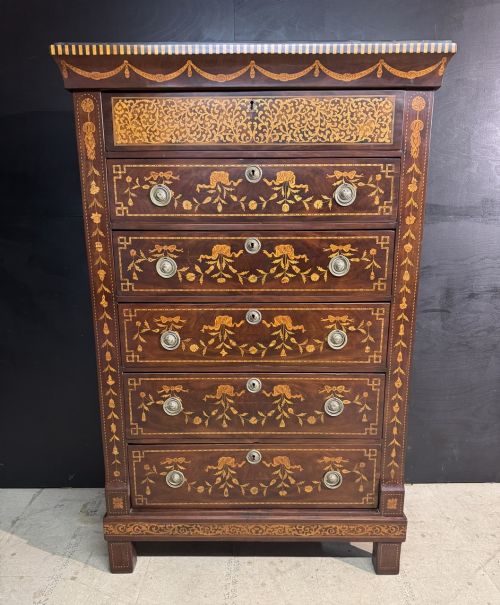
These brown inlay chest drawers bring together rich timber and intricate contrasting woodwork from several centuries of cabinet making.
Brown Inlay Chest Drawers
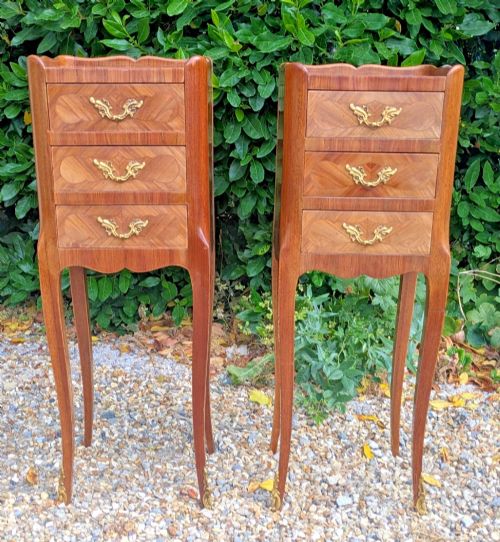
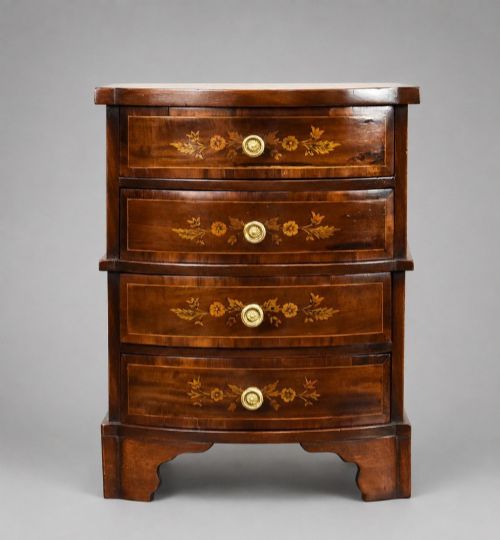
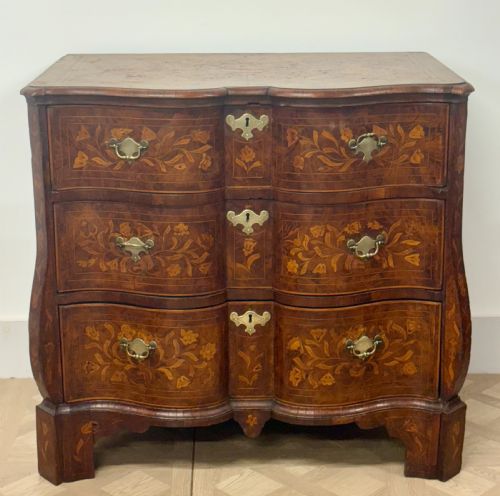
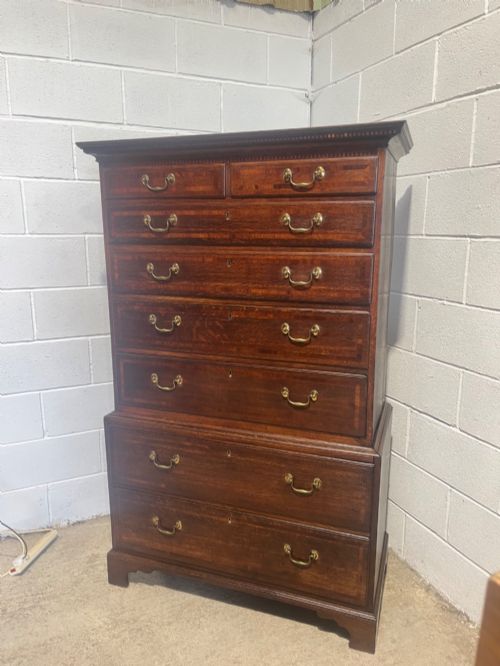
When you search for brown inlay chest drawers, you encounter a varied group of storage furniture spanning the seventeenth century through to the Edwardian period and the early twentieth century. The selection ranges from substantial Georgian mahogany and walnut pieces to continental marquetry commodes and compact bedside tables.
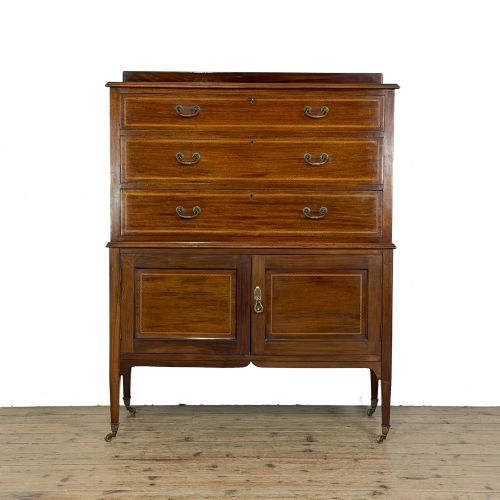
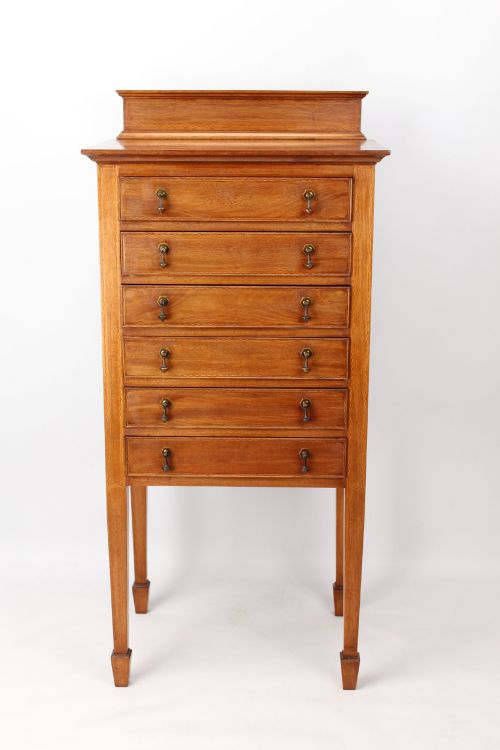
The standard form met most often on this page is the classic chest of drawers, though the selection frequently includes bureau desks, tall chests, and miniature furniture. Woods such as mahogany, oak, and walnut form the primary structure, enriched with decorative marquetry, parquetry, or simple line inlay.
How they were made
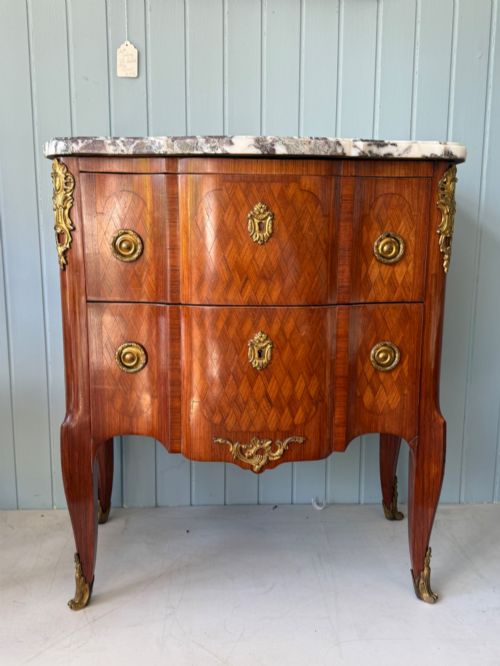
Cabinet makers constructed the carcasses of these pieces using solid timbers like oak, mahogany, and walnut, often applying fine veneers of burr walnut, kingwood, and satinwood to the exterior surfaces. Marquetry and parquetry techniques involved cutting intricate floral, geometric, or arabesque patterns from contrasting woods, pewter, and ivory, then fitting them precisely into the primary surface.
Brass hardware, including handles and escutcheons, was cast and fitted by hand to complement the dark tones of the wood. Marble tops occasionally featured on continental commodes and bedside cabinets, adding weight and a smooth contrasting surface to the inlaid wooden base.
Listings feature walnut, mahogany, oak, and satinwood pieces dating from the seventeenth century through to the Edwardian era.
What varies in quality
The distinction between ordinary and exceptional examples rests upon the precision of the cabinet work and the ambition of the design. Master craftsmen achieved seamless integration of contrasting veneers, ensuring that floral marquetry or geometric parquetry lines remained crisp and undisturbed by shrinkage over the centuries.
Secondary timbers and internal construction also signal the standard of manufacture. Finer pieces utilised solid oak or mahogany drawer linings with hand-cut dovetails, alongside well-proportioned brass mounts and balanced timber selection that created a cohesive appearance across the entire piece.
Grand Ducal Workshops·Edwards & Roberts·Druce & Co·A. F. Lloyd
The Brown Inlay Chest Drawers Glossary
- Marquetry
- Decorative veneer work forming pictorial or floral patterns using various tinted woods and other materials. It requires great skill to cut and fit each piece tightly into the background veneer.
- Parquetry
- Geometric mosaic woodwork used to cover floors or furniture surfaces. The small wooden tiles create repeating patterns such as cubes or chevrons.
- Bombe
- A bulging, outward-curving swell on the front and sides of a cabinet or commode. This Baroque and Rococo form demands advanced shaping of both the wooden carcass and its veneer.
- Commode
- A low chest of drawers, typically of French origin and dating from the eighteenth century onwards. They frequently stand on cabriole legs and incorporate marble tops.
- Serpentine
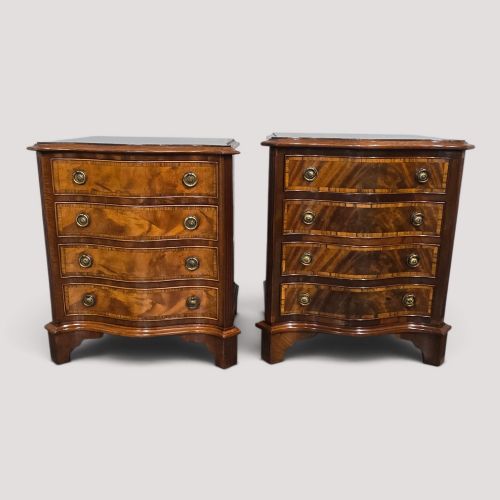
- A furniture front or top shaped with a double-curved line, curving outward in the centre and inward at the ends. It provides a fluid, undulating profile.
- Dovetail
- A joint formed by interlocking wedge-shaped fingers of wood. It secures drawer corners together with high tensile strength.
Brown Inlay Chest Drawers: Frequently Asked Questions
How do I care for antique inlaid furniture?
Keep these pieces away from direct sunlight and strong heat sources to prevent the delicate veneers and natural timbers from drying out and lifting.
Apply a traditional beeswax polish sparingly and buff with a soft cloth to maintain the natural lustre of the wood without building up heavy residues.
Where should I place a bedside chest?
These compact chests suit bedrooms and smaller dressing rooms where surface space for a lamp and enclosed storage are both required.
Their decorative inlay also allows them to function effectively as lamp tables or lamp chests in hallways and reception rooms.
How can I tell a Georgian chest from a Victorian one?
Georgian pieces often display lighter timbers like mahogany and walnut with subtle line inlay, while Victorian examples tend to be heavier in proportion and darker in tone.
Construction methods inside the drawers also help; hand-cut dovetails generally point to earlier eighteenth-century manufacture, whereas later pieces may show more mechanized uniformity.
What is the difference between a commode and a chest of drawers?
A commode typically refers to a low, decorative French or continental cabinet with drawers, often featuring shaped fronts and marble tops.
A standard chest of drawers is generally taller and more utilitarian in its British iterations, focusing primarily on generous storage capacity.