

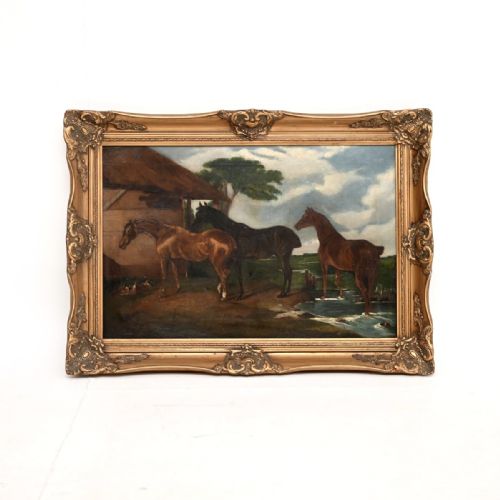


Brown Horse Landscape Painting
A brown horse landscape painting captures rural life and equine form across British and European art.
Brown Horse Landscape Painting
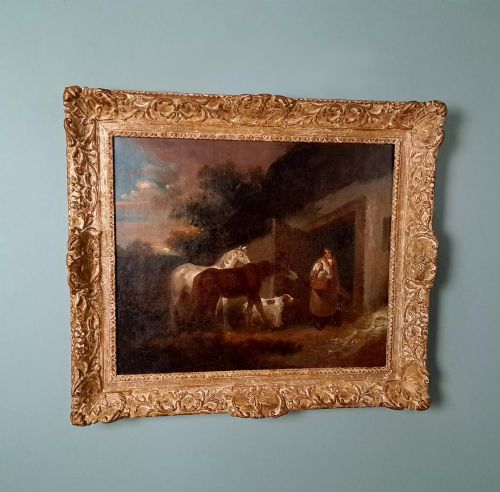
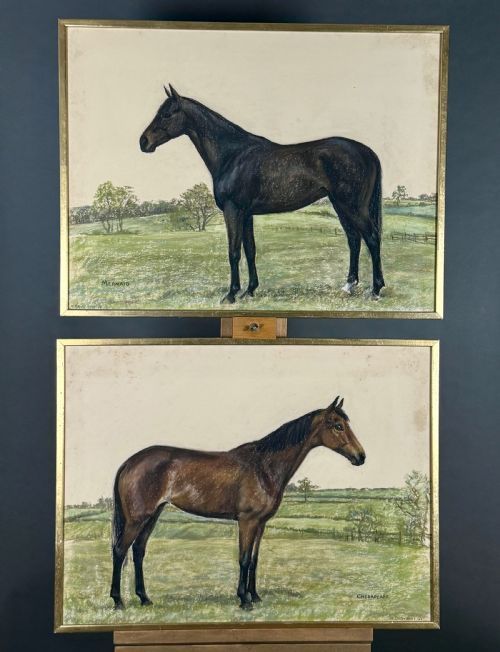
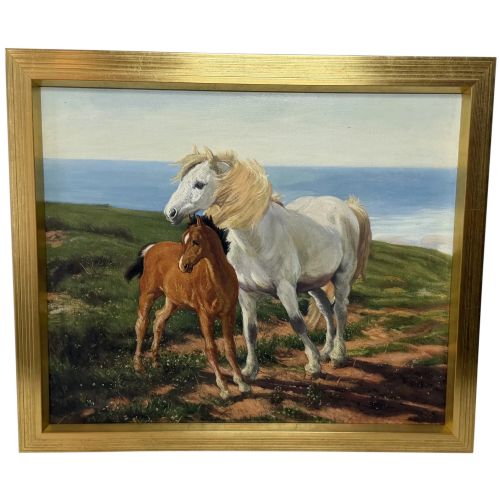
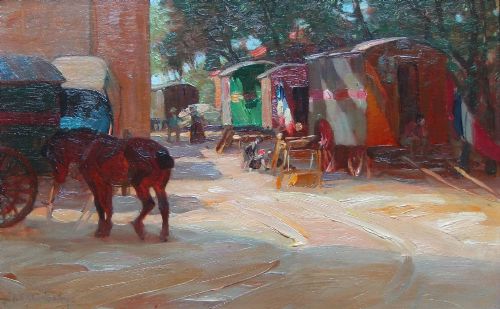
A brown horse landscape painting depicts equine subjects integrated into rural, agricultural or sporting settings. The selections on this page span the nineteenth century through to the mid twentieth century, encompassing British Impressionism, Victorian, and Edwardian schools.
Most pieces met here are oil on canvas or watercolour on paper, presenting working shires, hunters, bay racehorses, and ponies in fields, stableyards, or river landscapes. These works reflect both the artistic focus on rural labour and the deep cultural connection to horses in past centuries.
Materials and technique
Artists utilised oil paint on stretched canvas or applied watercolour to paper, often framing the completed works in gilt wood. The physical components reflect traditional studio practices of the nineteenth and early twentieth centuries.
Brushwork ranges from the tight, detailed rendering favoured by Victorian sporting artists to the looser, expressive application characteristic of British Impressionism and the English School.
Several horses share the frame with remarkably observant pigs and ducks.
What separates the work
Quality rests upon the anatomical accuracy of the horse, the depth of the surrounding landscape, and the artist's ability to capture light and atmosphere. Superior examples display a confident handling of musculature and movement rather than stiff, static representation.
The integration of the horse into its environment separates routine topographical records from accomplished artistic compositions. Balance between subject and scenery dictates the standing of each piece.
William Joseph Shayer Senior·Paul Ehrenberg·Herman S Melville·John Ferneley Senior·Harry Freckleton·Raimond Louis Lecourt·John Sanderson Wells·James William Booth·John Frederick Herring·John Linnell·Helena Maguire·John Atkinson·Clifton Tomson·Arthur Winter Shaw·Paul Jones·Robert Hollands Walker·John Charles Maggs·Vernon Stokes·Herbert Royle·George Hamilton Constantine·George Goodwin Kilburne·Frederick William Jackson·Molly Maurice Latham·W E Millner
The Brown Horse Landscape Painting Glossary
- Bay
- A horse coat colour characterised by a reddish-brown body with a black mane, tail, and lower legs. This shade appears frequently in equine portraits and sporting art.
- British Impressionism
- An artistic movement adopting the light-focused, looser brushwork of French impressionism while retaining domestic subjects. Works in this style show softer edges and atmospheric outdoor lighting.
- Equestrian art
- Depictions of horses, often involving riders, carriages, or agricultural work. This genre encompasses both formal portraits and narrative rural scenes.
- Sporting art
- A category of painting dedicated to horses, hounds, hunting, and racing. These works record the pivotal role of animals in rural and leisure activities.
Brown Horse Landscape Painting: Frequently Asked Questions
What periods do these paintings come from?
The works originate primarily from the nineteenth and early twentieth centuries, capturing evolving artistic movements from the Georgian era through to the mid twentieth century.
Periods represented include Victorian, Edwardian, and British Impressionism, showing how equine painting shifted from formal sporting records to atmospheric landscapes.
How do I care for an oil painting?
Keep canvas and oil paint away from direct sunlight and fluctuating humidity to prevent cracking and fading. Display the piece in a stable indoor environment.
Dust the surface gently with a soft, dry brush when needed. Avoid using water or chemical cleaners on the paint or gilt wood frame.
How can I tell a watercolour from an oil painting?
Watercolour works are executed on paper, usually displayed behind glass within a frame to protect the delicate medium from moisture. The paint layer sits thin and translucent.
Oil paintings utilise canvas or wood panels with a heavier paint texture that shows visible brushstrokes and has a distinct sheen, displayed without glass.
What subjects besides horses appear in these scenes?
The landscapes frequently incorporate working farm animals such as cattle, pigs, and sheep, alongside rustic figures, carts, and stableyards. These elements place the horse within everyday rural life.
Backgrounds often feature seasonal details, from snowy winter roads to hay carts in harvest fields, reflecting the agricultural calendar of the period.