




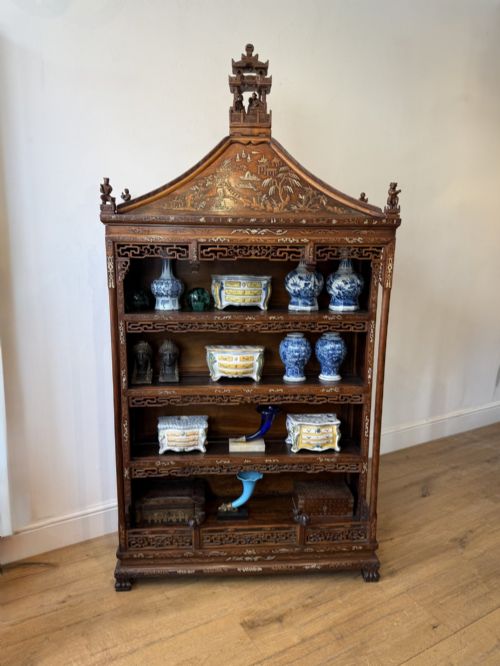


Brown Hardwood Cabinet
These brown hardwood cabinet examples offer dense grain and rich tone, providing solid storage shaped by diverse regional traditions.
Brown Hardwood Cabinet
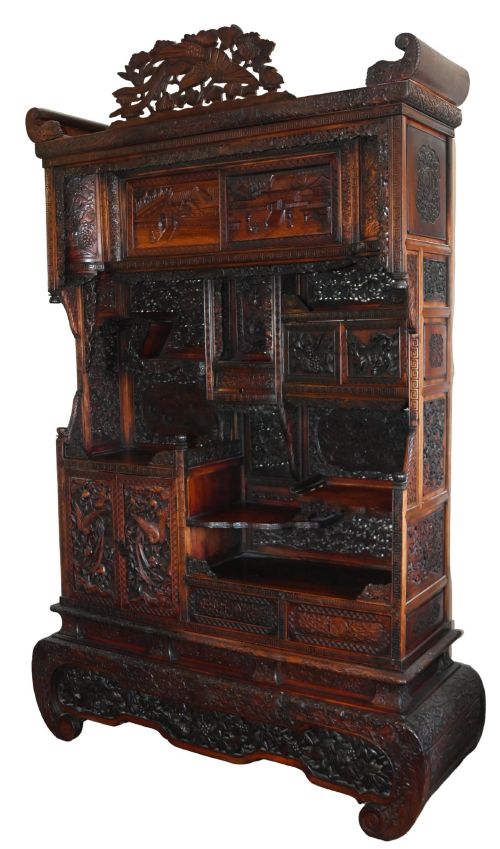
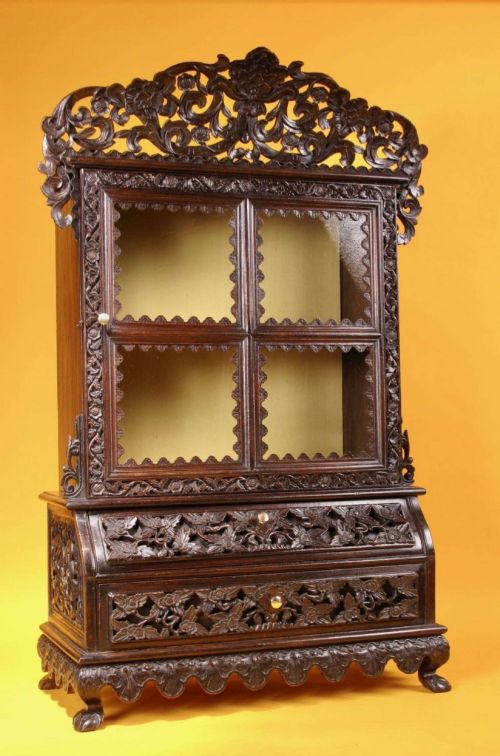
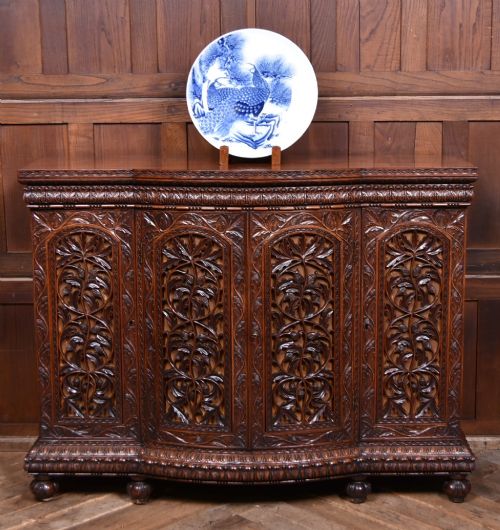
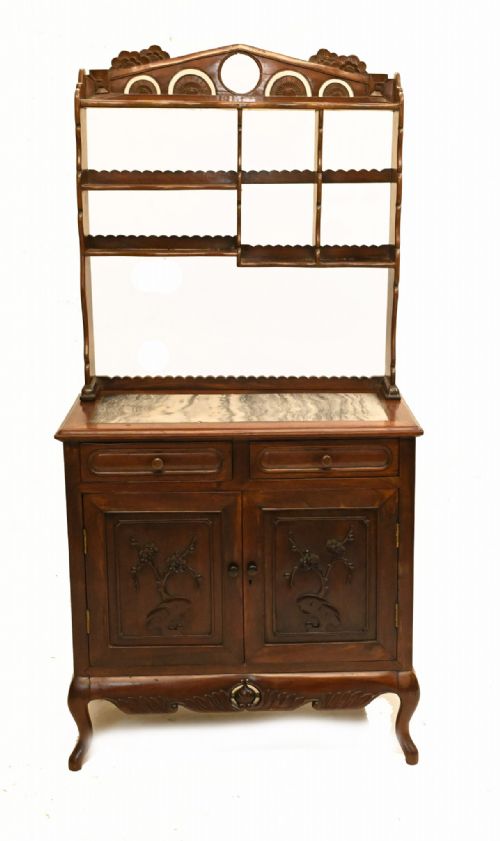
A brown hardwood cabinet serves primarily for display or storage, appearing across this page in forms ranging from tall display pieces to compact table-top units. Buyers seeking this phrase encounter pieces built from dense timbers, shaped by Chinese, Japanese, and Anglo-Indian traditions.
The selection centres heavily on nineteenth-century craftsmanship, including Victorian iterations and pieces originating from the Meiji period or Qing dynasty. These items span display cabinets, storage cupboards, and specialised glazed units designed to showcase objects.
Regional variations dictate the visual character, shifting between intricate carving, mother-of-pearl inlay, and simple glazed doors. Most pieces utilise sturdy tropical hardwoods that have darkened gracefully over decades of use.
What varies in quality
Quality rests in the crispness of the timber carving and the integrity of the joinery rather than mere age. Superior examples demonstrate precise fitting of doors and drawers without reliance on modern fasteners.
The selection of materials creates a distinct tier, where finely figured hardwoods paired with intact original glass and brass hardware command greater appreciation. Decorative embellishments like mother-of-pearl inlay require tight setting within the surrounding wood to maintain structural longevity.
Brown Hardwood Cabinet Retail Price Guide 2026
Typical asking prices for brown hardwood cabinet among the pieces listed under this phrase on Sellingantiques today, from the lower quarter to the upper quarter. They describe what is for sale here now, not the wider market.
Several cabinets moonlighted with cocoa advertisements, proving even antique timber occasionally promoted a hot drink.
The Brown Hardwood Cabinet Glossary
- Padauk
- A heavy tropical hardwood known for its deep reddish-brown tone and durability. It was frequently utilised in nineteenth-century furniture production.
- Meiji Period
- The era in Japanese history spanning from 1868 to 1912, associated here with intricately carved display cabinets and shodana units.
- Qing Dynasty
- The final imperial dynasty of China, lasting from 1644 until 1912, which influenced the design of various storage cabinets and open shelves.
- Shodana
- A traditional Japanese multi-tiered display cabinet featuring staggered shelves and small cupboards. These pieces showcase meticulous woodwork and joinery.
- Mother-of-Pearl
- An iridescent layer forming the inner shell lining of certain molluscs, utilised here as thin inlay pieces set into hardwood surfaces.
Brown Hardwood Cabinet: Frequently Asked Questions
How do I date a brown hardwood cabinet?
Dating relies on observing construction methods, timber choice, and stylistic markers tied to specific periods like the nineteenth century or Meiji era. Hardware such as brass hinges and locks also offers clues to the decade of manufacture.
Secondary indicators include the clarity of the glass and the wear patterns on internal shelving. Comparing regional carving styles helps narrow down the origin.
Where were these cabinets made?
The pieces originate from diverse workshops across Asia and British colonial outposts, reflecting Chinese Qing styles, Japanese Meiji aesthetics, and Anglo-Indian designs. Each region applied distinct decorative treatments to the local hardwoods.
Export markets heavily influenced the production of display cabinets intended for Western homes during the nineteenth and early twentieth centuries. This fusion created specific forms tailored for European drawing rooms.
Are these cabinets suitable for everyday use?
These pieces provide functional storage and display space for modern interiors, handling books, ceramics, and collectables securely. Solid hardwood frames offer robust durability for daily opening and closing of doors.
Placing them away from direct heat sources prevents the dense timber from splitting. Regular waxing maintains the natural lustre of the wood surface.
What is the difference between a display cabinet and a storage cabinet?
Display cabinets incorporate glazed doors or open shelving designed to exhibit decorative objects and specimens safely. Storage cabinets rely on solid wooden doors and multiple drawers to conceal items out of sight.
Some hybrid forms combine lower cupboards with upper glass display tiers. Both types utilise the same heavy tropical hardwoods.