
Brown Glazed Pottery
Brown glazed pottery encompasses utilitarian vessels and decorative objects finished in rich earthy tones, offering durability and depth of colour to collectors.
Brown Glazed Pottery
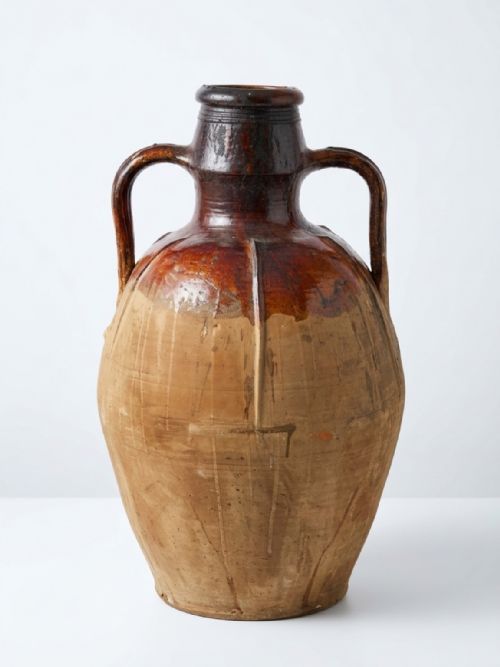
Brown glazed pottery covers functional vessels and decorative items produced across the eighteenth and nineteenth centuries, including jugs, vases, dairy bowls, and flasks. These utilitarian and ornamental pieces originate from British, continental European, and Asian workshops.
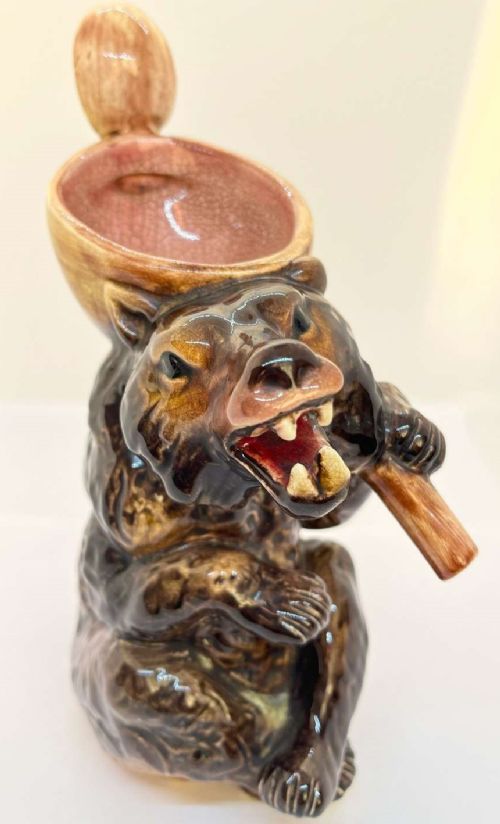
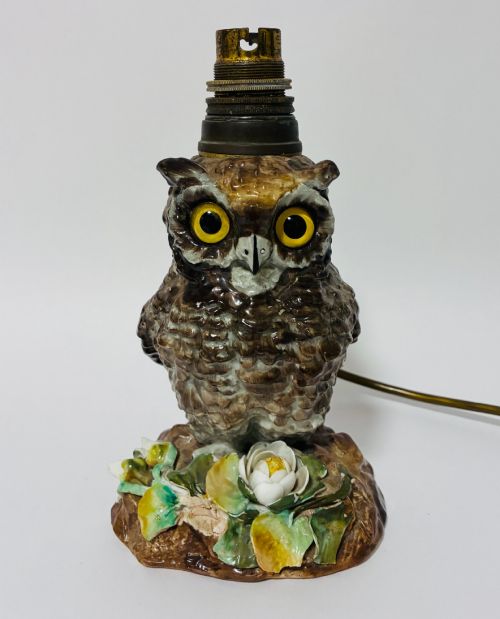
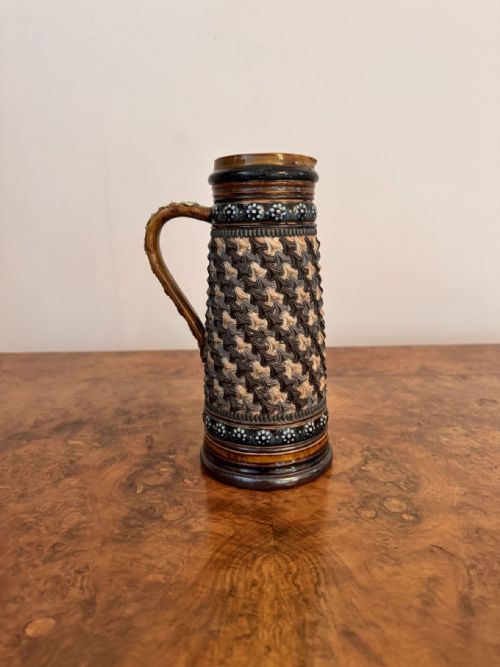
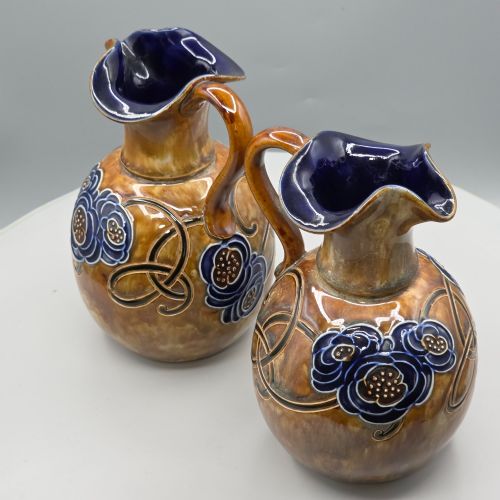
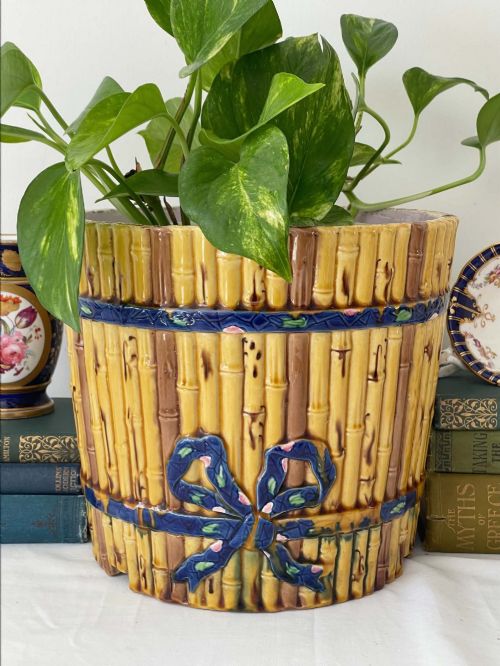
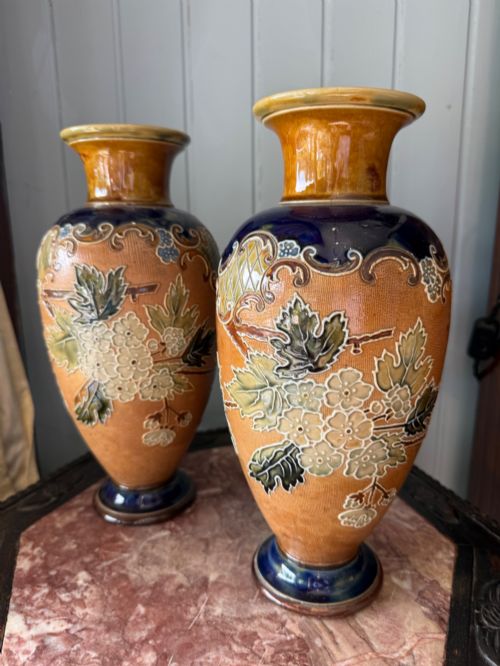
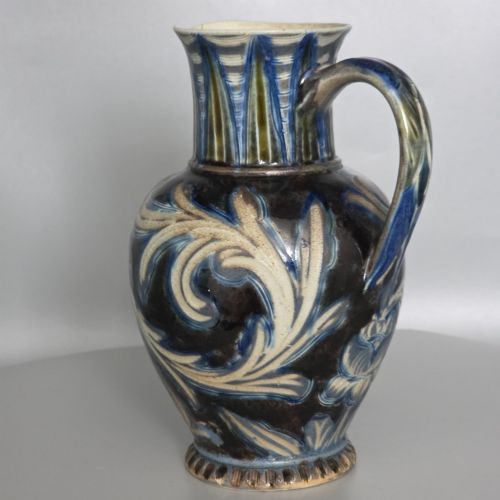
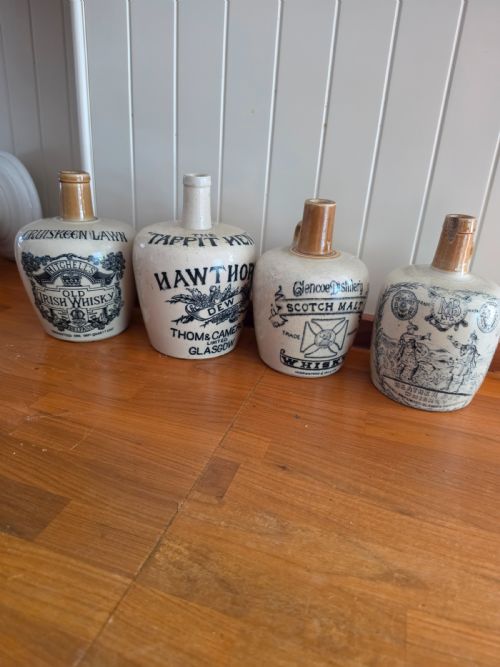
Buyers encountering this group will frequently find Victorian stoneware and earthenware pieces, such as ewers, tankards, and planters. Examples range from simple salt-glazed bottles to elaborate majolica and arts and crafts presentation pieces.
Materials and Techniques
Potters utilised heavy earthenware and dense stoneware bodies, shaped on the wheel or pressed into moulds to form vessels, figures, and tiles. These foundational clays provided the structural strength required for domestic storage, table use, and garden ornaments.
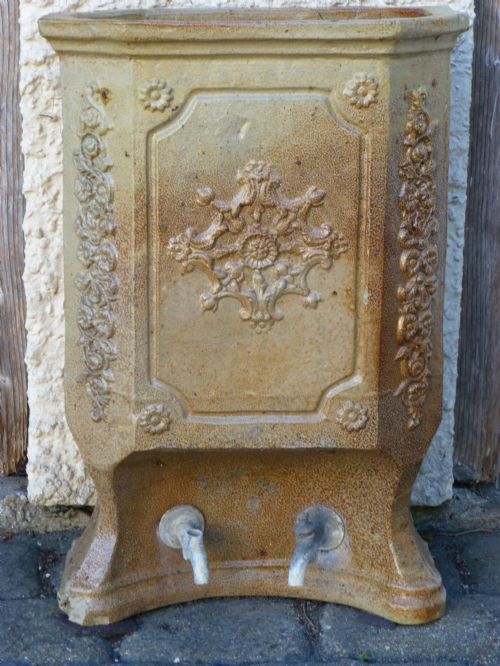
Surfaces received specialised treatments including lead glazes, salt glazing, and iron rust finishes, fired in kilns to produce the characteristic deep amber, chocolate, and chestnut sheens. Applied motifs, incised patterns, and moulded details frequently embellished the exterior forms.
Materials documented in current and archival items include salt glaze, lead glaze, terracotta, pearlware, and applied enamel details.
Assessing the Pieces
Quality rests upon the crispness of moulded or incised details and the uniformity and richness of the glaze application. Pieces retaining sharp relief work and deep, even colouration without pooling or thinning represent the upper tier of production.
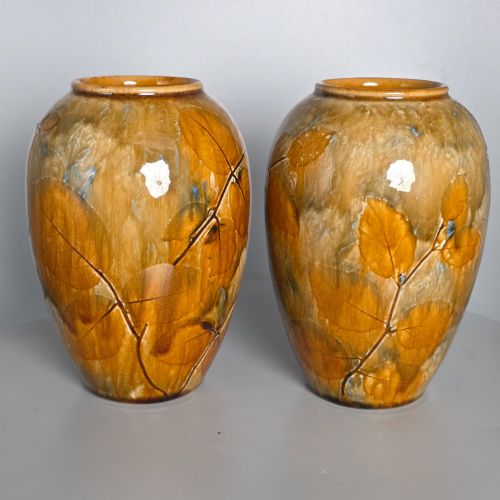
The sophistication of the design, whether geometric art nouveau lines or naturalistic majolica foliage, dictates the distinction between standard utilitarian wares and high-status studio or factory output.
Royal Doulton·Doulton Lambeth·Minton·Wedgwood·Bretby Pottery·Seaton Pottery·George Jones·Boch Freres·Mettlach Pottery·Sherwin And Cotton·Inoue Ryōsai Workshop·Holdcroft·Rockingham Pottery·Ralph Wood
The Brown Glazed Pottery Glossary
- Stoneware
- A dense, impermeable pottery fired at high temperatures until the clay vitrifies. This body resists liquids naturally and supports salt glazing.
- Salt Glaze
- A glossy, textured finish achieved by throwing common salt into the kiln during high-temperature firing. The sodium reacts with the silica in the clay body to form a durable orange-peel texture.
- Slipware
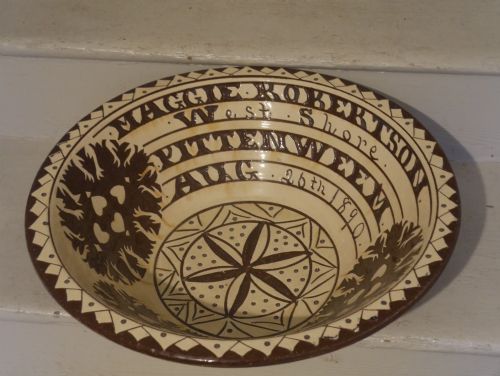
- Pottery decorated with liquid clay applied to a contrasting clay body before firing. Potters use this technique to create trailing, combed, or marbled surface patterns.
- Tyg
- A large drinking vessel featuring three or more handles designed for communal passing around a table. These multi-handled cups date back to the seventeenth century and continued into later regional production.
Brown Glazed Pottery: Frequently Asked Questions
What is brown glazed pottery used for?
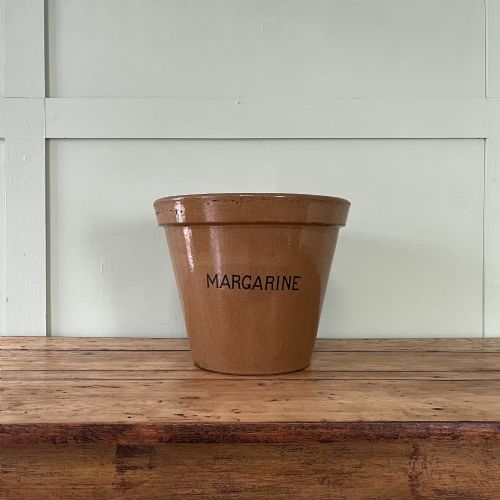
These ceramic pieces served practical domestic functions such as storing liquids, holding dairy products, serving ale, and filtering water. Many items also functioned as decorative planters, mantel vases, and commemorative vessels.
Over time, utility items transitioned into display pieces for collectors who appreciate historic kitchenalia, Victorian majolica, and arts and crafts design.
How do I date a piece?
Dating relies on identifying manufacturing styles, pottery marks, and glaze characteristics recorded across the eighteenth and nineteenth centuries. Stylistic indicators include geometric art nouveau motifs, neoclassical shapes, and Victorian naturalism.
Incised workshop stamps, registry diamond marks, and artist signatures help narrow the production window to specific decades or reigns.
How should I clean my pottery?
Dust surfaces gently with a soft, dry cloth to remove accumulated particles without disturbing delicate glazes or applied decorations. Avoid abrasive scrubbers, harsh chemical cleaners, and prolonged soaking in water.
Earthenware and porous historic bodies require careful handling to protect aged glazes, slip decorations, and historical repairs.
Are these items waterproof?
Stoneware and salt-glazed vessels generally hold water securely due to the vitrified nature of the high-fired clay body. Historic earthenware and slipware items may develop hairline fissures or micro-porosity over centuries.
Displaying delicate historical vessels as dry decorative objects prevents accidental moisture damage to fragile historic clay and glaze layers.