

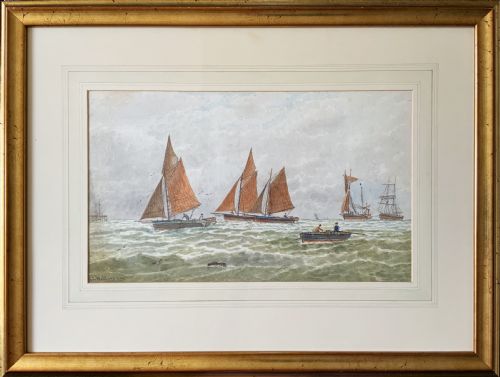


Brown Framed Nautical Pictures
Brown framed nautical pictures capture the historic power of the sea through marine oils, watercolours, gouaches, and photographs framed in wood.
Brown Framed Nautical Pictures
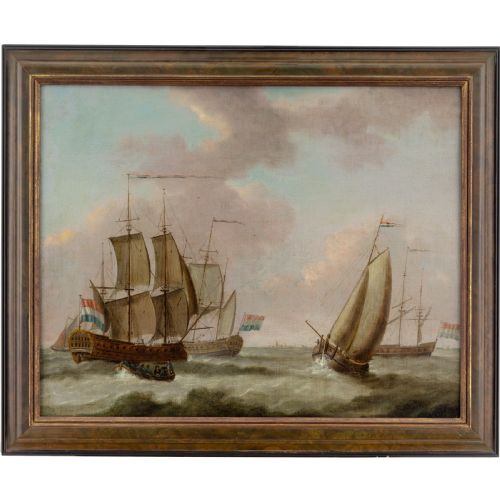
Brown framed nautical pictures encompass maritime scenes rendered in oil, watercolour, gouache, and photographic formats, all housed within wooden frames. These works span the nineteenth and twentieth centuries, recording coastal harbours, naval vessels, and tall ships under sail.
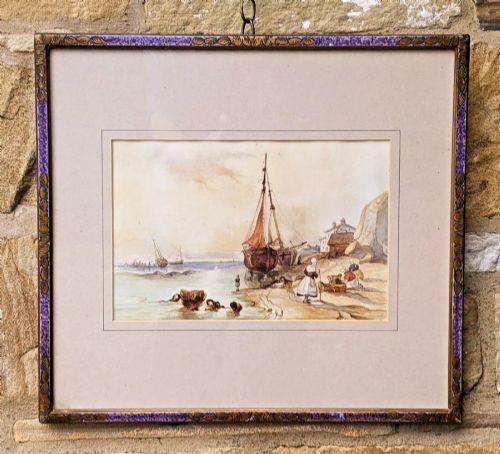
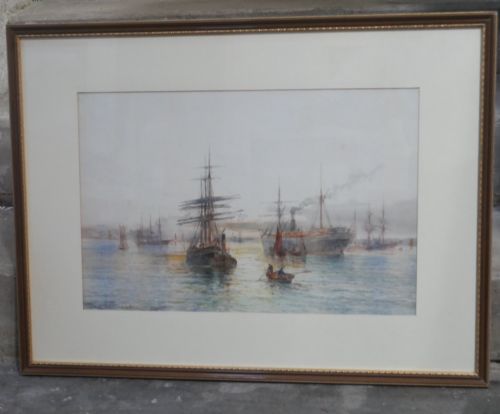
The most frequent examples on this page are nineteenth century watercolours and oils depicting fishing boats, merchant barques, and coastal ports. Artists deploy these mediums to capture the shifting moods of the sea, from calm river passages to stormy coastal waters.
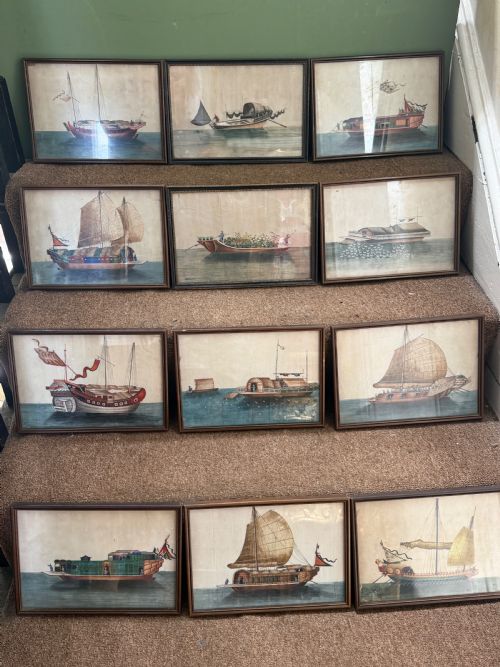
Buyers also encounter Chinese export gouaches of junks alongside French naval tributes and photographic portraits of captains. Each piece preserves a distinct fragment of maritime history within its original or period brown wood frame.
How they were made
Painters apply oil on canvas or board to build luminous coastal scenes with thick pigment, while watercolourists use delicate washes on paper to capture translucent skies and sea spray. Gouache provides an opaque alternative, allowing artists to render sharp details on ship rigging and hulls.
Photographers of the period produce sepia prints and large commissioned photographs mounted under glass, capturing the detailed rigging of vessels and the weathered faces of sailors. These works find their final form enclosed in wooden frames that protect the fragile paper or canvas within.
Listings feature works spanning the nineteenth and twentieth centuries, employing paper, canvas, watercolour pigment, and oil.
What varies in quality
The standard of execution in marine art rests on the artist's command of proportion and atmospheric perspective, distinguishing hasty commercial ship portraits from deeply observed works. Master hands render the complex geometry of standing rigging and the movement of wind-driven water with precise anatomical and nautical accuracy.
Material preservation further divides the selection, separating crisp, unfaded watercolours and stable oil canvases from works compromised by heavy foxing, damp staining, or crude overpainting. The integrity of the wooden frame, whether original to the piece or a later replacement, also shapes the overall character of the object.
George Stanfield Walters·Gustave De Bréanski·Thomas Bush Hardy·Samuel John Milton Brown·Fred Dade
The Brown Framed Nautical Pictures Glossary
- Barque
- A sailing vessel with three or more masts having the fore and mainmasts square-rigged and the mizzenmast fore-and-aft rigged. These ships dominated commercial ocean trade during the nineteenth century.
- Gouache
- An opaque watercolour paint composed of pigment, a binding agent, and additional inert material. It dries to a smooth, matte finish that allows artists to build bright highlights upon darker paper grounds.
- Ironclad
- A steam-propelled warship protected by iron or steel armour plates, developed during the mid-nineteenth century. French and British navies adopted these heavy vessels before the rise of the dreadnought.
- Junk
- A traditional Chinese sailing ship featuring fully battened sails that offer exceptional control in coastal waters. Western artists working in Chinese treaty ports frequently recorded these distinctive vessels.
- Sepia
- A brown pigment derived from the ink sac of the cuttlefish, widely utilised in early photography and wash drawings. Photographic prints toned in sepia acquire a warm, stable monochrome hue.
Brown Framed Nautical Pictures: Frequently Asked Questions
How do I date a nautical watercolour?
Examine the paper quality, the style of the wooden frame, and the rigging details of the depicted vessels for clues to the period. Nineteenth century works often utilise heavy wove paper and hand-carved wood mouldings.
Papers from later decades show different chemical treatments, while ship designs evolved rapidly from wooden barques to ironclad warships between eighteen-seventy and nineteen-ten.
Where should I hang a marine painting?
Select a wall space away from direct sunlight and high humidity to protect fragile paper, watercolours, and canvas from fading or warping. Natural indirect light allows the brushwork in oil paintings to emerge clearly.
Ensure the wooden frame complements surrounding furniture tones while keeping the artwork at standard eye level for optimal viewing.
What is the difference between oil and watercolour?
Oil paintings utilise slow-drying pigment suspended in medium, applied thickly to stretched canvas or wooden board to create rich, textured surfaces. Watercolours employ water-soluble pigments on paper, producing lighter, translucent effects.
Oils tolerate environmental humidity better than watercolours, though both mediums require glass or stable backing to prevent atmospheric degradation over time.
Are these ship paintings historically accurate?
Professional marine artists of the nineteenth century possessed intimate knowledge of naval architecture, accurately recording mast configurations, sail plans, and hull construction. Commissioned works for ship captains demand precise depictions of specific vessels.
Decorative export paintings or romanticized harbour scenes sometimes take minor artistic liberties with background coastlines while maintaining accurate vessel rigging.