



Brown Floral Carver Chair
These brown floral carver chair examples offer sturdy elbow support and botanical upholstery, bringing centuries of craftsmanship directly to your dining table or study.
Brown Floral Carver Chair
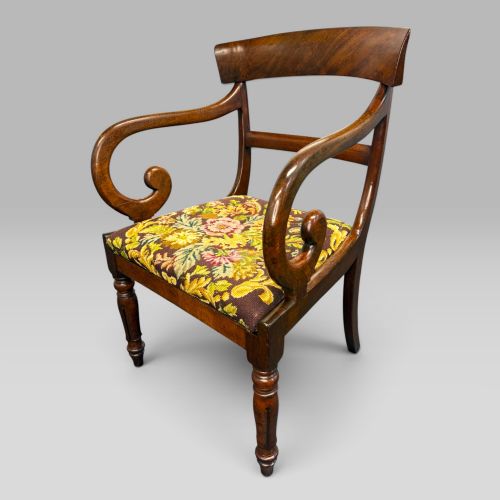
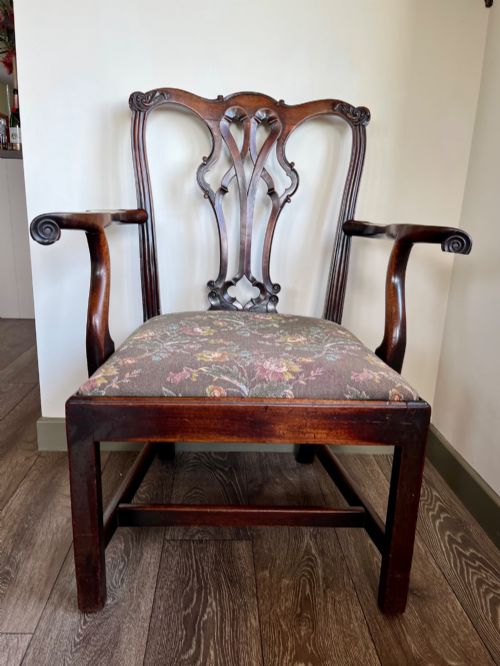
A brown floral carver chair is a substantial seating option featuring integrated arms and textile upholstery decorated with botanical motifs, spanning periods from the seventeenth century through to the Edwardian era. You will most frequently encounter nineteenth century and Victorian mahogany or walnut versions on this page, often built in the Sheraton, Chippendale or Georgian styles.
These armchairs serve practical roles as desk seats, morning room chairs or end seats at a dining table, combining timber frames with patterned fabric. The combination of structural woodwork and floral textiles creates a traditional aesthetic found across English and Dutch workshops.
How they were made
Cabinet makers built the frames predominantly using dense hardwoods such as mahogany, walnut and oak, occasionally incorporating fruitwood inlay and satinwood details. These timbers provided the structural integrity required for armchairs and desk chairs subjected to daily use.
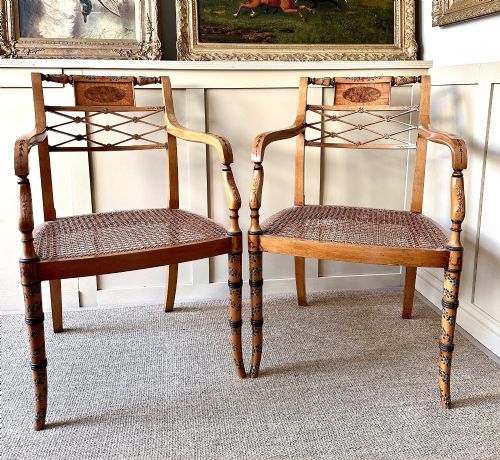
Upholsterers applied textile coverings including tapestry and patterned fabrics over the seats and backs, securing them to the wooden framework. Artisans also utilised hand painted decoration on selected walnut and oak surfaces to add visual depth to the timber.
Brown Floral Carver Chair Retail Price Guide 2026
Typical asking prices for brown floral carver chair among the pieces listed under this phrase on Sellingantiques today, from the lower quarter to the upper quarter. They describe what is for sale here now, not the wider market.
Several chairs arrive with musical and floral painted decoration, ready to bring an unexpected tune to your morning room.
What varies in quality
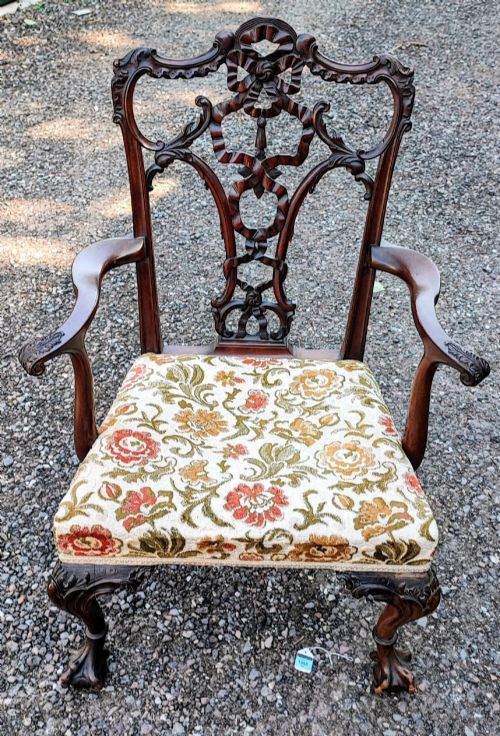
The degree of refinement in the carved mahogany or walnut woodwork sets apart finer examples, particularly where makers invested time in intricate splat backs or detailed marquetry. Simpler turned frames in oak or beech represent more utilitarian domestic production rather than high style cabinet work.
The integrity of the timber joints and the preservation of original or sympathetic floral textile upholstery dictate the standing of an individual piece. Retaining period hand painted decoration or quality inlay work further elevates the character of the seating.
Jas Shoolbred
The Brown Floral Carver Chair Glossary
- Carver chair
- An armchair, typically placed at the head of a dining table or used as a desk seat, featuring sturdy wooden arms built into the frame.
- Elbow chair
- An alternative term for an armchair, referencing the supportive wooden rests designed for the sitter's arms.
- Marquetry
- A technique where thin slices of various woods are fitted together to form decorative patterns on the surface of furniture.
- Splat
- The vertical wooden strip down the centre of a chair back, often shaped or carved in revival styles.
- Sabre leg
- A concave sweeping leg form curving outwards and backwards, commonly seen on Regency furniture.
Brown Floral Carver Chair: Frequently Asked Questions
What is a carver chair?
A carver chair is an armchair traditionally positioned at the head of a dining table to distinguish the host's seat. These chairs feature supportive wooden arms integrated directly into the structural frame.
They share the wood and stylistic details of the surrounding dining chairs while offering greater sitting comfort.
How old are these chairs?
The listings span multiple centuries, ranging from seventeenth century walnut pieces up to early twentieth century revival designs. Victorian and nineteenth century examples appear most frequently across the page.
Craftsmanship details and timber choices typically help indicate the period of origin.
Where should I use an elbow chair?
Elbow chairs suit studies and home offices as desk seats, or living spaces as occasional seating. Their arm supports make them comfortable for longer periods of sitting.
They also function well paired with matching dining sets at the head and foot of a table.
How do I identify different styles?
Styles range from the flowing lines of Art Nouveau to the structured mahogany forms associated with Chippendale and Sheraton designs. Distinctive back splats and leg shapes help differentiate these periods.
Inlay work and painted floral decoration provide further clues to the aesthetic movement of the piece.