


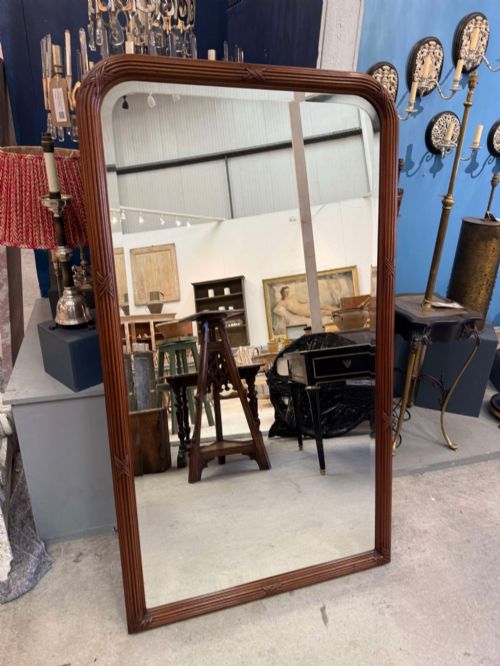
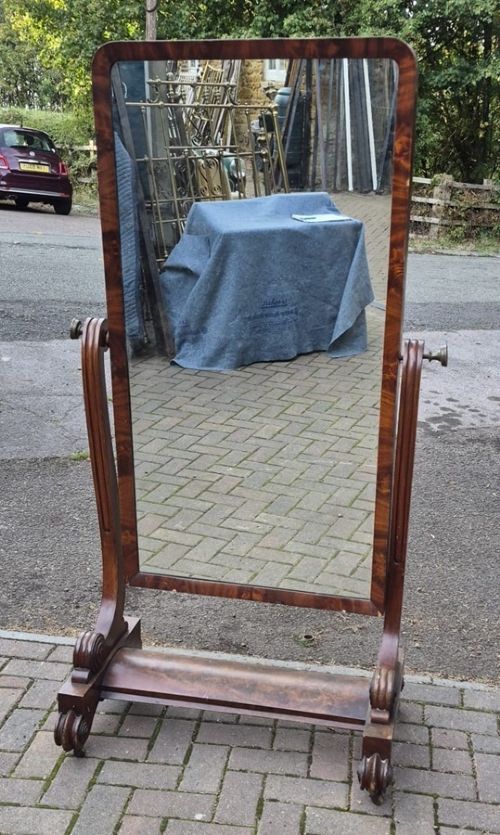
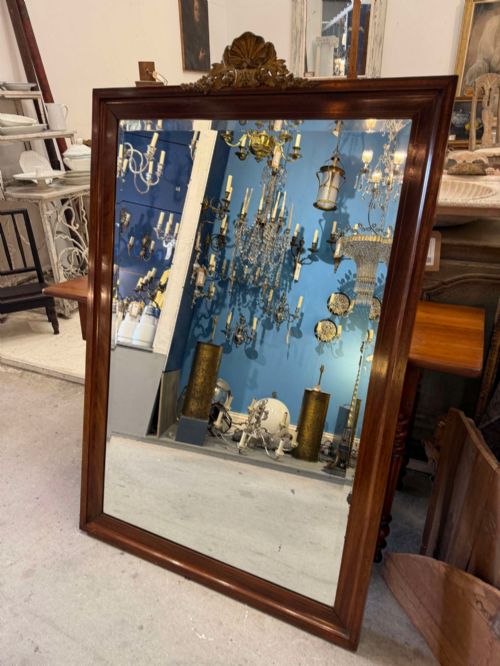
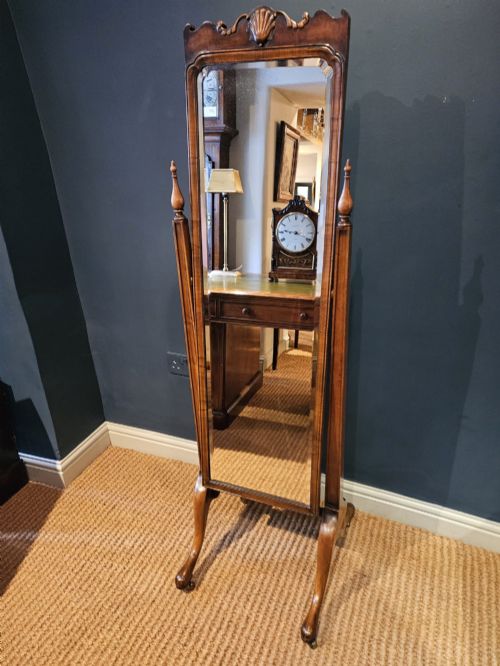
Brown Floor Mirror
A brown floor mirror stands ready to tilt and catch the morning light, bringing grand scale and practical grace to a dressing room.
Brown Floor Mirror
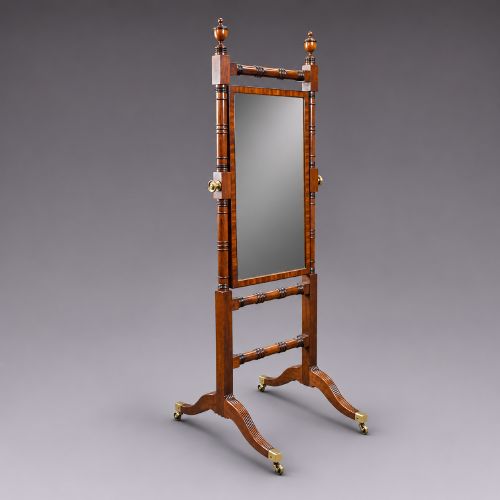
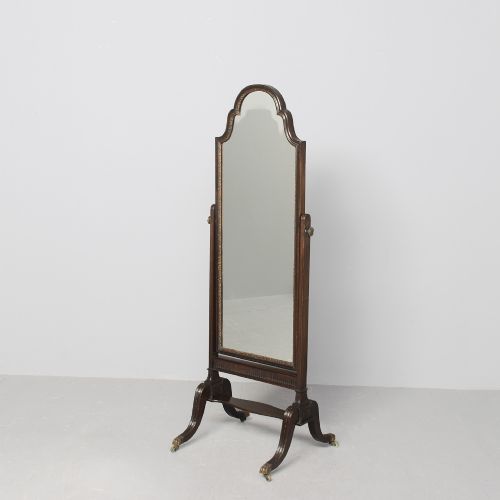
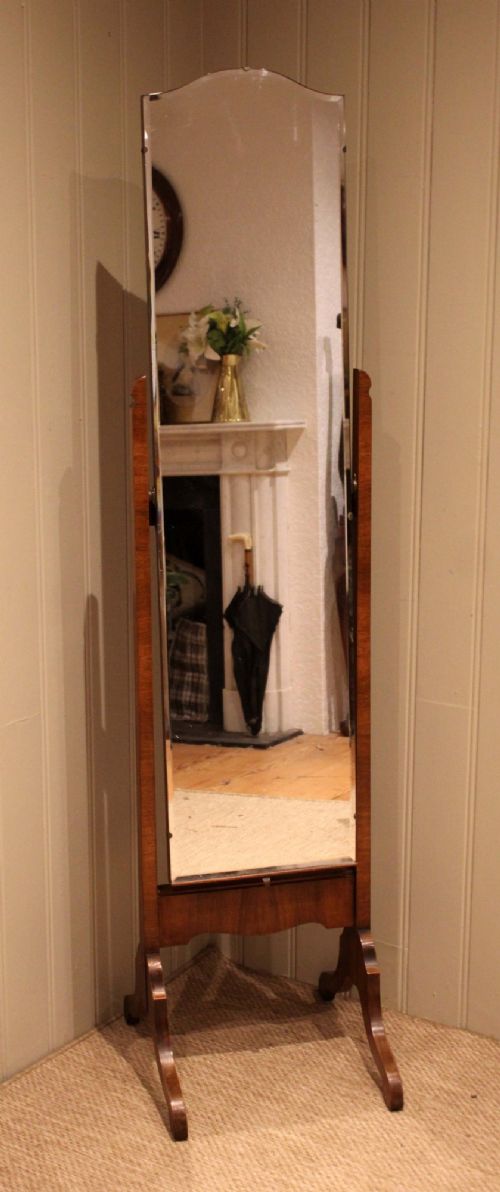
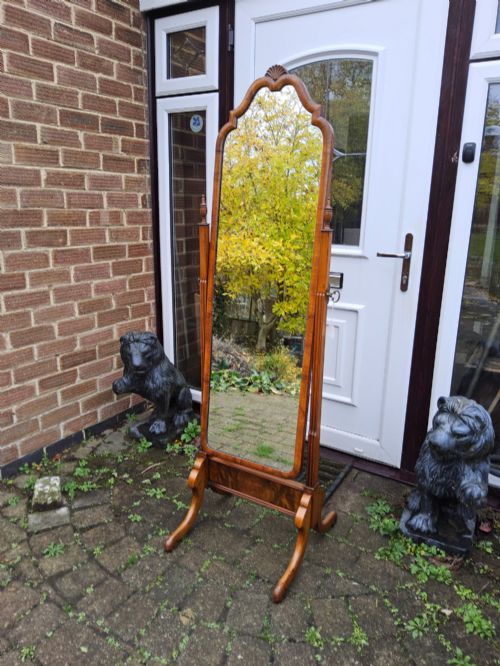
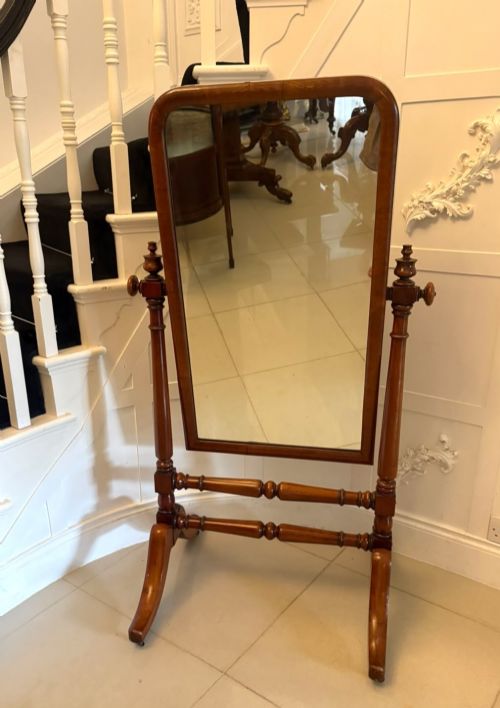
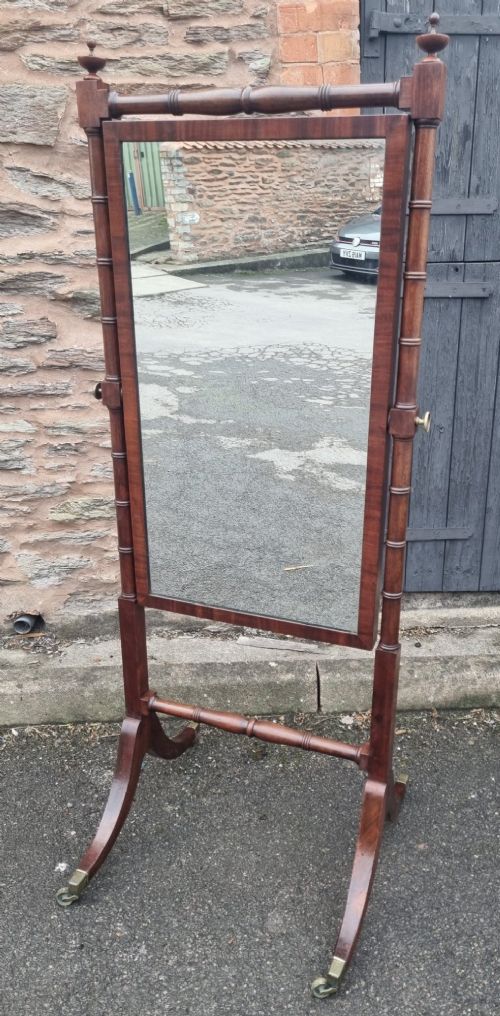
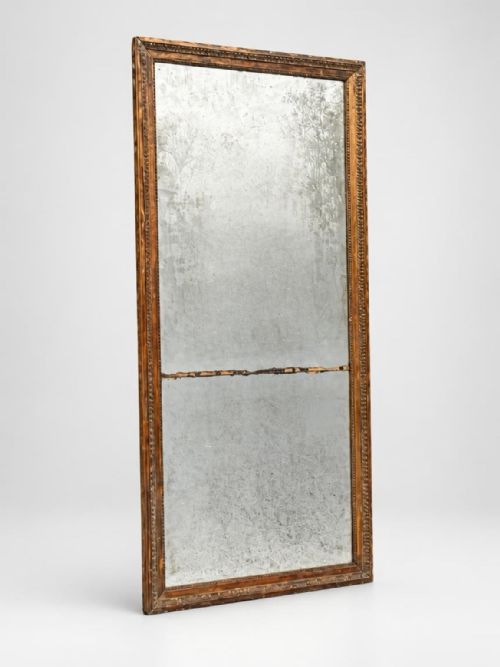
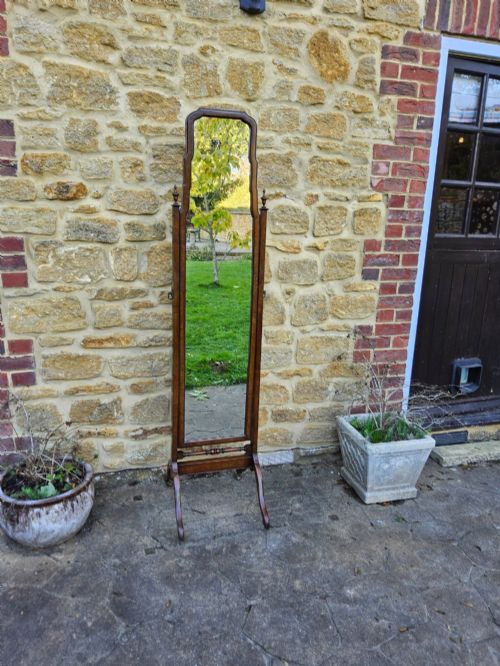
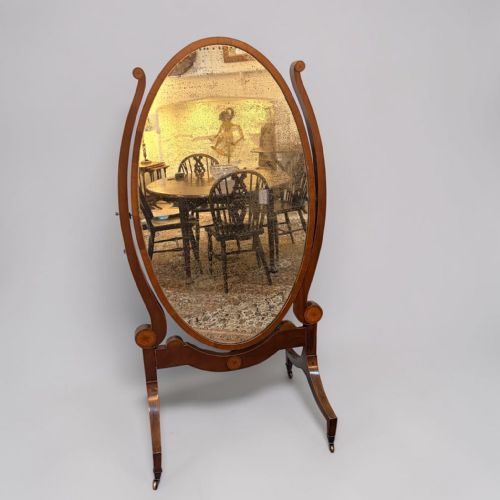
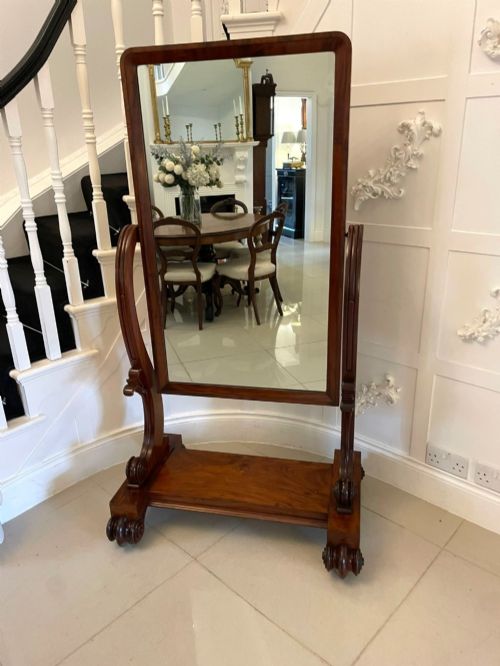
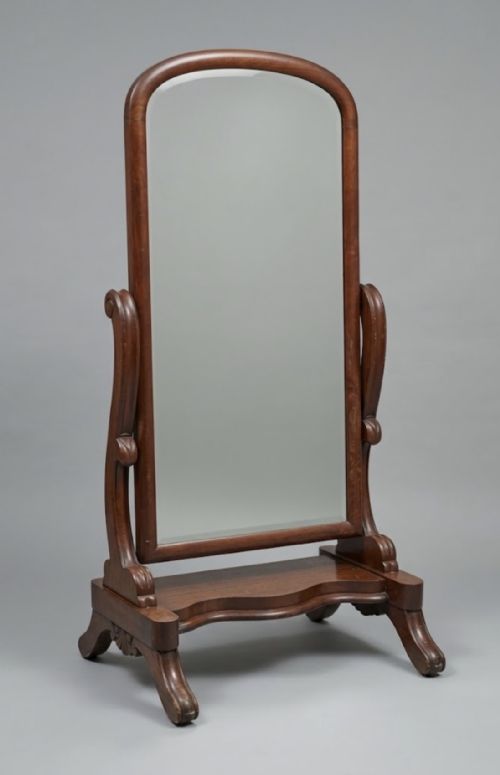
A brown floor mirror typically takes the form of a cheval mirror, a freestanding glass plate suspended within a wooden frame that tilts on central pivots. These pieces are designed to stand independently on the floor, offering a full-length reflection without needing wall fastenings.
The selections span distinct historical eras, ranging from the clean lines of the Regency period through to ornate Victorian examples and later Edwardian interpretations. Mahogany and walnut dominate the offerings, often presenting rich, warm tones that anchor a room's interior scheme.
Most examples function as dressing mirrors, historically utilised in bedrooms and dressing quarters for complete outfits. Certain iterations feature specialised fittings, such as brass candle holders or robust timber bases suited to traditional tailors and outfitters.
Materials and construction
Cabinetmakers constructed the frames primarily from dense hardwoods like mahogany and walnut, frequently applying burr walnut veneer to create striking, figured surfaces. Brass hardware appears regularly, utilised for pivoting screws, decorative sabots, and articulated candle brackets.
Support structures rely on sturdy freestanding legs, including sabre configurations, barley twist columns, and carved floor trestles. Mirror glass is set securely within timber surrounds, balanced to allow smooth tilting without slipping.
Brown Floor Mirror Retail Price Guide 2026
Typical asking prices for brown floor mirror among the pieces listed under this phrase on Sellingantiques today, from the lower quarter to the upper quarter. They describe what is for sale here now, not the wider market.
Certain antique mirrors arrived complete with brass candle holders, ensuring one could check an outfit by flickering candlelight before sunrise.
Evaluating the craftsmanship
Quality reveals itself in the timber selection and the precision of the joinery, particularly where the frame meets the pivoting uprights. Finely figured burr veneers and subtle inlaid details distinguish superior examples from plain utility pieces.
The sophistication of the brass mechanism dictates much of the functional merit, with heavier, well-cast mounts providing smoother movement and greater longevity. Carved wooden ornamentation should show crisp execution rather than soft, mass-produced moulding.
Gillow·Gillows Regency
The Brown Floor Mirror Glossary
- Cheval mirror
- A large freestanding mirror suspended on a frame that allows it to swing or tilt. The term derives from the French word for horse, referencing the four-legged support structure.
- Sabre leg
- A curving, outward-flaring furniture leg that tapers toward the foot, common in Regency design. It provides stability to freestanding frames.
- Burr walnut
- Wood taken from a walnut tree growth or burl, highly prized for its swirling grain patterns. It is typically sliced into thin veneers for cabinet fronts.
- Sabot
- A metal sleeve or cap fitted to the foot of a furniture leg, usually made of brass. It protects the timber from wear on the floor.
Brown Floor Mirror: Frequently Asked Questions
How do I tilt the mirror safely?
Most cheval mirrors utilise brass thumbscrews or pivot pins set into the upright supports. Adjusting these requires holding the glass steady while gently loosening or tightening the side fixings.
Over-tightening can crack the wood or stress the glass, so set the tension just firm enough to hold the glass at your chosen angle without slipping.
Where should I place a floor mirror?
These tall freestanding pieces need adequate floor space to stand securely away from heavy traffic areas. Placing them opposite a window maximises reflected daylight and brightens darker corners.
Ensure the floor beneath is reasonably level to prevent undue strain on the upright frame and pivoting joints.
How do I identify a Regency mirror?
Regency pieces often display classical restraint, featuring rich mahogany timbers, clean architectural lines, and delicate brass mounts. Sabre legs and reeded columns are characteristic hallmarks of this era.
Proportions tend to be elegant and balanced, prioritizing fine grain and subtle brass details over heavy carved ornamentation.
What is a dressing mirror used for?
Historically, these tall mirrors served in bedrooms and dressing rooms to check full-length attire before stepping out. Their tilting mechanism allowed users of varying heights to adjust the reflection angle easily.
Some period examples also incorporated small candle arms to provide illumination during early morning or evening dressing routines.