
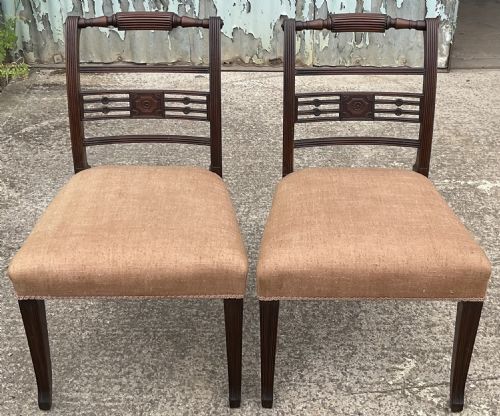
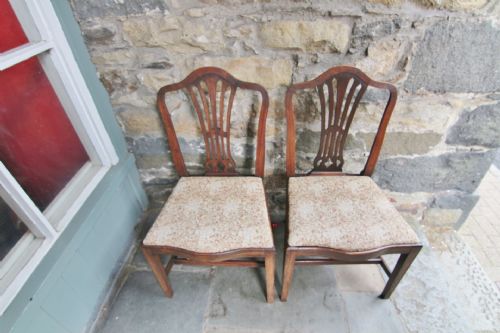


Brown Fabric Dining Chairs
Brown fabric dining chairs combine traditional wooden frames with comfortable textile upholstery, offering practical seating for family meals and formal dinners alike.
Brown Fabric Dining Chairs
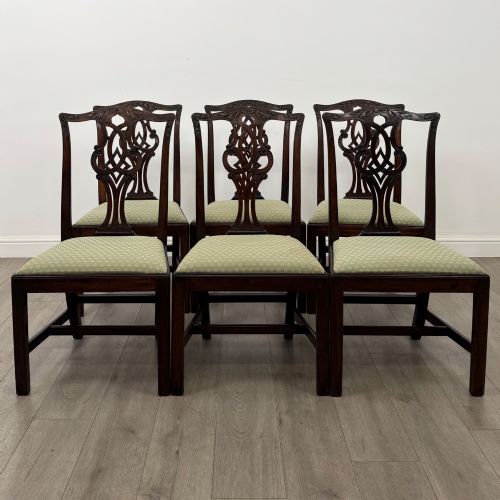
Brown fabric dining chairs encompass antique wooden seating upholstered in textiles, ranging from single side chairs to extensive matching sets. When searching for brown fabric dining chairs, buyers encounter pieces spanning multiple centuries, from Georgian mahogany originals to later revival styles.
The selection here includes dining chairs, armchairs, and desk chairs formed from timbers like mahogany, walnut, oak, and ash. Sets appear in various sizes, including pairs, sets of four, six, eight, and ten, reflecting the dining customs of different eras.
Originating across the nineteenth and twentieth centuries, these seats showcase regional cabinet-making traditions alongside distinct stylistic revivals. The combination of exposed wooden frames and fabric upholstery creates functional seating suited to period and modern interiors alike.
How they were made
Cabinet makers utilised durable hardwoods such as mahogany, walnut, oak, elm, and rosewood to construct the structural frames of these dining chairs. Timber selection depended on availability and regional preference, with dense hardwoods allowing for slender yet robust chair legs and backs.
Upholstery fabrics and textiles were applied over supportive padding to provide comfort during extended seating. Joinery techniques varied from traditional mortise and tenon joints to turnery, such as barley twist legs, ensuring structural integrity over generations of daily use.
Decorative details included hand-carved motifs, inlaid wood marquetry, and brass accents, which complemented the visible grain of the wooden frames. Upholstery was secured using traditional tacking methods, anchoring the fabric firmly to the wooden base.
What varies in quality
The quality of these dining chairs depends heavily on the grade of timber selected by the maker and the precision of the joinery. Denser woods with well-figured grain and tightly fitted joints indicate superior craftsmanship and greater longevity.
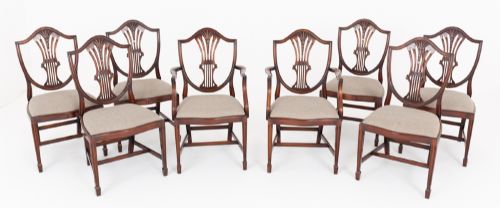
The sophistication of the carving and stylistic details separates standard production pieces from finer examples. Refined execution in shield backs, ribbon backs, and carved walnut framing demonstrates the skill of the original workshop.
The standard of upholstery and the retention of original structural elements influence the overall integrity of each piece. Chairs that maintain their original wooden frames without excessive timber replacement retain higher authenticity.
The Brown Fabric Dining Chairs Glossary
- Balloon back
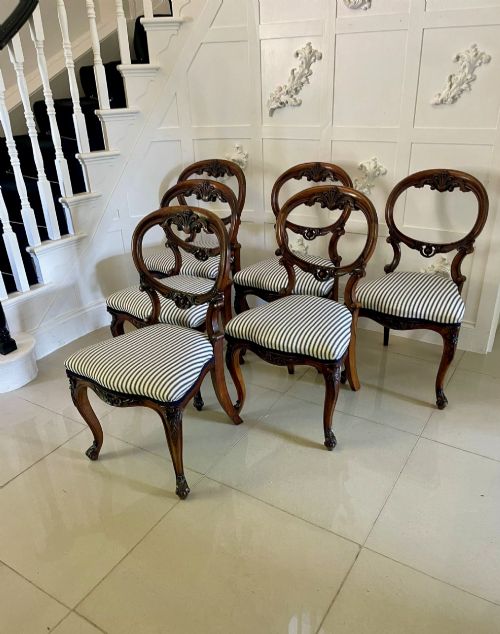
- An oval-shaped chair back resembling a rounded balloon, characteristic of Victorian seating. This style provides comfortable lumbar support through its curved wooden frame.
- Ribbon back
- A chair splat carved to resemble intertwined ribbons or bows, seen in fine Georgian seating. This intricate carving technique requires exceptional skill from the woodcarver.
- Barley twist
- A form of woodturning resembling a twisted rope, common on seventeenth and nineteenth-century furniture legs and stretchers. This decorative detail adds texture and visual movement to the frame.
- Side chair
- A small chair without arms designed primarily for dining tables. These chairs are proportioned to fit neatly around a dining table without obstructing movement.
Brown Fabric Dining Chairs: Frequently Asked Questions
Were these sold as sets originally?
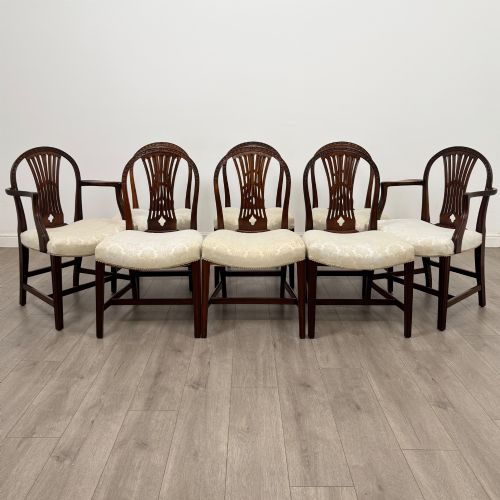
Many dining chairs were commissioned as matched sets to accommodate specific dining table lengths and household sizes. Larger sets often combined carvers with a greater number of side chairs.
Over time, sets can become separated or augmented with complementary pieces, making it useful to examine individual chairs for minor variations in timber grain and construction.
How do I care for the wood?
Maintaining the timber frames involves regular dusting with a soft, dry cloth and avoiding placement near direct heat sources or strong sunlight. Proper humidity control prevents the wood from drying out and cracking.
Application of appropriate wax polish helps nourish the grain and protects the surface finish from minor scuffs without building up heavy residue over time.
Can these chairs be used daily?
Solid hardwood construction ensures these chairs remain robust enough for regular dining use when the joints are stable and secure. Periodic inspection of the frame helps catch any loosening before heavy use causes damage.
Upholstered sections can be maintained or reupholstered using traditional or contemporary materials to suit ongoing practical requirements in a modern household.