
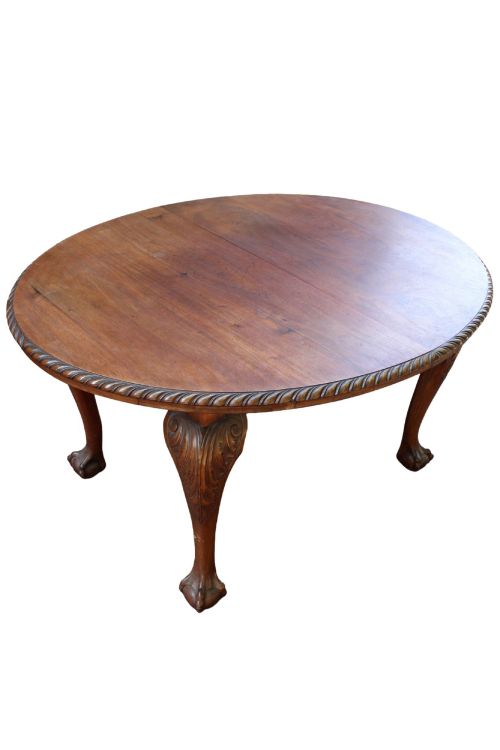
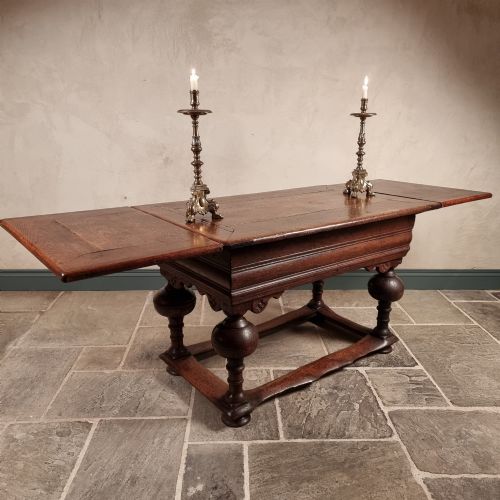
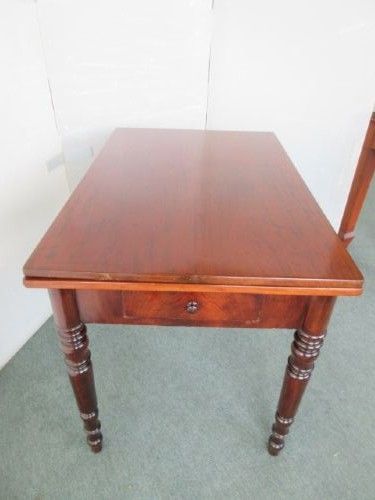
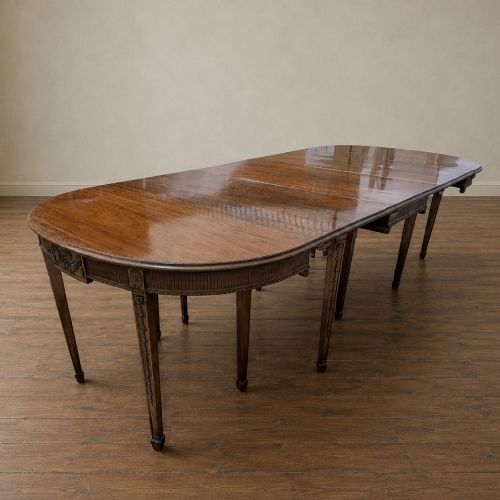
Brown Extendable Dining Table
A brown extendable dining table offers practical adaptability for hosting while anchoring a room with traditional timber character.
Brown Extendable Dining Table
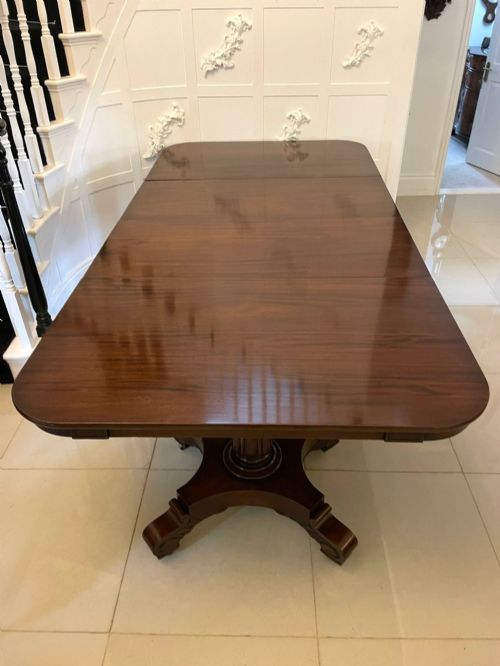
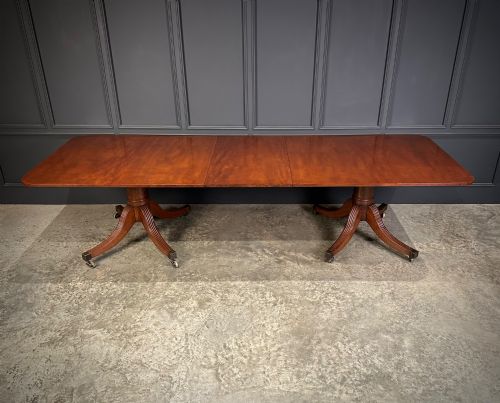
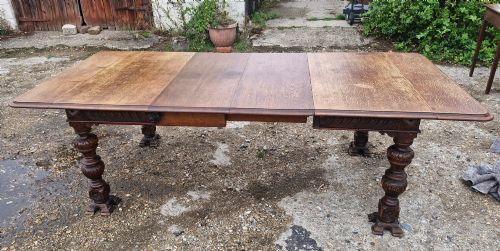
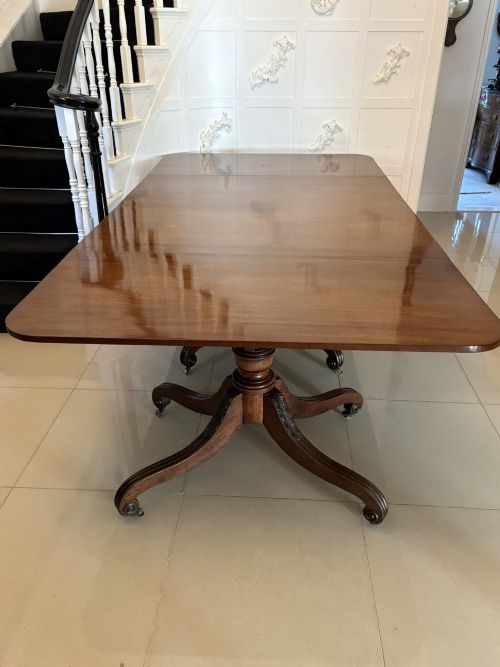
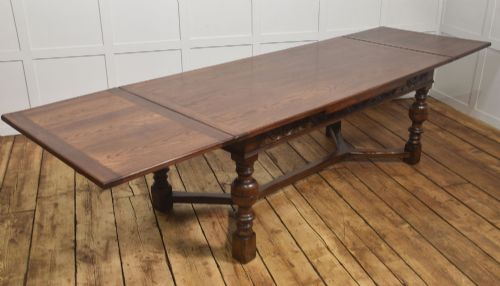
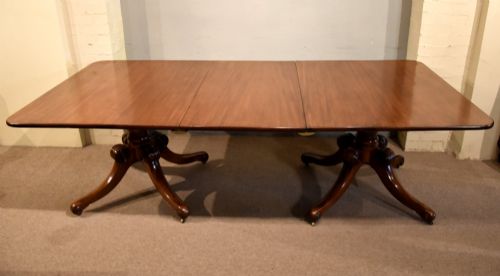
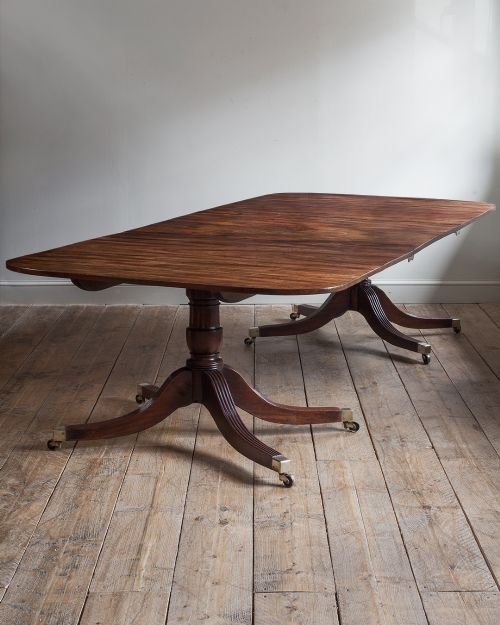
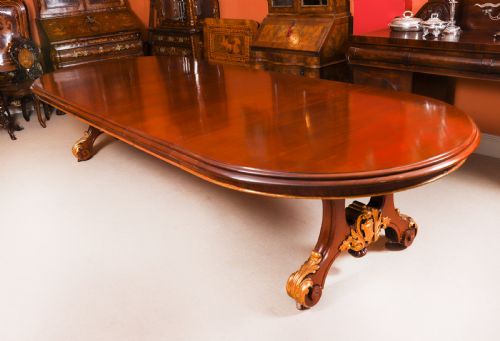
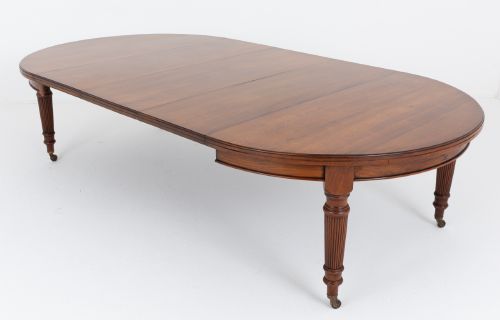
A brown extendable dining table is a functional dining piece designed to expand using leaves, pedestals, or draw mechanisms to accommodate varying numbers of guests. When searching for a brown extendable dining table, you will encounter diverse forms including twin or triple pillar tables, wind-out designs, and draw-leaf refectory styles.
The pieces available span multiple historical periods from the Georgian and Regency eras through the Victorian, Edwardian, and early twentieth century. Mahogany remains the dominant timber, accompanied by oak, walnut, burr walnut, and cherry.
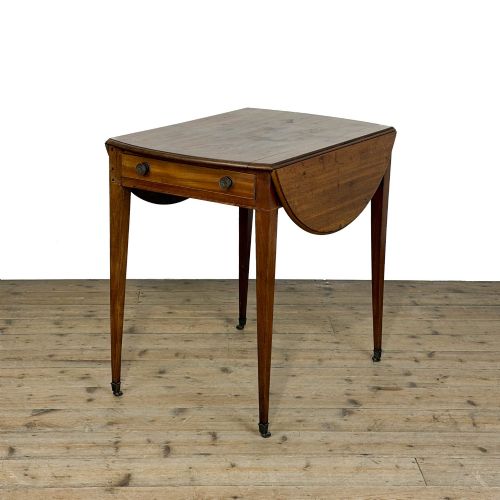
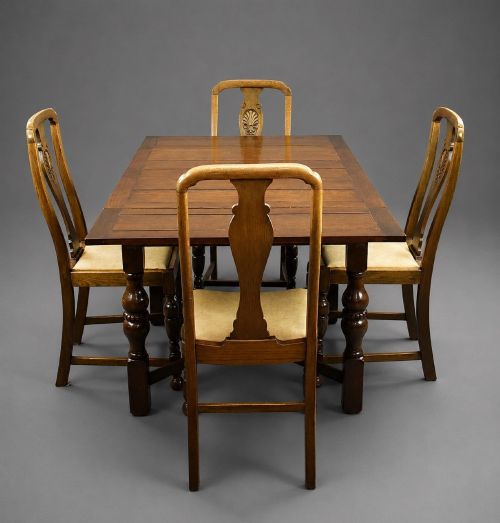
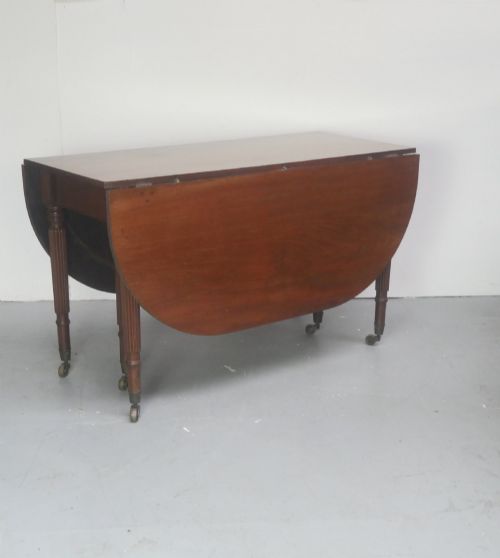
Object variations include dedicated dining tables, dining sets, drop-leaf tables, and Pembroke tables. These tables serve daily family meals as well as large gatherings through the addition of removable leaves.
Materials and construction
Cabinet makers utilised dense hardwoods, predominantly figured mahogany, oak, and walnut, chosen for structural stability and rich natural grain patterns. Timber surfaces frequently received French polish to deepen the colour and protect the wood.
Extending mechanisms relied on sturdy internal runners, brass winding systems, or draw-leaf frames that allowed heavy timber tops to glide smoothly apart. Pedestal bases often featured carved legs terminating in brass castors for mobility.
Some nineteenth-century tables expand to swallow over twenty diners, proving ancestors took festive overeating very seriously indeed.
Quality factors in construction
The distinction between ordinary and superior tables rests on timber selection and mechanical precision. Higher quality examples utilise finely figured mahogany or burr walnut veneers paired with robust, well-engineered internal runners that support multiple leaves without sagging.
Carved details, solid brass hardware, and the seamless alignment of table leaves when fully extended indicate superior craftsmanship. Lesser pieces may display simpler secondary woods and less sophisticated extension systems.
Wylie & Lochead·Maple & Co·Whytock & Reid·F & J Smith
The Brown Extendable Dining Table Glossary
- Wind-out table
- A dining table that expands via a mechanical screw mechanism operated by a detachable handle, separating the top to insert additional leaves.
- Pedestal table
- A table supported by one or more central pillars, typically resting on splayed legs rather than four corner posts.
- Draw-leaf table
- A table with pull-out leaves stored beneath the main top that slide out to extend the surface area.
- Pembroke table
- A small table with hinged drop leaves on two opposing sides, often supported by folding brackets.
- Flame mahogany
- Mahogany timber exhibiting a distinct, flamelike grain pattern created by cutting through the fork of the tree branch.
Brown Extendable Dining Table: Frequently Asked Questions
How do wind-out tables work?
Wind-out tables operate using an internal metal screw mechanism activated by a crank handle inserted into the side apron. Turning the handle drives the table halves apart to create a gap for insertion leaves.
Once the leaves are placed in position, the handle is turned in reverse to pull the table tightly shut, securing the leaves between the main sections.
What is a pedestal dining table?
A pedestal dining table rests upon one, two, or three central wooden columns rather than conventional corner legs. These pillars usually branch out into splayed feet, often fitted with brass castors.
This design provides greater legroom around the perimeter of the table, avoiding obstruction from traditional legs during seating.
How are extra leaves stored?
Extra leaves for draw-leaf tables slide directly underneath the main table surface on internal runners, remaining hidden when not in use. Leaves for pedestal and pillar tables are detached entirely and require separate storage.
Detachable leaves should be stored flat in a stable environment to prevent warping and to maintain a consistent finish with the main table top.
How do I care for a mahogany finish?
Maintain a polished mahogany surface by dusting regularly with a soft, dry cloth and avoiding placement near direct heat sources or strong sunlight. Excessive warmth can dry out the timber and cause the polish to craze.
Apply high quality beeswax periodically to nourish the wood and protect the traditional French polished finish from moisture and daily wear.