

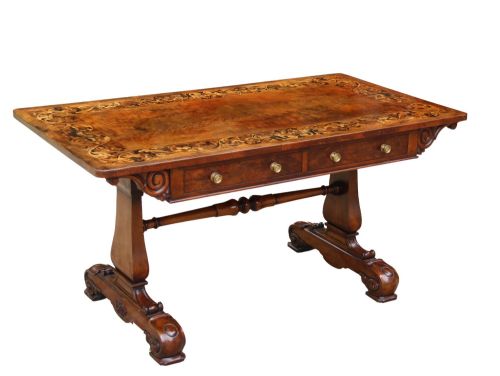
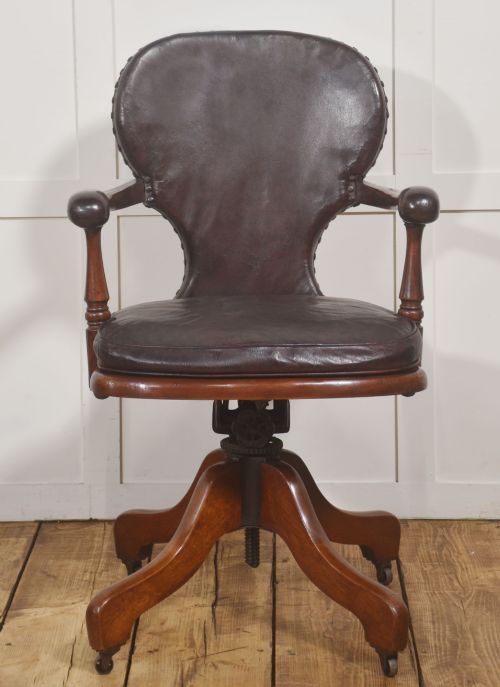
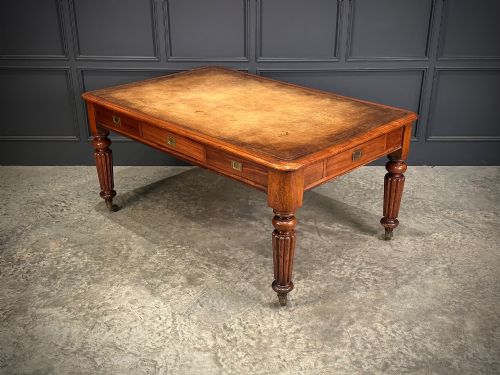
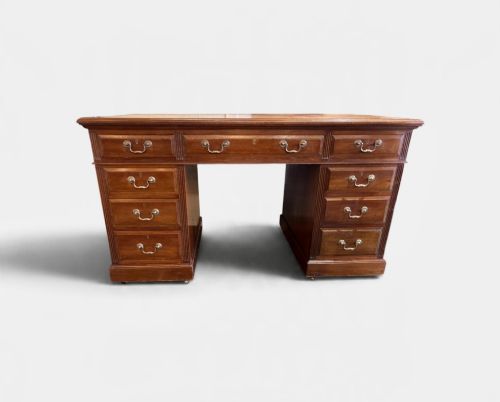
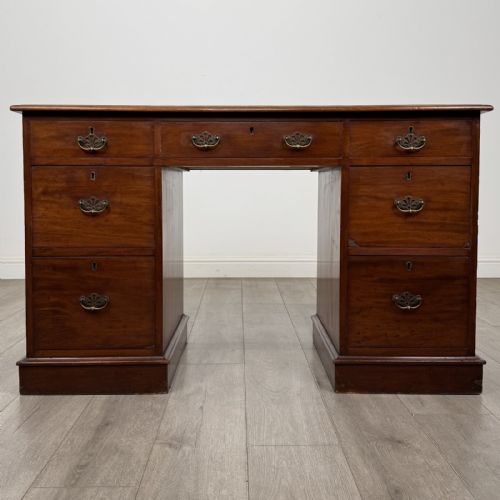
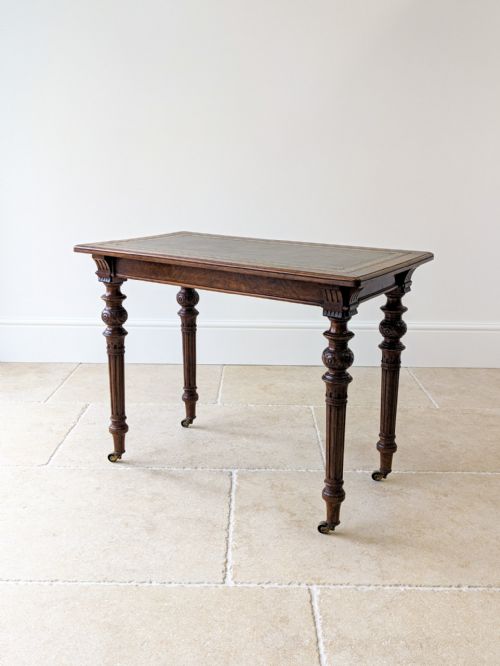
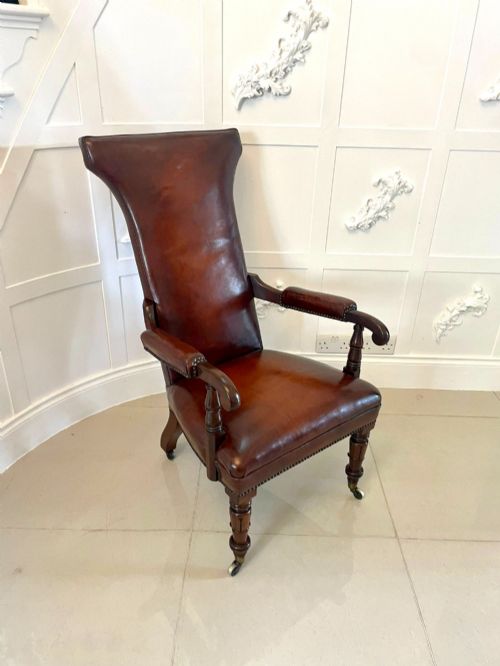
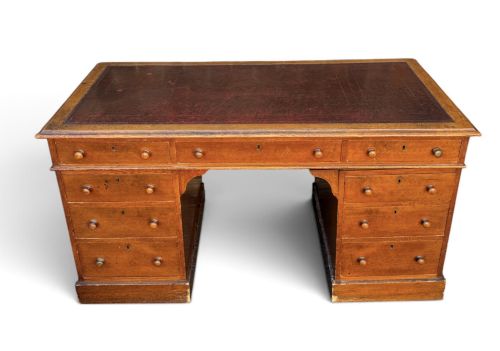
Brown Executive Desk
A brown executive desk provides a commanding presence in a study, offering substantial workspace combined with traditional craftsmanship.
Brown Executive Desk
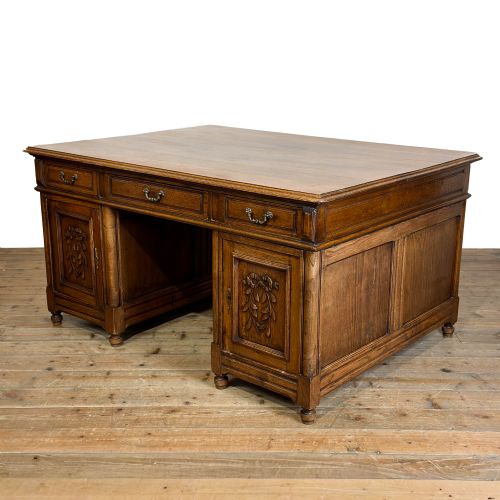
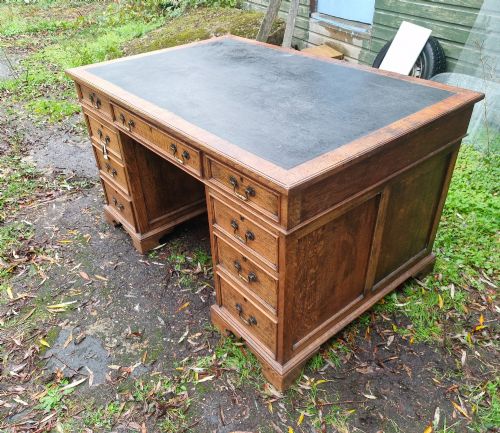
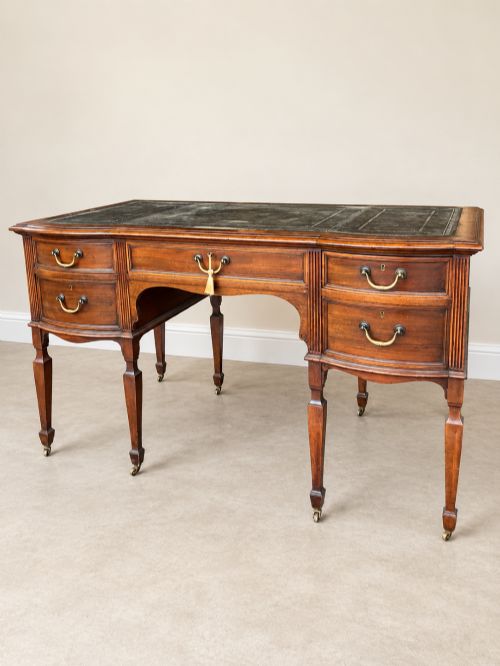
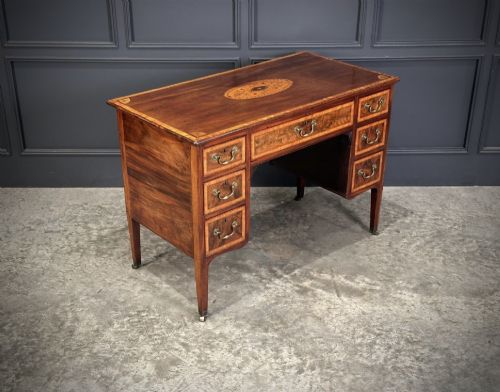
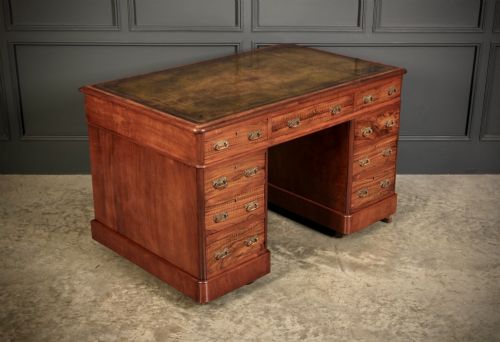
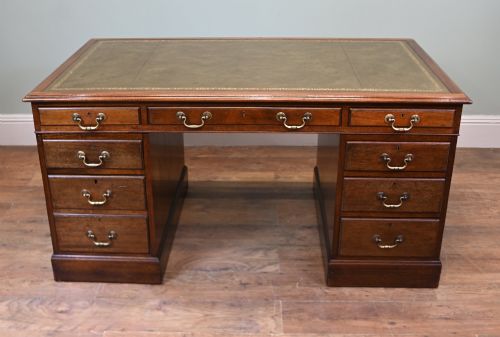
A brown executive desk encompasses substantial workspace pieces designed for professional rooms, frequently taking the form of pedestal desks, kneehole desks, and partners desks. Buyers seeking a brown executive desk find substantial timber constructions spanning the eighteenth century through the twentieth century, with Victorian and Edwardian examples appearing frequently.
The dominant timbers include mahogany, walnut, oak, and burr walnut, often paired with inset writing surfaces made of leather. These pieces range from large breakfront and partners models to smaller nine-drawer pedestal formats and French bureau plat designs.
Materials and Construction
Cabinet makers utilised dense hardwoods such as mahogany, walnut, and oak to build the structural carcase and drawers of these large desks. Timber selection often involved figured veneers like burr walnut or exotic woods like kingwood, enhanced by marquetry or parquetry inlay.
Writing surfaces were typically lined with tooled leather, while decorative embellishments incorporated brass hardware, ormolu mounts, and hand-carved pillars or claw and ball feet.
Brown Executive Desk Retail Price Guide 2026
Typical asking prices for brown executive desk among the pieces listed under this phrase on Sellingantiques today, from the lower quarter to the upper quarter. They describe what is for sale here now, not the wider market.
Several desks come equipped with secret drawers designed specifically for hiding private correspondence from inquisitive staff members.
Assessing Quality and Execution
Quality in these desks rests upon the selection of timber veneers and the precision of the cabinet work, particularly in drawer construction and jointing. Superior examples display thoughtful grain matching across large surfaces and refined secondary details like finely tooled leather writing inserts.
The distinction between standard utility pieces and finer workshop output lies in the crispness of carved elements, the integration of free-standing finished backs, and the overall structural proportion.
Howard and Sons·Trollope and sons
The Brown Executive Desk Glossary
- Pedestal desk
- A large freestanding desk comprising two supporting banks of drawers beneath the main writing top. This form offers generous storage space on both sides.
- Partners desk
- A double-sided pedestal desk designed for two people to work opposite one another. These large tables often feature cupboards and drawers on both faces.
- Kneehole desk
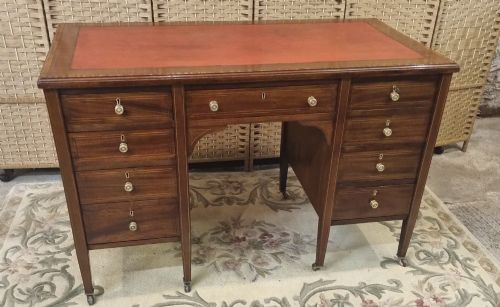
- A compact desk featuring a central recess for the user's legs, flanked by single or double banks of drawers. They are generally smaller than partners desks.
- Bureau plat
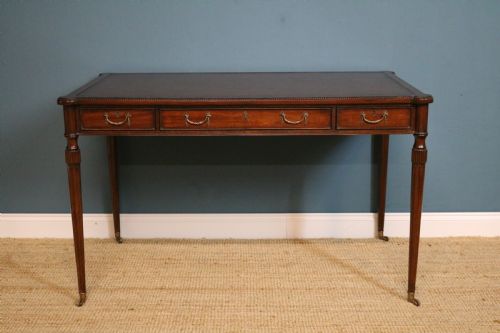
- A French freestanding writing table fitted with one or more drawers in the frieze. These tables often feature elaborate ormolu mounts and parquetry surfaces.
- Ormolu
- Gilded bronze ornamentation applied to furniture. This decorative technique is commonly found on nineteenth-century French pieces.
Brown Executive Desk: Frequently Asked Questions
What is a partners desk?
A partners desk is a large pedestal desk built with drawer and cupboard storage on both opposing sides. This design allowed two individuals to sit face to face and work simultaneously.
Such desks were historically utilised in libraries, banks, and large administrative offices where shared workspace was essential.
How do I identify a Victorian pedestal desk?
Victorian pedestal desks are typically constructed from solid mahogany or walnut with heavy timber carcases. They often feature tooled leather writing surfaces and multiple graduated drawers.
Examining the drawer linings and timber shrinkage helps confirm the nineteenth-century origin of the piece.
Are these desks finished on the back?
Many executive and partners desks are finished on all four sides so they can stand away from a wall in the centre of a room. Free-standing models feature panelled or polished rear surfaces matching the front.
Standard pedestal desks were historically placed against walls, meaning their rear sides were often left unfinished or plain.
What woods are common in these desks?
Mahogany and walnut form the majority of traditional executive desks, supplemented by oak, burr walnut, and kingwood. These dense timbers provided durability for heavy daily use.
Inlays of lighter woods and brass details were frequently added to enhance the visual appearance of the timber.