


Brown End Table
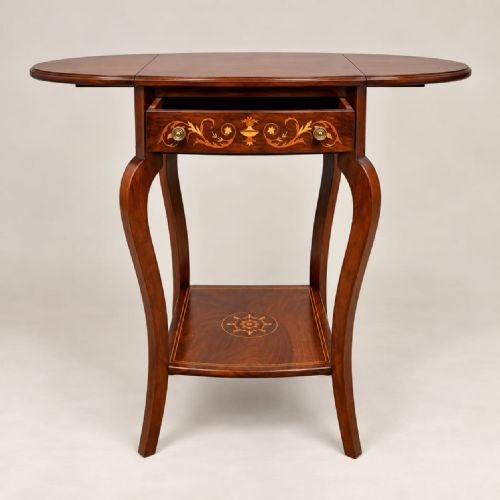
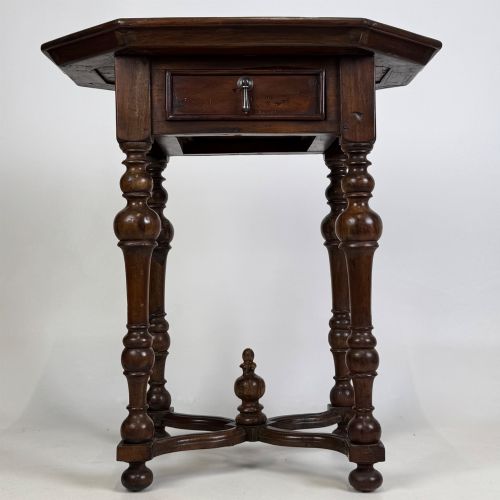
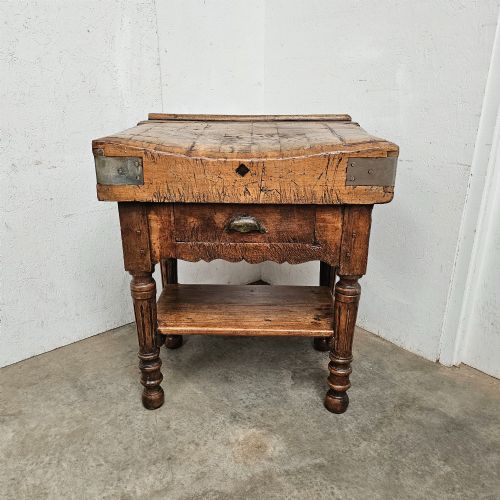
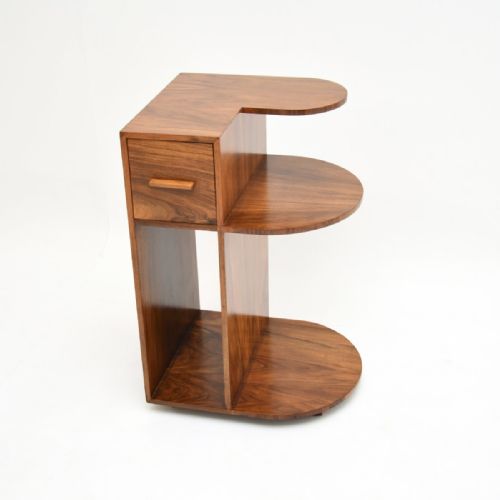
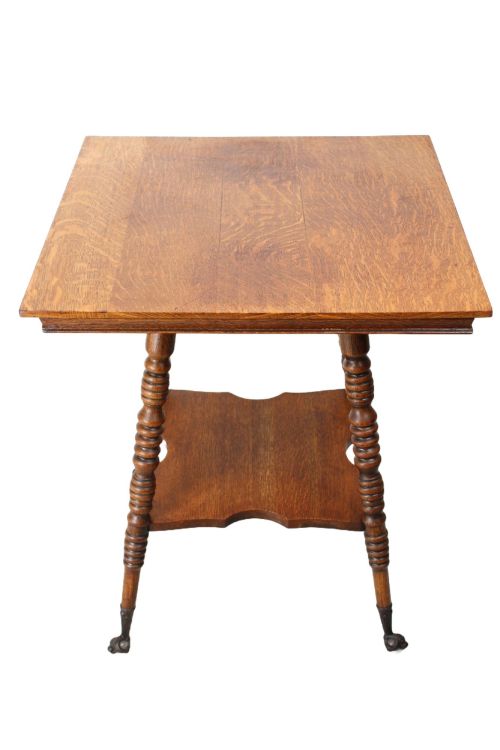
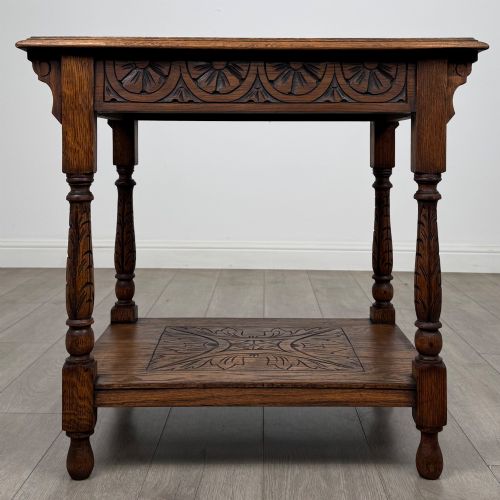
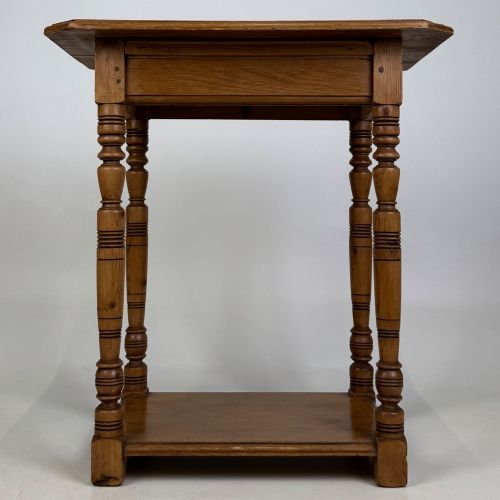
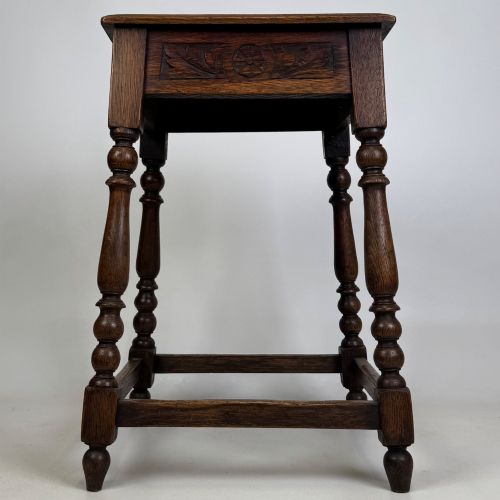
A brown end table sits quietly beside a chair, holding a lamp or a book while bringing warmth to a room through timber and polish.
Brown End Table
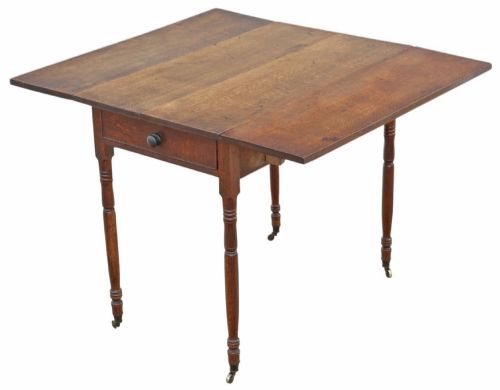
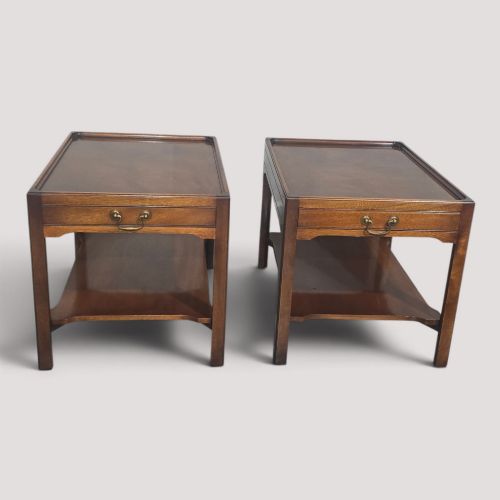
A brown end table encompasses functional occasional surfaces, side tables, and lamp tables designed for daily convenience. The selection spans periods from the 18th century through the Victorian, Edwardian, and Art Deco eras, reflecting centuries of domestic utility.
Makers and workshops constructed these tables in diverse regional styles, including Georgian, Jacobean Revival, and Arts & Crafts. Buyers find both simple utilitarian forms and decorative pieces with inlaid details or carved accents.
How they were made
Carpenters and cabinetmakers utilised traditional hardwoods such as mahogany, oak, walnut, and satinwood to build enduring frames. Many pieces incorporate figured veneers or intricate inlay work to enhance the visual depth of the timber.
Structural stability relied on joinery techniques paired with secondary elements like brass fittings, bamboo, and occasional marble tops. Finishers applied polishes that highlighted the natural grain and warm brown tones inherent in each species of wood.
Listings feature woods including mahogany, oak, walnut, satinwood, and hardwood across Victorian, Edwardian, and Art Deco periods.
What varies in quality
The standard of a brown end table depends on the selection of timber, such as figured mahogany or burr oak, and the precision of the underlying joinery. Superior examples display careful attention to structural proportion and balanced grain patterns across the top.
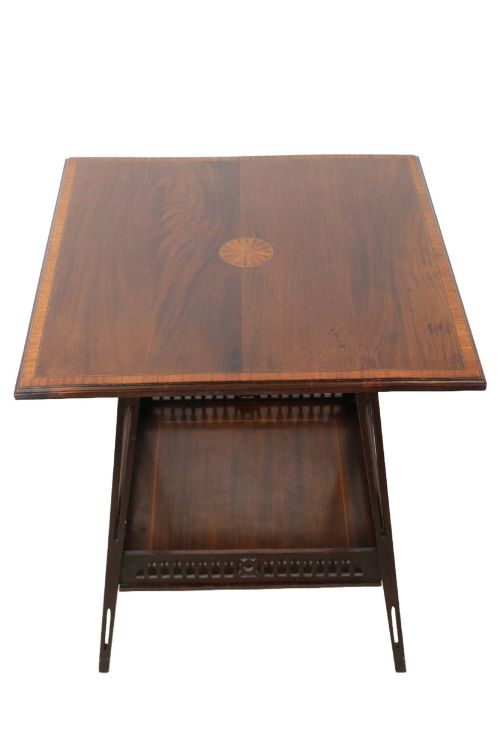
Refinement in decorative details, from subtle chequered inlay to carved borders and high-grade brass hardware, separates standard domestic furniture from finer workshop pieces. The integrity of the polish and the preservation of the original timber surface dictate the overall presence of the table.
Trevor Page & Co·Liberty & Co·William Birch
The Brown End Table Glossary
- Pembroke table
- A drop-leaf table featuring hinged flaps on either side supported by folding brackets. This form offers adaptable surface space for smaller rooms.
- Sutherland table
- A narrow drop-leaf table with exceptionally small flaps and legs that swing out to support them when raised. It folds flat for easy storage against a wall.
- Occasional table
- A light, movable small table designed for use as needed rather than for a permanent position. These pieces serve multiple domestic purposes.
- Nest of tables
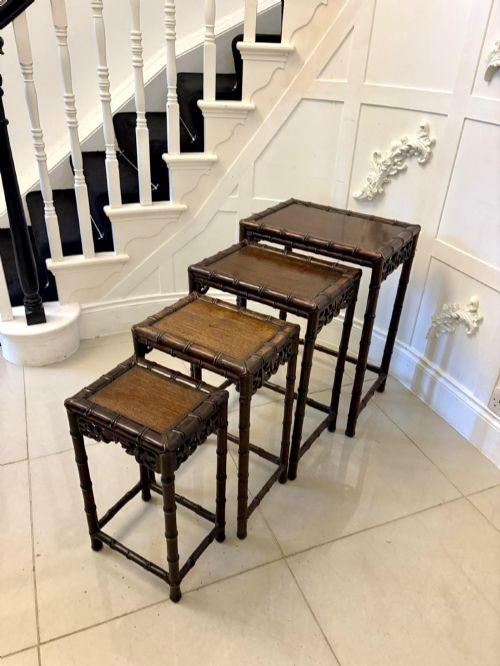
- A set of graduated tables designed to fit neatly one beneath another. They provide multiple surfaces while occupying the floor space of a single table.
- Inlay
- A technique of inserting pieces of contrasting timber or materials into depressions within a solid wood base to form decorative patterns. This method adds geometric or floral detail to the surface.
Brown End Table: Frequently Asked Questions
What is a brown end table used for?
These tables provide a convenient surface beside a sofa or armchair for holding lamps, books, and small decorative objects.
Their compact footprints allow them to fit into tight spaces while adding functional utility to living areas.
How do I identify an Edwardian side table?
Edwardian pieces often feature lighter mahogany timbers, delicate satinwood inlay, and tapered legs influenced by earlier 18th-century designs.
Makers during this period also produced practical nests of tables and tray-top designs suited to formal sitting rooms.
Are Art Deco tables made of walnut?
Art Deco examples frequently utilise figured walnut and limed oak to achieve smooth, geometric surfaces with striking grain patterns.
These 20th-century tables often emphasise clean horizontal lines and streamlined silhouettes rather than ornate carving.
What is a nest of tables?
A nest consists of a set of four or five graduating tables that slide neatly underneath the largest main table.
This clever design maximises floor space by storing auxiliary surfaces out of the way until guests arrive.