
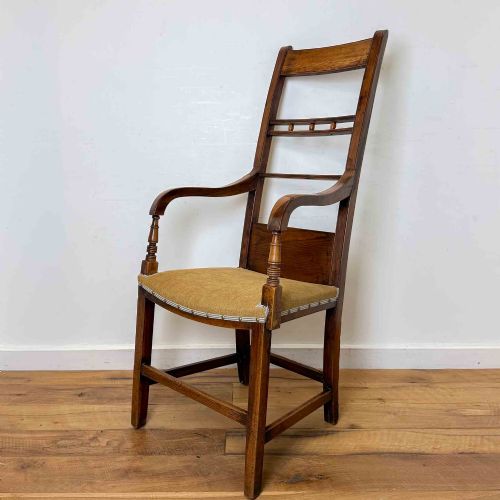

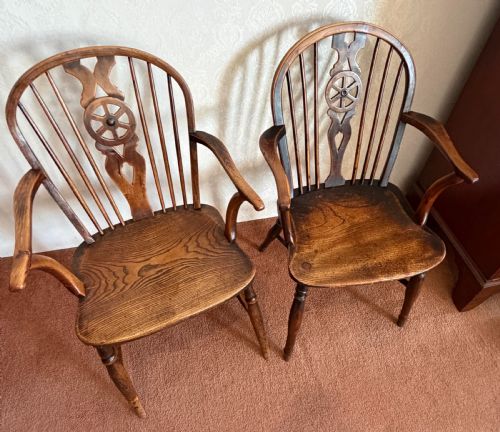

Brown Elm Dining Armchair
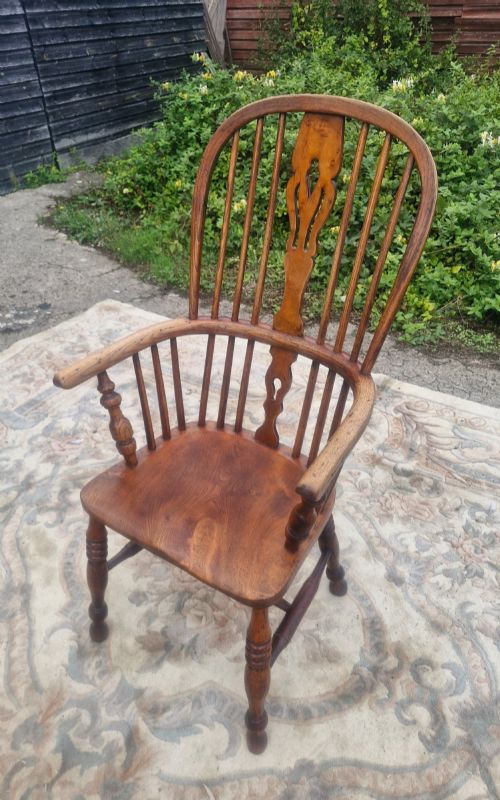
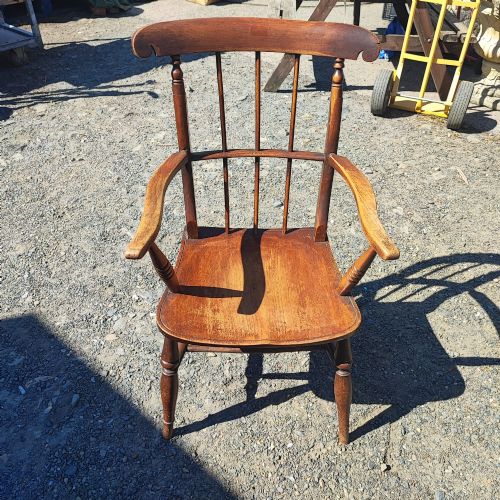
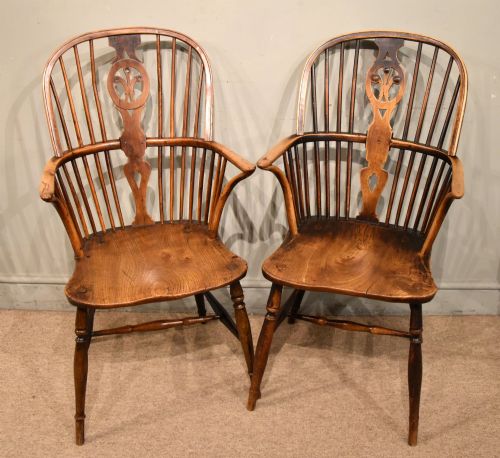
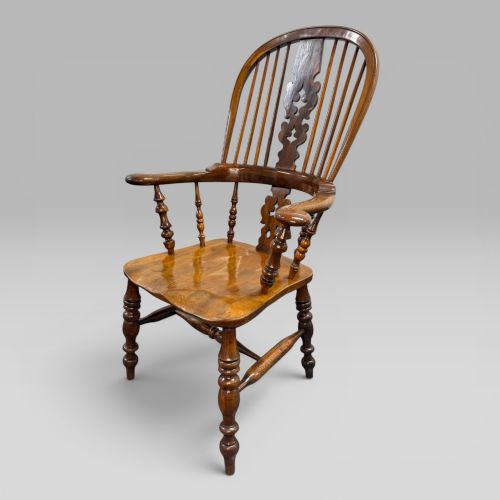
A brown elm dining armchair brings rugged vernacular character to a room, offering sturdy seating shaped by generations of country makers.
Brown Elm Dining Armchair
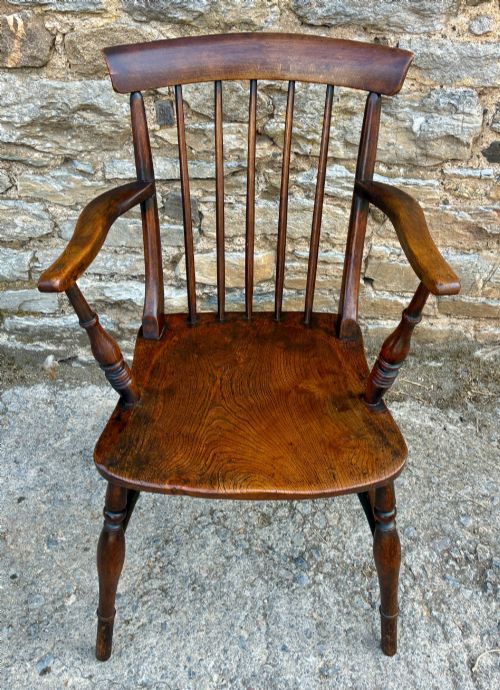
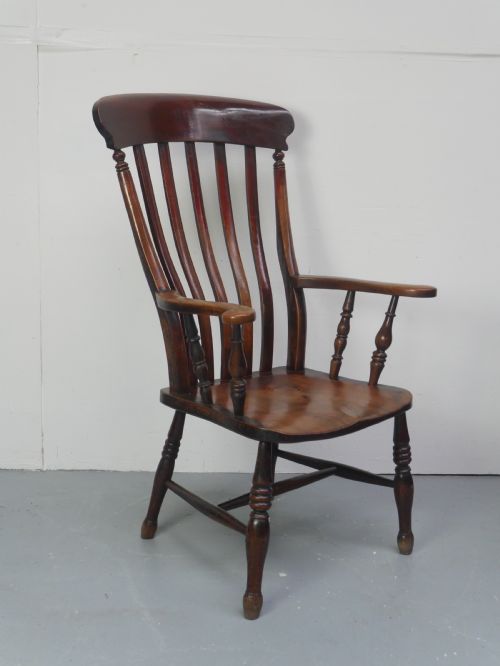
When searching for a brown elm dining armchair, buyers encounter robust vernacular seating rooted in English country traditions. These pieces span the Georgian, Regency, and Victorian periods, alongside later nineteenth-century examples.
Makers utilised local timbers, resulting in hybrid forms that bridge formal dining requirements and rustic country comfort. Their enduring appeal lies in this honest, utilitarian construction.
How they were made
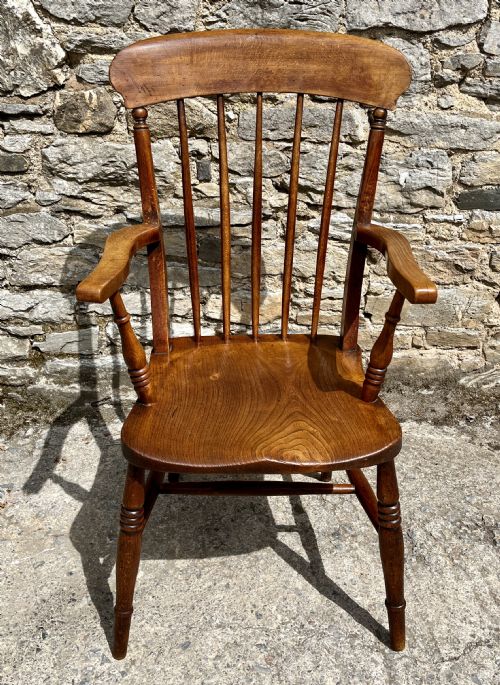
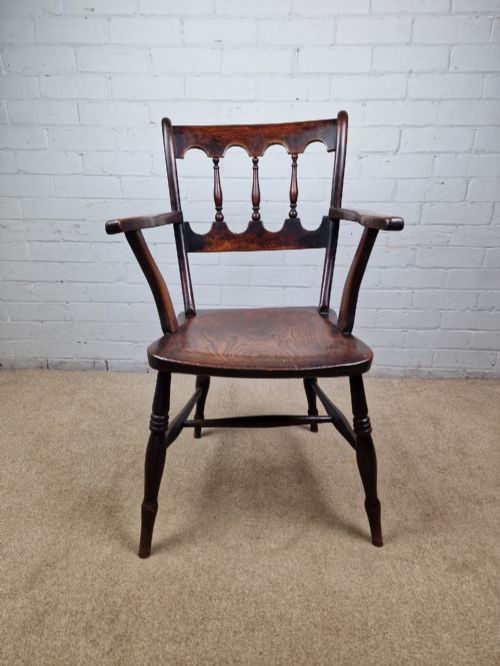
The primary construction relies on elm, selected for its tough, interlocking grain that resists splitting when shaped into solid seats. This timber is typically paired with ash, beech, fruitwood, or yew for spindles, legs, and bows.
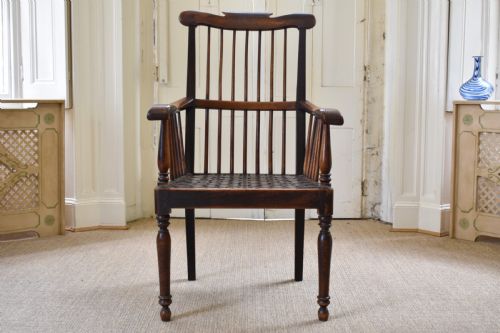
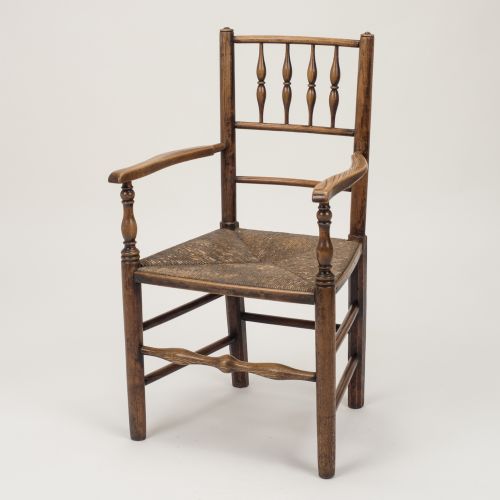
Turned components meet steam-bent parts and solid saddle-seated bases, often joined through traditional wedged tenons. Rush seating also appears in specific regional variations, woven directly onto the wooden frames.
Many of these sturdy armchairs survived centuries of kitchen life simply because they were too heavy for anyone to bother throwing away.
What varies in quality
Quality rests in the harmony of the timber selection and the competence of the turning. A superior chair displays well-matched grains, balanced proportions, and comfortable saddle scuplturing on the solid seat.
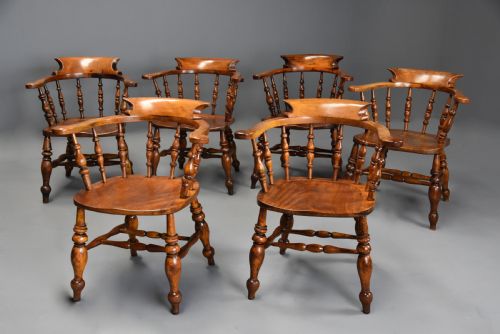
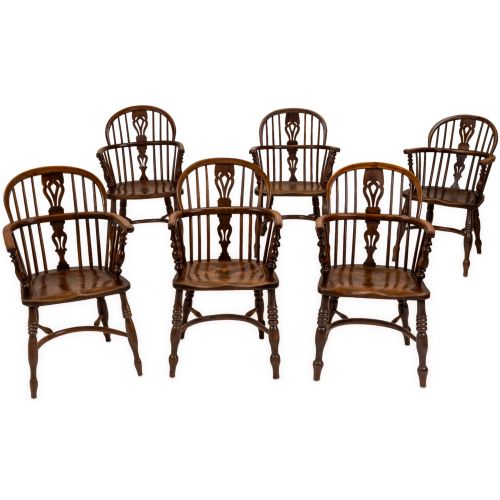
Finer examples show elegant splats, crisply turned stretchers like the crinoline pattern, and minimal replacement parts. The integrity of the original joints dictates the overall robustness and longevity of the armchair.
Fred Walker Rockley
The Brown Elm Dining Armchair Glossary
- Windsor chair
- A wooden chair built with a solid sculpted seat into which the legs and back spindles are independently inserted. This construction provides exceptional strength while maintaining relatively light proportions.
- Carver chair
- An armchair designed to match a set of smaller dining chairs, traditionally used at the head of the table. These often feature broader arms and sturdier frames.
- Crinoline stretcher
- An arched under-framing connecting the legs of a chair to provide rigidity and support. It is particularly common on nineteenth-century Windsor armchairs.
- Rush seat
- A seating surface woven from dried marsh grasses, twisted and patterned across a wooden frame. It offers a resilient, textured alternative to solid wood.
- Spindle back
- A chair back constructed from a series of slender turned wooden uprights. These vertical rods distribute weight evenly and offer supportive flexibility.
Brown Elm Dining Armchair: Frequently Asked Questions
Are these chairs suitable for daily dining use?
These armchairs were originally built for heavy domestic service in farmhouses and country homes. Their robust timber construction handles everyday seating comfortably.
Buyers should ensure the height aligns with modern dining tables, as older country chairs occasionally sit lower than contemporary standards.
What is the difference between elm and fruitwood?
Elm possesses a distinctive interlocking grain that makes it exceptionally difficult to split, rendering it ideal for solid saddle seats. Fruitwood displays a smoother, denser texture with warmer tones, commonly utilised for turned spindles and arms.
Together, makers combined these woods to exploit their respective structural strengths.
How do I care for antique elm furniture?
Maintain the wood by applying a quality beeswax periodically to nourish the dry grain. Avoid placing antique timber near direct heat sources or rapid temperature shifts.
Gentle dusting with a soft cloth preserves the natural patina built up over generations of use.