
Brown Dressing Desk
A brown dressing desk bridges personal grooming and private correspondence, uniting the fitted vanity with the practical writing table.
Brown Dressing Desk
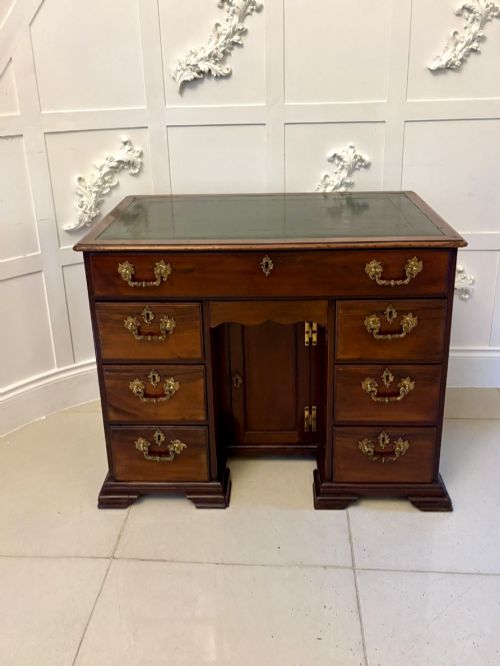
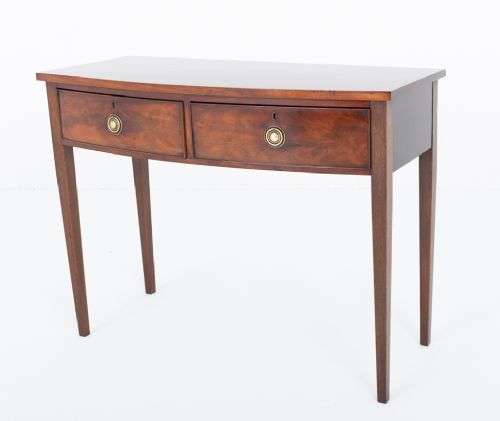
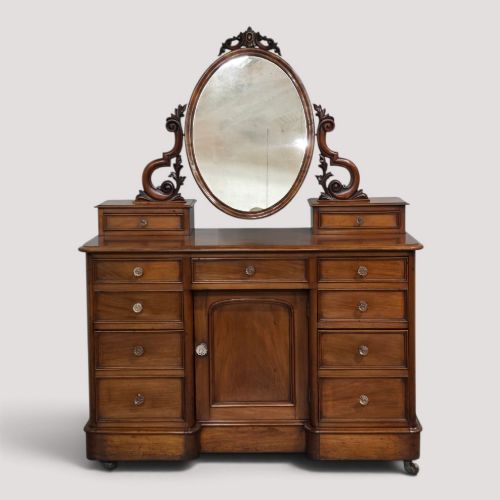
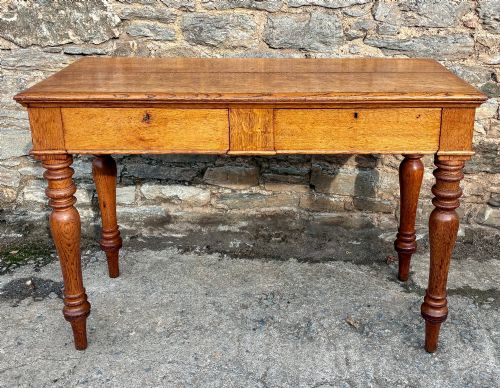
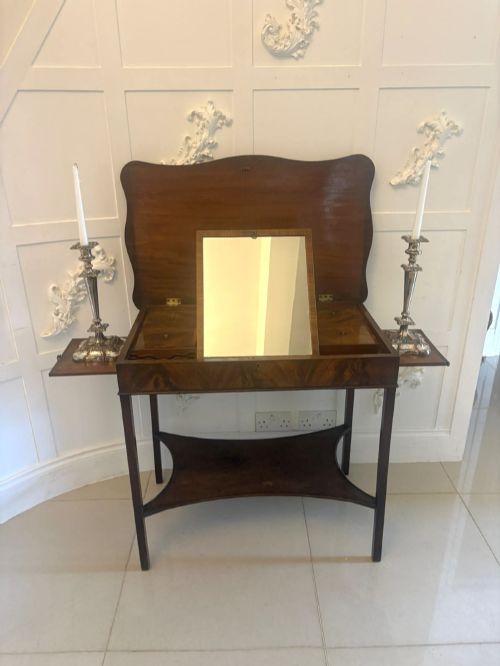
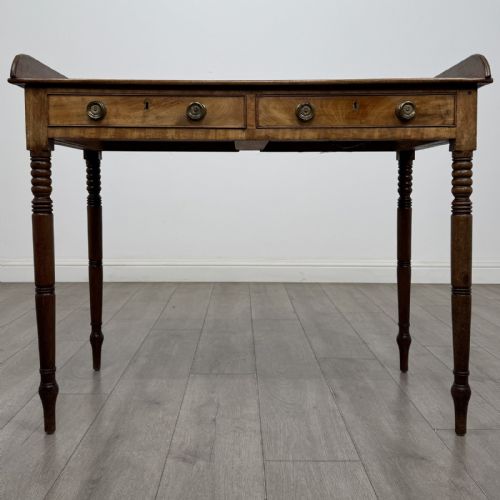
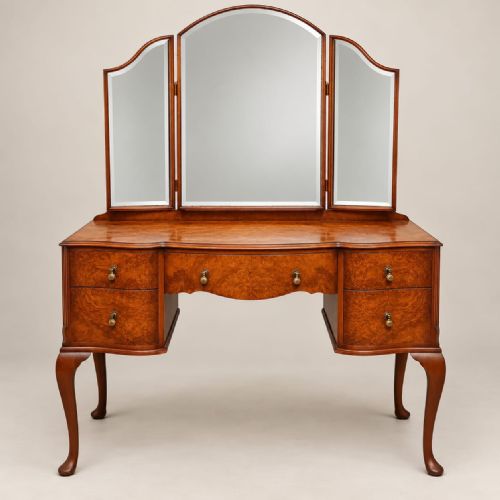
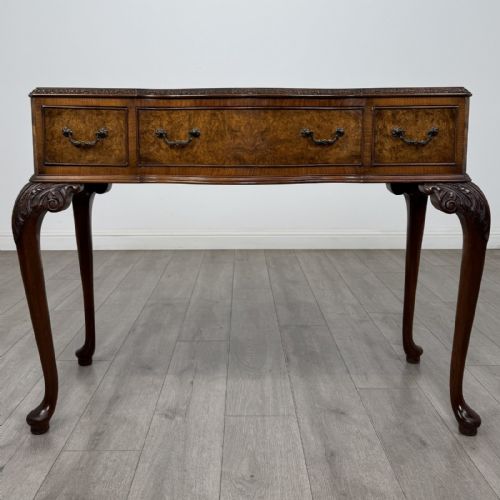
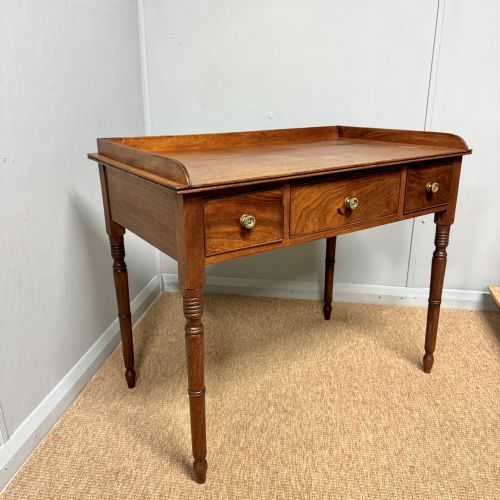
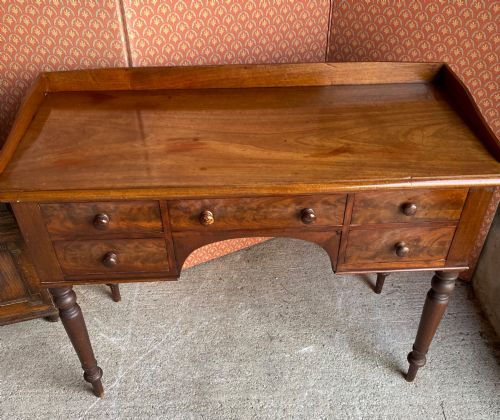
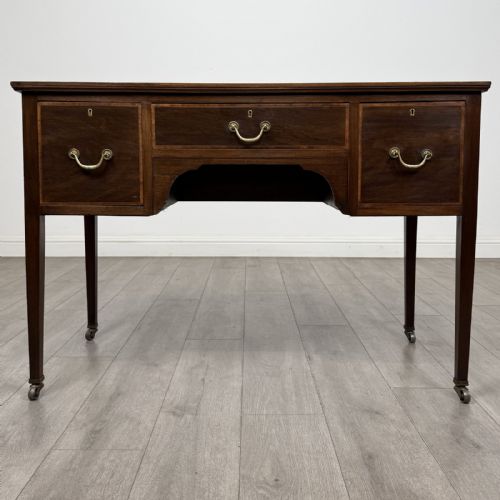
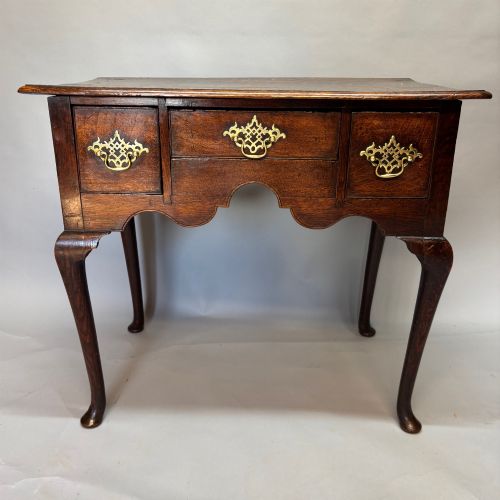
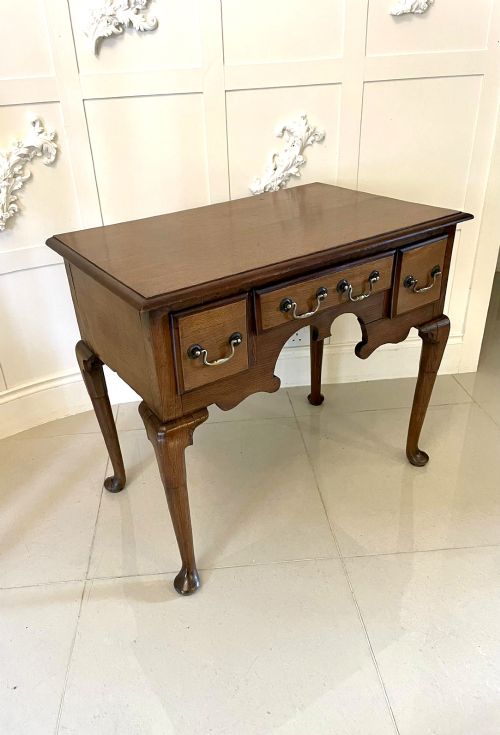
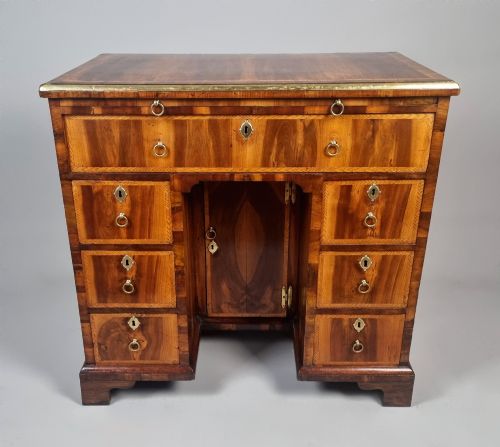
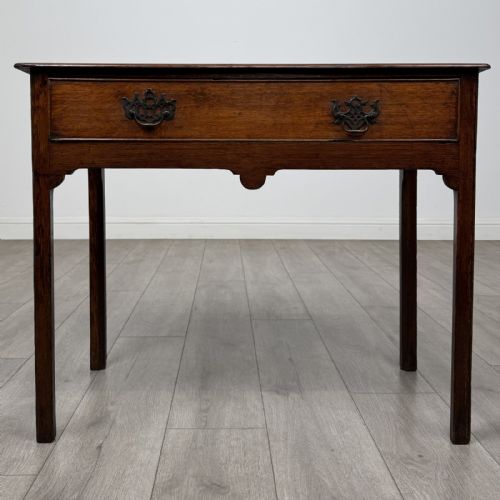
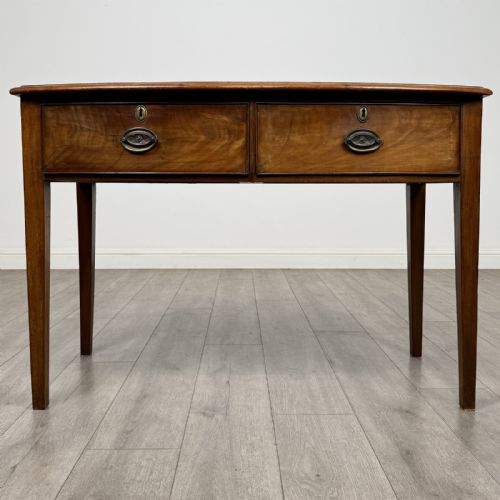
A brown dressing desk combines the functions of a personal vanity and a compact writing table, frequently taking the form of a lowboy, side table or kneehole desk. When you search for a brown dressing desk, you encounter versatile pieces designed for daily use in bedrooms and private chambers across multiple centuries.
The versions most commonly met on this page span the Georgian, Victorian and Edwardian eras, alongside later twentieth-century interpretations. These domestic surfaces serve as writing desks, washstands and dressing tables equipped with fitted drawers for small possessions.
How they were made
Cabinet makers constructed these desks using dense hardwoods such as mahogany, oak and walnut, frequently enhancing surfaces with figured veneers like burr walnut, burr elm and flame mahogany. These timbers were selected for both structural stability and rich natural grain patterns that responded well to polishing.
Drawer construction relied on traditional hand-cut dovetail joints, designed to withstand repeated opening and closing over generations of daily domestic service. Secondary timbers such as fruitwood and elm appear in concealed framing and drawer linings.
Hardware played an integral role in construction, utilising cast brass handles, escutcheons and drop pulls secured with original pins. Surface decoration was achieved through subtle inlay, marquetry details or carved mouldings rather than heavy ornamentation.
Materials recorded across the inventory include solid mahogany, oak, walnut, burr elm, fruitwood, satinwood, glass and leather.
What varies in quality
Quality rests primarily in the selection of timber and the handling of grain, where highly figured burr walnut or flame mahogany elevates a standard form into a superior piece. The choice of secondary woods and the precision of the cabinet work dictate the overall integrity of the construction.
The survival of original elements, including brass handles, leather inserts and fitted interior compartments, distinguishes an intact example from one heavily restored. Subtle details such as crisp edge mouldings and clean dovetailing separate master craftsmanship from provincial production.
The Brown Dressing Desk Glossary
- Lowboy
- A small dressing or side table featuring one or more rows of drawers beneath the working surface. These low tables gained popularity during the eighteenth century.
- Kneehole desk
- A compact desk featuring a central recess for the user's legs, flanked by pedestals of small drawers. This form provides substantial storage within a modest footprint.
- Marquetry
- The art of forming decorative patterns by fitting together thin slices of various coloured woods and veneers. Artisans utilised this technique to adorn drawer fronts and tops.
- Dovetail joint
- A traditional interlocking corner joint formed by fan-shaped tenons that lock together securely. Its presence indicates competent and durable cabinet making.
Brown Dressing Desk: Frequently Asked Questions
What is a lowboy used for?
A lowboy served historically as a dressing table or side table for holding personal grooming items and small valuables in a bedchamber.
Over time, these versatile tables also functioned as writing surfaces or serving tables in smaller rooms of the house.
Are these desks suitable for daily work?
Many antique writing tables and kneehole desks offer comfortable dimensions for modern laptop use and general correspondence.
Their compact footprints make them practical for contemporary home offices where floor space is at a premium.
How should I care for timber surfaces?
Maintain the finish by dusting regularly with a soft dry cloth and applying natural beeswax polish sparingly when the wood appears dry.
Keep wooden furniture away from direct heat sources and strong sunlight to prevent the timber and veneers from splitting.