
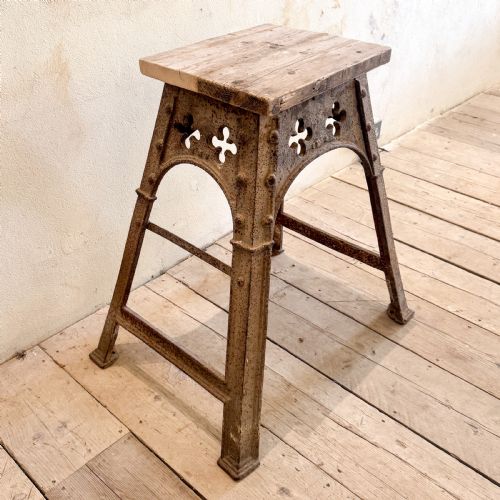


Brown Cast Iron Table
A brown cast iron table anchors a room with industrial weight and unyielding utility.
Brown Cast Iron Table
A brown cast iron table combines heavy metal frames with timber, oak, walnut, or marble tops, originating from Victorian workshops, gardens, and domestic interiors. When searching for a brown cast iron table, you will encounter diverse forms including garden tables, side tables, workbenches, and bistro tables spanning the nineteenth century through the 1930s.
The utility of these pieces ranges from industrial workbenches fitted with vises to refined sewing machine cabinets and tripod coffee tables. Many examples pair robust metal bases with rich wooden surfaces, creating practical furniture built for endurance.
How they were made
Foundries produced the heavy metal bases through sand casting, pouring molten iron into moulds to create intricate structural legs, pedestals, and industrial stands. These durable frames were subsequently paired with timber, oak, burr walnut, or marble tops.
Joinery and mechanical integration define the construction of functional pieces, such as adjustable mechanisms, sewing machine cabinetry, and integrated vises on French workbenches. The marriage of cast metal and natural wood grain provides both structural stability and textural contrast.
Several pieces double as mechanical marvels, featuring integrated vises and sewing machine cabinets ready to stitch a hem.
What varies in quality
The distinction between standard utility furniture and superior examples lies in the crispness of the iron casting and the selection of top materials, such as figured burr walnut or polished marble. Refined proportions and original surface patination elevate utilitarian workshop pieces into decorative centerpieces.
Mechanical integrity in adjustable mechanisms or sewing machine stands differentiates simpler tables from advanced engineered designs. The harmony between the heavy metal base and the fitted top dictates the overall presence of the piece.
The Brown Cast Iron Table Glossary
- Cast iron
- An iron-carbon alloy poured into moulds to create rigid, heavy structural forms. It provides the foundational support for industrial and garden furniture.
- Burr walnut
- A highly figured wood veneer harvested from walnut tree growths, prized for its swirling grain patterns. It often tops refined domestic tables.
- Tripod base
- A three-legged support structure commonly utilised for small round tables, ensuring stability on uneven floors. It distributes weight evenly beneath heavy stone or wood tops.
- Bistro table
- A small café table typically featuring a metal pedestal base and a round top. These were designed for commercial hospitality use in France and England.
Brown Cast Iron Table: Frequently Asked Questions
How do I date a cast iron table?
Dating relies on stylistic clues, casting marks, and the accompanying timber or mechanical components. Victorian and Edwardian pieces often display heavier industrial proportions.
Later pieces from the 1920s and 1930s incorporate specialised cabinetry, such as sewing machine mechanisms, reflecting domestic production shifts.
Can these tables be used outdoors?
Garden tables and certain industrial stands were originally designed to withstand exterior environments. Cast iron resists weather well when properly maintained.
Wooden or marble tops require consideration, as timber and polished stone react differently to moisture and temperature fluctuations over time.
Are the table tops original to the bases?
Many industrial bases and workbenches survived while original timber tops were replaced or adapted during their working lives. Combinations like modern cast iron tripod bases paired with burr walnut tops also occur.
Examining the mounting points and wear patterns reveals whether a top and base have a long-established history together.
How heavy is a cast iron table?
Cast iron is exceptionally dense and heavy, giving these tables substantial physical weight and stability. This mass prevented workshop benches and garden tables from shifting during heavy use.
Moving these pieces requires care, particularly when paired with heavy marble or thick oak tops.