

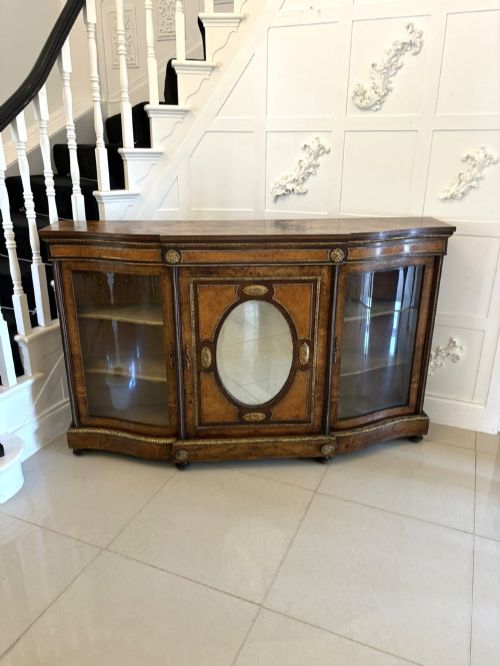
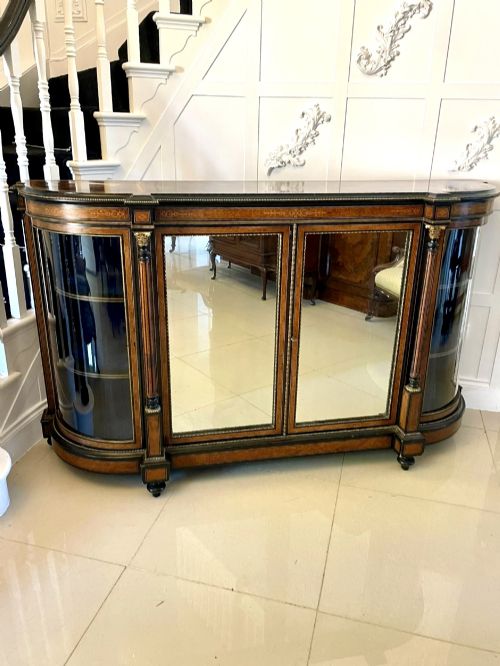
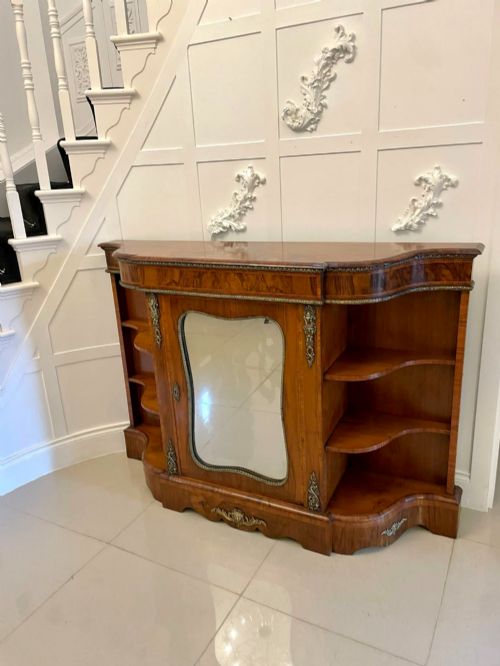
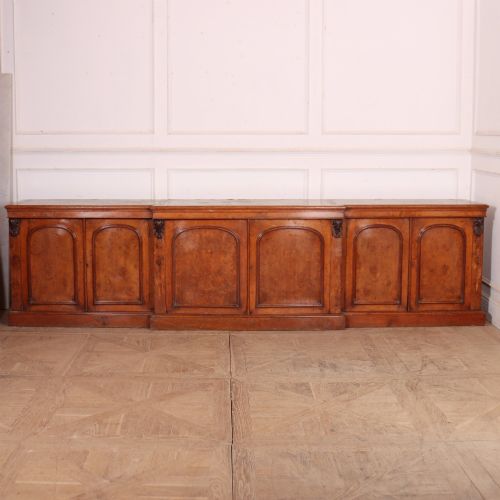

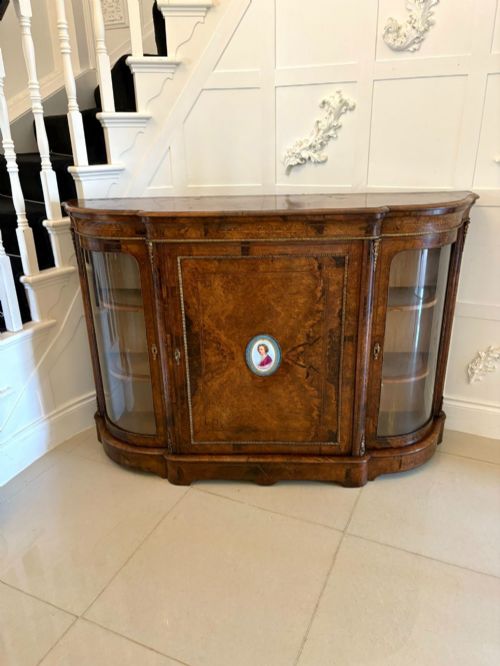
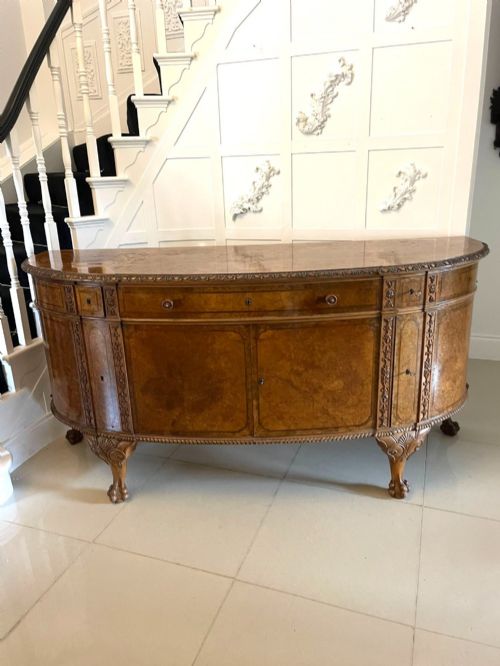
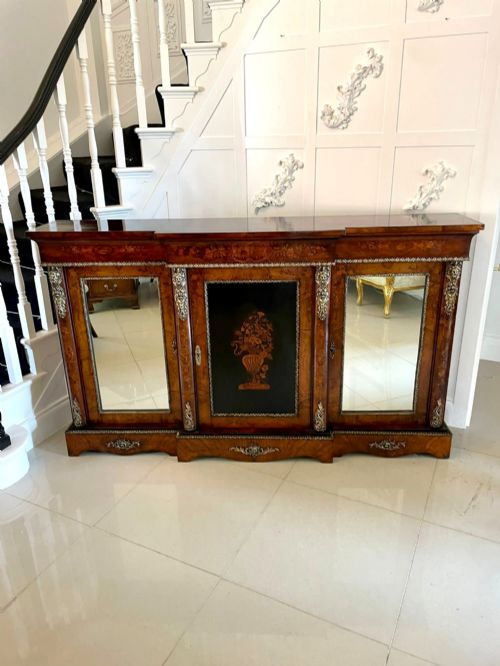
Brown Burr Walnut Credenza
A brown burr walnut credenza delivers rich timber grain and polished presence, anchoring a grand room with mid-nineteenth-century British cabinet-making.
Brown Burr Walnut Credenza
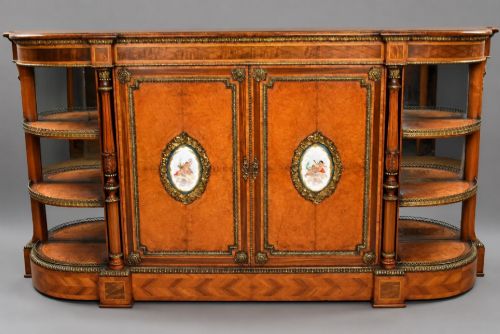
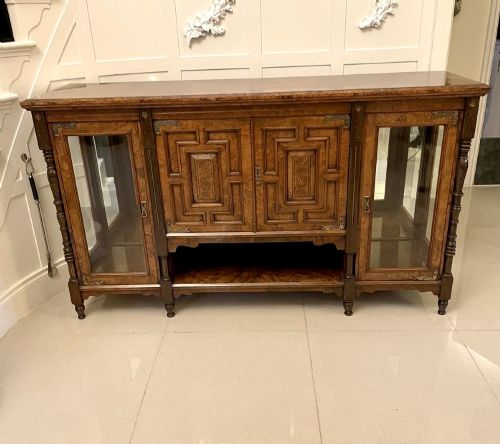
When you search for a brown burr walnut credenza, you encounter substantial display furniture designed primarily for formal reception rooms during the Victorian era and the nineteenth century. These low, long cabinets frequently incorporate glazed central doors flanked by curved side cupboards, serving as both storage and surface display.
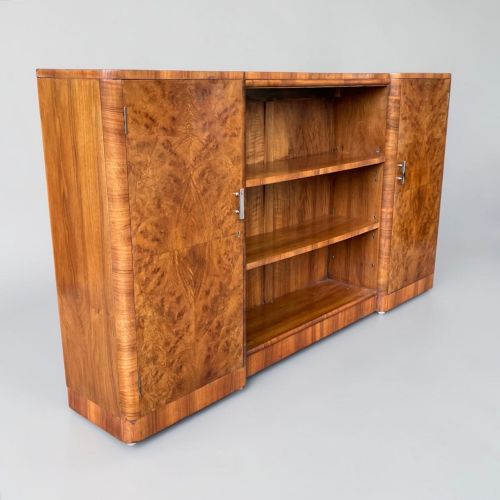
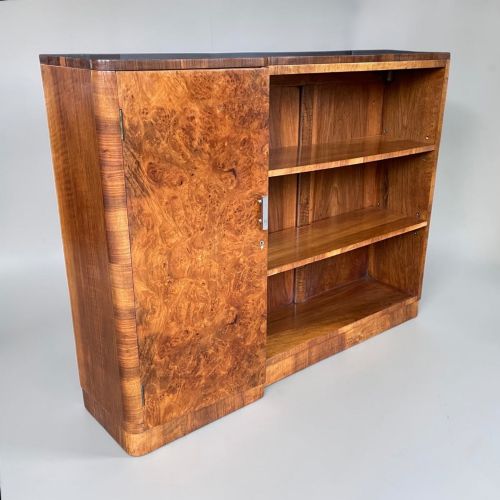
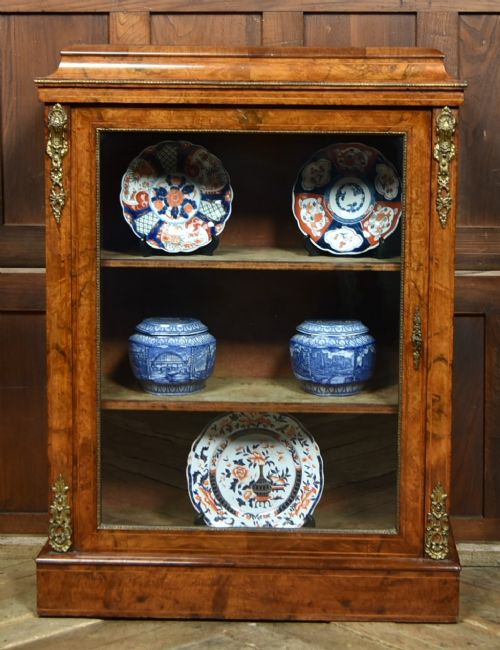
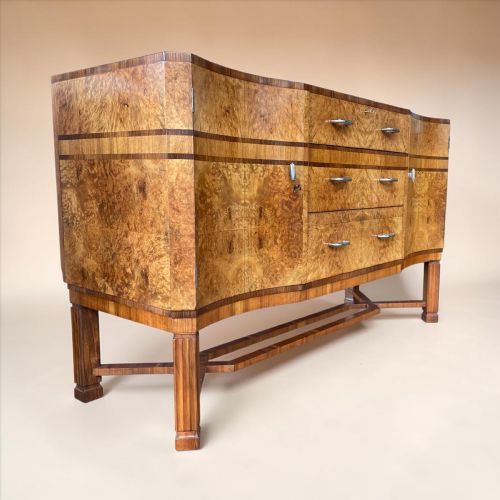
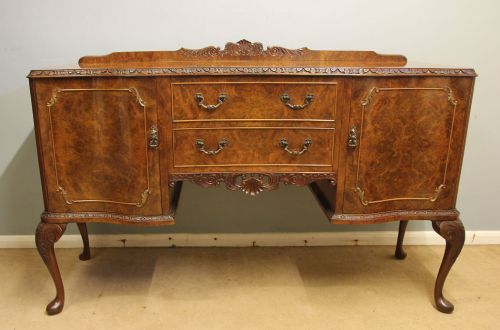
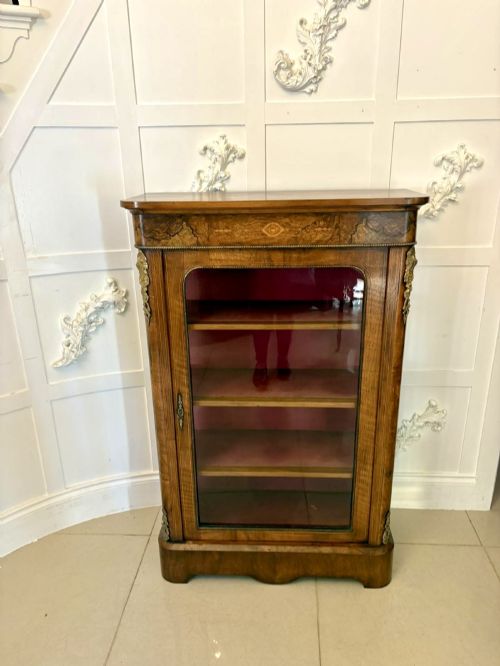
The pieces appearing on this page span from the mid-nineteenth century up to the 1930s, encompassing Victorian productions alongside later revivals and Art Deco interpretations. Alongside traditional credenzas, the selection includes related forms such as sideboards, pier cabinets, and breakfront bookcases sharing the same core timber vocabulary.
Materials and Construction
Cabinet-makers built these carcasses using solid timber frames overlaid with highly figured burr walnut veneers, prized for their intricate swirling patterns. Workshops enhanced these rich brown surfaces with delicate boxwood and marquetry inlay, framing the grain with geometric precision.
Structural embellishments relied heavily on cast and gilt ormolu mounts, brass details, and glass panels for door inserts and mirror backs. Certain examples integrate porcelain plaques and painted panels directly into the timber framework, combining ceramic art with cabinet-work.
Brown Burr Walnut Credenza Retail Price Guide 2026
Typical asking prices for brown burr walnut credenza among the pieces listed under this phrase on Sellingantiques today, from the lower quarter to the upper quarter. They describe what is for sale here now, not the wider market.
Several cabinets include hidden cutlery sets or specialised compartments designed specifically for holding Victorian parlor games.
Assessing Quality and Execution
The distinction between standard commercial pieces and exhibition-grade work lies in the choice and symmetry of the burr walnut veneer. Superior examples display perfectly matched grain patterns mirrored across doors and panels, demonstrating immense skill in veneer slicing and application.
Execution of the brass, ormolu, and hand-cut marquetry further separates grades of production, with finer items featuring crisp chasing and robust interior cedar or oak linings. The integration of curved glass and high-relief carved detailing demands advanced technical mastery from the original maker.
The Brown Burr Walnut Credenza Glossary
- Burr walnut
- A specialised timber veneer harvested from the irregular growth knots of the walnut tree, generating dense, swirling patterns. This material forms the primary visual signature of these cabinets.
- Credenza
- A low, freestanding display cabinet originating in the nineteenth century, typically featuring enclosed cupboards and glass doors. It functions as a sideboard alternative for formal interiors.
- Ormolu
- Gilded bronze mounts applied to the corners and panels of furniture to accent the woodwork. This decorative technique defines much of the French revival aesthetic.
- Marquetry
- The art of applying small pieces of veneer to form decorative patterns and pictures on a wooden surface. Craftsmen utilise contrasting timbers like boxwood to achieve linear definition.
- Pier cabinet
- A narrow display cabinet designed specifically to fit the wall space between windows. These upright pieces share the burr walnut and glass construction of larger credenzas.
Brown Burr Walnut Credenza: Frequently Asked Questions
Where should a brown burr walnut credenza go?
These cabinets suit principal reception rooms, long hallways, or dining spaces where their low profile allows for surface display without obstructing sightlines. Placing them against a solid wall highlights the reflective qualities of the burr grain and glass doors.
Because these credenzas maintain substantial proportions, they require adequate floor space to be fully appreciated. Keep them away from direct heat sources and strong sunlight to protect the aged walnut veneer and polish.
How do I clean burr walnut furniture?
Dust the surfaces regularly with a soft, dry cloth to prevent particulate accumulation in the intricate grain recesses. Avoid modern silicone sprays or abrasive household cleaners that can damage the historical polish.
Apply a traditional beeswax polish sparingly once or twice a year to nourish the timber and maintain its deep brown lustre. Buff the surface gently after application using a clean lint-free cloth.
What is the difference between a credenza and a sideboard?
A credenza typically incorporates enclosed glass-fronted display sections and low proportions designed for showing off porcelain or decorative objects. Sideboards historically focus more on heavy storage, drawers, and serving food during dining occasions.
Over the nineteenth and twentieth centuries, the terms frequently blurred as cabinet-makers experimented with hybrid forms combining open shelving, cupboards, and mirror backs.
How do I date a burr walnut cabinet?
Examine the construction methods, hardware, and secondary woods visible inside the drawers and carcass back panels. Mid-nineteenth-century Victorian pieces often feature hand-cut dovetails and heavy ormolu mounts, while 1930s Art Deco examples show streamlined geometry and different internal shelving setups.
Stylistic markers such as porcelain plaque inserts point toward the 1860s and 1870s, whereas later revivals emulate earlier Queen Anne or Regency proportions with machine-assisted precision.