
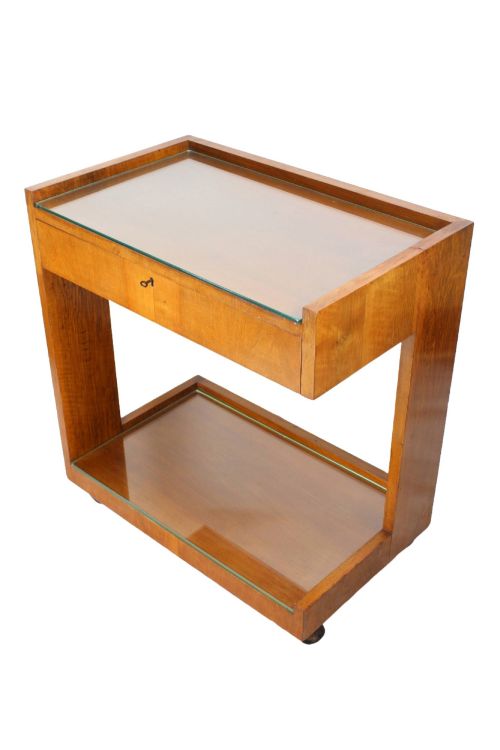
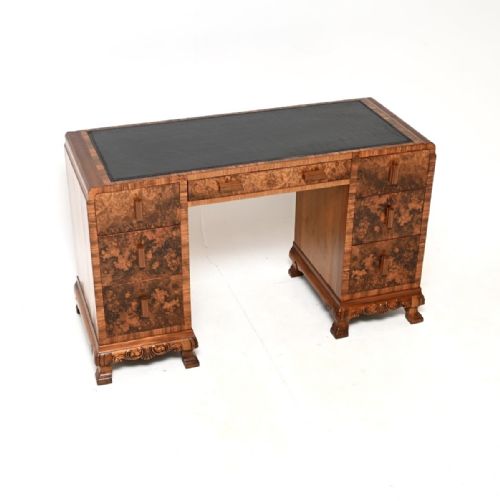
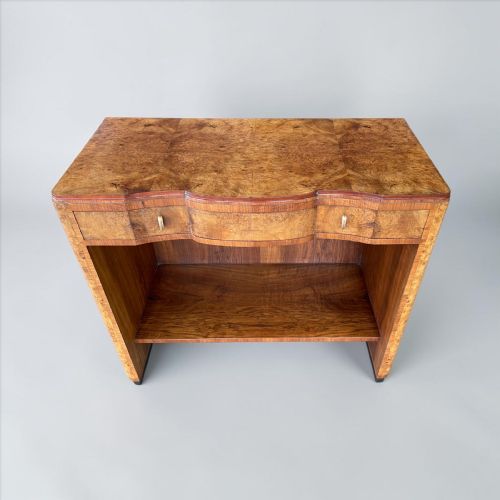


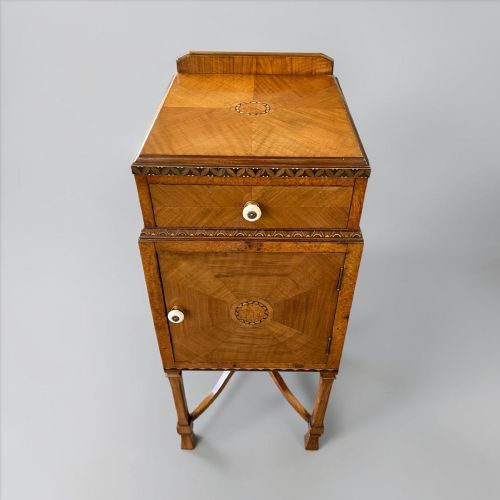
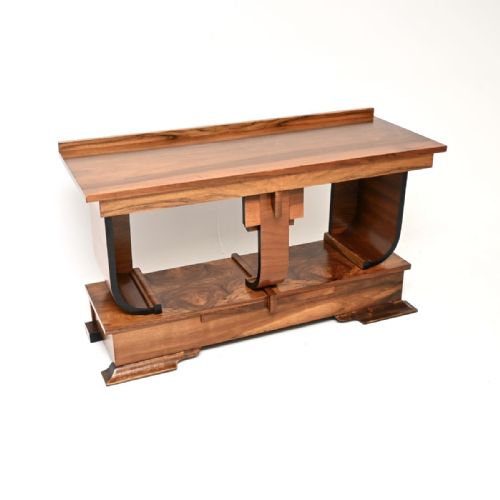
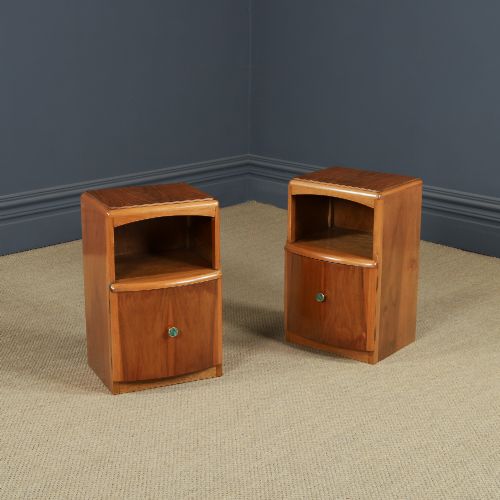
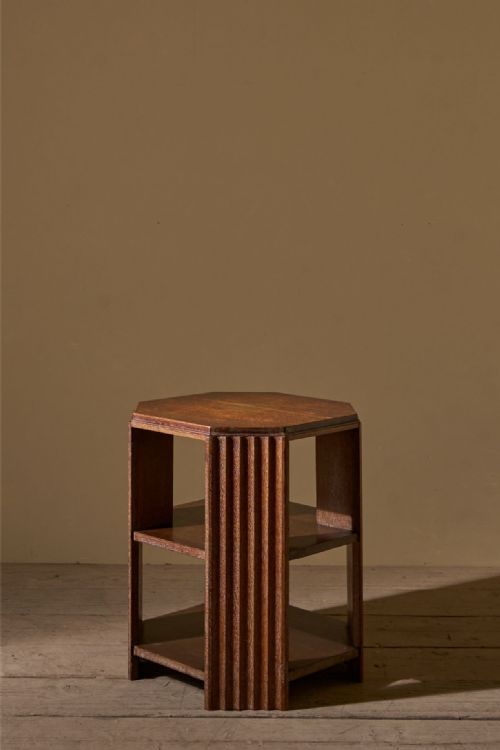
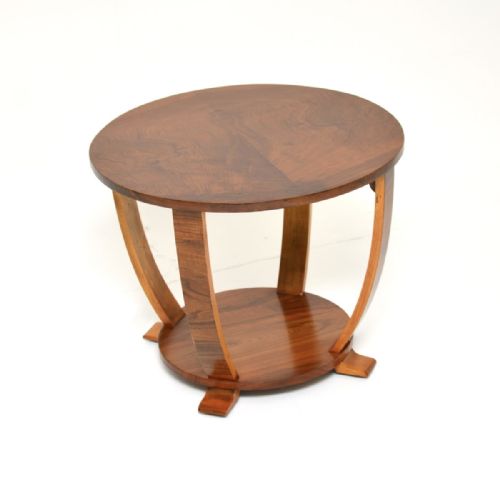
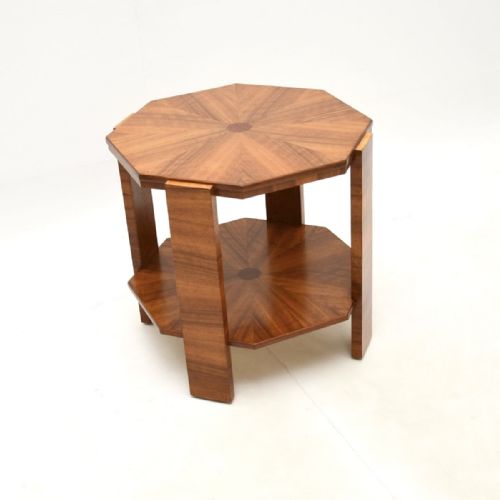
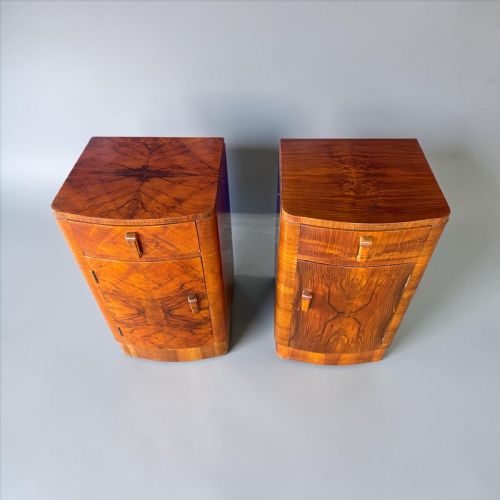
Brown Art Deco Table
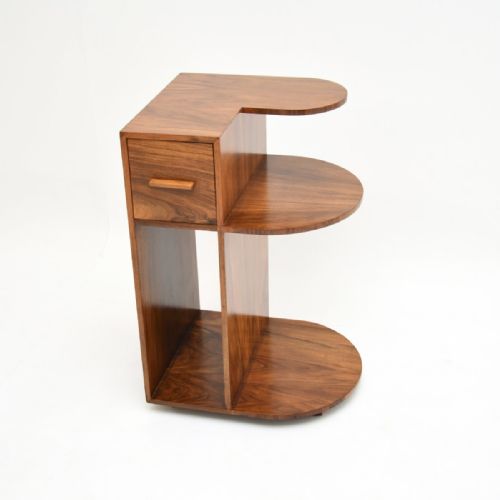
A brown art deco table delivers geometric form and rich timber grain, anchoring a room with period utility.
Brown Art Deco Table
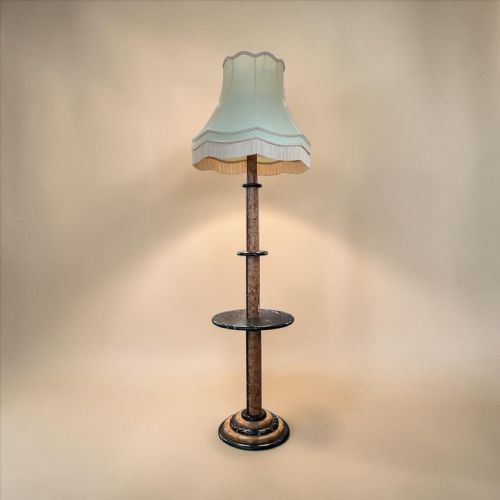
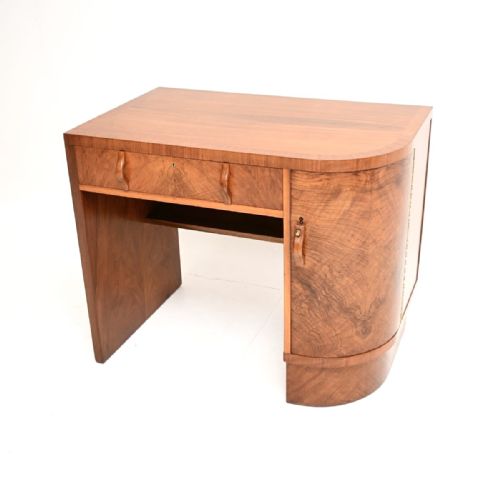
Every brown art deco table brings together geometric form and functional utility, spanning coffee tables, desks, and bedside cabinets. When searching for a brown art deco table, the most common discoveries are walnut and oak pieces produced across the nineteen twenties, thirties, and forties.
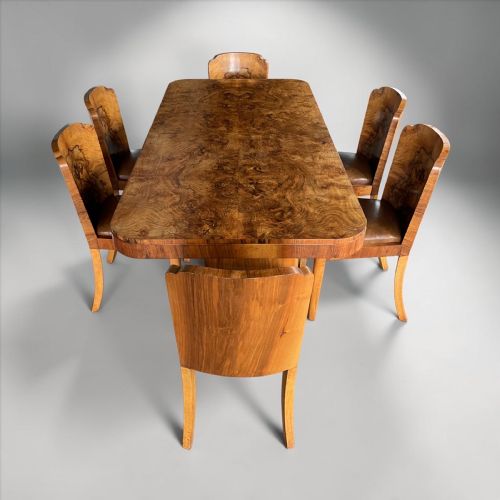
These items range from small occasional side tables and tiered tea trolleys to substantial dining tables and executive office desks. French and English workshops dominate the selection, offering variations in timber tone from light oak to deep burr walnut.
Judging quality in design and finish
The standard of a piece depends on the choice of timber veneer and the precision of its book-matching. Superior examples display symmetrical grain patterns that flow seamlessly across drawers and table tops.
Construction integrity and original hardware separate standard items from finer productions. Solid brass fittings, intact leather inserts, and well-preserved polish indicate a higher tier of period craftsmanship.
Listings feature walnut, oak, and fruitwood alongside brass, glass, and leather elements across the nineteen twenties and thirties.
Maurice Adams·Gomme·Charles Schneider·Jaz
The Brown Art Deco Table Glossary
- Burr walnut
- A prized timber harvested from walnut tree growths, yielding intricate, swirling grain patterns. It appears frequently on the surface panels of high-end period furniture.
- Veneer
- A thin slice of superior wood applied over a stable secondary timber to create decorative surfaces without excessive weight. This technique allowed makers to utilise expensive grains efficiently.
- Art Deco
- A design movement spanning the nineteen twenties and thirties characterised by streamlined shapes, geometric motifs, and modern materials. It replaced heavy Victorian ornamentation with clean lines.
- Book-matching
- A veneer technique where adjacent slices are opened like a page to create a symmetrical mirror-image pattern. This method highlights the natural beauty of figured wood.
- Occasional table
- A small, versatile piece designed for specific, intermittent use rather than central dining or work. Examples include coffee tables, lamp tables, and side stands.
Brown Art Deco Table: Frequently Asked Questions
What woods were used for a brown art deco table?
Makers primarily worked with walnut, burr walnut, oak, and fruitwood. These timbers were often selected for their prominent grains.
Veneers allowed craftsmen to display complex patterns across flat surfaces, complemented by solid wood frames and occasional brass or glass elements.
How do I distinguish French and English pieces?
French versions frequently employ exotic hardwoods like rosewood and feature more curvaceous, flamboyant silhouettes. English production tends toward restrained geometric forms in figured walnut and oak.
Both regional styles share the characteristic emphasis on clean lines and functional modernity typical of the period.
Are these tables suitable for modern interiors?
The geometric shapes and rich timber tones integrate smoothly into contemporary living spaces. Compact forms like bedside cabinets and coffee tables adapt easily to modern room layouts.
Their restrained ornamentation bridges the gap between historical antiques and minimalist design.
How should I care for a veneered wood surface?
Maintain the finish by dusting with a soft, dry cloth and avoiding direct sunlight or excessive moisture. Periodic waxing preserves the polish without harming the underlying timber.
Keep wooden items away from direct heat sources to prevent the veneer from drying out or lifting.