


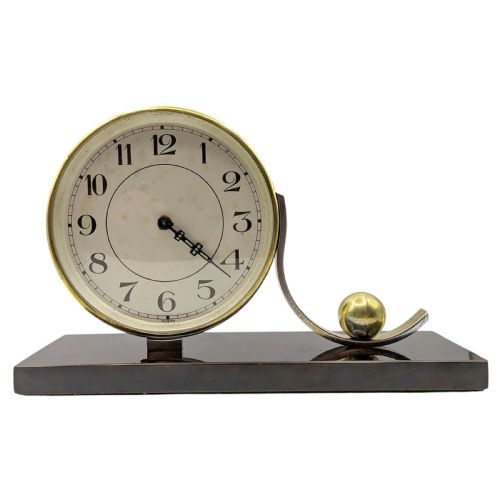
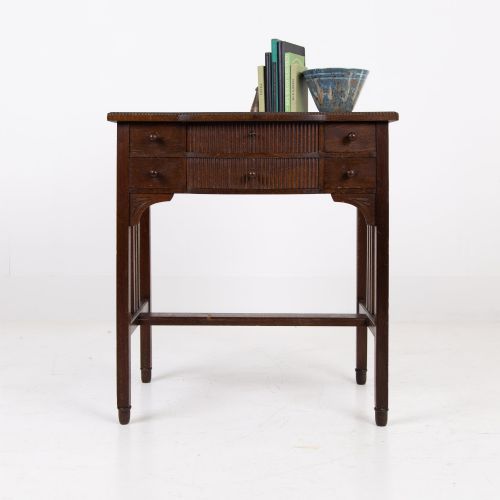
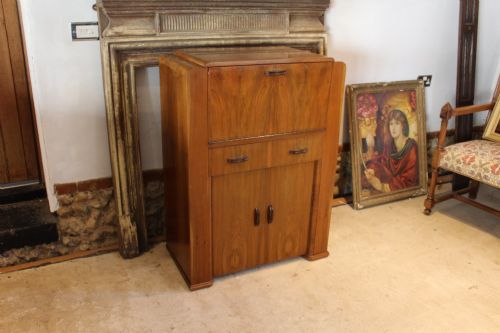
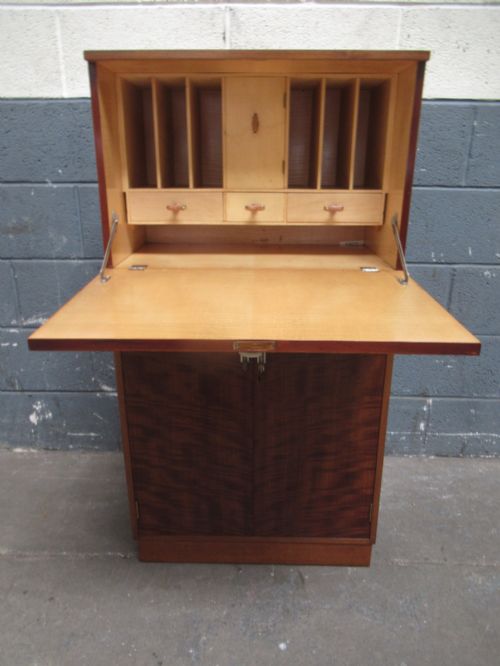
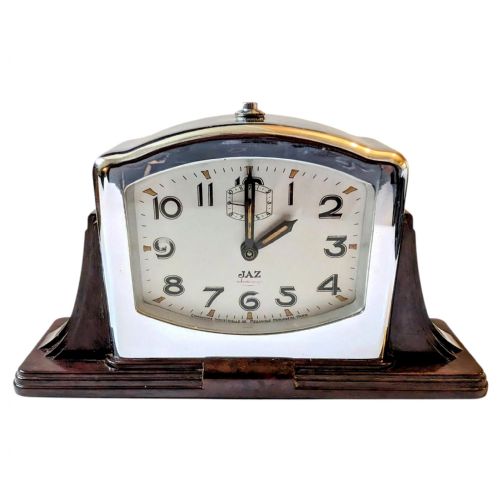
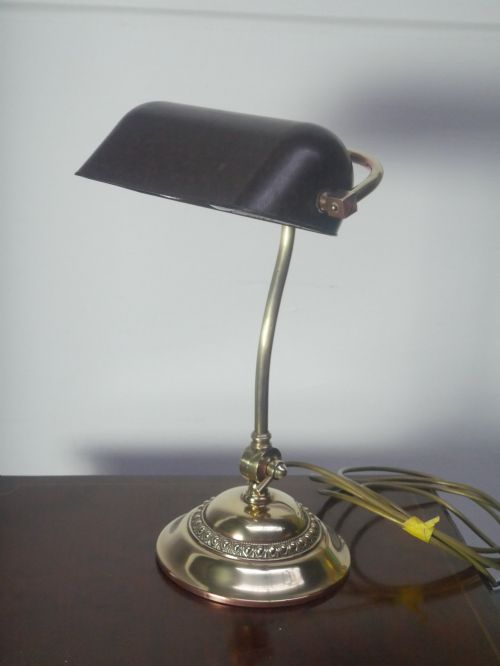
Brown Art Deco Desk
A brown art deco desk combines geometric form with rich timber tones, offering a striking workspace grounded in interwar design.
Brown Art Deco Desk
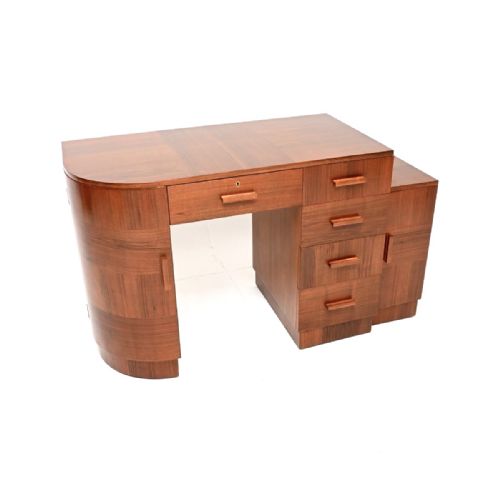
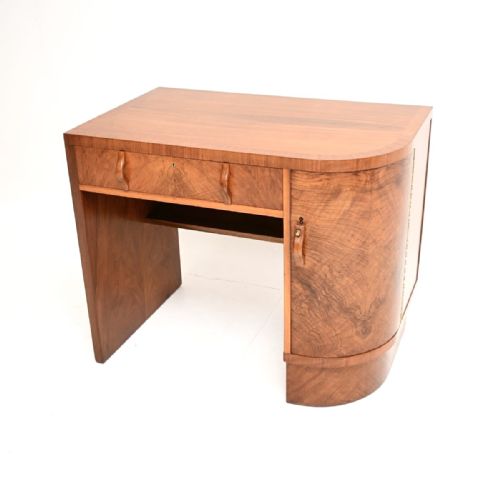
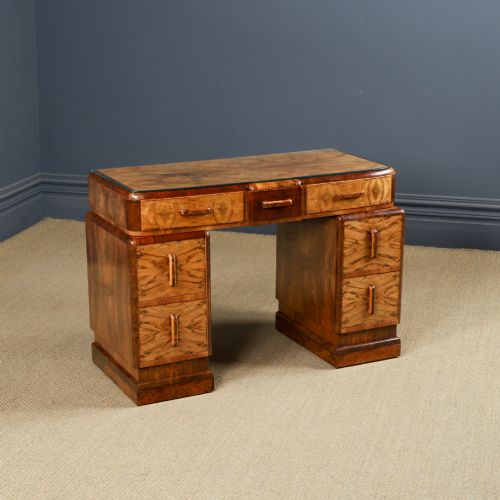
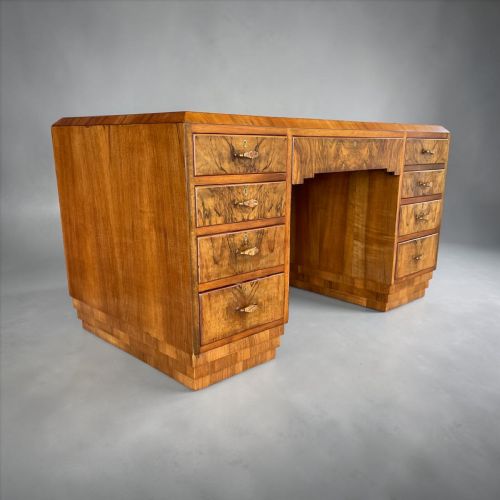
When you search for a brown art deco desk, you encounter substantial writing tables, compact bureaus, and pedestal office desks originating primarily from the 1930s. These pieces emerge in styles ranging from English craftsmanship to French interpretations, often taking centre stage in a study or home office.
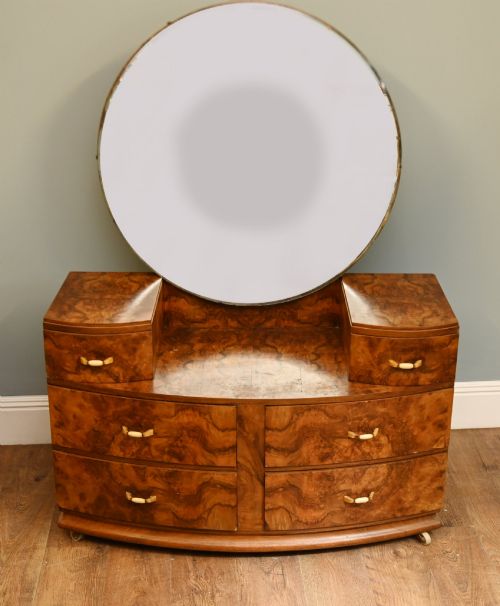
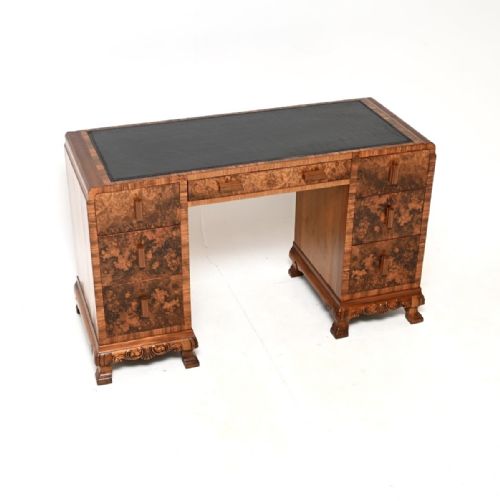
The most common version met on this page is constructed from walnut or burr walnut, frequently paired with contrasting leather top inserts for writing surfaces. Bureau bookcases and cloud-shaped writing desks also appear, displaying the characteristic streamlined silhouettes and figured wood grains typical of the period.
Construction and materials
Cabinet makers utilised choice timbers such as walnut, burr walnut, rosewood, oak, and burr elm, often selected for dramatic grain patterns and warm brown hues. These woods were expertly veneered over solid secondary timbers to create smooth, curved, and waterfall edges.
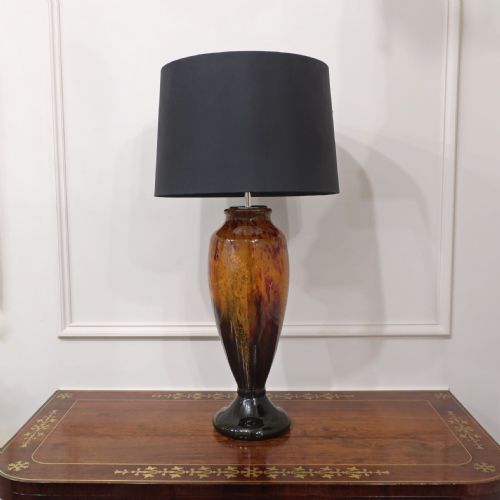
Metal and glass components frequently complement the woodwork, incorporating brass hardware, chromium plating, and integrated lighting fixtures. Leather desk inserts, sometimes edged with gold tooling, provide a durable writing surface within the wooden framework.
Listings span the 1900s through the 1940s, with walnut and oak serving as the predominant woods alongside brass and glass.
Judging quality and craftsmanship
Quality in these desks rests upon the choice of veneer and how seamlessly the grain matches across large expanses of drawer fronts and pedestals. Superior examples display carefully selected burr walnut or figured walnut that wraps symmetrically around curves and corners.
The integration of secondary materials also separates standard production from finer pieces, such as heavy cast brass handles, smooth operating drawer runners, and bespoke built-in lamps or glass privacy screens. Substantial pedestal construction and fitted interiors denote workshops operating at a higher level.
F.H. Marshall & Co Glasgow·Heal's·Maurice Adams·Maurice Dufrêne·Étienne Kohlmann
The Brown Art Deco Desk Glossary
- Burr walnut
- A figured wood grain derived from growth excrescences on walnut trees, prized for its swirling, mottled patterns. It appears frequently on the main surfaces of interwar writing furniture.
- Pedestal desk
- A heavy office or library table supported by two banks of drawers reaching down to the floor. This form provides substantial storage alongside a central writing space.
- Bakelite
- An early synthetic thermosetting plastic utilised extensively during the period for desk accessories, clock casings, and switchgear. Its dark, lustrous finish complements polished brown timber.
- Bureau
- A slant-front writing cabinet enclosing small pigeonholes and drawers behind a hinged flap. Drop-front versions offer a compact alternative to standard flat-top writing tables.
Brown Art Deco Desk: Frequently Asked Questions
How do I care for a vintage walnut desk surface?
Maintain the polished timber by applying quality beeswax periodically, buffing gently with a soft cloth to preserve the natural lustre of the walnut grain.
Avoid placing the piece near direct heat sources or strong sunlight, which can dry out the veneer and cause fading over decades of use.
Were these desks used in homes or offices?
Interwar desks served both residential studies and professional offices, reflecting a growing demand for functional yet stylish workspace furniture during the period.
Compact variations suit domestic writing tasks, while heavier pedestal models catered to executive administrative use.
What defines the streamline style on these desks?
Streamlining draws inspiration from aerodynamic industrial design, manifesting as curved corners, rounded pedestal ends, and horizontal banding rather than sharp angles.
This aesthetic softens the rigid geometry typical of earlier furniture, creating a fluid transition across the wood and metal components.
How do I distinguish 1930s pieces from later reproductions?
Examine the interior secondary woods, drawer construction joints, and back panels, which should exhibit traditional hand-finishing techniques and period-appropriate materials.
Hardware fixtures, original locks, and patinated leather inserts also offer reliable indicators of interwar manufacturing methods.