

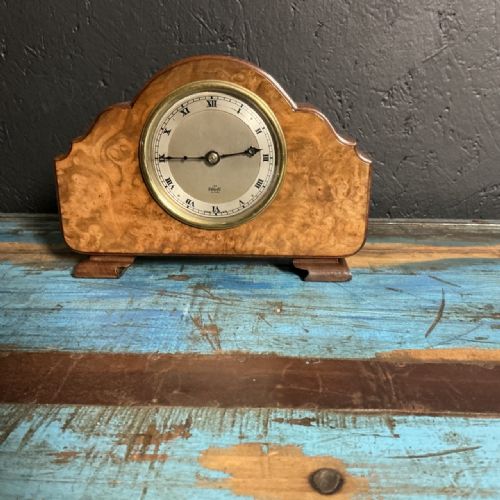
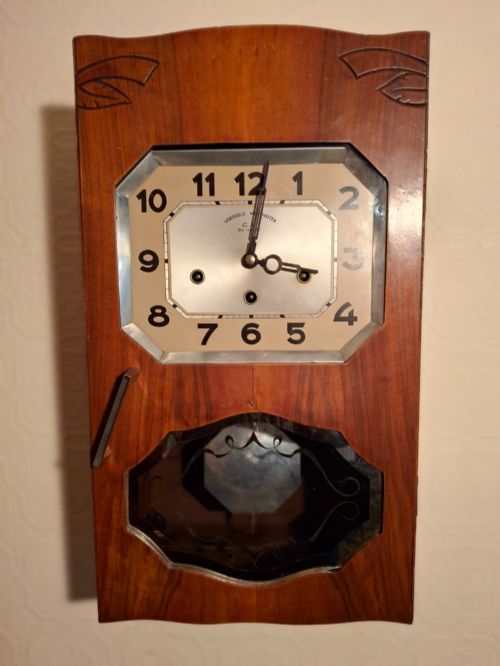
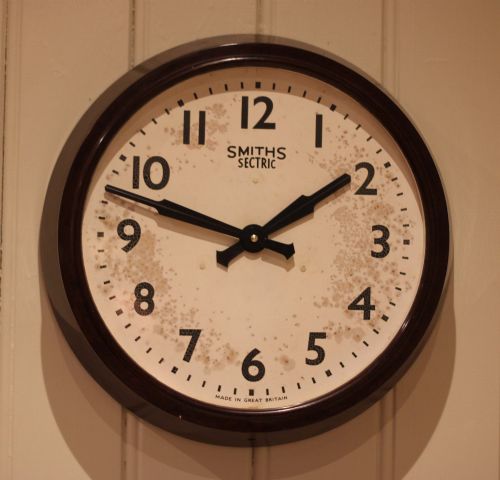
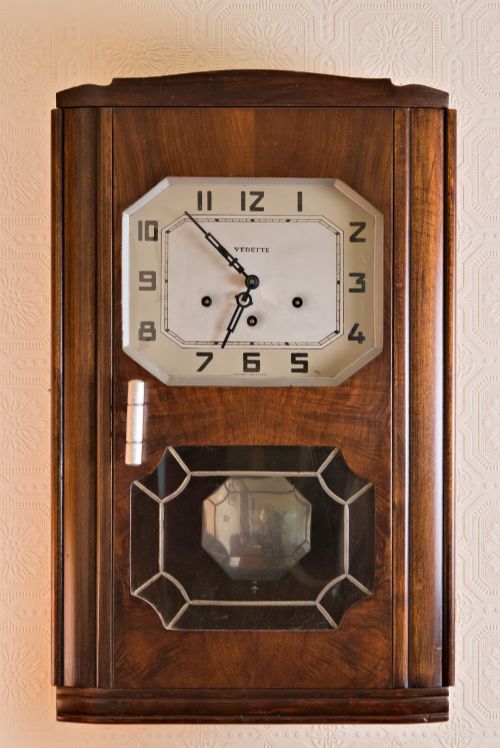

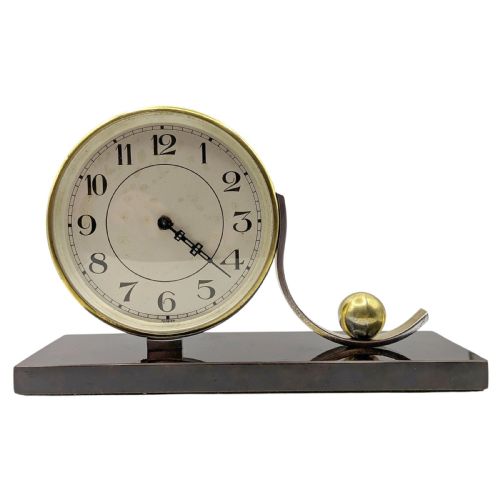

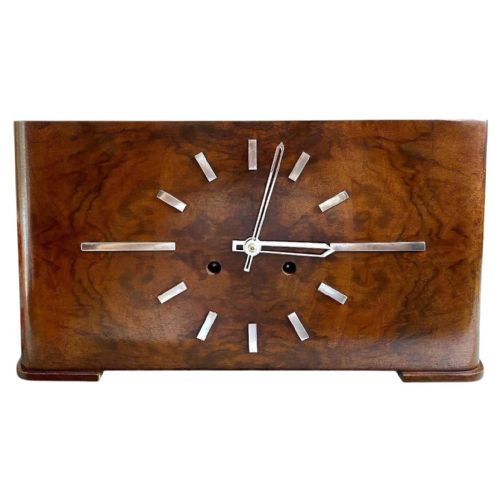


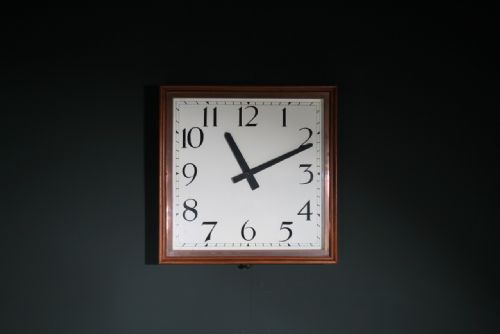
Brown Art Deco Clock
These brown art deco clock examples bring distinctive period geometry to an interior, combining rich timber and early plastics in striking domestic timepieces.
Brown Art Deco Clock
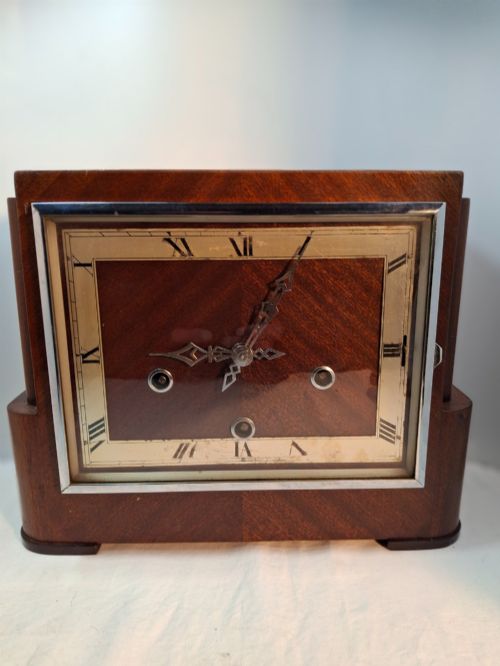
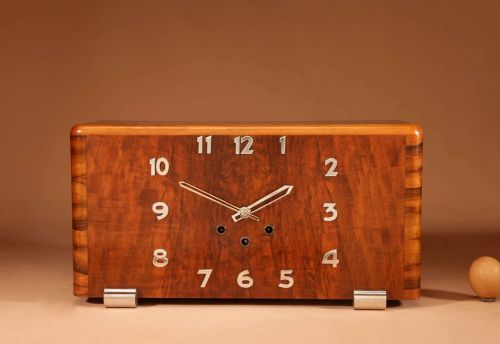
A brown art deco clock offers a direct connection to the design movements of the interwar decades, spanning wall, desk, and mantel formats. These timepieces rely heavily on warm wood tones and rich materials to define their architectural silhouettes.
The selections here most frequently appear as mantel and wall clocks rendered in walnut, oak, and bakelite. Pieces emerge from workshops across England, France, Germany, and Hungary, showcasing diverse regional interpretations of the style.
Materials and construction
Cabinet makers utilised figured timbers like walnut, burr walnut, and golden oak for case construction, often applying veneers to achieve smooth geometric curves. Amsterdam School pieces introduce contrasting woods such as macassar ebony and coromandel to enrich the surface texture.
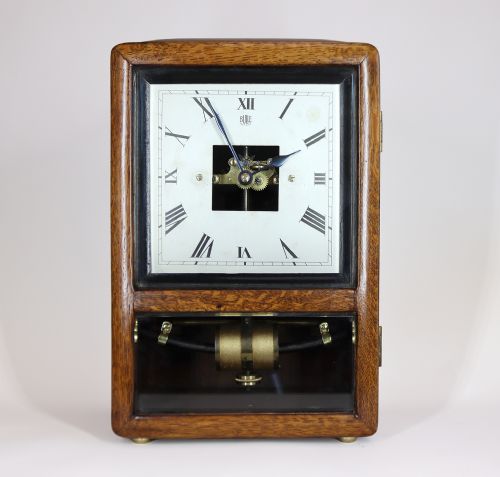
Moulders shaped early synthetic resins including bakelite into streamlined desk and alarm clock bodies, sometimes pairing them with chrome or brass bezels. Movement technology ranged from traditional eight-day spring-driven mechanisms to electric master clocks and specialised carillon systems.
Brown Art Deco Clock Retail Price Guide 2026
Typical asking prices for brown art deco clock among the pieces listed under this phrase on Sellingantiques today, from the lower quarter to the upper quarter. They describe what is for sale here now, not the wider market.
Materials span walnut, oak, glass, chrome, brass, bakelite, and onyx.
Distinctions in quality
The standard of timber selection and veneer matching defines the higher tiers of wooden clock cases. Superior examples display carefully aligned grain patterns across stepped and curved architectural forms.
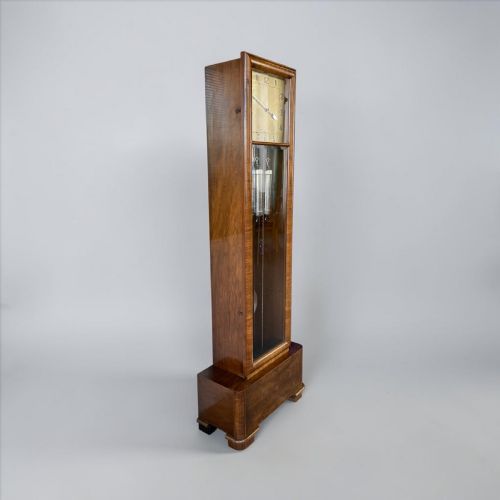
Complexity of movement architecture separates standard production pieces from sophisticated items like chiming mantel clocks and carillon longcase clocks. Renowned makers and robust mechanical engineering elevate the standing of individual timepieces.
Bulle Clock·Vedette·Haller·Zenith·Charvet·Bravingtons Ltd·Elliott of London·Jaz·Blangy
The Brown Art Deco Clock Glossary
- Bakelite
- An early thermosetting phenol formaldehyde resin widely used for clock cases during the period. It allowed manufacturers to produce smooth, glossy, brightly coloured or dark brown moulded bodies.
- Carillon
- A mechanism in a clock that plays a sequence of tunes or melodies on bells or gongs. These systems often feature multiple hammers striking tuned rods.
- Garniture
- A set of matching decorative ornaments, such as side vases or figures, designed to sit alongside a mantel clock on a fireplace. French clock sets frequently include these matching companion pieces.
- Veneer
- A thin slice of decorative wood glued over a secondary timber base to create patterned surfaces. Burr walnut and oak veneers are common on geometric cases.
- Westminster
- A chime pattern played by mechanical clocks every quarter hour. It derives its melody from the famous quarters of the clock tower at the Palace of Westminster.
Brown Art Deco Clock: Frequently Asked Questions
Where did these clocks originate?
The pieces recorded here stem from various European countries, with notable representation from French, English, and German workshops.
Craftsmen and manufacturers adapted the predominant style using local timbers and regional movement designs.
What woods appear most often?
Walnut and oak form the primary timber casing materials across the selection, appearing in both solid construction and veneered surfaces.
Exotic accents like macassar ebony occasionally complement the main carcase woods.
How do electric models differ?
Electric pieces utilise early battery or mains-driven systems rather than traditional spring-wound mechanisms.
Master clocks regulated larger systems, while domestic desk clocks used compact electric calibres.
What is an Amsterdam School clock?
Amsterdam School examples display expressive brickwork patterns and dynamic use of contrasting timber textures.
This architectural style integrates closely with the broader decorative developments of the era.