



Brown Apprentice Chest
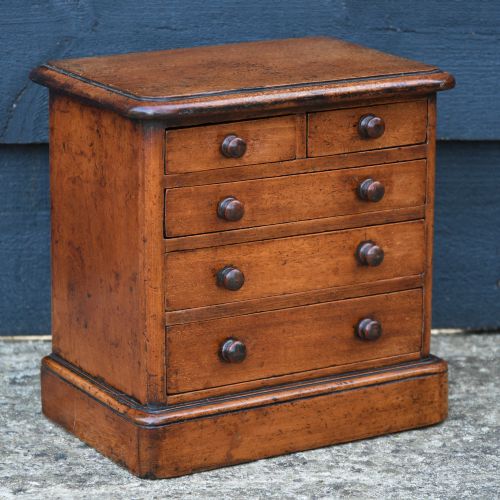
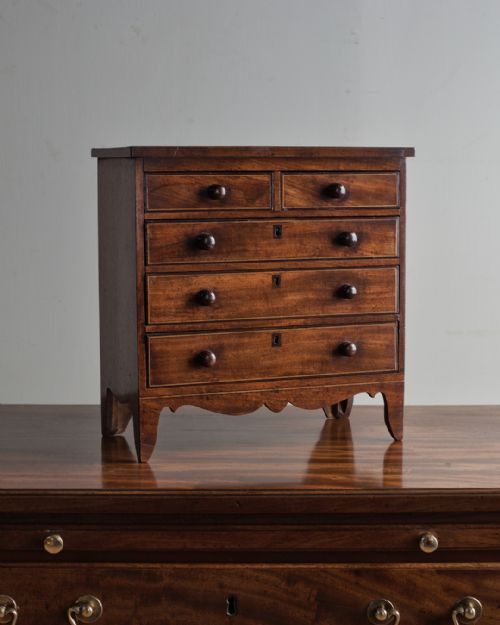
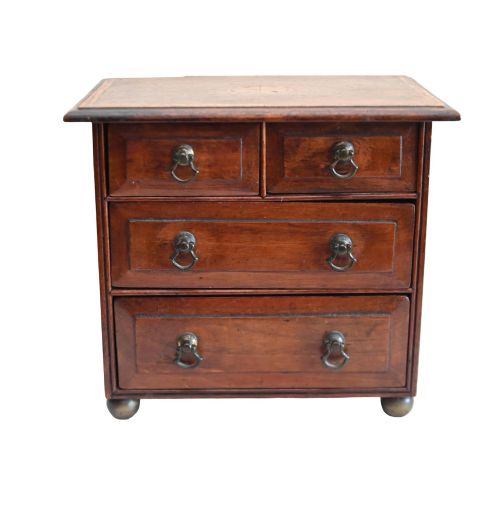
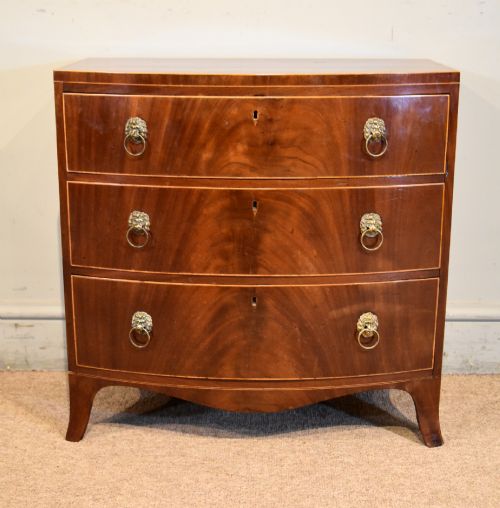
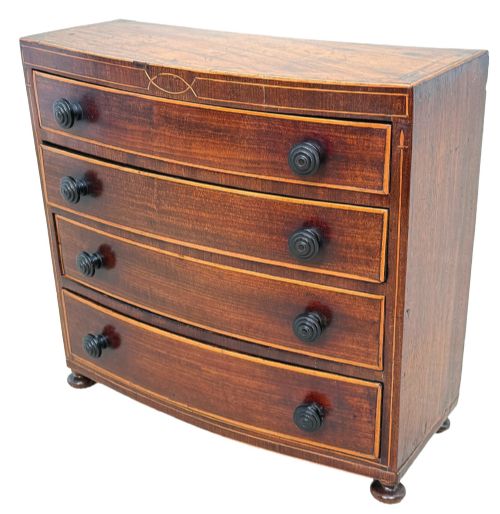
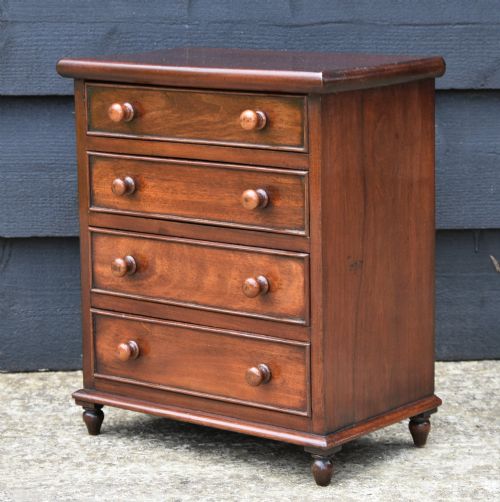
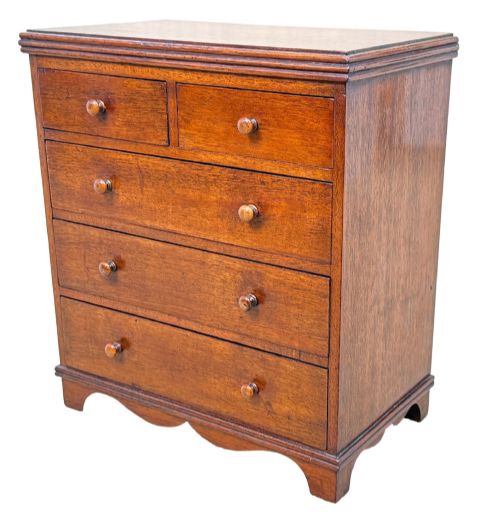
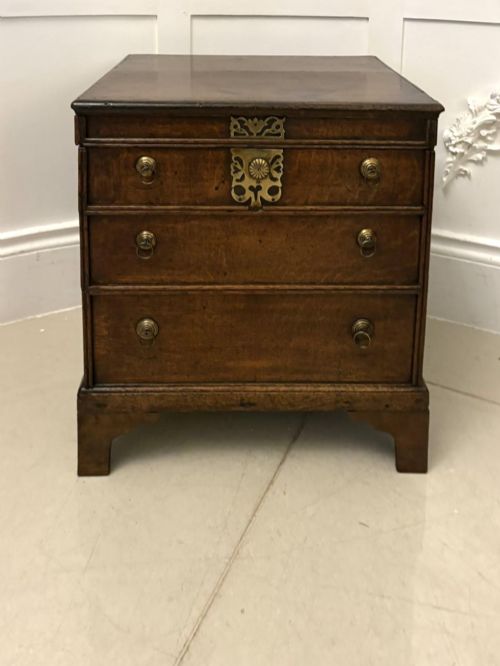
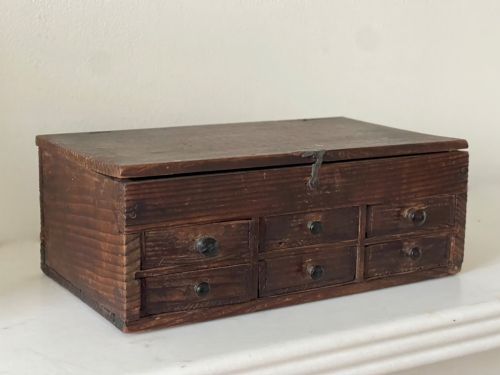
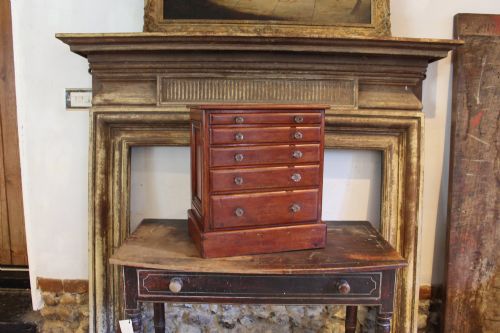
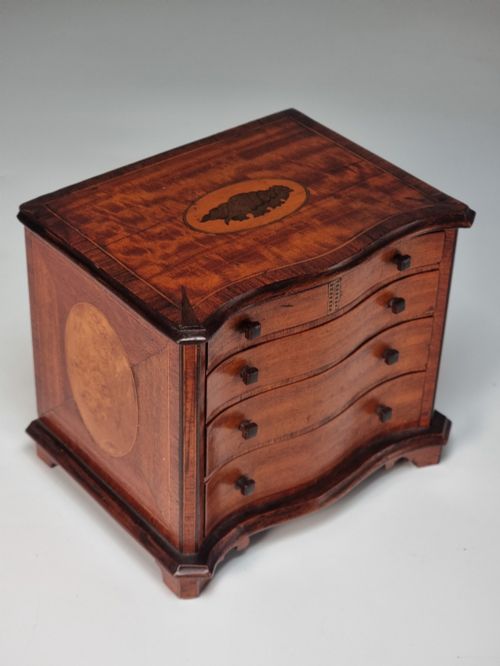
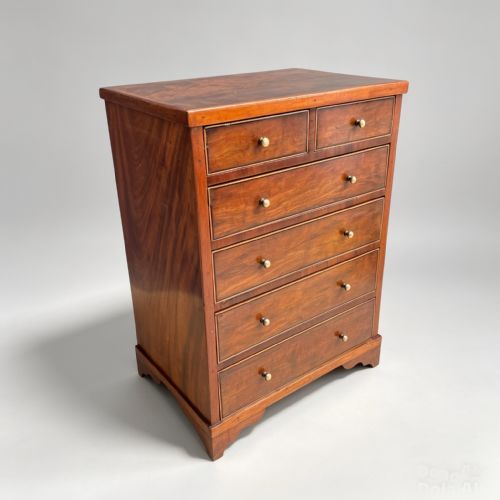
These small brown apprentice chests bring the presence of full-size furniture into a compact tabletop scale.
Brown Apprentice Chest
A brown apprentice chest is a small-scale piece of furniture, often built by a craftsman in training or produced as a detailed miniature for display and storage. When you search for a brown apprentice chest, you encounter items primarily from the Georgian, Regency, and Victorian periods.
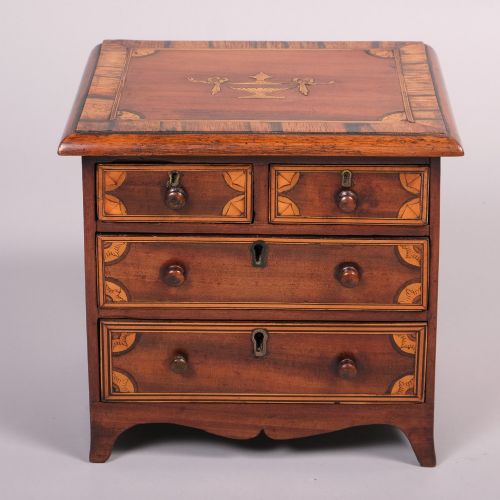
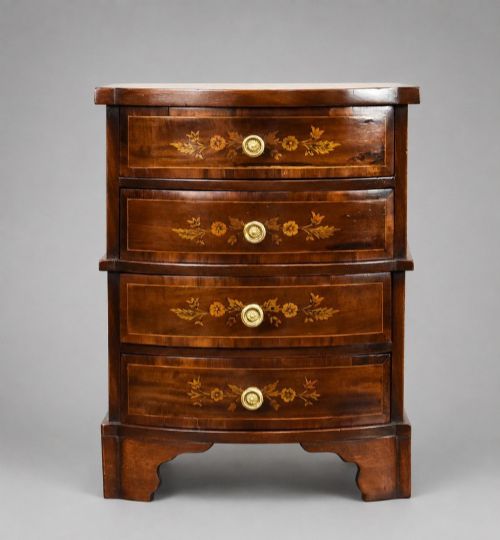
The form mirrors standard domestic cabinetry, most commonly appearing as miniature chests of drawers with working brass handles and key escutcheons. These items range from plain utilitarian pine to finely figured mahogany, burr walnut, and oak.
How they were made
Cabinetmakers constructed these small chests using traditional timber framing, dovetail joints for the drawers, and turned wooden or brass pulls. Mahogany, oak, and walnut provide the primary structural woods, frequently accented with veneers, stringing, and mother of pearl inlay.
Secondary timbers such as pine appear on drawer linings and backboards, reflecting the standard workshop practices of the eighteenth and nineteenth centuries.
Brown Apprentice Chest Retail Price Guide 2026
Typical asking prices for brown apprentice chest among the pieces listed under this phrase on Sellingantiques today, from the lower quarter to the upper quarter. They describe what is for sale here now, not the wider market.
Listings feature woods such as mahogany, oak, pine, walnut, burr yew, and satinwood across Georgian and Victorian periods.
What varies in quality
Quality rests on the precision of the joinery and the selection of timber figures, such as burr oak, yew, or flame mahogany. The execution of miniature dovetails and the scale of the mouldings separate utilitarian pieces from those made by master craftsmen or accomplished learners.
Proportion and attention to detail also define the work, where superior examples maintain the exact architectural balance of full-size furniture down to the smallest drawer lining.
A. F. Lloyd, Bideford
The Brown Apprentice Chest Glossary
- Apprentice piece
- A demonstration item created by a woodworker to prove skill before entering a trade guild or finishing training. These objects show the maker's competence in miniature scale.
- Bow front
- A curved cabinet front that swells outward in the centre, seen frequently on Regency and Victorian miniature chests.
- Dovetail
- An interlocking joint used at the corners of drawers, formed by interlocking wedge-shaped fingers. This joint provides durable construction without relying on metal fasteners.
- Escutcheon
- A small plate of brass or bone placed around a keyhole to protect the surrounding wood from wear. They are standard fixtures on period miniature drawers.
Brown Apprentice Chest: Frequently Asked Questions
What is a brown apprentice chest?
A brown apprentice chest is a small-scale cabinet made from timbers like mahogany or oak, styled after full-size furniture.
Craftsmen built these items as demonstration pieces or tabletop storage for valuables and documents.
How were apprentice chests used?
Original makers used them to demonstrate mastery of woodworking techniques to their guilds or employers.
Later owners utilised the small drawers to store jewellery, watchmaker tools, or personal trinkets on a tabletop.
How do I date a miniature chest?
Dating relies on identifying the primary wood species, construction methods, and stylistic cues such as Regency curves or Georgian proportions.
Secondary woods and hardware styles also help narrow the decade of manufacture.
Where should I place a small chest?
These compact pieces fit easily on top of desks, sideboards, or chests of drawers in domestic settings.
Keeping them out of direct sunlight protects the antique wood and delicate veneers from fading.