



Brown and Blue Stoneware
Brown and blue stoneware brings together utilitarian density and rich surface decoration, offering robust vessels shaped by late nineteenth and early twentieth century makers.
Brown and Blue Stoneware
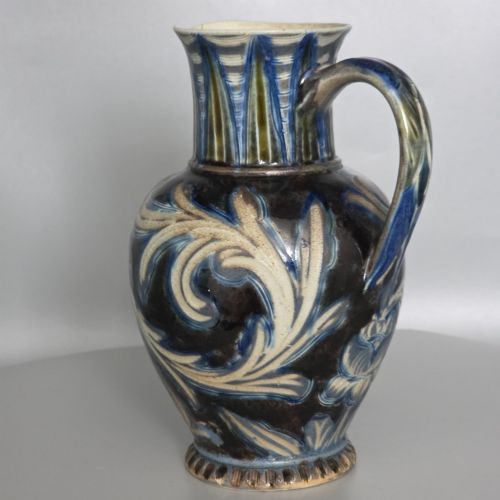
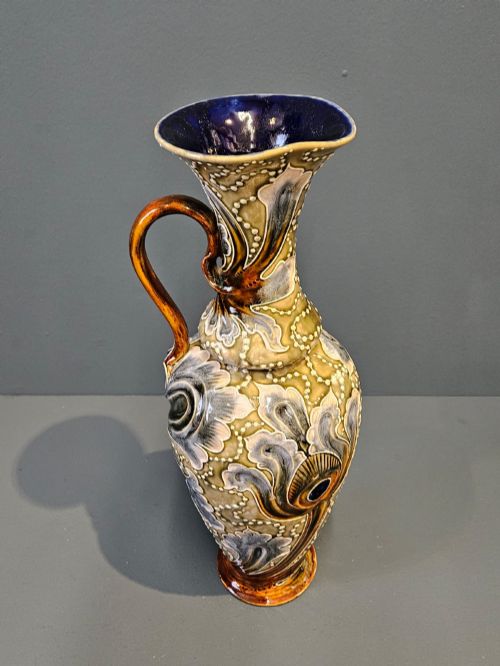
Brown and blue stoneware comprises dense, vitrified ceramic vessels designed primarily for decorative display and domestic utility during the Victorian, Arts and Crafts, and Art Nouveau periods. You are most likely to encounter salt-glazed ceramic jugs, vases, and jardiniere planters produced by major British potteries such as Doulton during the late nineteenth century.
The form factor ranges from large ewers and tobacco jars to delicate beaker vessels and matching jug and bowl sets. These pieces utilise durable clay bodies fired at high temperatures to achieve impermeability, often enhanced with applied or incised decorative motifs.
Makers spanned from large commercial potteries to individual artists working within specific stylistic movements. The resulting inventory reflects both mass production standards and bespoke studio outputs from the 1870s through to the early decades of the twentieth century.
How they were made
Stoneware bodies were shaped on the potter's wheel or cast in moulds before receiving intricate surface ornamentation. Artisans applied salt glazing during the high-temperature kiln firing to produce a characteristic pebbled texture, or utilised rich cobalt blue and warm brown glazes to define patterned bands.
Decoration frequently involved incised geometric or floral patterns, sometimes complemented by raised slip trailing or silver mounts. Individual artists signed or stamped their completed pieces, providing a record of the decorator's hand within studio workshops.
Brown and Blue Stoneware Retail Price Guide 2026
Typical asking prices for brown and blue stoneware among the pieces listed under this phrase on Sellingantiques today, from the lower quarter to the upper quarter. They describe what is for sale here now, not the wider market.
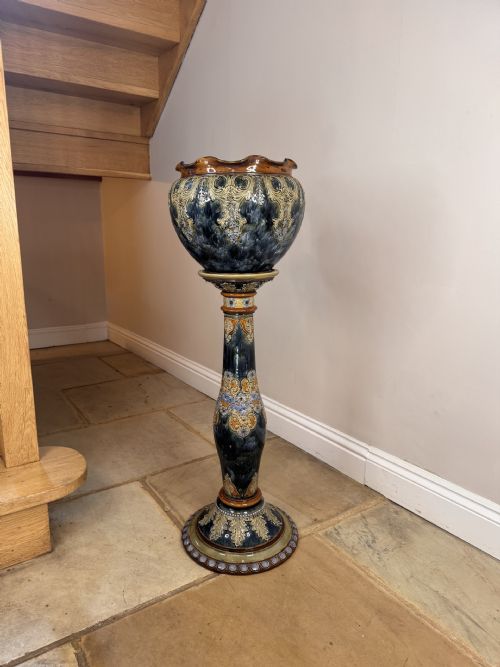
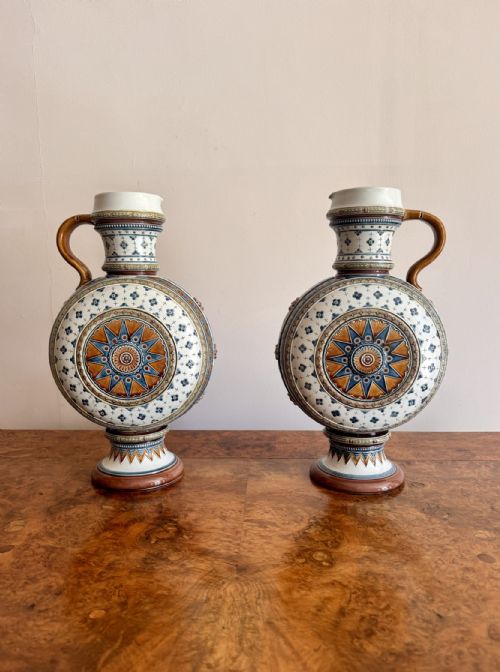
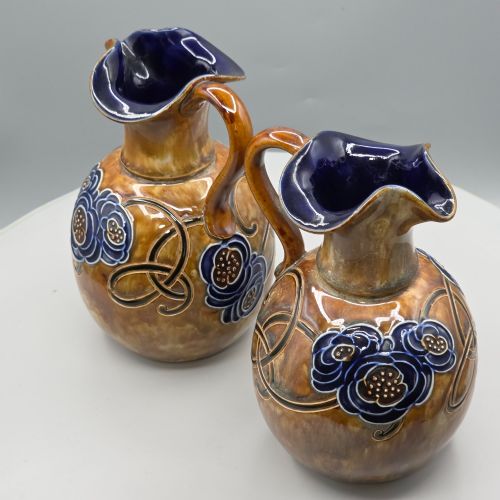
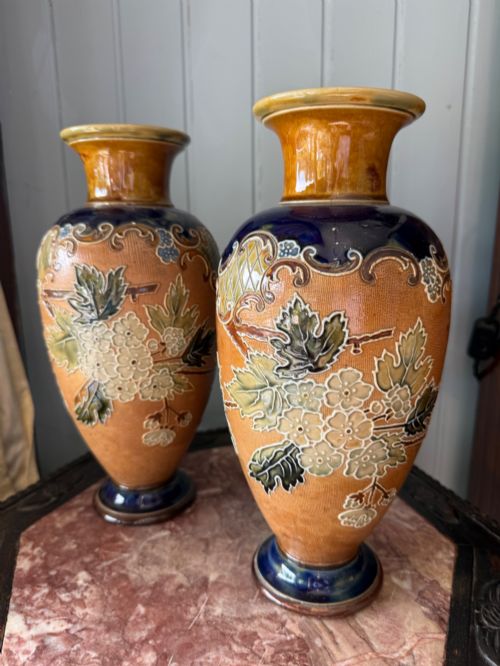
The listings show diverse forms spanning salt-glazed ceramic jugs, decorative ewers, and large jardiniere planters.
What varies in quality
The distinction between standard commercial output and superior quality items rests upon the crispness of the incised decoration and the control of the salt glaze. Pieces featuring named artists and complex hand-applied ornamentation represent the upper tier of production.
Proportion and symmetry in larger forms, such as jardiniere vessels and tall ewers, dictate visual success. The depth and saturation of the brown and blue tones further distinguish exceptional examples from simpler utilitarian wares.
Royal Doulton·Doulton Lambeth·Villeroy and Boch·Doulton Burslem
The Brown and Blue Stoneware Glossary
- Stoneware
- A robust ceramic type fired at high temperatures until vitrified and rendered non-porous. It provides a durable foundation for decorative glazes.
- Salt Glaze
- A glossy, slightly pitted texture formed by throwing common salt into the kiln during high-temperature firing. This chemical reaction creates a durable orange-peel surface.
- Jardiniere
- A large ornamental pot or stand designed to hold growing plants or flowers. These vessels often feature prominent brown and blue decorative banding.
- Slip
- A liquid mixture of clay and water applied to ceramic bodies for surface decoration or coating. It can be trailed or painted to create raised patterns.
- Vitrification
- The high-temperature process that melts ceramic particles into a glass-like state. This ensures the finished vessel holds liquids without additional internal sealing.
Brown and Blue Stoneware: Frequently Asked Questions
How do I clean brown and blue stoneware?
Wash these ceramic pieces gently in warm water using a mild soap and a soft cloth. Avoid abrasive sponges or harsh chemical cleaners that might damage the salt-glazed or slip-decorated surfaces.
Dry the vessel thoroughly with a lint-free towel after washing. Take particular care with pieces that feature delicate silver mounts or older repair work.
Were these vessels used for food?
Many of these stoneware pieces served functional roles in the home, including tobacco storage, beverage pouring, and general kitchen utility. The vitrified clay body made them safe for holding liquids and provisions.
Over time, utilitarian items transitioned into decorative display objects. Today, collectors primarily prize them for their artistic glazes and historical association with the Arts and Crafts movement.
How do I identify a Victorian piece?
Examine the base of the vessel for manufacturer stamps, impressed artist initials, and registration numbers specific to the nineteenth century. Stylistic indicators like dense floral incising and naturalistic Art Nouveau motifs also point towards this era.
The weight and density of the salt-glazed ceramic provide further clues to period production standards. Comparing the piece against documented workshop patterns helps confirm the exact decade of manufacture.
Can I use these vases for fresh flowers?
Water-resistant stoneware bodies safely hold fresh flowers without leaking. The natural vitrification of the clay protects the interior walls from moisture damage.
Place protective felt pads beneath heavy bases to safeguard furniture surfaces. Empty and dry the vessel after use to prevent mineral deposits from forming along the waterline.