

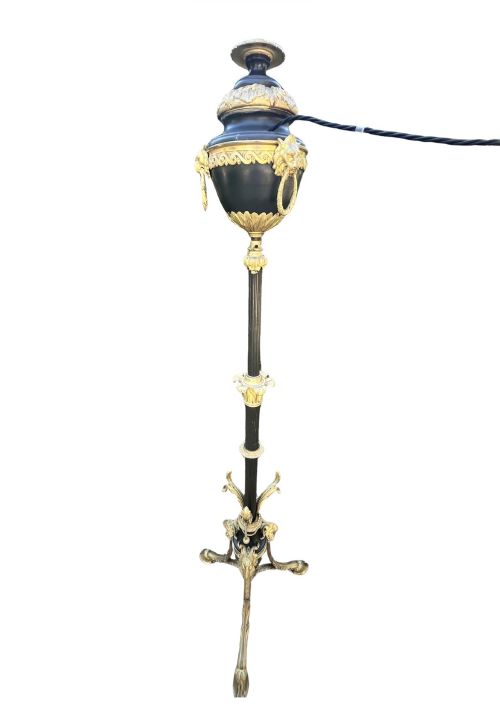
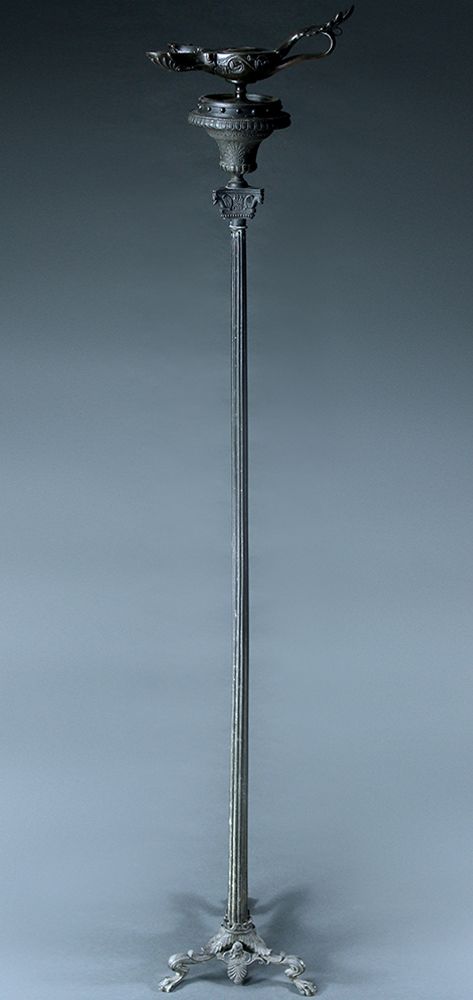


Bronzed Standard Lamp
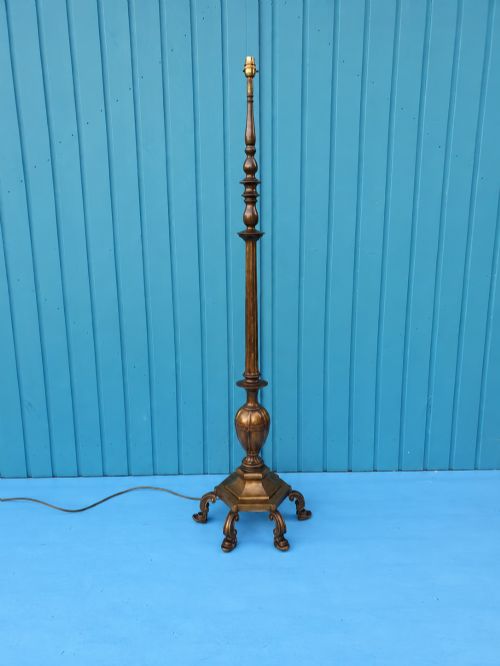
A bronzed standard lamp brings immediate vertical presence and heavy cast metal craft to a room, offering both period weight and adjustable illumination.
Bronzed Standard Lamp
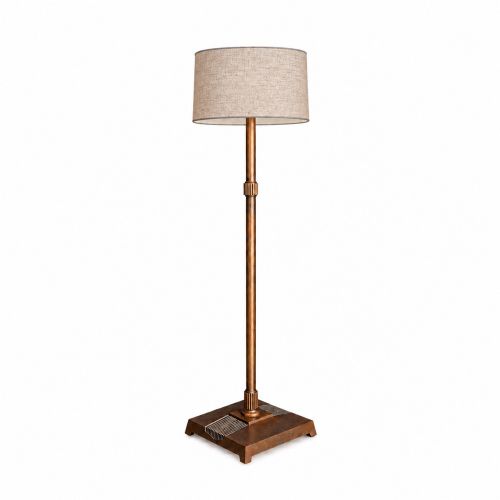
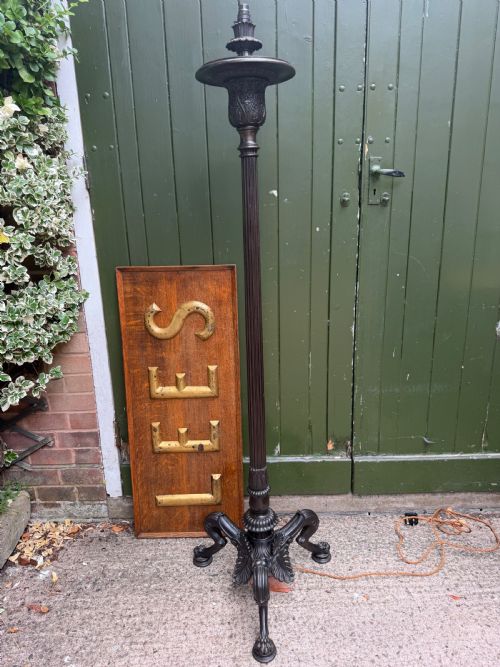
When you search for a bronzed standard lamp, you are looking at tall floor-standing lighting fixtures cast or finished in bronze, patinated metal, and brass. These pieces stand upward on slender or figural columns, designed to illuminate a room from a grounded position rather than a table top.
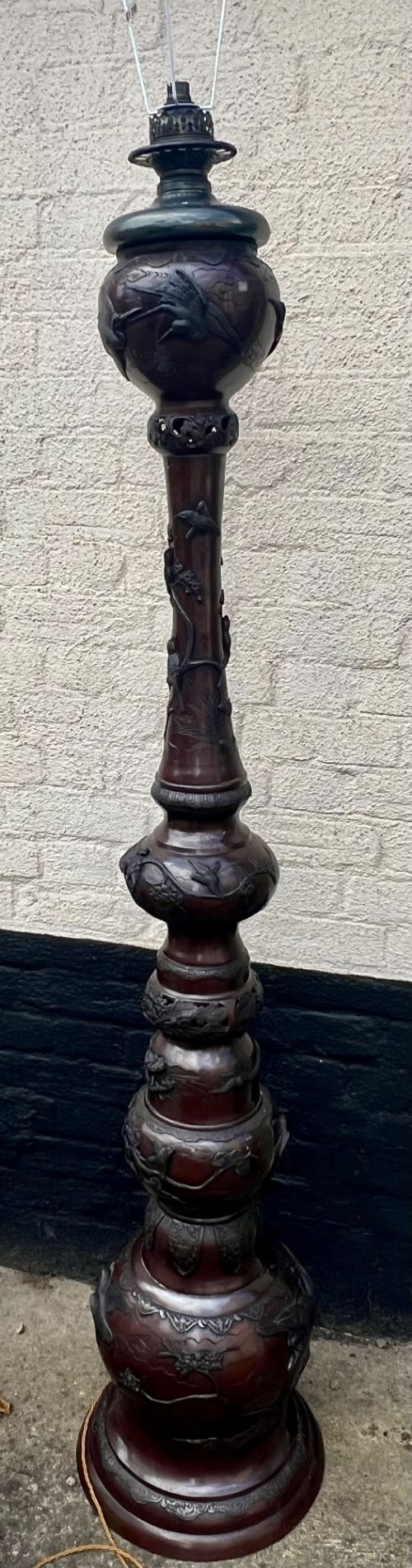
The versions you are most likely to meet on this page span the nineteenth century into the twentieth, taking shapes from Victorian, Edwardian, and Art Deco eras. They appear in styles ranging from Neoclassical and Rococo Revival to Japanese Meiji and Italianate-Baroque.
Makers and workshops across Britain, France, Sweden, Italy, and Japan produced these floor lamps to anchor large reception rooms and parlours. You will encounter floor lamps, torcheres, and twin-arm variations alongside occasional table lamps included in the wider floor lighting selections.
How they were made
These standard lamps rely on cast metals such as bronze, patinated bronze, gilt bronze, and cast-iron to form heavy, stable bases and detailed vertical stems. Workshops applied chemical patination or gilt finishes to achieve the characteristic dark bronzed or gilded surface tones.
Many examples incorporate adjustable mechanisms, twin arms, or figural components cast in distinct sections and joined together. Fabric shades in linen or other textiles were historically paired with these metal standards to diffuse the light downwards.
Bronzed Standard Lamp Retail Price Guide 2026
Typical asking prices for bronzed standard lamp among the pieces listed under this phrase on Sellingantiques today, from the lower quarter to the upper quarter. They describe what is for sale here now, not the wider market.
Listings feature periods spanning the nineteenth century, Edwardian era, and the 1920s and 1930s Art Deco movement.
What varies in quality
The distinction between standard and superior pieces lies in the crispness of the metal casting and the depth of the patination. Finer examples display deeply chased details on classical motifs or figural elements, whereas lesser pieces show softer, shallower surface definition.
Structural integrity also separates the range, with heavier cast bases and robust adjustable stems commanding greater presence than lighter, more utilitarian constructions. The quality of the original gilding or the richness of the bronze patina dictates the visual impact of the lamp.
The Bronzed Standard Lamp Glossary
- Patinated bronze
- Bronze that has been treated with chemical solutions to produce a dark, aged surface finish. This technique protects the metal while giving it an antique appearance.
- Torchere
- A tall ornamental stand or floor lamp designed to hold a light source. They often feature slender columns derived from classical architecture.
- Gilt bronze
- Bronze that has been coated with a thin layer of gold or gold leaf. It is frequently referred to as ormolu in French pieces.
- Neoclassical
- A style drawing inspiration from the classical art and culture of ancient Greece and Rome. It appears here in strict geometric lines and classical Grecian design elements.
- Meiji Period
- The era in Japanese history spanning from 1868 to 1912, known for distinct bronze casting techniques and decorative arts exported to the West.
Bronzed Standard Lamp: Frequently Asked Questions
What is a bronzed standard lamp?
A bronzed standard lamp is a tall floor-standing lighting fixture made from cast bronze, patinated metal, or brass. These pieces are designed to stand directly on the floor and provide elevated illumination.
They utilise heavy metal bases to support vertical columns, which frequently feature adjustable heights or multiple arms for widespread lighting.
How do I date a bronzed standard lamp?
Dating these lamps involves examining the casting techniques, materials, and stylistic details such as Victorian revival motifs or Art Deco geometry. Nineteenth-century examples often display heavy cast-iron or patinated bronze with classical ornamentation.
Later Edwardian and 1920s pieces introduce streamlined forms or different finishes like copper and linen pairings. Comparing the decorative style to known period designs helps narrow the manufacturing era.
Where should I place a floor lamp?
These tall lamps suit corners of living rooms, beside reading chairs, or flanking large pieces of furniture to add vertical height to a room. Their heavy metal construction requires a stable, flat surface on carpets or wooden floors.
Because many include adjustable stems or twin arms, you can position them to cast light downward over seating areas or upward to wash a wall.
What is the difference between bronze and brass?
Bronze is an alloy primarily composed of copper combined with tin, yielding a darker, heavier material that accepts patination readily. Brass is an alloy of copper and zinc, which naturally presents a brighter, more golden yellow colour.
Many standard lamps described as bronzed use patinated brass or cast-iron treated to mimic the darker, richer tones of genuine bronze.