


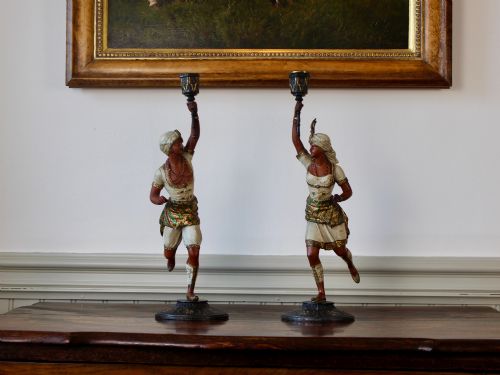


Bronzed Spelter Figure Pair
These bronzed spelter figure pair options bring substantial figurative presence to a room, offering the visual weight of bronze without the same cost.
Bronzed Spelter Figure Pair
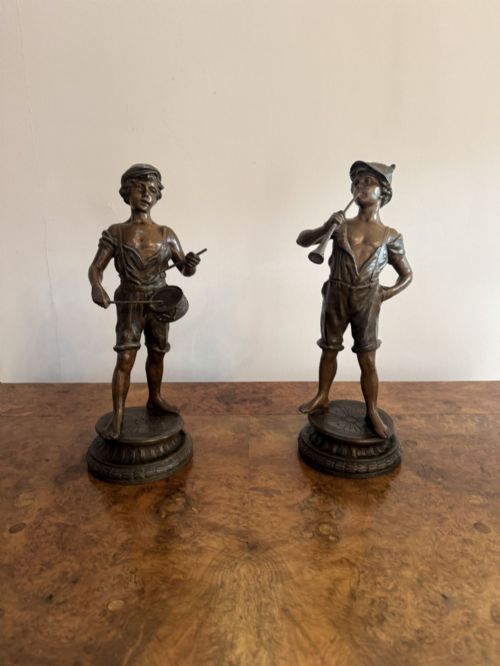
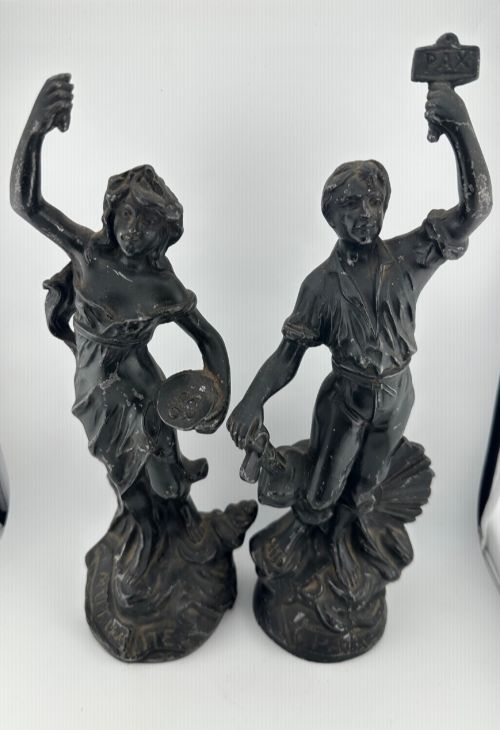
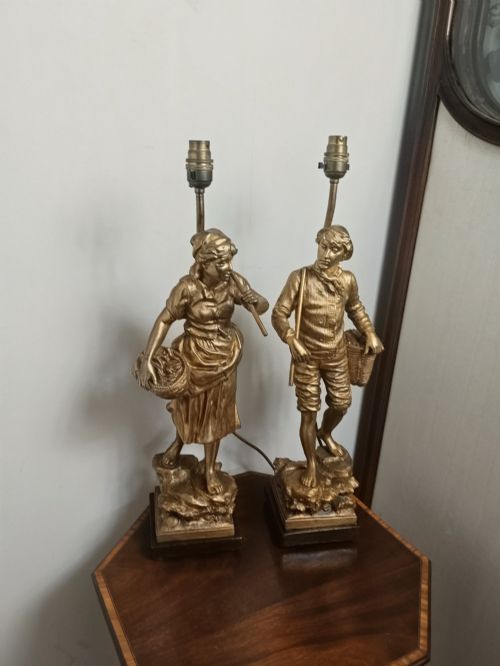
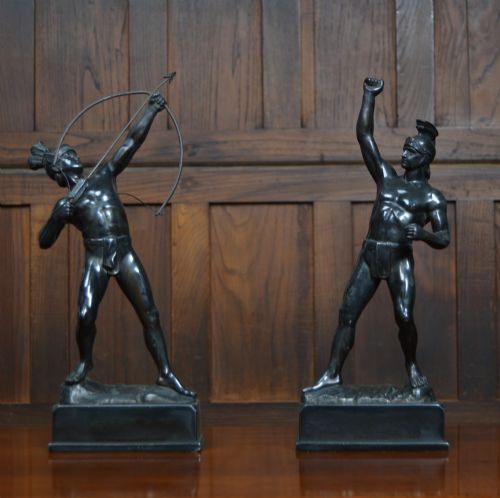
When searching for a bronzed spelter figure pair, collectors find matching sets of decorative metalwork designed primarily as mantel ornaments, candlesticks, or lamps. These pairs depict soldiers, cavaliers, medieval characters, allegorical figures like Spring and Autumn, and classical motifs.
The versions most commonly met on this page originate from the nineteenth century, including Victorian and Edwardian examples, alongside French interpretations in styles ranging from Art Nouveau to Renaissance Revival. Many of these pairs stand on wooden or metal bases, sometimes incorporating glass elements or mirrors.
The manufacturing tradition behind a bronzed spelter figure pair draws heavily on French foundry work from the late nineteenth century. Pieces often emerge as representations of historical or allegorical subjects, designed to flank a centrepiece on a mantelpiece or sideboard.
How they were made
Makers cast these objects using spelter, a zinc alloy that takes detail well while remaining softer and lighter than bronze. Founders then applied a bronze patina or cold painted finishes to simulate the appearance of more expensive metalwork.
Bronzed Spelter Figure Pair Retail Price Guide 2026
Typical asking prices for bronzed spelter figure pair among the pieces listed under this phrase on Sellingantiques today, from the lower quarter to the upper quarter. They describe what is for sale here now, not the wider market.
Listings feature periods from the Victorian era through to Edwardian times, alongside French nineteenth-century and Art Nouveau styles.
What varies in quality
The crispness of the casting separates finer examples from softer, more blurred production runs. Detail in facial expressions, costume folds, and weaponry indicates the skill of the original pattern maker and the condition of the mould.
The application and preservation of the bronze patina or cold painted finish dictate visual success. A stable, richly toned surface finish retains depth, whereas poorly applied or heavily rubbed finishes diminish the sculptural definition.
E Rousseau·Sylvain Kinsburger
The Bronzed Spelter Figure Pair Glossary
- Spelter
- A zinc alloy commonly used in the nineteenth century as an economical alternative to bronze. It allows for intricate casting but possesses a softer structure.
- Bronze patina
- A chemical or applied surface treatment designed to give zinc alloy or base metals the dark, lustrous appearance of aged bronze. This finish can wear thin over decades of handling.
- Cold painting
- A method of applying non-fired paint to metal sculptures after the casting process is complete. This technique permits vivid polychrome effects on garments and details.
- Figural
- Describes an object that incorporates human or animal forms into its design, such as soldiers, cavaliers, or allegorical figures. These serve a decorative function rather than a purely utilitarian one.
Bronzed Spelter Figure Pair: Frequently Asked Questions
What is spelter?
Spelter is a zinc-based alloy utilised extensively in the nineteenth century for decorative figures and ornamental objects. It served as a cost-effective alternative to bronze.
Because the metal is relatively soft, objects cast in spelter can achieve fine surface detail, though they require gentle handling to avoid bending or surface damage.
How do I clean them?
Cleaning requires only a soft, dry cloth to remove accumulated dust from crevices and raised details. Moisture and chemical polishes will strip away the applied bronze patina or cold painted finishes.
Keeping these objects away from direct sunlight and damp environments helps preserve the integrity of the patination and any integrated wooden or glass components.
Are they solid bronze?
These pieces are cast from a zinc alloy rather than solid bronze, though they frequently feature a bronze patinated surface. This composition makes them significantly lighter than equivalent bronze sculptures.
A magnet or a discreet check beneath the base often reveals the lighter, softer nature of the underlying metal.
What periods are common?
The listings span the nineteenth and early twentieth centuries, with Victorian and Edwardian examples appearing frequently alongside French nineteenth-century works. Styles range from Neoclassical and Renaissance Revival to Art Nouveau.
Design choices shifted over these decades, moving from rigid historical revivals towards the flowing lines associated with the turn of the century.