


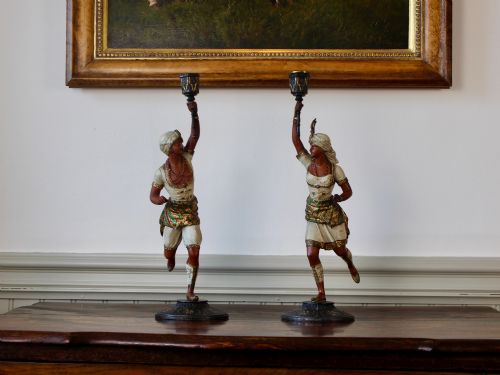


Bronzed Spelter Figural Sculpture
These bronzed spelter figural sculpture pieces bring expressive human form and period character into a room without the heavier cost of solid bronze.
Bronzed Spelter Figural Sculpture
When you search for bronzed spelter figural sculpture, you encounter figural representations cast from zinc-based alloy and given a dark or metallic surface finish. The selections here span the Victorian era, the Edwardian period, and the interwar Art Deco years, capturing human forms from dancers and cavaliers to allegorical figures.
The version you are most likely to meet on this page is the Art Deco female figure, frequently mounted upon a contrasting marble or onyx base. These twentieth-century pieces often double as table lamps, lighters, or clock garnitures, showing the strong French influence present across the inventory.
Earlier nineteenth-century examples lean towards classical subjects, cavaliers, and water carriers, often reflecting historical French sculpture traditions. These nineteenth-century pieces demonstrate a more elaborate approach to form and detail before the streamlined geometries of the 1930s took hold.
Materials and Working Methods
Spelter serves as the primary base material, utilising a relatively soft and inexpensive zinc alloy that casts intricate details cleanly. Makers applied surface patination, cold painting, or bronzed finishes to mimic the appearance of traditional cast bronze.
Sculptures are frequently mounted onto heavier natural stone supports such as marble, alabaster, or onyx to provide stability and visual contrast. Glass elements appear alongside these metal and stone components, particularly in the form of torchere shades on figural lamps.
Listings span the nineteenth century through to 1930, uniting French Art Deco figures with Victorian historicism.
Assessing Quality and Execution
The quality of the patination or cold-painted finish dictates the visual depth of the piece, as original patination wears differently over time than later retouching. Furthermore, the selection of the supporting base - ranging from simple wood to high-grade onyx or marble - influences the overall weight, balance, and visual authority of the sculpture.
Auguste Moreau·P. Sega
The Bronzed Spelter Figural Sculpture Glossary
- Spelter
- A zinc-based alloy used as an economical alternative to bronze for casting decorative figures and lamps during the nineteenth and twentieth centuries. It is softer and lighter than true bronze.
- Patination
- The surface treatment applied to metal to simulate age or create a bronzed appearance. This finish can range from a dark uniform tone to multicoloured cold painting.
- Garniture
- A set of matching decorative objects designed to be displayed together, most commonly a mantel clock flanked by matching candelabras or urns. In this inventory, they appear as three-piece sets.
- Torchere shade
- An upward-pointing glass shade designed to sit atop a figural lamp. These shades direct light toward the ceiling while illuminating the metal figure below.
- Alabaster
- A fine-grained translucent stone used for carving decorative bases. Its softness allows for smooth shaping beneath figural sculptures.
Bronzed Spelter Figural Sculpture: Frequently Asked Questions
What is spelter made from?
Spelter is a zinc-based alloy that melts at lower temperatures than bronze, making it well-suited for commercial casting. It was widely utilised across Europe for decorative objects.
Because the metal is relatively soft, objects made from it require sturdy stone bases to prevent damage and provide necessary weight.
How do I clean my sculpture?
Dusting with a dry, soft cloth is sufficient for routine maintenance of these metal and stone surfaces. Avoid water and chemical cleaners which can strip the patination.
Take care around cold-painted areas, as aggressive rubbing will remove the delicate surface pigments applied by the maker.
Are these figures solid bronze?
These pieces are cast from spelter rather than solid bronze. Manufacturers applied surface finishes to give the zinc alloy the appearance of aged bronze.
Examining the underside or any areas of wear will usually reveal the lighter grey metal beneath the surface bronze coating.
Why are they mounted on marble?
Spelter figures are relatively light and soft, requiring a dense stone base for proper balance and support. Onyx, marble, and alabaster were chosen to anchor the sculpture securely.
These stone bases also contributed to the overall decorative appeal, particularly in Art Deco designs where geometric marble plinths complemented the dynamic figures.