


Bronzed Mantel Clock
When you search for a bronzed mantel clock, you are looking at substantial timepieces cast in metal and set upon stone or wood.
Bronzed Mantel Clock
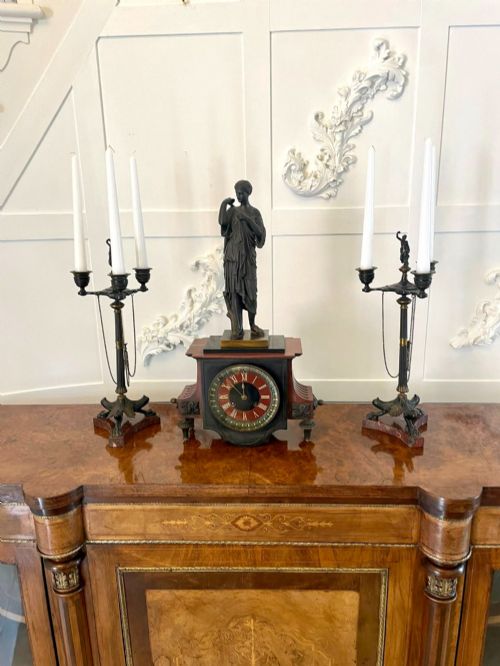
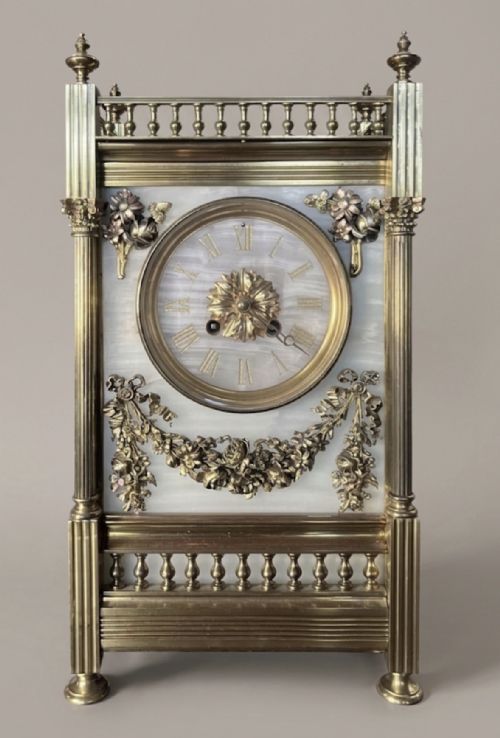
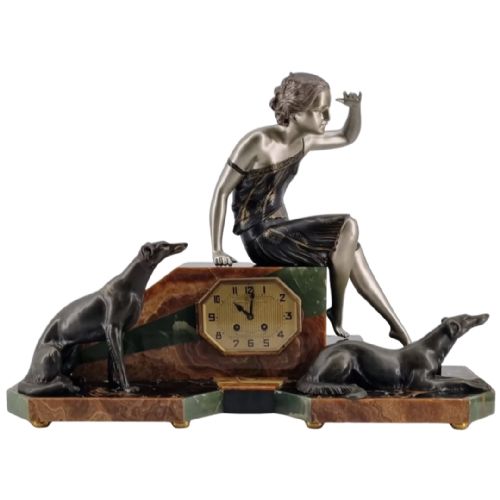
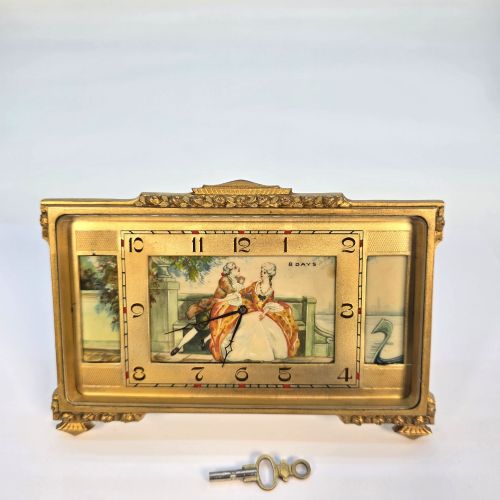
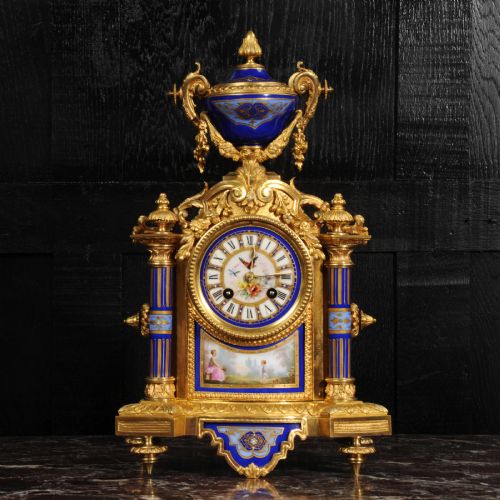
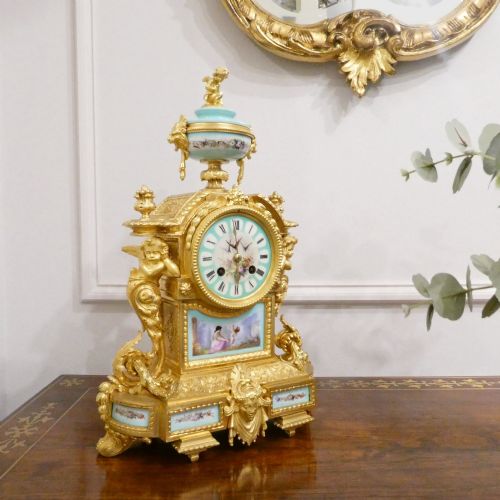
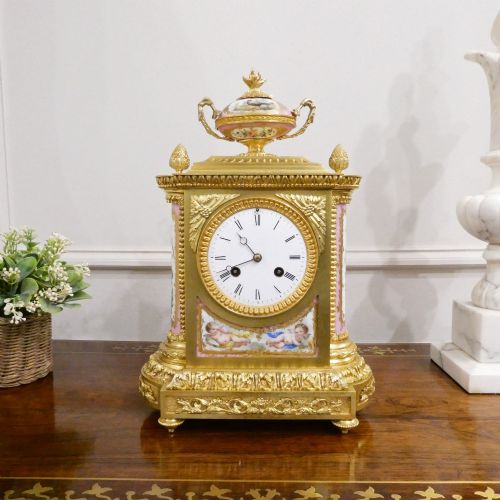
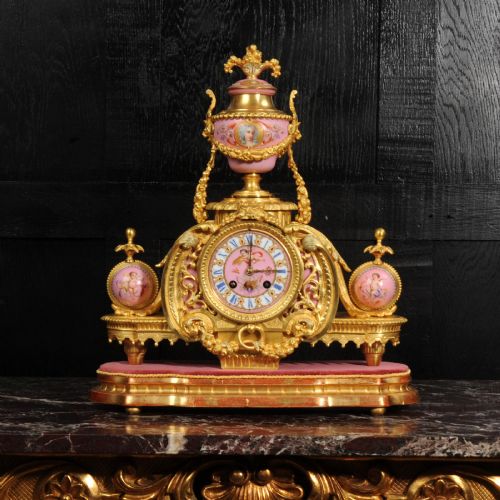
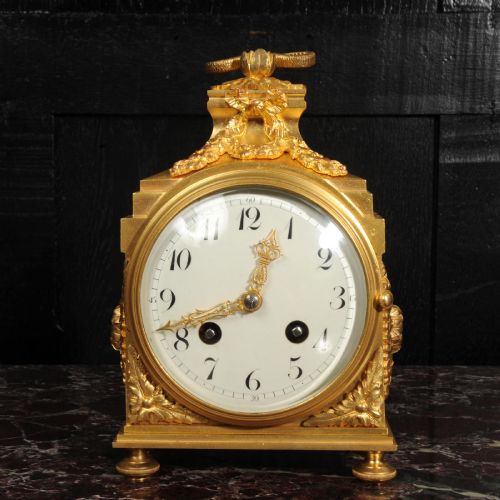
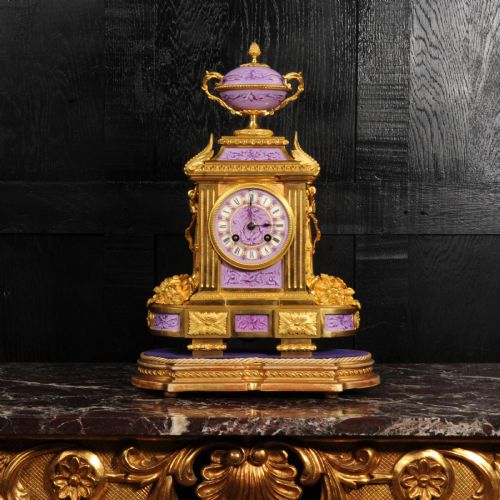
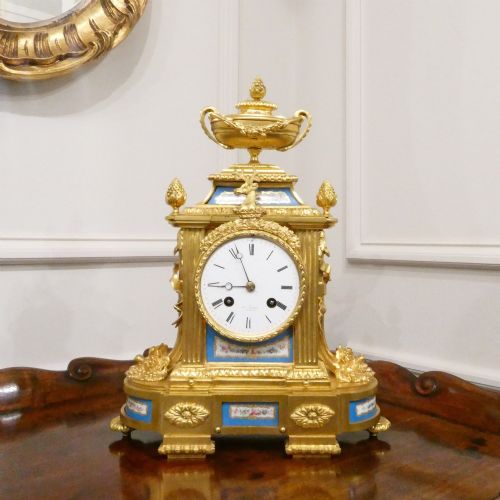
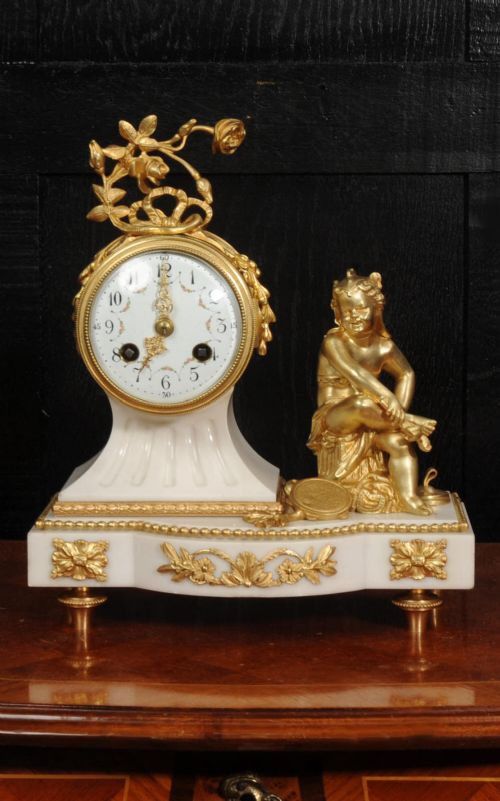
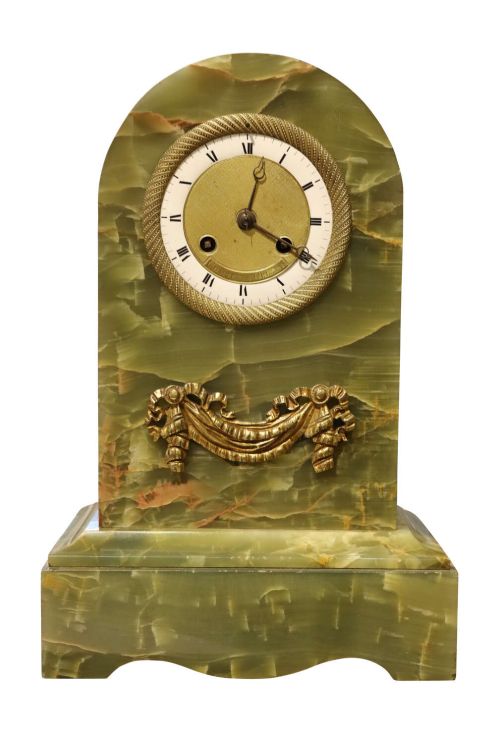
A bronzed mantel clock is a domestic timekeeper featuring metalwork with a dark, patinated or gilded finish, commonly mounted upon a base of marble, onyx or slate. You will frequently encounter nineteenth-century French examples on this page, ranging from formal architectural portico designs to figural subjects involving classical figures, animals or allegorical themes.
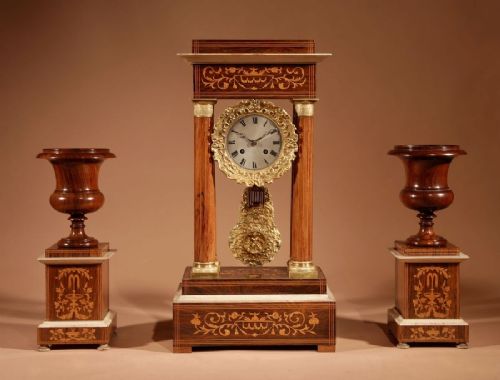
The objects span varied stylistic revivals including Louis XVI, Empire and Rococo, alongside later Art Deco pieces. Makers often incorporated enamel dials and intricate decorative mounts, sometimes accompanied by matching clock garniture sets to flank the central timepiece on a mantelpiece.
While many are French productions from houses like Japy Freres or Samuel Marti, English regency brass timepieces also appear. These clocks served both a utilitarian purpose and a decorative function in period drawing rooms and parlours.
How they were made
Makers constructed these clocks using bronze, brass and ormolu for the structural cases and figural elements, often applying a dark bronze patination alongside bright fire-gilding. Enamel was utilised for the clock faces, featuring painted Roman or Arabic numerals.
Bases and architectural columns frequently employ white, green or pink marble, slate and occasionally porcelain or tortoiseshell veneer. Intricate details were cast, chased and assembled by hand, incorporating mechanical movements driven by springs or pendulums.
Watch out for nineteenth-century mantel clocks featuring elephants, serpents, and figures of Napoleon guarding the dial.
What varies in quality
Quality rests in the crispness of the bronze casting and the depth of the chasing, where sharper, more expressive details distinguish finer works from simpler production pieces. The integration of materials also matters, such as the seamless fit of marble mounts and the clarity of painted enamel dials signed by established makers.
Mechanical execution further separates the range, with fully restored movements by renowned French clockmakers commanding greater interest. The presence of matching garnitures and original glass domes or wall brackets elevates the completeness of the ensemble.
Achille Brocot·Henry Marc·Japy Freres·Charles à Orléans·Samuel Marti·Vincenti·Siffel and Cartier·R Varnier·Thuret·Reiche·Sega·Baetens London
The Bronzed Mantel Clock Glossary
- Ormolu
- Gilded bronze produced by applying a mercury and gold amalgam to a bronze base and firing it. This technique creates a durable, bright golden surface found on many nineteenth-century French clock cases.
- Garniture
- A set of decorative matching objects designed to be displayed together on a mantelpiece. These typically consist of a central clock flanked by matching vases, urns or figural candelabra.
- Champlevé
- An enamelling technique where troughs or cells are hollowed out of the metal surface and filled with vitreous enamel powder before firing. It frequently decorates the bezels and panels of late nineteenth-century clocks.
- Crystal Regulator
- A clock housed in a brass or gilt frame with glass panels on all four sides, allowing a clear view of the pendulum and movement within. These became popular during the later Victorian period.
- Portico Clock
- A tall, architectural mantel clock featuring a stepped pediment supported by four columns, often enclosing a suspended pendulum. They frequently showcase symmetrical classical proportions.
Bronzed Mantel Clock: Frequently Asked Questions
What is a bronzed mantel clock?
A bronzed mantel clock is a mechanical timekeeper housed in a patinated metal case, designed to sit upon a fireplace mantel or shelf. These pieces range from simple timepieces to ornate figural sculptures.
They combine metal casting with stone bases, reflecting the stylistic tastes of the eighteenth and nineteenth centuries.
How do I wind a mantel clock?
Most mechanical mantel clocks require a key inserted into winding holes on the enamel dial to tension the springs. Care must be taken not to over-wind the mechanism.
Regulating the pendulum ensures the clock keeps accurate time once it is placed on a level surface.
What is a clock garniture?
A clock garniture is a matching set comprising a central mantel clock accompanied by two side pieces, such as urns or candelabra. These sets were designed for symmetrical placement on a fireplace mantel.
They share the same materials and decorative motifs as the main clock.
Are these clocks French or English?
The majority of decorative mantel clocks from this period originate from France, particularly Paris and surrounding manufacturing centres. English examples also exist, often taking the form of brass timepieces.
French pieces tend to lean towards ornate bronze, marble and porcelain combinations.