







Bronzed Girl Sculpture
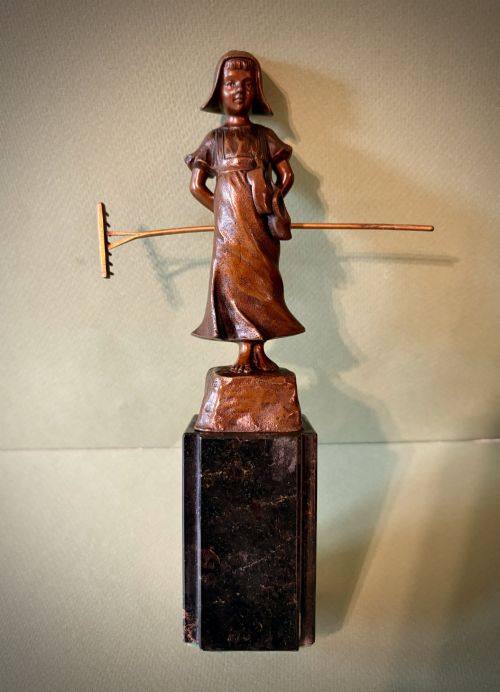
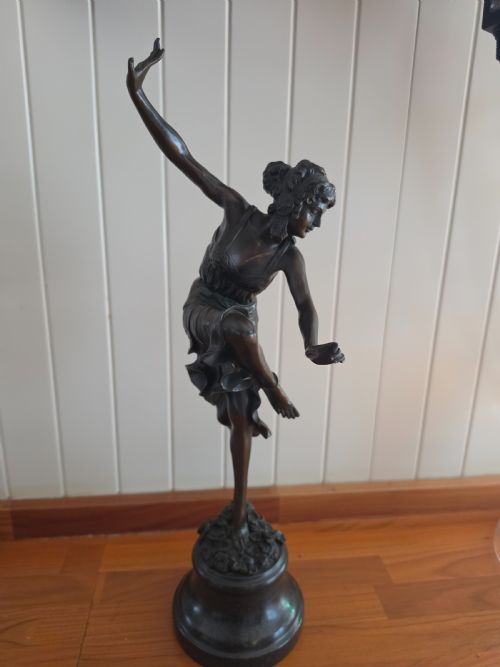
A bronzed girl sculpture captures youthful grace in metal, combining period style with expressive character that anchors a room.
Bronzed Girl Sculpture
A bronzed girl sculpture represents young female figures across various historical periods, frequently appearing in forms such as dancers, maidens, and bust portraits. When exploring this selection, buyers encounter works ranging from nineteenth-century French and Japanese Meiji creations to distinct Art Deco pieces.
The objects span multiple stylistic movements, including Art Nouveau and Vienna Bronze, alongside provincial and classical interpretations. Figures often interact with animals, musical instruments, or architectural elements, reflecting the aesthetic priorities of their respective eras.
Most examples originate from European workshops and Asian foundries, utilising traditional sculptural formats like statuettes, figurines, and full busts. These pieces document changing artistic interpretations of youth and motion across the nineteenth and early twentieth centuries.
Materials and Technique
Makers shaped these sculptures primarily from bronze, patinated metal, and spelter, often mounting the completed metal figures onto heavy bases of marble or onyx. Surface finishes vary from cold-painted enamel and silvering to applied gilding and rich patination.
Foundries employed the lost-wax casting method or sand casting to achieve intricate detail in hair, drapery, and facial expressions. Skilled artisans then chased and polished the metal surfaces by hand before applying final patinas and mounting the figures securely to their stone plinths.
Listings feature works spanning the nineteenth century through the Art Deco era, utilising bronze, marble, onyx, and spelter.
Qualities of Execution
The integrity of the mounting and the quality of the supporting stone base contribute significantly to the overall execution. Fine sculptures integrate the metal figure with its marble or onyx plinth seamlessly, maintaining correct proportions and structural balance.
Bruno Zach·Josef Lorenzl·C J R Colinet·Emmanuel Villanis·Alexandre Kelety
The Bronzed Girl Sculpture Glossary
- Patinated Bronze
- Bronze treated with chemical solutions to produce a specific surface colour and tone. This process protects the metal while enhancing the sculptural contours.
- Spelter
- A zinc alloy frequently utilised as an economical alternative to bronze. It accepts metallic paints and patinas to simulate heavier bronze sculptures.
- Cold-Painted
- Paint applied to metal without subsequent high-temperature firing. This technique is typical of Vienna Bronze production.
- Lost-Wax Casting
- A manufacturing process where a wax model is melted from a mould and replaced with molten metal. It allows for exceptional detail in figurative works.
- Ormolu
- Gilt bronze produced by applying a mercury and gold amalgam to base metal. The technique creates a durable, bright golden surface finish.
Bronzed Girl Sculpture: Frequently Asked Questions
How do I clean a bronzed girl sculpture?
Dust the surface gently with a soft, dry brush to prevent accumulation in crevices and recesses. Avoid chemical polishes or water, which can strip historic patinas from the metal.
Maintain the stone bases separately with a dry cloth. Protect the sculpture from direct sunlight and excessive humidity to preserve the finish.
Are these sculptures solid metal?
Many bronze and spelter figures are cast hollow to reduce weight and material costs during production. The casting thickness varies depending on the foundry and the period of creation.
Heavier elements often stem from solid marble or onyx bases rather than the figure itself. Examining the underside reveals the core material and construction method.
What is the difference between bronze and spelter?
Bronze is an alloy of copper and tin that yields a durable and heavy sculpture capable of holding sharp detail. Spelter is a softer zinc alloy that feels lighter and requires careful handling.
Sculptures cast in spelter often rely on surface patinas or metallic paints to imitate the appearance of genuine bronze.
How were marble bases attached?
Foundries typically secured metal figures to stone bases using threaded rods and bolts extending through the sculpture into the plinth. This mechanical fastening ensures stability for figures with dynamic postures.
Inspect the joinery beneath the marble or onyx base to understand how the foundational components connect.