


Bronze Side Table
When a bronze side table catches the eye, it brings the weight of nineteenth-century French cabinetmaking and cast metalwork into a room.
Bronze Side Table
A bronze side table encompasses compact occasional pieces, guéridons, and lamp tables shaped by nineteenth-century French and Victorian makers. These forms frequently combine timber structures with cast metal mounts, serving functional roles beside seating or in hallways.
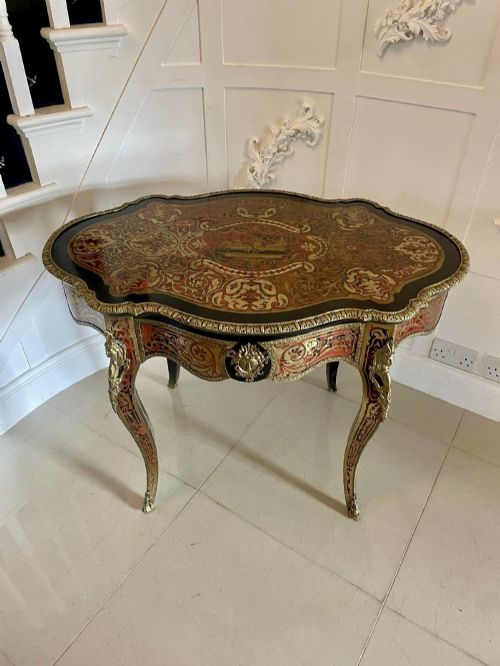
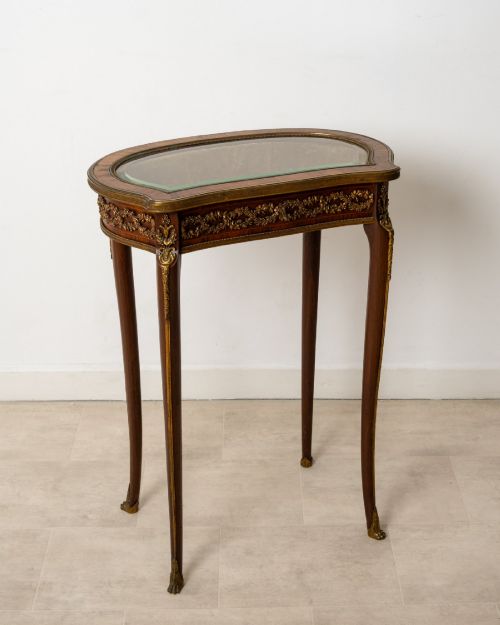
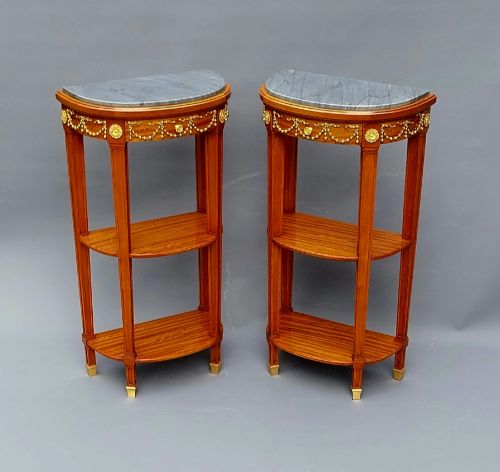
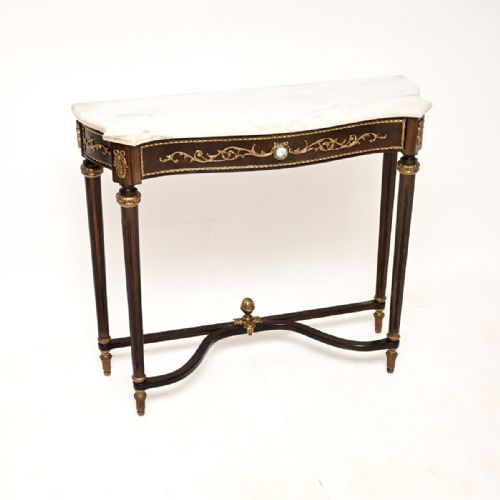
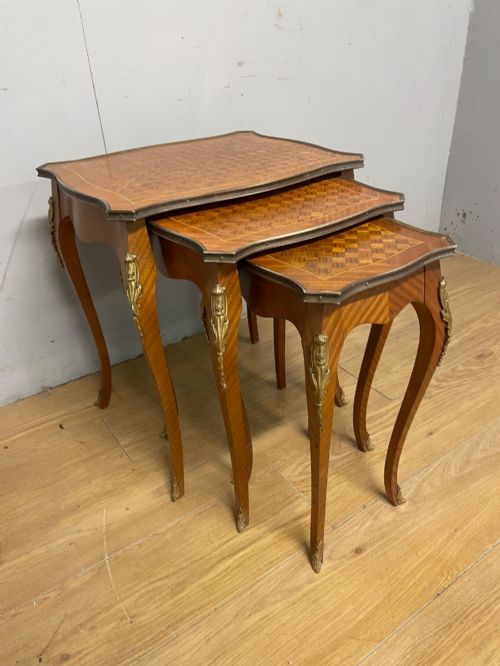
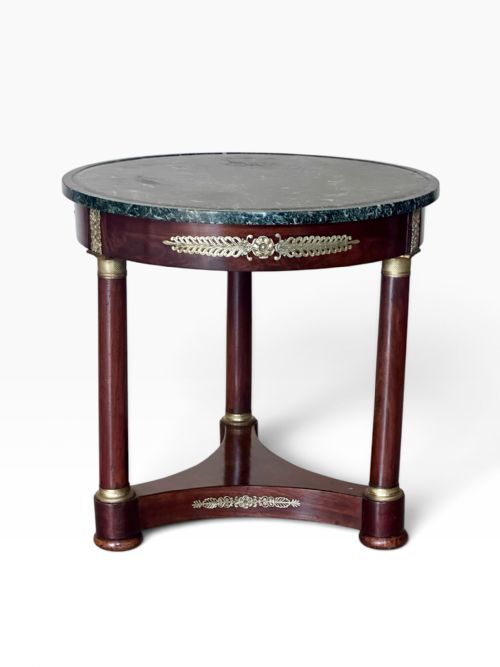
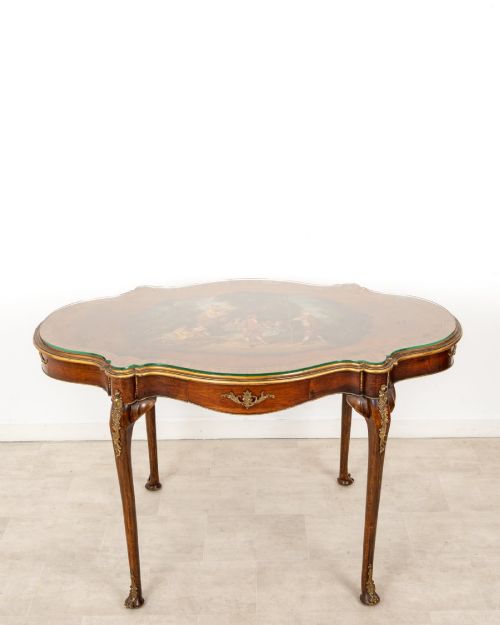
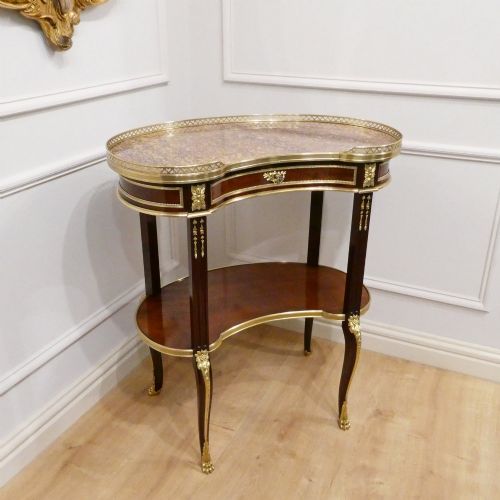
The selection on this page leans heavily towards nineteenth-century French production, particularly Louis XV and Louis XVI revival styles, alongside Empire and Belle Époque examples. Buyers encounter freestanding centre tables, two-tier étagères, and kidney-shaped occasional tables fitted with marble tops.
Alongside tables with cast bronze elements, the search captures related forms like console tables and small commodes that share identical materials. The underlying framework generally relies on hardwoods or decorative veneers rather than solid cast metal throughout.
Materials and construction
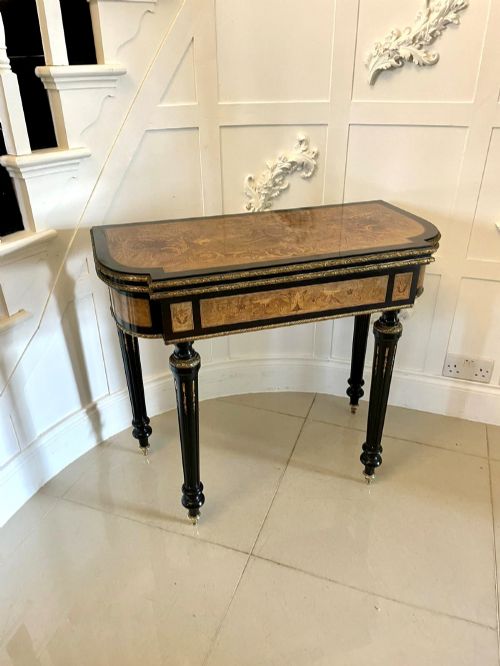
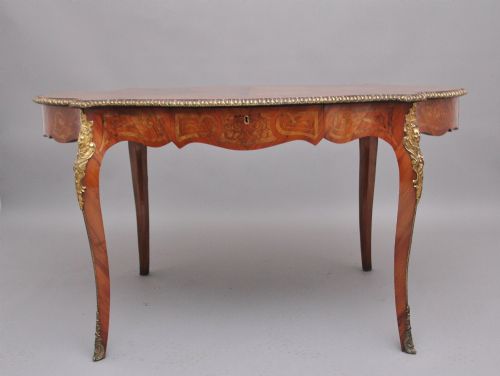
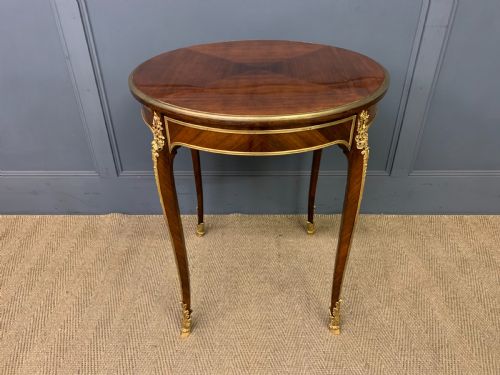
The structural framework typically utilises dense timbers such as kingwood, mahogany, walnut, and rosewood, often enhanced by intricate marquetry or parquetry inlays. Cabinetmakers applied veneers over secondary woods to achieve flowing serpentine and bombe silhouettes.
Cast bronze, gilt bronze, and ormolu provide the decorative mounts, corners, and sabots that punctuate the timber frames. These metal components underwent detailed chasing and fire-gilding before being secured to the wooden bodies.
Many examples incorporate inset slabs of white or coloured marble, shaped to fit the moulded rims of the tabletops. Secondary elements include brass stringing, champlevé enamel, and vernis martin panels.
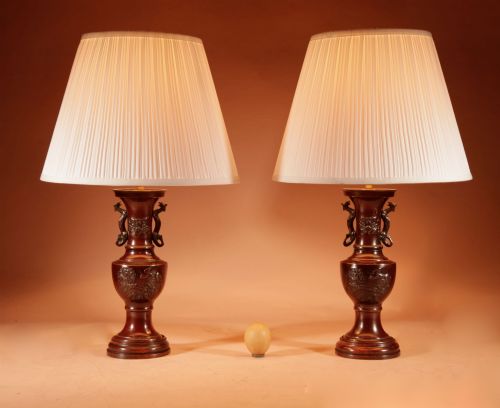
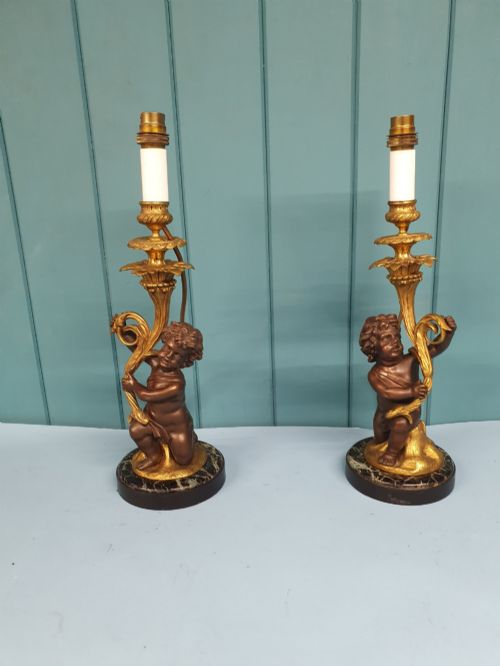
Cast bronze cherubs peer out from beneath lamp bases.
Distinctions in craftsmanship
Quality rests upon the crispness of the bronze chasing and the depth of the hand-finishing on the metal mounts. Superior pieces display sharply defined ornamentation where every leaf and scroll retains distinct, tactile edges rather than soft, cast-flat surfaces.
The precision of the cabinetwork dictates the upper tier of the range, visible in the alignment of wood grain and the tightness of veneer joints. Sophisticated internal mechanisms, stamped maker signatures, and heavy, genuine marble tops further separate workshop production from mass output.
Maison Millet·Joseph-Emmanuel Zwiener·Krieger Paris·E. Kahn·Gillows·Maison Bagues
The Bronze Side Table Glossary
- Ormolu
- Gilded bronze, typically produced by applying a mixture of gold amalgam to cast bronze and heating it to drive off the mercury. This technique creates a durable, warm metallic finish common on nineteenth-century furniture mounts.
- Guéridon
- A small French occasional table, often round and supported by a central pillar or three legs. These tables frequently feature marble tops and gilt bronze accents.
- Marquetry
- The art of applying decorative veneer pieces in wood, metal, or shell to a structure to form geometric or pictorial designs. It requires steady precision to fit each piece flush within the surface.
- Champlevé
- An enamelling technique where troughs or cells are hollowed out of a metal surface and filled with vitreous enamel before firing. The resulting panels provide rich colour alongside cast bronze details.
Bronze Side Table: Frequently Asked Questions
How do I clean the bronze mounts?
Dust the mounts regularly with a soft, dry brush to prevent grime accumulation.
Avoid abrasive polishes or harsh chemical cleaners, as these can strip away the original gilding and damage the surrounding wood or marble.
Are the marble tops original?
Original marble tops generally match the exact contour of the wooden rim and show appropriate age wear beneath the overhang.
Replacements often fit less securely or display modern machine-cut edges that conflict with nineteenth-century cabinet tolerances.
Where should I place these tables?
These pieces function well beside armchairs, as lamp tables in living spaces, or as decorative stands in hallways.
Keep them away from direct heat sources and strong sunlight to protect sensitive wood veneers and natural stone surfaces.
How do I identify the period?
Dating relies on construction methods, timber choices, and stylistic revival cues that reflect nineteenth-century taste.
Maker stamps, casting quality, and assembly marks provide concrete clues to narrow down the decade of manufacture.