
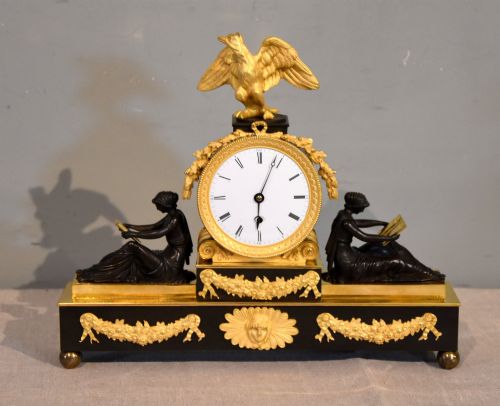


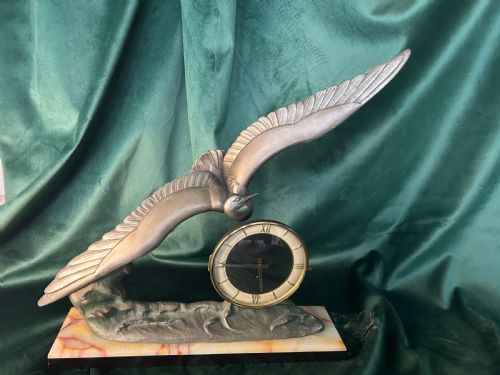


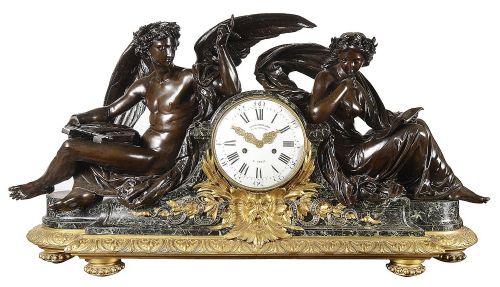

Bronze Sculpture Clock
A bronze sculpture clock unites timekeeping with figurative casting, offering a sculptural centrepiece driven by mechanical movement.
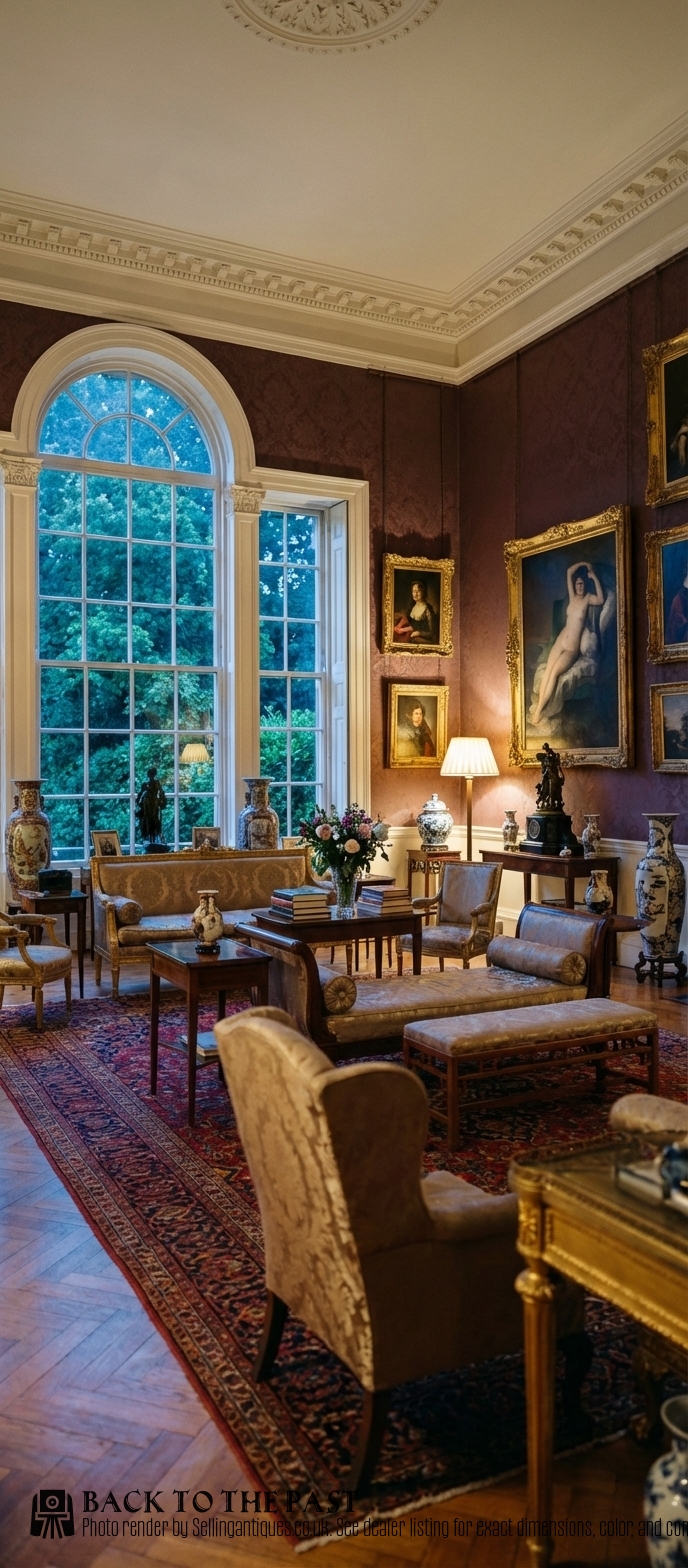
Bronze Sculpture Clock
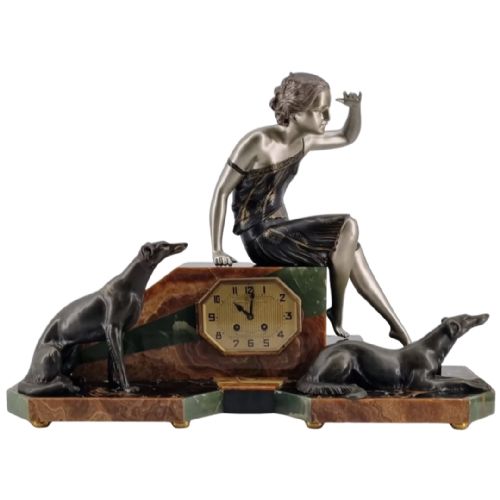
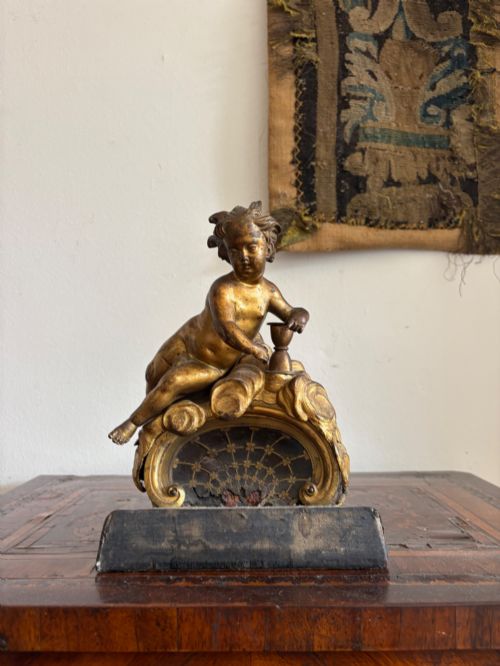
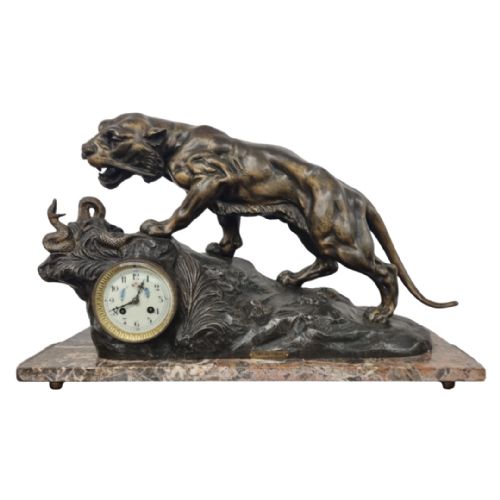
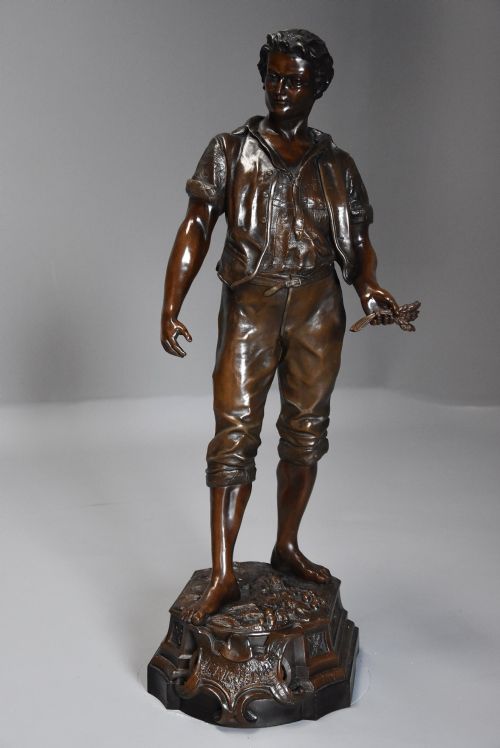
A bronze sculpture clock combines a functional timepiece with cast metal figures, animals, or architectural mounts. You will frequently encounter French mantel designs spanning the nineteenth century, often pairing patinated bronze or ormolu with marble bases.
The horological components sit alongside detailed statuary depicting classical figures, literary subjects, or exotic animals. These works function simultaneously as domestic timekeepers and decorative sculptural displays for a mantelpiece or console.
Materials and casting methods
Casting relied on traditional techniques to shape bronze, gilt bronze, and spelter into intricate human and animal forms. Ormolu application required mercury gilding onto bronze substrates to achieve a durable, lustrous golden finish.
Movements were paired with heavy stone plinths, commonly utilising marble or onyx for structural stability and visual contrast against the metalwork. Enamel dials and brass gear trains completed the interior mechanics of these timepieces.
Factors of craftsmanship and execution
Quality rests upon the sharpness of the metal chasing and the depth of the initial casting. Finer examples display crisp detail in the facial expressions, drapery, and fur of the sculptural elements without surface pitting.
The integration between the clock movement and the bronze sculpture dictates the piece's success. Superior works feature signed movements from established Parisian or London makers housed securely within substantial marble or gilt mounts.
R Varnier·F.Milliot·Baetens London·Leon Message·Jollet et Cie·Charpentier Paris·Auguste Moreau·Andre Guilmet·Victor Paillard·Deniere and Cailleaux·Japy Freres·Louis Hottoot·Bruchon
The Bronze Sculpture Clock Glossary
- Ormolu
- Gilt bronze produced by applying a gold and mercury amalgam to a bronze base and heating it. This technique creates a rich, enduring golden surface common in French decorative arts.
- Spelter
- A zinc alloy used as a less expensive alternative to bronze for sculptural castings. It is often bronzed or painted to imitate heavier metals.
- Garniture
- A set consisting of a central clock flanked by matching decorative objects such as urns or candelabra. These sets were designed to create a balanced display on a mantelpiece.
- Finial
- A decorative ornament that crowns the top of a clock case or architectural feature. They frequently take the form of urns, foliage, or small figures.
Bronze Sculpture Clock: Frequently Asked Questions
How do I wind a bronze sculpture clock?
Most mechanical models use a key inserted into the dial face to tension the springs for time and strike trains. Care must be taken not to overwind the movement.
Consulting a professional horologist for initial setup ensures the pendulum hangs correctly and the beat remains even.
Where should I place a heavy marble clock?
These pieces require a sturdy, level surface such as a heavy mantelpiece or strong sideboard to support their substantial weight. Placing them away from direct heat sources protects the internal oils.
Securing the base prevents accidental tipping, especially given the top-heavy nature of combined sculptural and horological forms.
How do I clean gilt bronze mounts?
Dusting gently with a soft, dry brush is the safest method for maintaining patinated bronze and ormolu surfaces. Moisture and abrasive cleaners will damage the historical finish.
Professional conservation is recommended if oxidation or heavy grime obscures the detail of the casting.
What indicates a nineteenth-century French origin?
Signature stamps on the back plate of the movement combined with foundry marks on the bronze typically denote Parisian manufacture. Stylistic cues include classical proportions and mercurial gilding.
Case materials like Portor or white marble frequently accompany these French neoclassical and rococo revival designs.