
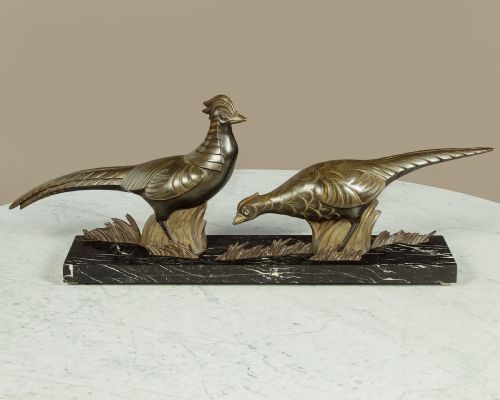


Bronze Patinated Spelter Figures
Bronze patinated spelter figures are decorative metal sculptures finished to resemble bronze, offering the visual weight of antique bronze without the heavier cost.
Bronze Patinated Spelter Figures
When you search for bronze patinated spelter figures, you are looking at cast metal ornaments designed to display human, animal and architectural subjects across several historical periods. The selection ranges from Victorian figural pairs and candlesticks to Art Deco animal groups, dancers and functional table lamps.
The version you are most likely to meet on this page originates from France, spanning the nineteenth century up to the nineteen-thirties. These pieces take the form of freestanding sculptures, bookends, table mirrors and mounted lighting elements.
Makers and sculptors often signed their work directly on the cast base or body, marking pieces from periods such as the Victorian era, Edwardian years and the height of Art Deco production.
How they were made
Spelter, an alloy primarily composed of zinc, is poured into moulds to create the core form of each sculpture. Because zinc is a softer and more brittle metal than bronze, the casting process captures fine detail while remaining lighter in weight.
Manufacturers apply a chemical or painted patination over the base metal to simulate the dark or weathered appearance of aged bronze. Many figures incorporate contrasting elements such as marble bases, onyx plinths or glass components.
What varies in quality
The application and preservation of the patinated finish significantly impact the visual integrity of a piece. Original patination that remains stable and untouched across the metal surface demonstrates superior condition compared to later, heavy-handed repainting.
P Sega·Geo Maxim·H Bal·Chiparus·Auguste Moreau
The Bronze Patinated Spelter Figures Glossary
- Spelter
- A zinc-based alloy utilised as a cost-effective substitute for bronze in nineteenth and twentieth-century decorative casting. It takes patination well but is softer than true bronze.
- Patination
- The surface treatment or artificial ageing applied to metal to simulate the appearance of oxidised bronze. It can range from dark brown tones to greenish metallic hues.
- Art Deco
- A design style prominent around nineteen-thirty characterised by streamlined geometric forms, stylised figures and modern subjects such as greyhounds, panthers and dancers.
- Art Nouveau
- An artistic movement from the late nineteenth and early Edwardian periods featuring organic lines, flowing floral motifs and naturalistic female models.
Bronze Patinated Spelter Figures: Frequently Asked Questions
How do I clean bronze patinated spelter figures?
Dust the surface gently with a soft, dry cloth to prevent accumulation without disturbing the delicate patinated finish. Avoid liquid cleaners, abrasives and harsh polishes, which can strip the metal coating.
Keep the pieces away from damp environments and direct sunlight to protect both the metal and any accompanying marble or onyx bases.
How can I tell spelter from actual bronze?
Spelter is noticeably lighter than bronze and has a softer composition, sometimes showing a grey or white metallic colour where the surface coating has worn away. True bronze is heavier, harder and typically reveals a warm golden-brown metal tone beneath minor scratches.
Magnet tests are inconclusive because neither material is magnetic, but gentle tapping on an unexposed underside often yields a duller sound for spelter compared to the clear ring of bronze.
What periods do these figures come from?
The pieces span from the nineteenth century through the Victorian and Edwardian eras up to the nineteen-thirties. Nineteenth-century examples frequently depict classical soldiers, woodsmen or water carriers in revival styles.
Later pieces from around nineteen-thirty reflect the distinct geometric and figurative aesthetics of the Art Deco movement, including animals and human dancers.
How were these figures used originally?
Many served as decorative mantel sculptures, bookends or architectural ornaments within nineteenth-century domestic interiors. Others were integrated into functional objects such as candlesticks, table lamps and dressing table mirrors.
Art Deco figures often combined artistic display with utility, functioning as illuminated lamps or weighted bookends for libraries and studies.