
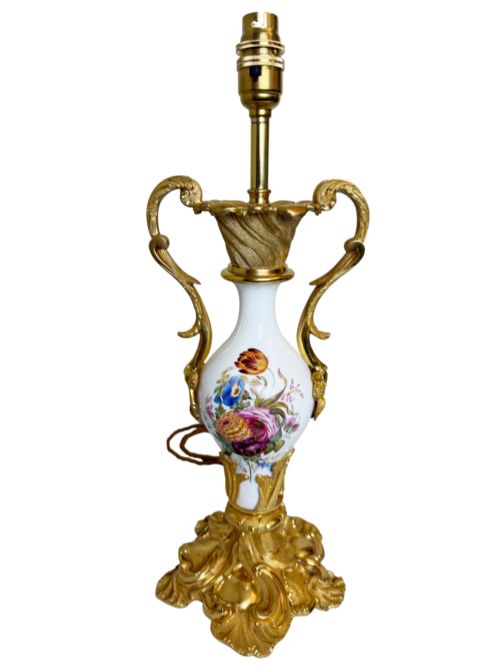
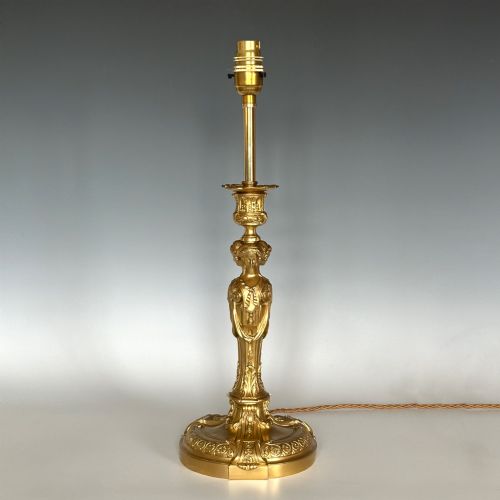
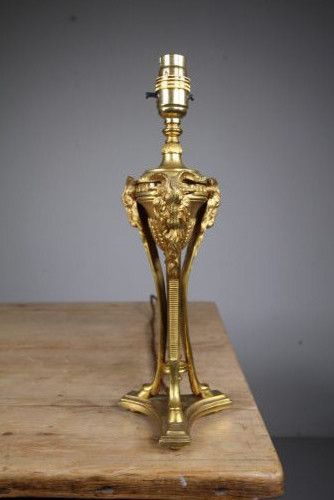
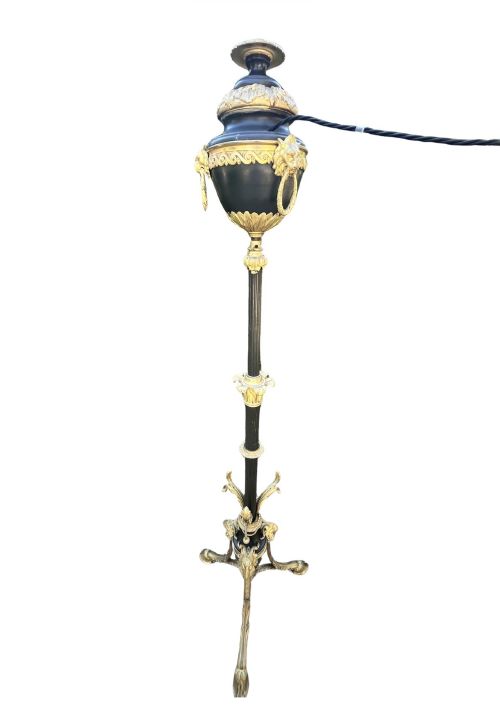
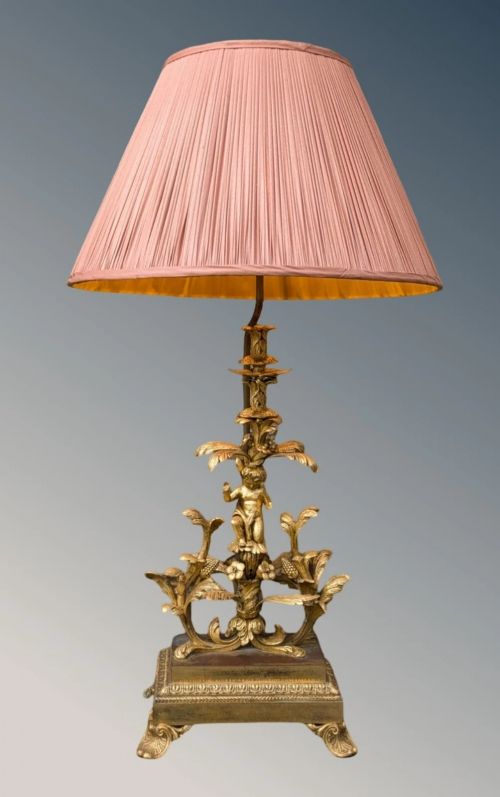
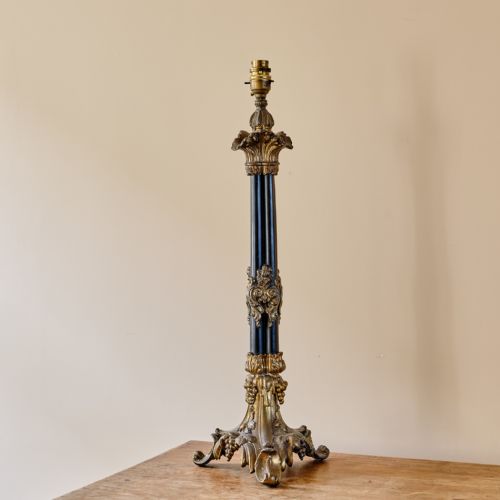
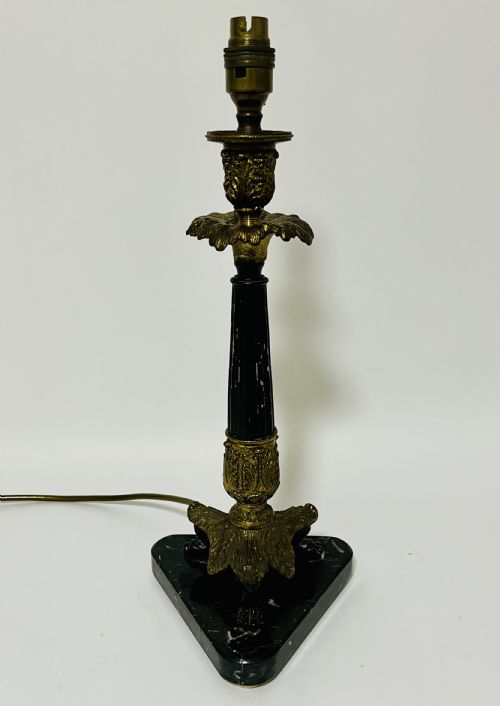


Bronze Ormolu Reading Lamp
A bronze ormolu reading lamp brings warm metal glow and classical dignity to a room.
Bronze Ormolu Reading Lamp
A bronze ormolu reading lamp is a dual-material lighting fixture combining dark cast bronze with bright gilded highlights. The form usually appears as a table lamp or floor lamp, standing on a sturdy base.
Most examples found here date from the nineteenth century, including Victorian pieces and French imports. Makers often drew on French Empire, Neoclassical, and Rococo Revival styles to shape the metalwork.
Buyers look for these pieces to illuminate a desk or side table while adding period character. The combination of patinated metal and bright gilding creates a striking contrast that defines the style.
How they were made
These lamps rely on bronze and brass castings, shaped into columns, figural mounts, and rams' heads. Artisans used patination to darken the main body of the bronze while applying mercury gilding, known as ormolu, to selected details.
Many designs incorporate white marble bases or glass and fabric shades, particularly silk. The metal parts were cast in sections, chased by hand to sharpen the details, and then joined mechanically or screwed together.
Listings feature table lamps and floor lamps spanning the nineteenth century, with strong representation from French Empire and Victorian design periods.
What varies in quality
Heavier castings and substantial marble plinths distinguish superior pieces from lighter, simpler manufacturing. The integration of the wiring components and the preservation of the original patination also mark the better examples.
The Bronze Ormolu Reading Lamp Glossary
- Ormolu
- Gilded bronze produced by applying a mercury and gold amalgam to a bronze base and heating it. This technique creates a durable, bright golden surface.
- Patinated Bronze
- Bronze treated with chemicals or heat to alter its surface colour. This process darkens the metal to provide contrast against the bright ormolu.
- Rococo Revival
- A nineteenth-century style reviving eighteenth-century Rococo ornamentation. It uses asymmetrical scrolls, shell motifs, and naturalistic floral designs.
Bronze Ormolu Reading Lamp: Frequently Asked Questions
How do I date a bronze ormolu reading lamp?
Dating relies on examining the casting methods, wear patterns, and stylistic cues such as French Empire or Victorian design motifs. Nineteenth-century examples often show hand-finishing marks beneath the base that differ from later reproductions.
Inspect the assembly screws, the composition of the bronze, and the type of wiring or burner fittings if remnants remain. These details help place the lamp within the broader nineteenth-century timeline.
Can I use modern bulbs in these lamps?
Most antique lamps have been rewired for modern electrical standards to ensure safety during daily use. It is wise to have a qualified electrician check the internal wiring before plugging the lamp in.
Choose LED bulbs that emit a warm light to replicate the traditional glow without generating excessive heat. This protects old silk or fabric shades from damage.
How do I clean ormolu metalwork?
Dust the lamp regularly with a soft, dry microfibre cloth to prevent dirt from settling into the chased recesses of the bronze. Avoid commercial metal cleaners, which can strip away the delicate ormolu gilding.
If the piece requires deeper cleaning, consult a professional conservator specialising in historic metalwork. Aggressive polishing will permanently ruin the antique surface.
Where should I place a heavy bronze lamp?
Place the lamp on a sturdy piece of furniture, such as a large wooden desk, a sideboard, or a heavy side table. The substantial weight of bronze and marble bases requires strong support.
Keep the lamp away from areas with high foot traffic where the cord might be pulled. Positioning it on a stable surface prevents accidental tipping.