



Bronze Okimono Sculpture
A bronze okimono sculpture brings the sharp observation of the Japanese natural world straight into a room through masterly metalwork.
Bronze Okimono Sculpture
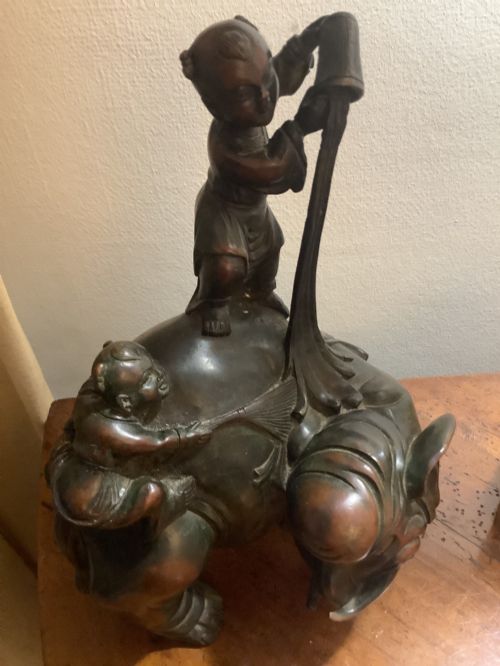
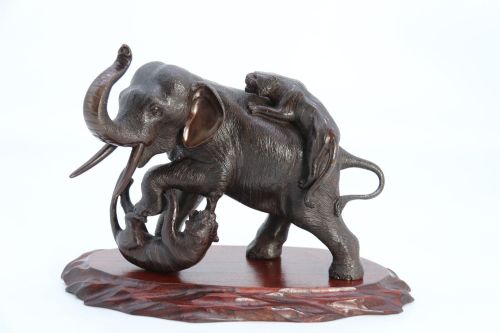
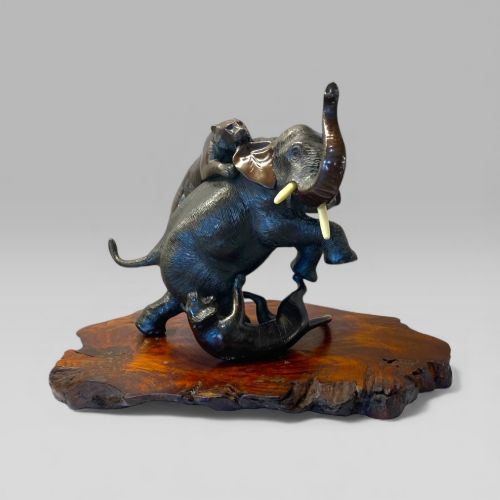
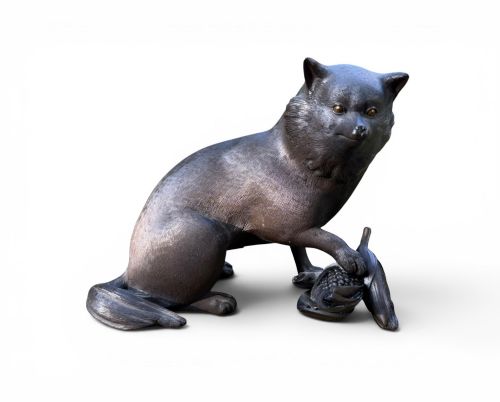
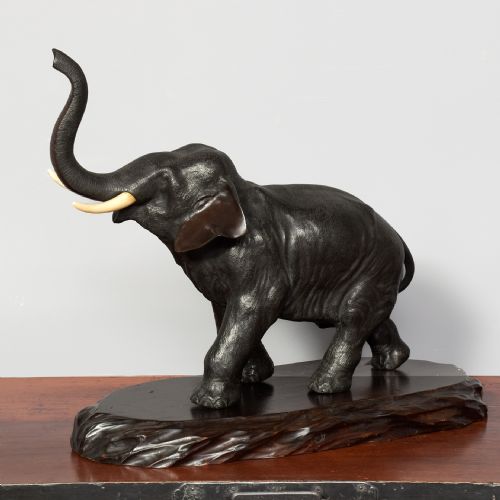
A bronze okimono sculpture is a decorative Japanese display piece originating largely from the Meiji and Showa periods. The pieces on this page focus heavily on natural subjects, ranging from large elephants and garden dragons to smaller studies of puppies, monkeys, and insects.
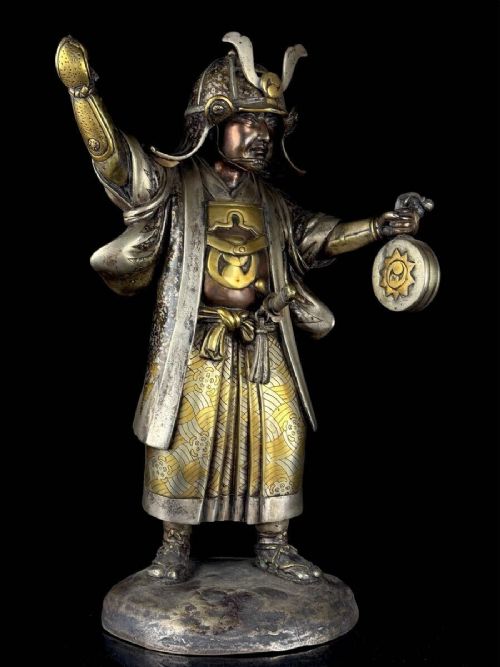
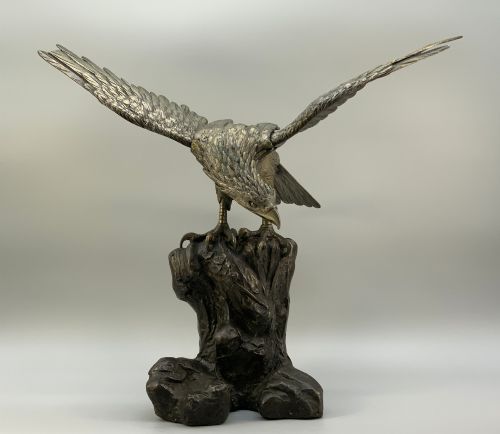
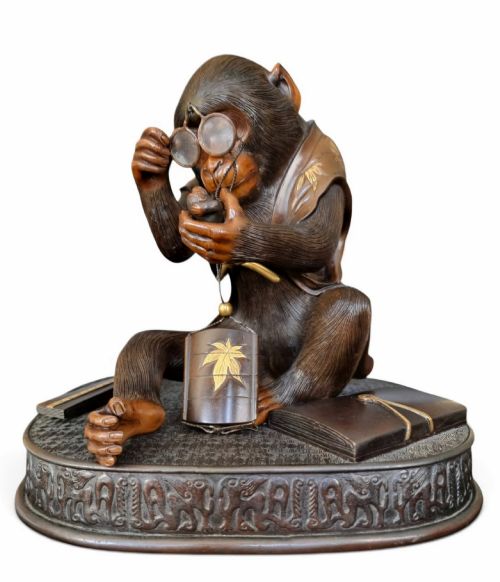
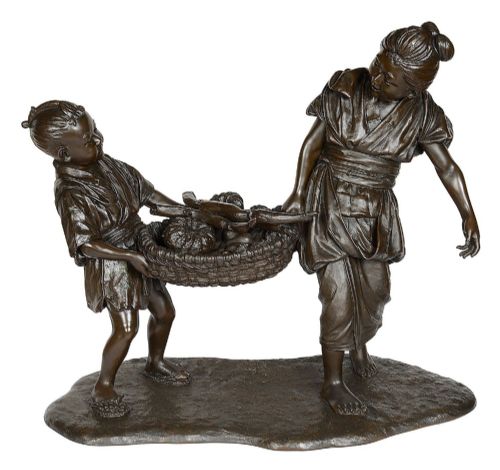
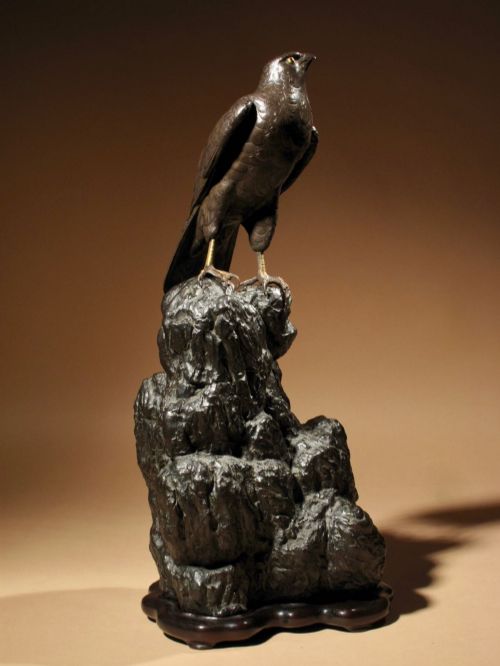
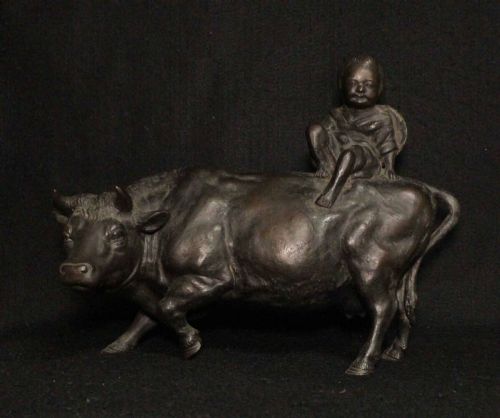
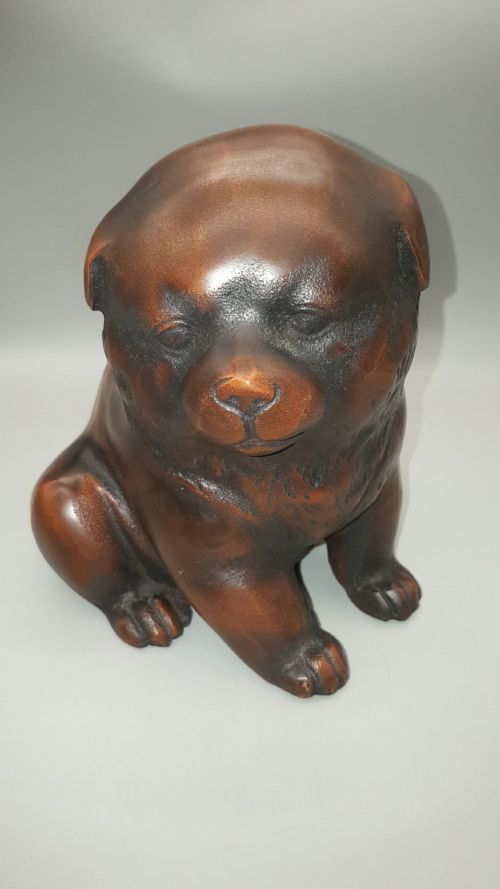
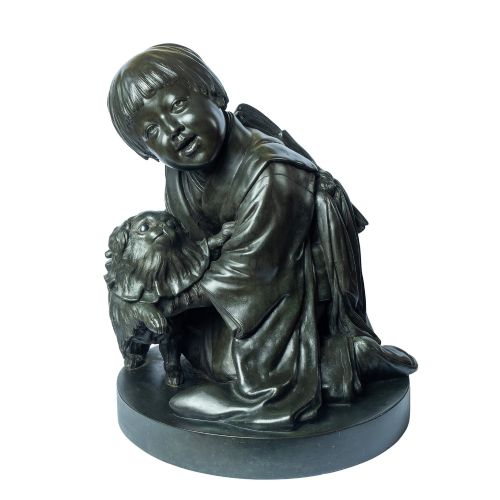
Buyers encounter subjects both fierce and domestic, including fighting tigers, resting hawks, and playful groups of puppies. Many examples take the form of single animals, while others depict human figures or anthropomorphic scenes like scholar monkeys.
The objects stem predominantly from the late nineteenth and early twentieth centuries, capturing a distinct era of Japanese metal artistry. They function primarily as shelf sculptures, table objects, or large garden statuary.
Materials and construction
Makers utilised cast bronze as the primary medium, frequently enhancing the surfaces with patination to create deep tonal variations. Mixed-metal elements, gold inlay, and silvered bronze appear across various figures to highlight details like fur, feathers, and clothing.
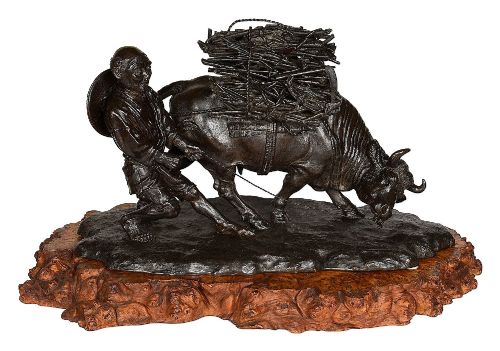
Certain works incorporate supplementary materials such as wood bases, ivory tusks, bone, and stone to anchor the metal figures in naturalistic settings. Articulated pieces demonstrate precise segmental casting where individual limbs and joints move independently.
Bronze Okimono Sculpture Retail Price Guide 2026
Typical asking prices for bronze okimono sculpture among the pieces listed under this phrase on Sellingantiques today, from the lower quarter to the upper quarter. They describe what is for sale here now, not the wider market.
Listings span the 19th and early 20th centuries, featuring materials such as patinated bronze, wood, bone, and gold inlay.
Factors determining quality
Quality rests upon the naturalism of the carving and the fidelity of the cast to living anatomy. The crispness of feather texturing, fur rendering, and muscle definition distinguishes superior works from simpler productions.
Signature marks by known artists elevate a piece significantly, reflecting master-level foundry work from the Meiji period. The integration of mixed-metal highlights, complex patination, and functional articulation also separates standard decorative items from high-tier creations.
Tsunemitsu·Kakuha Kanzaemon·Mitsumoto·Jomi Eisuke·Kaniya Kuniharu·Unno Shomin·Miyao
The Bronze Okimono Sculpture Glossary
- Okimono
- A Japanese ornamental object designed for display on a shelf or in a tokonoma alcove. These sculptures represent animals, figures, and scenes from daily life.
- Meiji Period
- The era in Japanese history spanning from 1868 to 1912. This period saw a rapid opening of trade and an unprecedented peak in metalwork mastery.
- Patination
- The chemical treatment of a metal surface to produce a specific colour or aged tone. Makers used this to enrich the visual depth of bronze feathers and fur.
- Shakudo
- A traditional Japanese copper and gold alloy that turns a dark blue-black colour when patinated. It appears frequently in highlights on high-grade metalwork.
- Articulated
- A descriptor for metal figures constructed with moveable joints. Centipedes and other insects were cast in sections so their bodies could flex naturally.
Bronze Okimono Sculpture: Frequently Asked Questions
What is a bronze okimono sculpture?
A bronze okimono sculpture is a decorative Japanese figure made for display, depicting animals, figures, or natural scenes.
These pieces showcase traditional metal casting techniques developed primarily during the Meiji period.
How do I date a bronze okimono sculpture?
Dating relies on stylistic markers, signature analysis, and the specific metal patination techniques typical of the late nineteenth and early twentieth centuries.
Meiji period works generally exhibit finer anatomical detail and distinct foundry signatures compared to later Showa period items.
Where should I place garden okimono?
Large garden statuary like bronze geese or dragons work well positioned directly on stone paths, near ponds, or amid foliage.
Indoor pieces require stable surfaces away from excessive moisture to preserve the original bronze patina.
What subjects are most common?
Animals dominate the available forms, including elephants, hawks, tigers, and dogs, alongside smaller insects like beetles and spiders.
Human figures and mythical beasts also appear, reflecting traditional folklore and everyday Japanese life.