

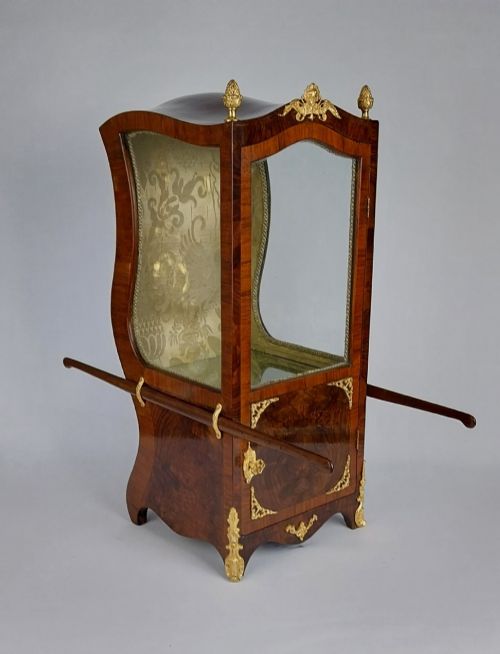


Bronze Mounted Vitrine
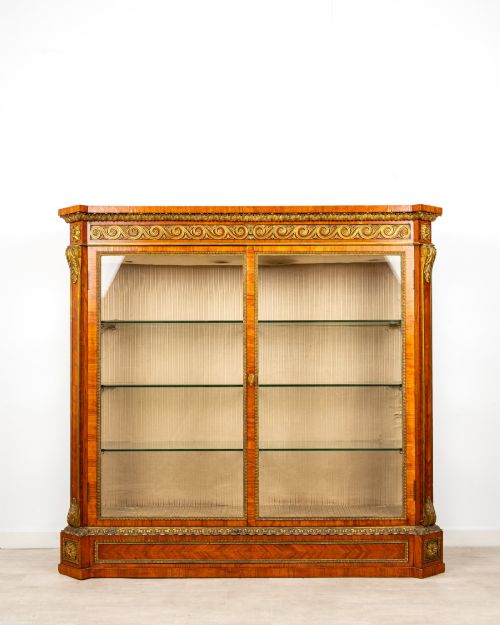
A bronze mounted vitrine is a glazed display cabinet framed in gilt metal, designed to show off porcelain and curiosities.
Bronze Mounted Vitrine
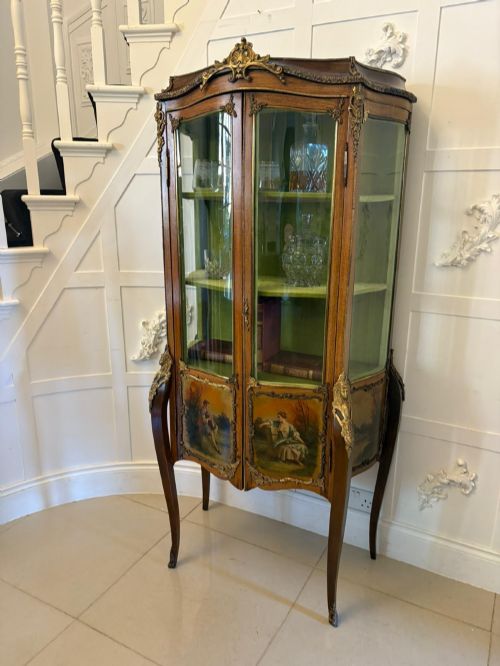
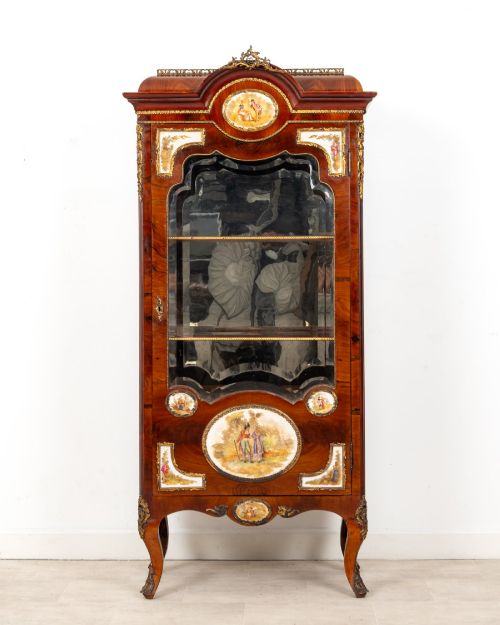
When you search for a bronze mounted vitrine, you enter a world of nineteenth-century display furniture originating primarily in France and Britain. These pieces combine glazed timber carcasses with decorative metal mounts to protect and exhibit precious objects. The examples you encounter on this page span the Victorian and Edwardian eras, alongside revivals of earlier French court styles.
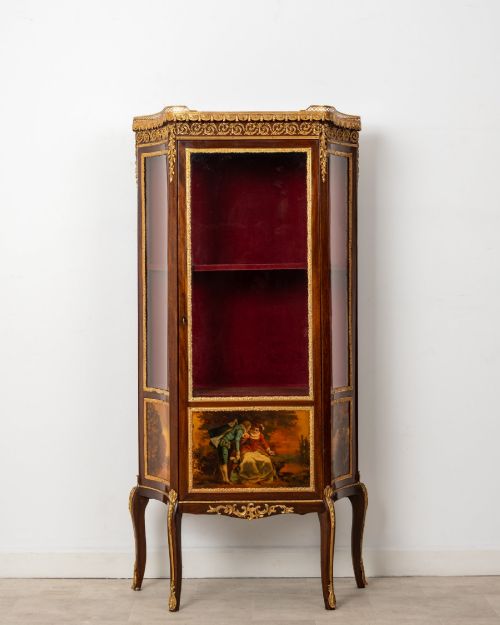
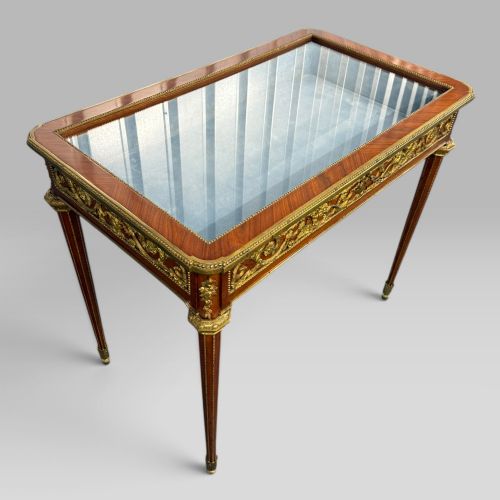
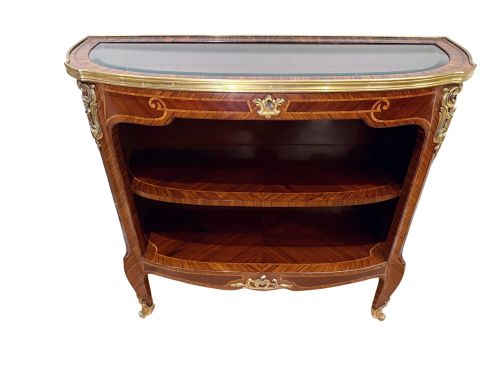
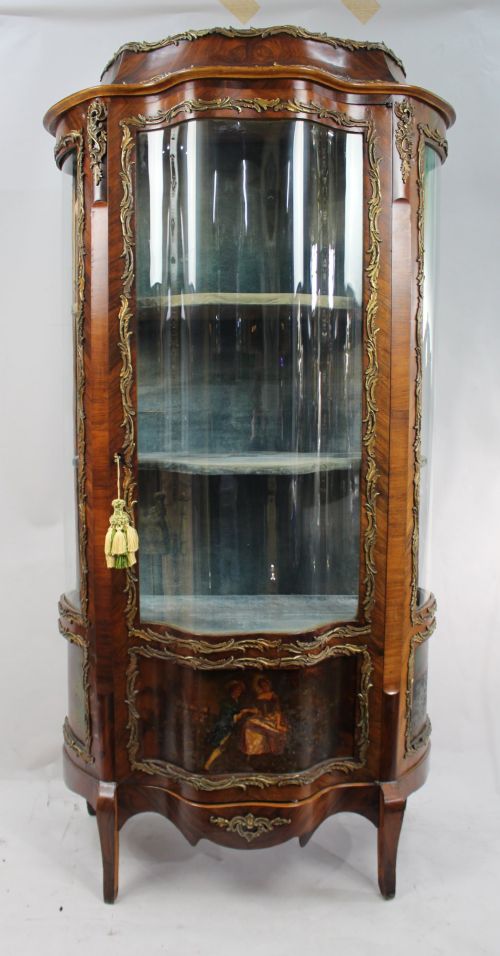
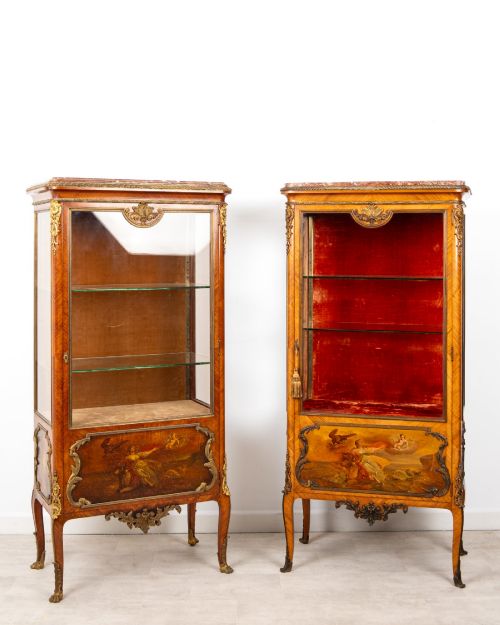
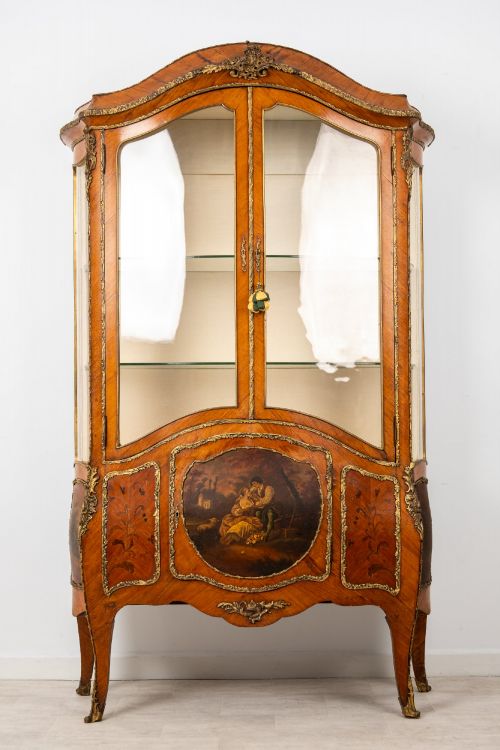
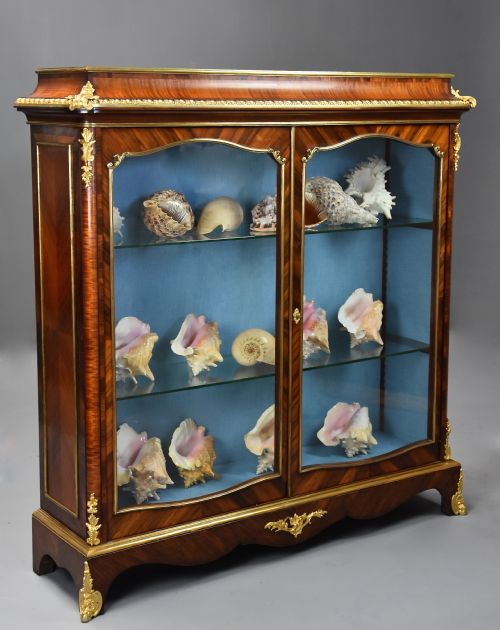
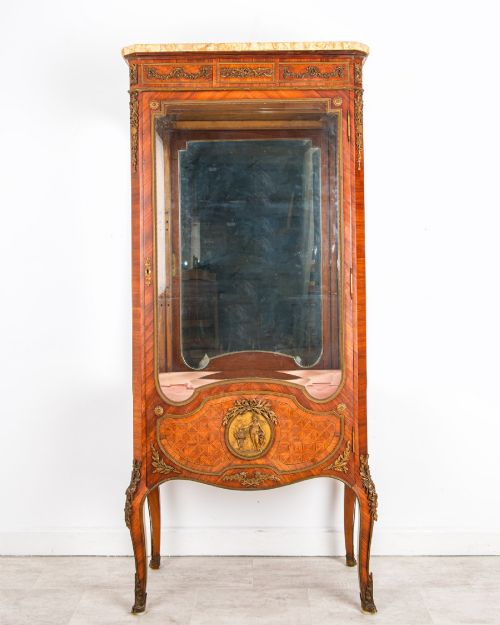
The form ranges from tall freestanding cabinets and serpentine pier cabinets to low bijouterie tables and tabletop vitrines. Many adopt Louis XV or Louis XVI revival aesthetics, incorporating curved glass or painted lower panels. Walnut, kingwood, and mahogany provide the primary wooden structures for these display vessels.
How they were made
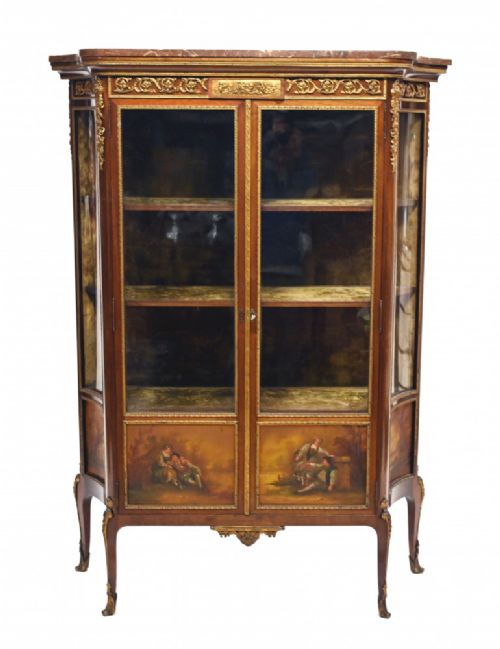
Cabinetmakers constructed the wooden carcasses using dense hardwoods like kingwood, walnut, and mahogany, frequently applying intricate marquetry or veneer patterns. Panels decorated in the Vernis Martin technique often occupy the lower sections of the cabinets, providing a painted contrast to the glass above. Marble slabs frequently top the cabinetry to add weight and a polished surface.
The signature bronze and ormolu mounts were cast separately, chased by hand to sharpen the detail, and then gilded. These metal mounts frame the glass doors, cap the corners, and wind down the legs to accentuate the contours of the furniture. Glass panels, sometimes curved under heat, complete the enclosure to keep dust from the contents.
Some tabletop vitrines were made small enough to sit on a desk so a collector could inspect pocket watches without standing up.
What varies in quality
The refinement of the ormolu mounts dictates much of the visual success of the piece, separating crisp, hand-chased bronze work from soft, mass-produced metal casts. Superior cabinets display meticulous matching of wood veneers across the doors and sides, whilst lesser examples employ simpler timber arrangements.
Internal details such as velvet linings, fitted glass shelves, and working locks with original keys contribute to the overall standard. The fluidity of the timber shaping, particularly on serpentine and bowed fronts, marks the distinction between standard commercial workshop production and the output of master cabinetmakers.
François Linke·H. J. Hatfield And Sons·Paul Sormani·G. Durand
The Bronze Mounted Vitrine Glossary
- Ormolu
- Gilded bronze used for decorative mounts on furniture. The technique involves applying a gold amalgam to heated bronze before burning off the mercury.
- Vernis Martin
- A simulated Japanese lacquer developed in eighteenth-century France by the Martin brothers. Artisans applied multiple layers of varnish and painted pastoral scenes on furniture panels.
- Bijouterie table
- A low display table with a glazed top and sides designed for jewellery and small ornaments. These tables frequently stand on slender cabriole legs.
- Pier cabinet
- A piece of furniture designed to fit the wall space between windows. These cabinets are typically narrow and shallow in depth.
- Marquetry
- The art of applying small pieces of veneer to a structure to form decorative patterns. Craftsmen utilise various coloured woods to build pictorial or geometric designs.
Bronze Mounted Vitrine: Frequently Asked Questions
What is a bronze mounted vitrine used for?
These cabinets were built to display porcelain, miniatures, and small precious objects while protecting them from dust and handling. The glazed panels and internal shelves allowed collectors to view their acquisitions from multiple angles in drawing rooms.
Today, they serve the same purpose in domestic settings, functioning as focal points for curated collections of glassware, ceramics, and small antiques.
How do I tell Louis XV and Louis XVI styles apart?
Louis XV style pieces, often linked to French Rococo revival, feature flowing asymmetrical curves, serpentine fronts, and scrolling ormolu mounts. The overall silhouette feels organic and dynamic, with cabriole legs dominating the base.
Louis XVI style furniture moves towards classical symmetry and straight lines. You will notice fluted columns, right angles, and neoclassical motifs within the bronze mounts rather than wild scrolls.
Are marble tops original to these cabinets?
Many nineteenth-century vitrines and pier cabinets were designed with fitted marble tops to provide a durable and luxurious upper surface. White and coloured marbles complement the ormolu mounts and hardwood veneers.
When assessing a piece, check that the marble sits flush within the wooden frame and matches the proportions and period of the cabinet below.
How do I care for a wood and ormolu vitrine?
Keep the cabinet away from direct sunlight and sudden temperature changes to protect the wood veneers and prevent the timber from warping. Dust the ormolu gently with a soft brush rather than using harsh metal polishes that can strip the gilding.
Maintain stable humidity levels in the room to preserve the integrity of the glue and the polished finish on the kingwood or walnut.