





Bronze Mount Clock
A bronze mount clock brings together heavy architectural stone and finely cast gilt metal, adding distinct French presence to a mantelpiece.
Bronze Mount Clock
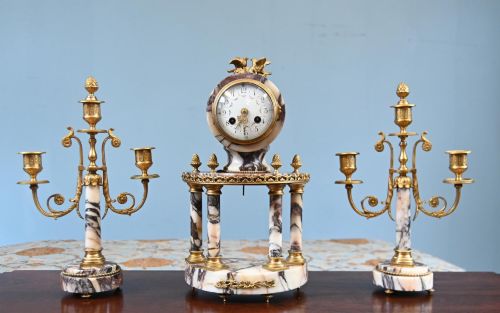
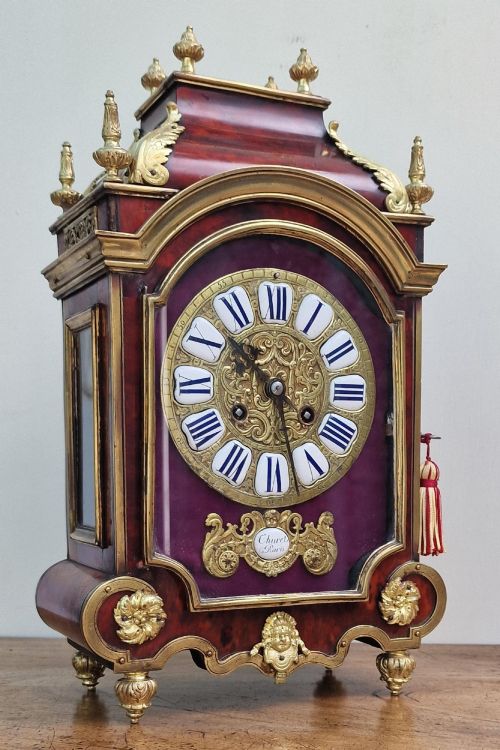
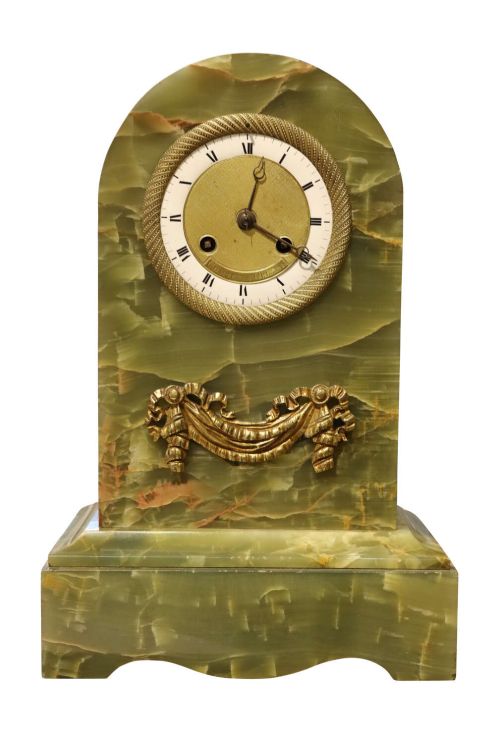
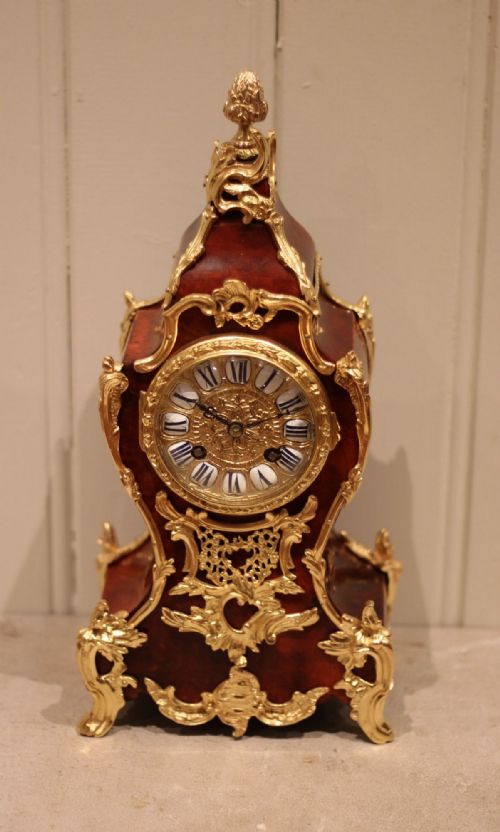
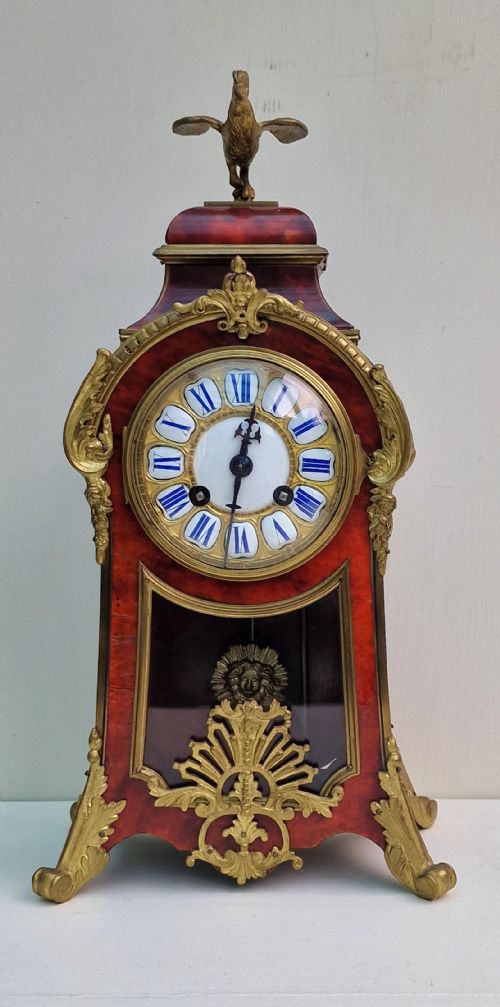
When you search for a bronze mount clock, you encounter timepieces dominated by French design from the nineteenth century, including the Victorian era, alongside select eighteenth-century examples. These works pair bodies of marble, onyx, slate, tortoiseshell, or porcelain with cast metal ornamentation.
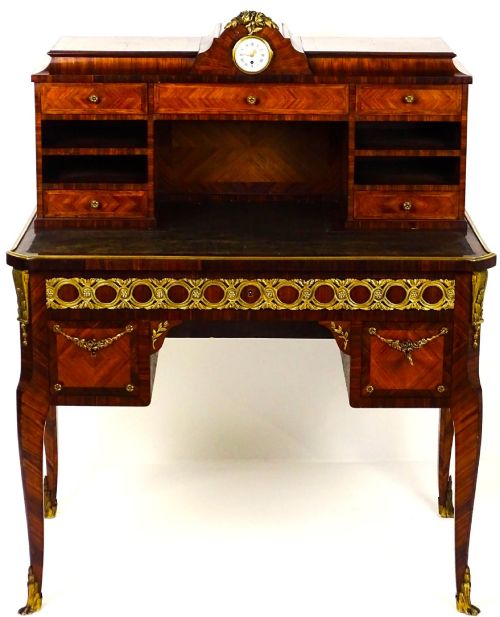
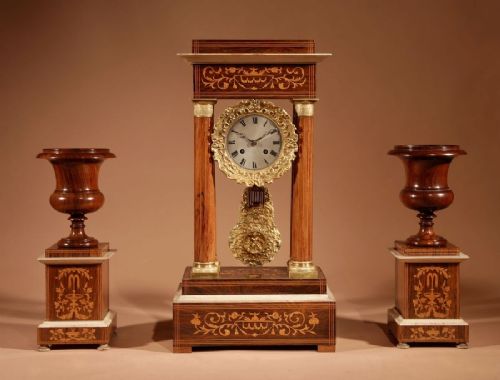
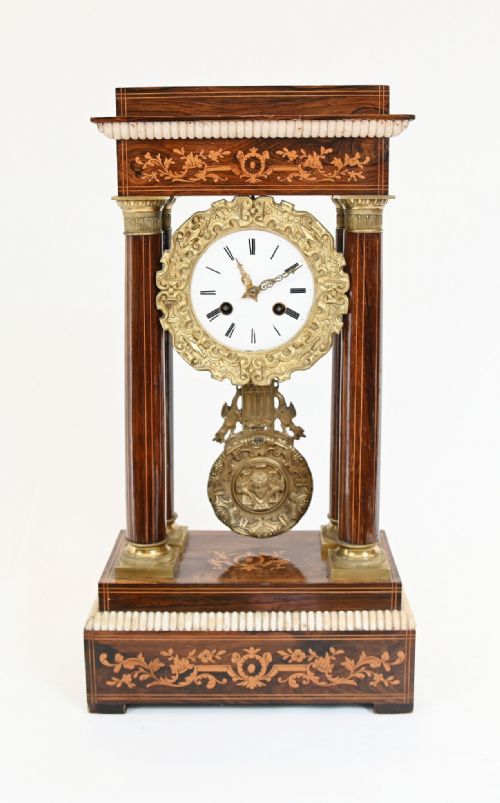
Mantel clocks and portico clocks form the majority of the pieces on this page, accompanied by occasional bracket clocks and desk items. Most examples display revivalist aesthetics such as Louis XVI, Louis XIV Boulle work, or French Rococo.
The materials range from deep green onyx and rouge marble to polished brass and tortoiseshell veneer. These items function as mechanical timekeepers and ornamental sculpture combined.
How they were made
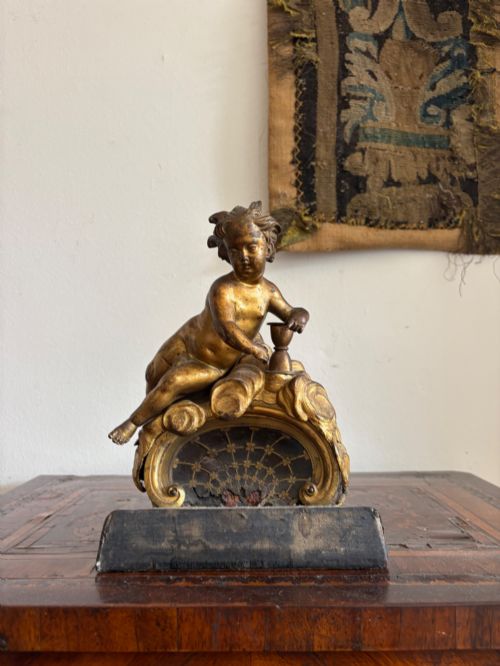
Maker workshops built the carcasses of these timepieces from dense stones like marble and slate, or framed them in timber before applying tortoiseshell and brass marquetry. Metal casters shaped the mounts in bronze or brass, using mercury gilding or electroplating to produce a rich ormolu finish.
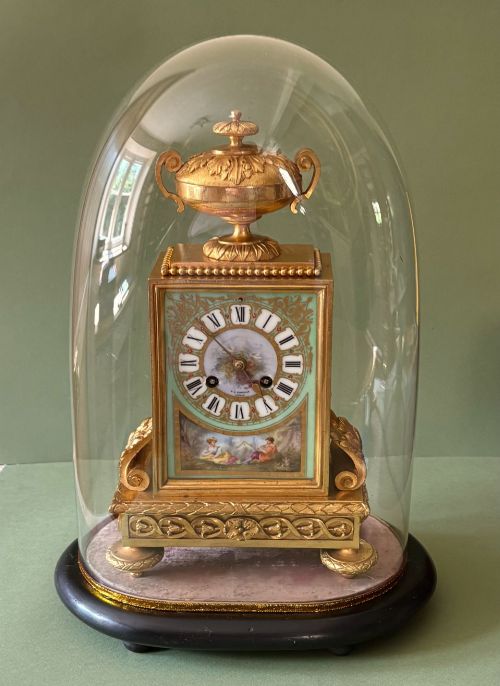
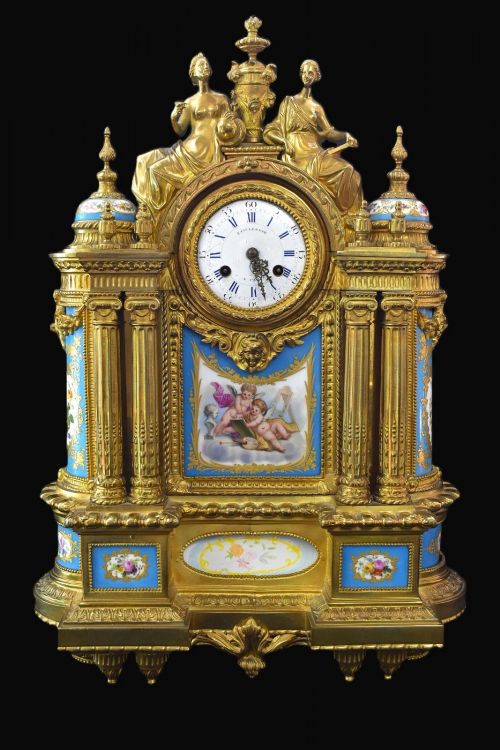
Clockmakers fitted precision movements into these housings, ranging from simple eight-day spring-driven mechanisms to fusee movements and calendar systems. Porcelain panels, painted with pastoral scenes or floral motifs, were integrated into the metal and stone frameworks.
Bronze Mount Clock Retail Price Guide 2026
Typical asking prices for bronze mount clock among the pieces listed under this phrase on Sellingantiques today, from the lower quarter to the upper quarter. They describe what is for sale here now, not the wider market.
Several clocks share shelf space with unexpected animal companions, including porcelain elephants and bronze figures of William Shakespeare.
What varies in quality
The standard of a bronze mount clock rests primarily on the crispness of the metal chasing and the depth of the casting. Superior mounts exhibit sharp relief and hand-finished detailing, whereas lesser pieces appear soft and uniform.
Charles à Orléans·Paul Sormani·Thuret·Etienne Lenoir·Louis Goret·Lenzkirch·Payne and Co·Achille Brocot·JP Delettrez
The Bronze Mount Clock Glossary
- Ormolu
- Gilt bronze produced by applying a mercury-gold amalgam to cast bronze before heating. This technique creates a durable, golden surface lustre seen on finer French mounts.
- Boulle
- Marquetry technique utilising tortoiseshell and engraved brass in counterchange patterns. Named after the Parisian cabinetmaker André-Charles Boulle, it defines many luxury clock cases.
- Portico clock
- A architectural clock design supported by four columns resembling a classical portico. These pieces often feature a suspended pendulum swinging within the central opening.
- Garniture
- A set comprising a central clock accompanied by matching side ornaments such as vases or candelabra. These sets create a balanced display across a mantel or sideboard.
- Fusee
- A conical pulley used in mechanical clocks to maintain even tension on the gear train as the mainspring unwinds. This mechanism improves timekeeping accuracy across the power reserve.
Bronze Mount Clock: Frequently Asked Questions
How do I wind a mechanical mantel clock?
Most spring-driven pieces require a winding key inserted into specific dials on the face to tension the mainspring.
Care must be taken not to overwind the mechanism, stopping as soon as resistance is felt.
How do I identify a Boulle clock?
Boulle clocks are identifiable by their tortoiseshell veneer inlaid with intricate brass patterns.
This technique originated in seventeenth-century France and returned to popularity during the nineteenth century.
Where should I place my clock?
These timepieces require a stable, level surface such as a mantelpiece, heavy desk, or wall bracket.
Avoiding direct sunlight and damp environments protects the delicate tortoiseshell and gilt surfaces.