


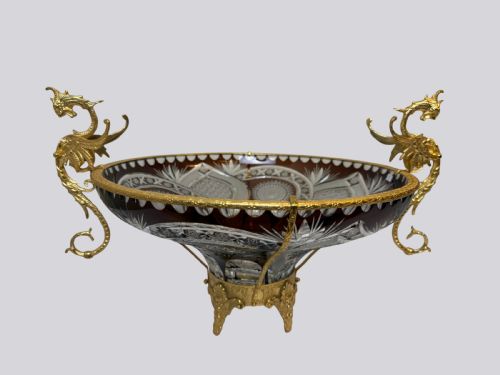


Bronze Mount Bowl
A bronze mount bowl combines cast metalwork with glass or porcelain, bringing striking decorative presence to a table.
Bronze Mount Bowl
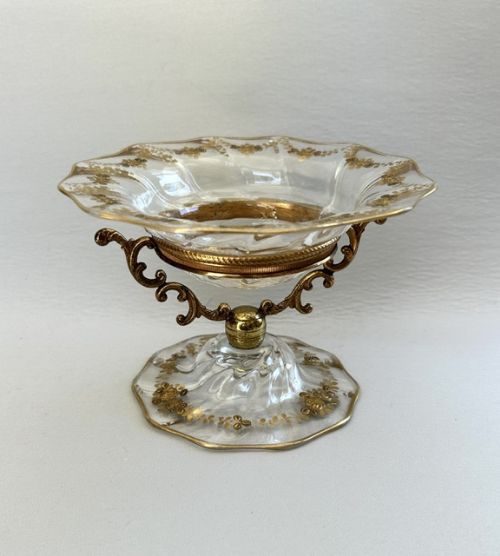
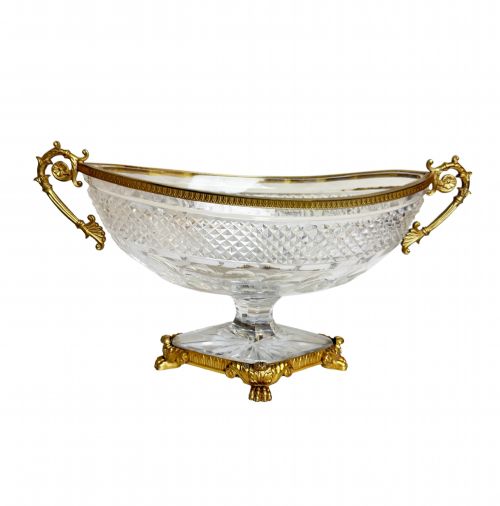
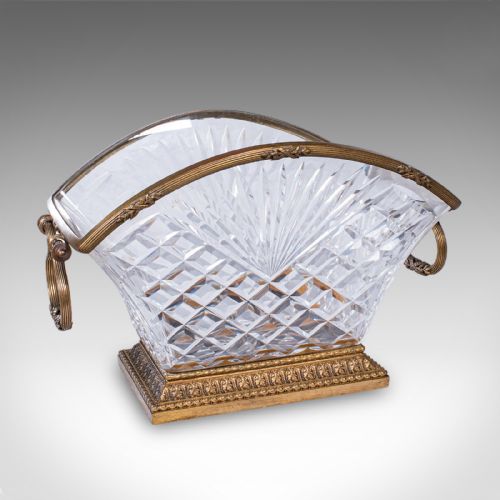
A bronze mount bowl is a decorative vessel combining a central body of glass, porcelain, crystal, or papier mache with cast metal supports, handles, or rims. When searching for a bronze mount bowl, buyers encounter centrepieces, comports, tazzas, and jardinieres designed for display. These objects originate predominantly from nineteenth-century France and Victorian Britain, alongside items influenced by French Empire, Rococo Revival, and Chinoiserie styles.
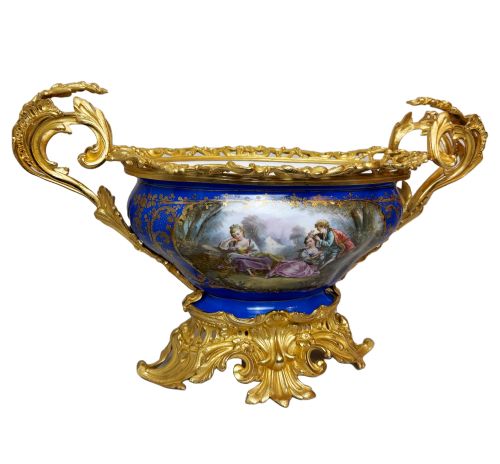
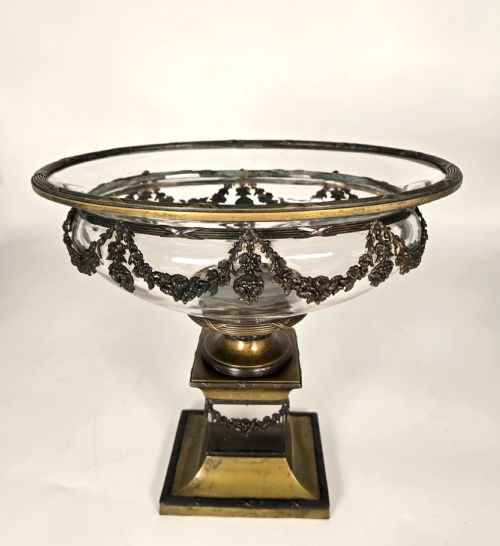
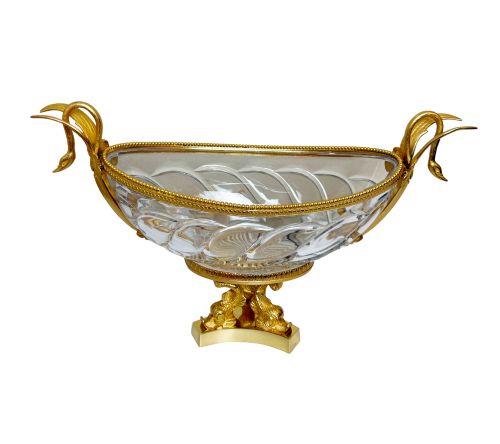
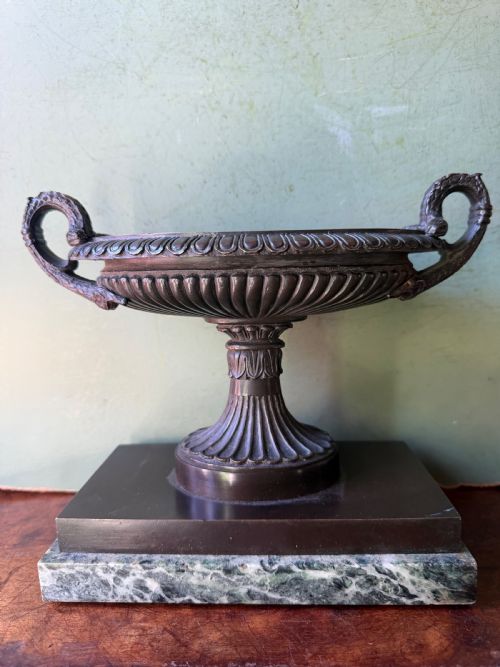
The most frequent examples on this page pair cut glass, crystal, or Sevres-style porcelain with gilt bronze or ormolu mounts. Makers utilised these mountings to elevate functional serving dishes and ornamental vessels into grand table centrepieces and garnitures. Pieces range from large pedestal bowls resting on elaborate stands to tazzas incorporating marble bases.
How they were made
Craftsmen built these vessels by combining individually formed bodies of glass, porcelain, or papier mache with cast metal components. Gilt bronze and ormolu mounts were cast, chased, and secured to the ceramic or glass using pins, screws, or collars. Glass elements were typically mould-blown and cut, whilst porcelain bodies were painted, glazed, and fired before receiving their metal fittings.
Makers applied fire gilding or electroplating to bronze to create the bright ormolu finish characteristic of French and Victorian decorative arts. Specialised workshops combined materials such as marble, enamel, and coloured glass with bronze mountings to achieve elaborate Neoclassical, Empire, and Rococo Revival designs.
Bronze Mount Bowl Retail Price Guide 2026
Typical asking prices for bronze mount bowl among the pieces listed under this phrase on Sellingantiques today, from the lower quarter to the upper quarter. They describe what is for sale here now, not the wider market.
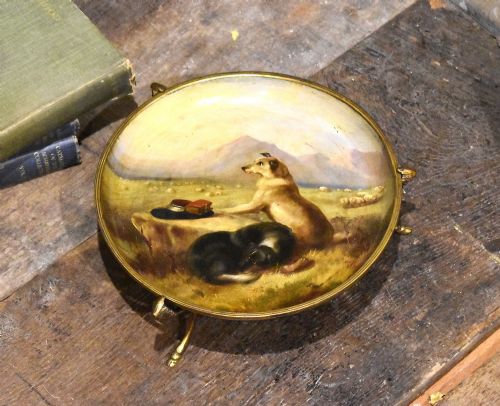
One Victorian papier mache comport displays hand-painted dogs, proving that nineteenth-century dining tables occasionally welcomed canine companions in miniature form.
What varies in quality
Quality in these vessels rests upon the crispness of the bronze casting and the depth of the chasing. Superior mounts exhibit sharp detail in foliage, figural elements, and geometric patterns, whereas lesser examples appear soft and flat. The integration between the metal mount and the glass or porcelain body also determines overall execution, with finer pieces showing secure, flush fitting without excess adhesive or movement.
The material quality of the bowl itself dictates the standard of the piece, from heavy lead crystal with deep wheel-cutting to finely painted porcelain decorated in the Sevres manner. The weight and finish of the bronze, whether bright ormolu or patinated, reflect the workshop standards of the nineteenth-century period.
Louis Pierre Malpass·Samson Porcelain
The Bronze Mount Bowl Glossary
- Ormolu
- Gilt bronze created by applying a mercury and gold amalgam to cast bronze and heating it to drive off the mercury. This technique produces a durable, rich golden surface typical of luxury nineteenth-century decorative objects.
- Comport
- A raised dish or bowl mounted on a stem and foot, used historically for serving fruit or sweetmeats. These pieces often feature elaborate metal mounts and decorative porcelain or glass bodies.
- Tazza
- A shallow saucer-like dish set upon a pedestal foot, originating from classical antiquity. Nineteenth-century interpretations frequently incorporate bronze mounts and marble bases.
- Jardiniere
- An ornamental pot or stand designed to hold plants or floral arrangements. They frequently incorporate ceramic or glass bodies secured with decorative metal mounts.
- Champlevé
- An enamelling technique where troughs are dug into the surface of a metal object, filled with vitreous enamel powder, and fired. The resulting design sits flush with the surrounding metal.
Bronze Mount Bowl: Frequently Asked Questions
What is a bronze mount bowl used for?
These vessels functioned primarily as table centrepieces, decorative comports, or serving dishes in nineteenth-century formal dining rooms. They were placed on tables or sideboards to display fruit, flowers, or confectioneries during meals.
Today, collectors use them as standalone decorative objects on side tables, mantels, or dining surfaces. Their mixed materials allow them to catch light and anchor a room's decorative scheme.
How do I identify French Empire style?
French Empire style draws heavily from classical Roman, Greek, and Egyptian motifs, featuring symmetrical designs, military trophies, and animal forms like rams' heads. The bronze mounts on these pieces are typically heavy and structured with a formal presence.
In contrast to the swirling asymmetry of Rococo revival, Empire pieces maintain strict geometric order and architectural proportion. The metalwork often contrasts polished gilt bronze with dark patinated bronze.
What distinguishes ormolu from gilt bronze?
Ormolu specifically refers to objects finished using the historic mercury gilding process, which yields a distinctively warm and deep metallic lustre. The term is frequently used interchangeably with gilt bronze in modern descriptions.
When examining a piece, the presence of mercury gilding indicates a nineteenth-century or earlier manufacture date. Later electroplated pieces often show a more uniform, pale yellow gold surface without the subtle variations of hand-applied fire gilding.
How should I clean my bronze mount bowl?
Dusting with a soft, dry microfibre cloth is the safest way to maintain glass, porcelain, and metal surfaces without causing abrasion. Avoid commercial metal cleaners or harsh chemical dips, which can strip the original gilding from the bronze mounts.
If the glass or porcelain bowl is removable, lift it out carefully before cleaning to prevent moisture from seeping into the metal joints or adhesives. Keep these pieces away from direct sunlight and damp environments to protect the integrity of the materials.