

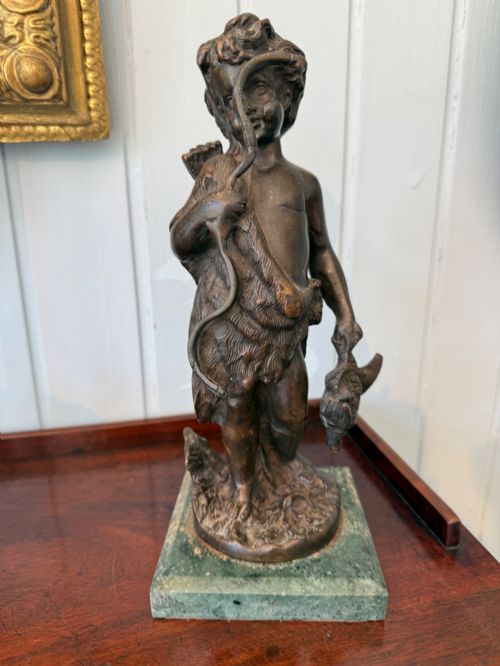


Bronze Hunting Statue
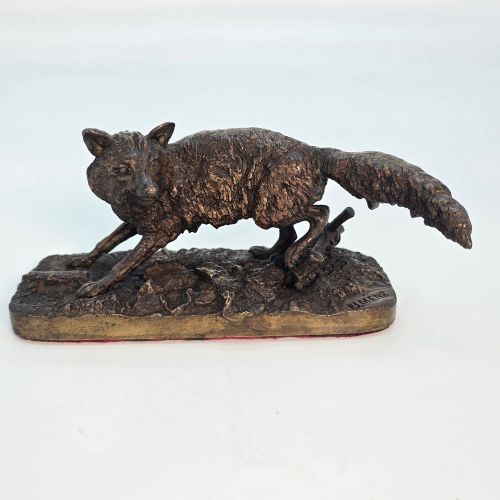
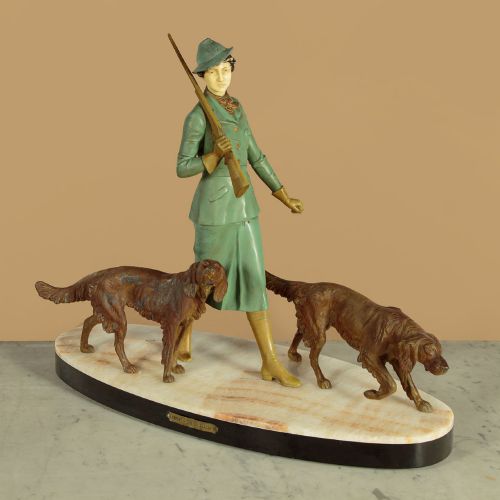
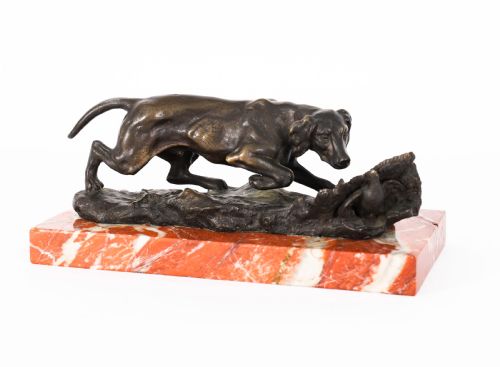
A bronze hunting statue captures the tension of the chase through cast metal, depicting hounds, gundogs, and huntsmen from the nineteenth and early twentieth centuries.
Bronze Hunting Statue
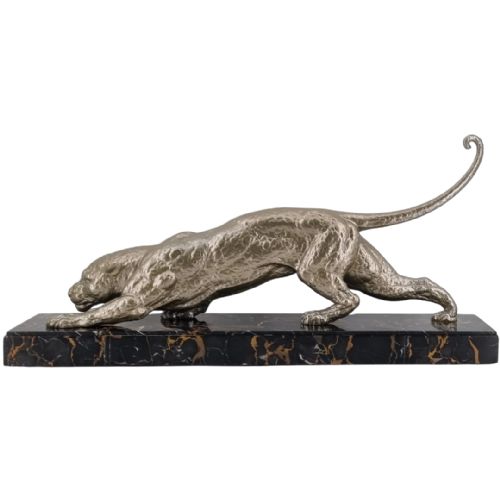
A bronze hunting statue brings canine subjects, wild game, and sporting pursuits into domestic interiors through detailed metal sculpture. The selections span the nineteenth century and the early decades of the twentieth century, reflecting both Victorian taste and Art Deco design.
Most pieces on this page emerge from French animalier traditions, depicting setters, hounds, greyhounds, and hunting groups in moments of rest or action. These sculptures frequently combine cast metal figures with heavier stone plinths.
The subjects range from solitary resting dogs to complex multi-figure scenes involving birds, hares, and mounted huntsmen. Animalier realism dominates the selection, alongside stylised interpretations from the nineteen-twenties and thirties.
How they were made
Foundries produced these sculptures primarily through the lost-wax method or sand casting, capturing muscle tone, fur texture, and sporting equipment with precision. Artisans finished the metal surfaces with patination, ranging from warm browns to dark green tones, and occasionally applied cold-painted enamels.
Many figures are mounted upon heavy bases of marble, onyx, alabaster, or portoro marble, anchoring the composition and providing contrast to the metal above. Alternative materials such as spelter and patinated metal appear alongside solid bronze in period works.
Bronze Hunting Statue Retail Price Guide 2026
Typical asking prices for bronze hunting statue among the pieces listed under this phrase on Sellingantiques today, from the lower quarter to the upper quarter. They describe what is for sale here now, not the wider market.
Several setters and hounds share their pedestal with unsuspecting pheasants and rabbits, frozen mid-hunt in enduring metal.
What varies in quality
The quality of the base material and its integration with the metal sculpture also set pieces apart. Fine marble or portoro plinths fitted flush to the bronze demonstrate greater workshop care than plain wooden mounts or poorly matched stone.
D. H. Chiparus·Carl Kauba·Jules Moigniez·Delabrierre·C Masson·Auguste Nicholas Cain·Antoine Louis Barye·Christophe Fratin·Pierre-Jules Mêne·John Willis Good·Isidore Bonheur·Dubucand·Nikolai Lieberich·L.Bureau
The Bronze Hunting Statue Glossary
- Animalier
- A nineteenth-century artistic movement dedicated to the realistic representation of animals, particularly in sculpture. Practitioners focused heavily on anatomical accuracy and natural behaviour.
- Patination
- The chemical treatment applied to the surface of bronze to alter its colour and protect the metal. This process creates rich brown, black, or greenish tones over the raw alloy.
- Spelter
- A zinc-based alloy commonly used as a cheaper alternative to bronze for decorative figures. It takes patination well but feels lighter and proves more brittle than bronze.
- Portoro marble
- A distinctive black Italian marble featuring prominent gold and yellow veins. It frequently forms the plinths for twentieth-century figural groups.
Bronze Hunting Statue: Frequently Asked Questions
What is an animalier bronze?
An animalier bronze is a nineteenth-century sculpture focused specifically on the realistic portrayal of animals. These works capture creatures in motion or repose, often highlighting the musculature and behaviour of sporting dogs and wildlife.
Such pieces gained immense popularity across Europe, with French foundries leading production. They remain central to categories involving hunting and sporting statuary.
How do I identify spelter from bronze?
Spelter is a zinc alloy that feels significantly lighter than bronze and often shows a greyish metal beneath worn spots in the finish. Bronze possesses a heavier weight and a warmer base metal colour.
Many antique figures cast in spelter were given bronze-coloured patination to mimic the more expensive material. Closer inspection near the base or underside usually reveals the lighter metal.
Why are these statues mounted on marble?
Marble plinths provided stability for heavy metal castings while adding a decorative element to domestic displays. The stone base grounded the dynamic compositions of hounds and game.
Different stones, including onyx, alabaster, and portoro marble, became popular during specific periods. Art Deco pieces frequently utilised geometric marble slabs to complement the metal figures.
How should I clean a bronze statue?
Dusting with a soft, dry brush is sufficient for routine maintenance of patinated metal surfaces. Avoid using commercial metal polishes, which can strip away the historical patination.
Applying a light coat of microcrystalline wax by professional conservators helps protect the bronze from atmospheric moisture. The marble bases can be wiped gently with a damp cloth.