

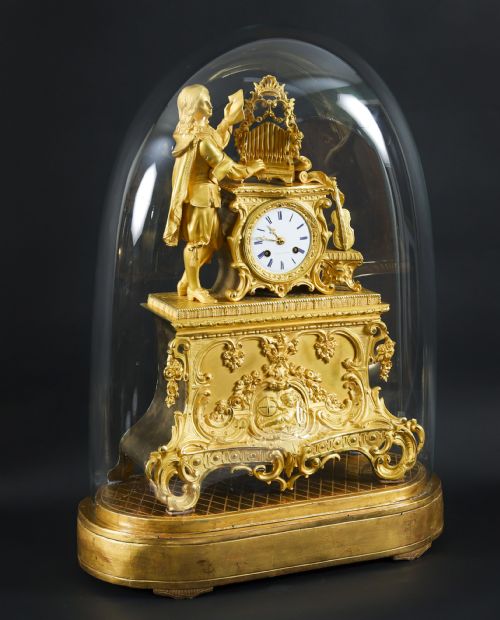


Bronze Glass Clock
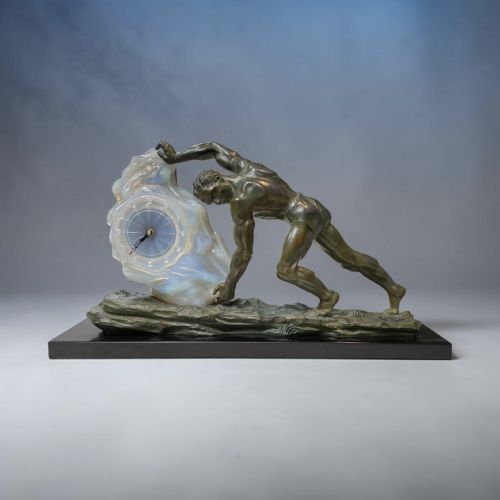
A bronze glass clock brings together heavy cast metal and clear panels to show the intricate movement ticking inside.
Bronze Glass Clock
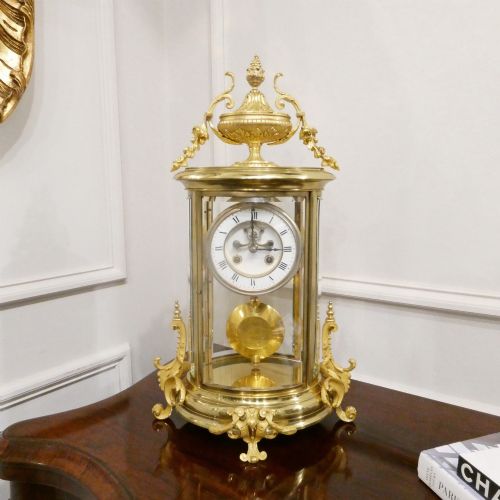
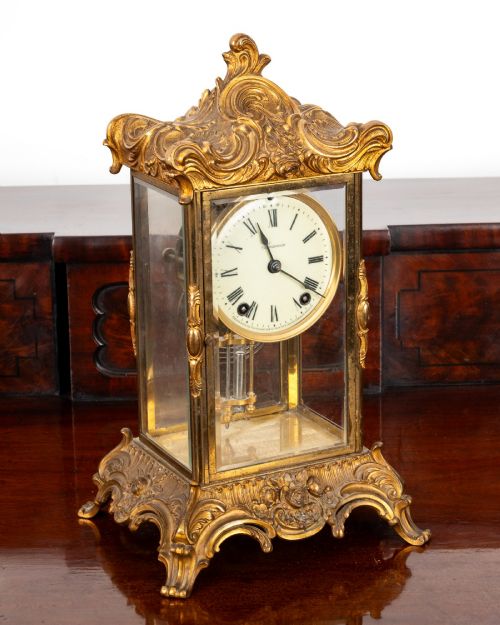
A bronze glass clock unites metal frames with transparent panels, often appearing as four glass mantel pieces, crystal regulators, and portico designs from the nineteenth century. These items span Victorian, Napoleon III, and Charles X styles, alongside French Rococo Revival and Neo-Classical forms.
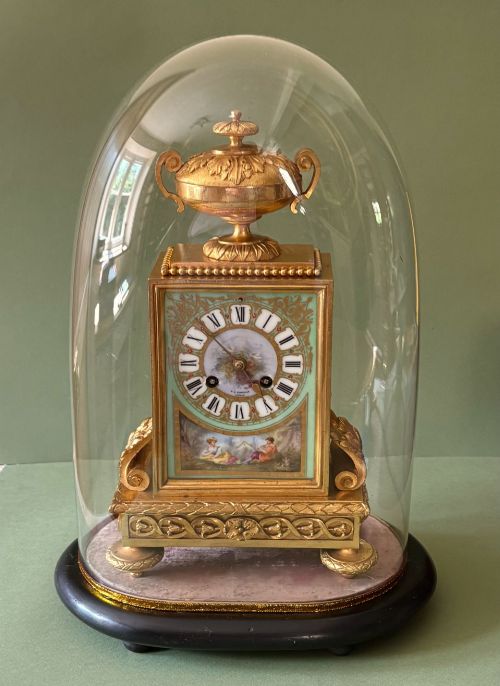
The most common examples on this page are French four glass mantel clocks and crystal regulators housing visible mechanical movements. Makers and houses such as Samuel Marti, Leroy Paris, and Breguet produced these mantel clocks and garnitures, frequently accompanied by original glass domes.
Beyond standard mantel versions, the selection includes carriage clocks, desk clocks, and portico models incorporating cut crystal, marble, and porcelain panels. Buyers encounter pieces framed in gilt bronze, ormolu, and brass, dating across the 1850s to the early 1900s.
Materials and construction
Foundries cast bronze, brass, and ormolu into ornate frames, then applied fire gilding or gold plating to create bright metallic surfaces. Glassmakers produced heavy bevelled panes and hand-blown domes to protect the delicate inner mechanisms from dust.
Craftsmen integrated enamel dials, painted porcelain panels, and marble bases into the metal and glass structures. Movements featured escapements such as the chaff-cutter type, driving strike and repeat functions or bell-striking trains.
Bronze Glass Clock Retail Price Guide 2026
Typical asking prices for bronze glass clock among the pieces listed under this phrase on Sellingantiques today, from the lower quarter to the upper quarter. They describe what is for sale here now, not the wider market.
Some models feature swinging cherubs that gently sway back and forth as the clock ticks away the hours.
Distinguishing quality
Quality rests in the crispness of the bronze chasing and the weight of the cast metal frame. Finer models display deep, sharp ornamentation rather than soft, shallow casting marks.
The clarity and thickness of the bevelled glass panels and the presence of signed movements or maker markings elevate a piece. Original hand-blown glass domes surviving intact add substantial merit to the assembly.
Samuel Marti·Ansonia New York·Rodier·Leroy Paris·Breguet·Moser·Farcot·Ferdinand Barbedienne
The Bronze Glass Clock Glossary
- Four glass clock
- A mantel clock housed in a brass or gilt bronze frame with glass panels on all four sides, allowing the movement to be seen from multiple angles. These often feature mercury pendulums.
- Crystal regulator
- A mantel clock featuring heavy bevelled glass panels held within a brass or gilt bronze frame, exposing the entire clockwork and pendulum to view. They emerged during the late nineteenth century.
- Ormolu
- Finely chased bronze that has been gilded with a mercury and gold amalgam, producing a rich golden finish found on nineteenth-century French pieces. The technique was widely utilised by Parisian makers.
- Portico clock
- A mantel clock built in the architectural form of a classical portico, supported by columns framing a central suspended pendulum. These frequently combine cut crystal pillars with ormolu mounts.
- Clock garniture
- A set comprising a central clock flanked by matching decorative objects such as vases, candelabra, or urns. They are often displayed together beneath glass domes.
Bronze Glass Clock: Frequently Asked Questions
How do I maintain a crystal regulator?
Keep the clock away from direct sunlight and damp environments to protect the gilt finish and the delicate internal escapement. Dust the glass panels regularly using a soft cloth without harsh chemical cleaners.
Professional servicing every few years ensures the brass gears and springs remain lubricated and accurate.
Why are glass domes included?
Glass domes protected nineteenth-century clocks from coal smoke, dust, and accidental bumps in domestic parlours. Original hand-blown domes retain subtle surface ripples and bubbles formed during their manufacture.
Displaying a clock under its original dome preserves both the mechanism and the decorative gilding from airborne particles.
How do I identify a French portico clock?
A French portico clock takes the architectural shape of a classical temple with upright pillars supporting an upper entablature. The pendulum swings freely within the central open space between the columns.
These pieces typically combine ormolu mounts with cut crystal or marble components dating from the Charles X period.