

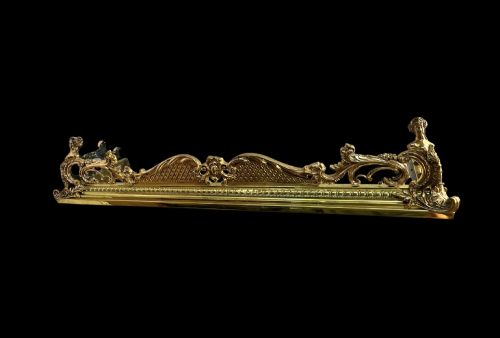


Bronze Fireplace Surround
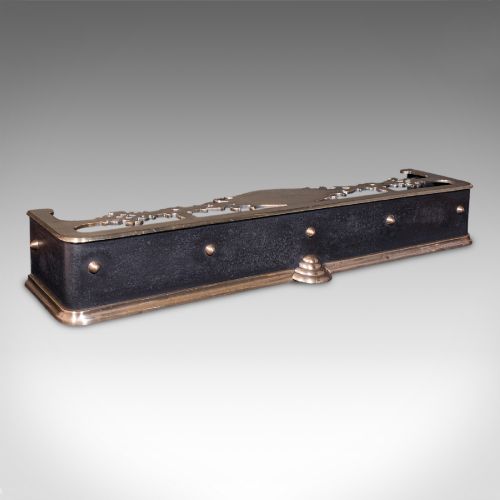
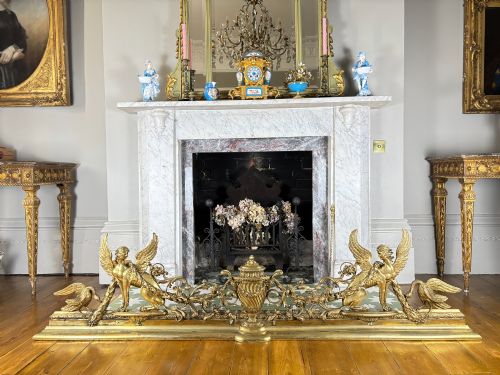
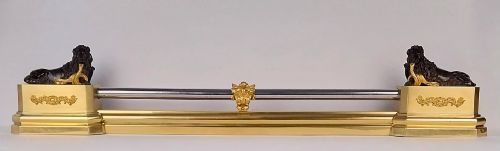
These bronze fireplace surround options bring monumental French and English hearth furniture into your room, offering both adjustable hearth guards and detailed chenets.
Bronze Fireplace Surround
A bronze fireplace surround selection centres on hearth furniture including adjustable fireplace fenders, fire kerbs, and paired chenets designed to frame an open hearth. These metal hearth furnishings protect the floor and contain fuel while defining the domestic fireplace.
The most common format you will meet on this page is the adjustable metal fender spanning nineteenth-century English and French domestic interiors, often paired with decorative fire irons or chenet sets.
Pieces span the nineteenth century, Victorian era, and around nineteen hundred, running through Neoclassical, Louis XV, and Rococo Revival styles.
Materials and construction
Workshops utilised cast bronze, gilt bronze, ormolu, dore bronze, and brass alongside structural iron and polished steel to form the heavy frames and decorative mounts. Metals were shaped through casting and then chased or gilded to create reflective surfaces.
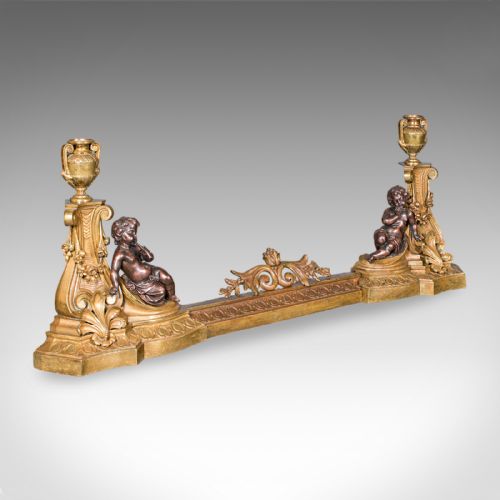
Makers combined bronze with iron to provide structural rigidity for adjustable fender mechanisms while reserving gilded bronze for visible decorative elements like cherubs and scrollwork.
Bronze Fireplace Surround Retail Price Guide 2026
Typical asking prices for bronze fireplace surround among the pieces listed under this phrase on Sellingantiques today, from the lower quarter to the upper quarter. They describe what is for sale here now, not the wider market.
Several fenders include mischievous cherubs cast directly into the metalwork, ensuring someone watches the fire even when the hearth is cold.
Assessing quality
Quality rests upon the crispness of the bronze casting and the depth of the original gilding or ormolu finish, where finer examples display sharp relief in Rococo and Neoclassical motifs. Heavy gauge metals and robust mechanical adjustment systems separate substantial architectural pieces from lighter utilitarian items.
The sophistication of the design execution, such as the sculptural modelling of cherub figures or pierced scrollwork on chenets, dictates the standing of each piece.
E F Caldwell New York
The Bronze Fireplace Surround Glossary
- Fender
- A low metal guard placed in front of an open fireplace to contain falling coals and sparks. These objects are often adjustable in width to fit various hearth dimensions.
- Chenet
- An alternative term for an andiron, used to support logs within the hearth or placed decoratively before the fire opening. Pairs frequently feature cast figural motifs.
- Ormolu
- Finely ground high-carat gold mercury-gilded onto a bronze base metal object. This technique produces a warm, durable metallic finish typical of French decorative arts.
- Dore Bronze
- Bronze pieces treated with a gold wash or mercury gilding process. The terminology reflects American and French manufacturing descriptions from the turn of the twentieth century.
- Rococo Revival
- A nineteenth-century design style characterised by asymmetrical scrollwork, naturalistic plant forms, and flowing curves. It draws inspiration from earlier French royal decorative arts.
Bronze Fireplace Surround: Frequently Asked Questions
What is a fireplace fender?
A fireplace fender is a metal barrier placed on the floor directly in front of an open hearth. Its primary purpose is to stop rolling embers and ash from damaging the surrounding flooring.
Beyond safety, these pieces act as decorative frames for the fireplace opening. They ground the hearth visually within nineteenth-century room schemes.
How do adjustable fenders work?
Adjustable fenders feature sliding sections that expand or contract to match the width of specific fireplace openings. This mechanical flexibility allowed nineteenth-century households to move hearth furniture between rooms.
The sliding mechanism relies on fitted metal channels that lock securely at the desired span. It provides a snug fit against brickwork or stone surrounds.
What are chenets used for?
Chenets serve as decorative fire irons or andirons positioned at the front of the hearth. They often incorporate figural castings, cherubs, or elaborate scrollwork to enhance the fireplace display.
While traditional andirons supported logs inside the hearth, many surviving nineteenth-century examples function primarily as decorative surrounds. They complement the design of the matching fender.
How do I identify Victorian pieces?
Victorian fireplace pieces often combine heavy cast bronze with structural iron or polished steel. They draw upon revival styles like Rococo, Louis XV, and Neoclassical designs popular during the nineteenth century.
Construction methods typically show nineteenth-century casting techniques and adjustable rail systems. Maker attribution or specific period registration marks sometimes appear on the metal frame.