
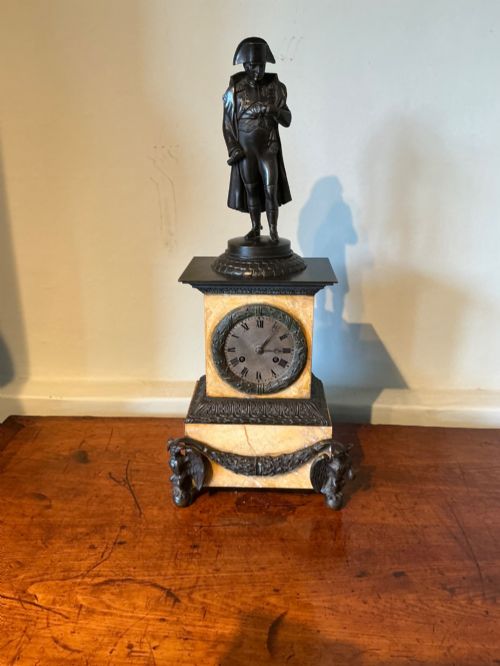
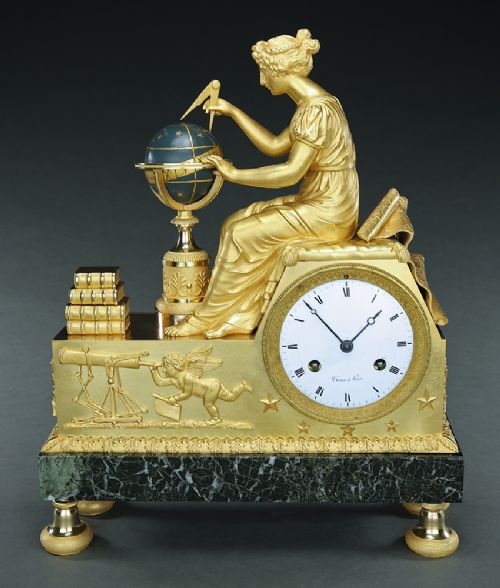
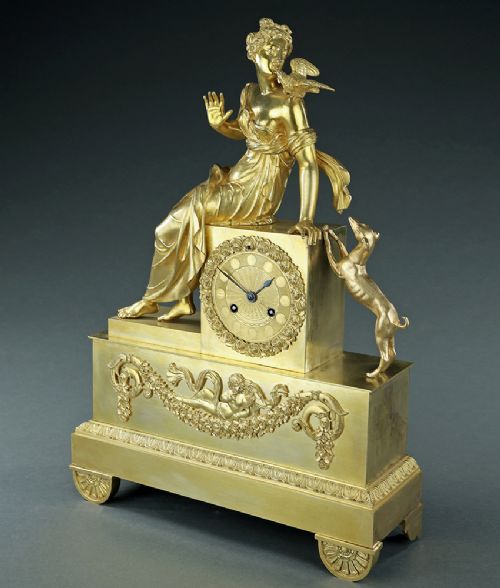
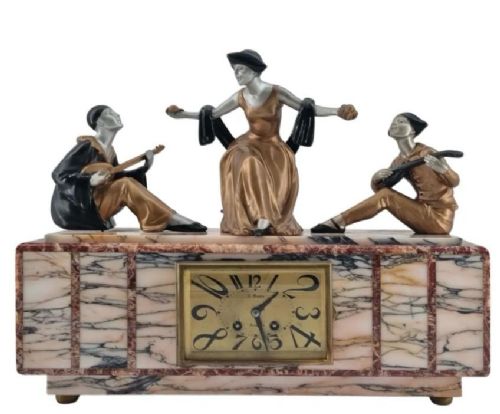




Bronze Figure Mantel Clock
A bronze figure mantel clock brings architectural weight and classical sculpture together on a shelf.
Bronze Figure Mantel Clock
A bronze figure mantel clock combines a mechanical timekeeper with cast metal figural sculpture, typically depicting mythological, historical, or allegorical subjects. These pieces serve as both functional timepieces and sculptural centrepieces for domestic interiors.
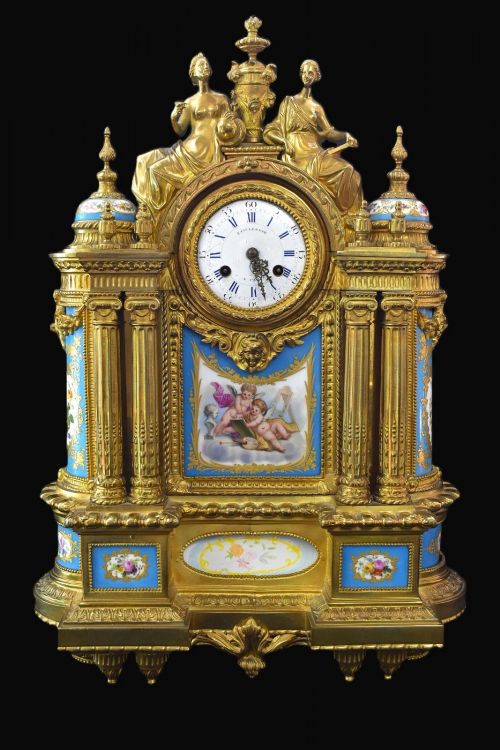
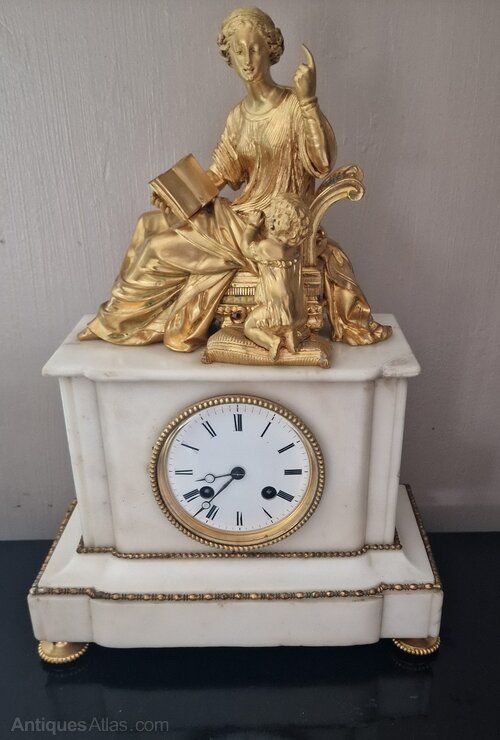
The bronze figure mantel clock most frequently encountered on this page originates from nineteenth-century France. Such pieces draw upon Empire, Louis XVI, and Neoclassical design vocabularies, often featuring standing or seated figures cast in patinated bronze alongside gilded mounts.
Larger examples sometimes form part of a clock garniture set, accompanied by matching candelabra or urns placed to either side. These ensembles create a balanced display designed for the mantelpiece or sideboard.
Materials and construction
Makers formed the structural body of a bronze figure mantel clock using cast bronze, often combining dark patinated surfaces with fire-gilded ormolu highlights. Marble bases in white, black, or rouge varieties frequently support the metalwork, adding stability and contrasting colour.
Movements relied on brass gear trains, frequently housing eight-day striking mechanisms produced by specialist Parisian makers. Enamel dials, sometimes signed by the retailer or horologist, displayed Roman or Arabic numerals behind glazed bezels.
Listings feature eighteenth and nineteenth-century periods, utilising materials such as ormolu, patinated bronze, rouge marble, and enamel.
Judging quality
Integration between the sculptural figure and the clock case separates ordinary pieces from superior examples. The best horological works use movements and dials tailored to the specific case rather than generic mass-produced components.
Etienne Lenoir·Berger Paris·Charpentier Paris·Lemerle Charpentier·Deniere Et Fils·Japy Freres·F Marti·Russels Liverpool
The Bronze Figure Mantel Clock Glossary
- Ormolu
- Gilded bronze produced through a mercury amalgamation process that leaves a durable, deep golden surface. This technique was widely employed on nineteenth-century French clock cases.
- Garniture
- A set of matching decorative objects designed for display together, typically comprising a central clock flanked by urns or candelabra. These sets created a symmetrical arrangement on nineteenth-century mantelpieces.
- Patinated bronze
- Bronze that has been chemically treated to produce a dark brown, green, or black surface colour. This dark tone provides visual contrast against bright ormolu mounts.
- Enamel dial
- A clock face formed by fusing powdered glass onto a metal disc at high temperatures. These dials offer a smooth, luminous white background for painted numerals.
- Regency
- A British stylistic period spanning the early nineteenth century, characterised by neoclassical restraint and classical revival motifs. Pieces from this era often incorporate austere architectural lines.
Bronze Figure Mantel Clock: Frequently Asked Questions
How do I wind an antique mantel clock?
Insert the appropriate winding key into the dial holes and turn gently until resistance is felt, taking care not to over-wind the mainspring.
Most nineteenth-century movements require weekly attention to keep accurate time across the eight-day duration.
Where should I place a heavy marble clock?
Select a sturdy mantelpiece, sideboard, or pier table capable of supporting substantial weight without sagging or vibrating. Ensure the surface is entirely level so the pendulum swings symmetrically and the escapement beats evenly.
Avoid positioning the clock in direct sunlight or near active heat sources that might dry out internal oils or discolour marble.
How can I tell a French nineteenth-century clock from a later copy?
Examine the rear movement plate for maker stamps, serial numbers, and foundry marks that indicate production in Paris or regional French workshops. High-grade antique examples feature hand-cut gear teeth and finely chased bronze figures rather than modern cast resin.
The weight and composition of the marble base also provide clues to the period of manufacture.
What does a clock garniture include?
A garniture consists of a central timekeeper accompanied by two matching side pieces, such as candelabra or decorative urns. These matched suites were designed to create a balanced focal point on a drawing room fireplace.
The materials and decorative motifs on the side pieces mirror those found on the clock case.