



Bronze Claw Feet
Bronze claw feet anchor Regency and Victorian lighting and tables with classical weight.
Bronze Claw Feet
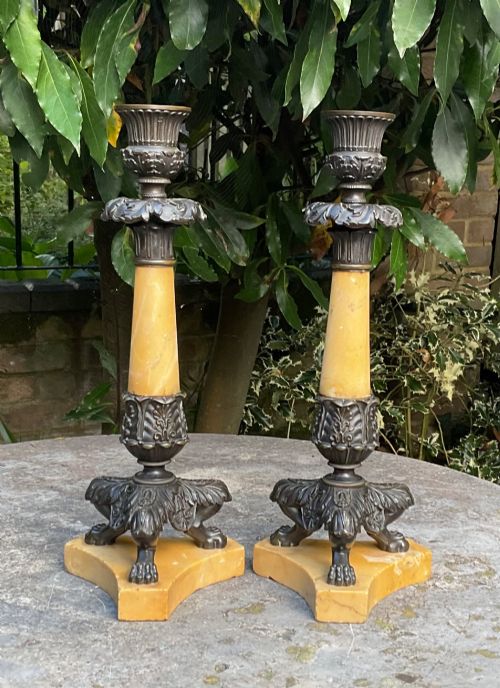
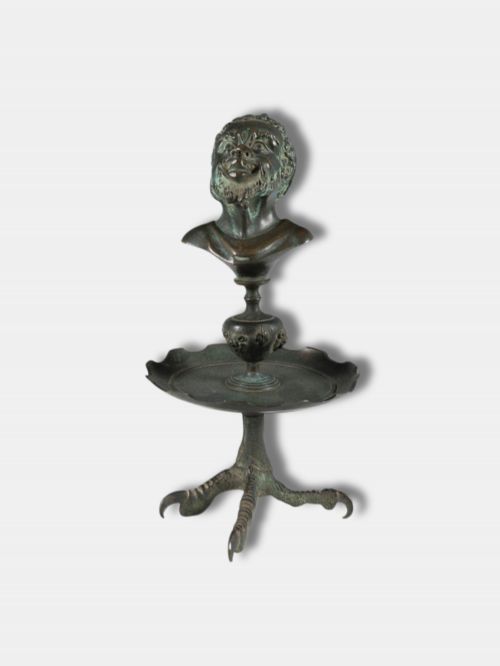
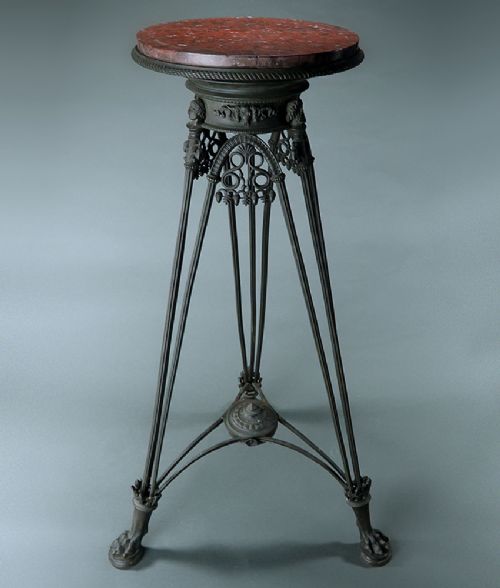
Bronze claw feet support decorative items like candlesticks, floor lamps, guéridon tables, and desk accessories found across this selection. These pieces span periods from the early nineteenth century through the Edwardian era, carrying distinct neoclassical and French Empire designs.
A buyer examining these listings meets pairs of candlesticks mounted on marble plinths alongside standard lamps and oil lamps featuring animalistic supports. Materials shift between cast bronze, patinated bronze, ormolu, and brass, often paired with marble bases or mahogany timber.
The objects originate from French workshops, Italian makers, and British makers, reflecting the enduring popularity of classical Grecian, Etruscan Revival, and Grand Tour aesthetics. Each piece uses the motif of the claw foot to elevate domestic furnishings into miniature monuments.
Materials and construction
Metalwork relies on casting techniques, producing forms in bronze, patinated bronze, ormolu, and brass that are subsequently chased and finished by hand. These metal components frequently anchor heavy stone elements such as sienna or white marble plinths and table tops.
Secondary materials like mahogany appear in furniture and desk sets, combining rich timber grains with cast metal mounts. Surface finishes vary from bright fire-gilt ormolu to dark patinated bronze, showing the distinct thermal and chemical treatments applied by period metalworkers.
Bronze Claw Feet Retail Price Guide 2026
Typical asking prices for bronze claw feet among the pieces listed under this phrase on Sellingantiques today, from the lower quarter to the upper quarter. They describe what is for sale here now, not the wider market.
Listings feature items from the nineteenth century, Regency period, Victorian era, and Edwardian period, utilising bronze, brass, ormolu, and marble.
Assessing quality
Quality rests upon the crispness of the metal chasing in the claws and the depth of the casting detail. Sharp talons and defined fur or scales separate finely worked pieces from softer, more generalized production.
The integration of the metal foot with its supporting marble base or timber body demonstrates the maker's precision. Superior examples maintain balanced proportions and secure joints where heavy metal meets stone or wood.
The Bronze Claw Feet Glossary
- Ormolu
- Gilded bronze produced by applying a mercury and gold amalgam to a cast bronze object and heating it. This technique creates a durable, luminous golden surface characteristic of French Empire luxury goods.
- Patinated bronze
- Bronze treated chemically or naturally to alter its surface colour, usually to a dark brown or green tone. This treatment protects the metal and accentuates sculptural details.
- Guéridon
- A small round table supported by a central column or legs, often featuring a marble top. The form gained popularity in neoclassical interiors.
- Pricket candlestick
- A candle holder featuring a central spike upon which a wax candle is impaled, rather than sitting inside a socket. These often appear in ecclesiastical or revival settings.
- Grand Tour
- A cultural journey undertaken by wealthy young Europeans to study classical antiquities. It inspired the creation of souvenirs and decorative bronzes.
Bronze Claw Feet: Frequently Asked Questions
What periods do these pieces come from?
The items span the nineteenth and early twentieth centuries, encompassing the Regency, Victorian, and Edwardian eras. French Empire and neoclassical revival styles dominate the selection.
Dates range from the early eighteen-hundreds through to nineteen-hundred, showing consistent admiration for classical antiquity across multiple decades.
How were bronze claw feet used originally?
Makers employed bronze claw feet to support candlesticks, tables, inkstands, and heavy floor lamps. The animal paw motif added structural stability while referencing ancient Roman and Greek furniture.
In domestic settings, these objects occupied prominent positions on mantelpieces, desks, and principal reception rooms.
How do I care for antique bronze and marble?
Dust bronze objects gently with a dry, soft cloth to prevent the accumulation of grit in recessed details. Avoid harsh chemical cleaners that strip historical patina.
Marble plinths and tops require simple wiping with a damp cloth and immediate drying. Acidic substances can etch polished stone surfaces permanently.
What is the difference between bronze and brass?
Bronze is an alloy primarily composed of copper combined with tin, resulting in a heavier, stronger material suited to detailed casting and patination. Brass is an alloy of copper and zinc, generally possessing a brighter, more golden hue.
Period pieces often combine both metals, using cast bronze for sculptural feet and mounts alongside brass components.