






Bronze Bust Marble Base
Bronze bust marble base works bring classical figures and literary portraits into domestic interiors through lasting metal and stone.
Bronze Bust Marble Base
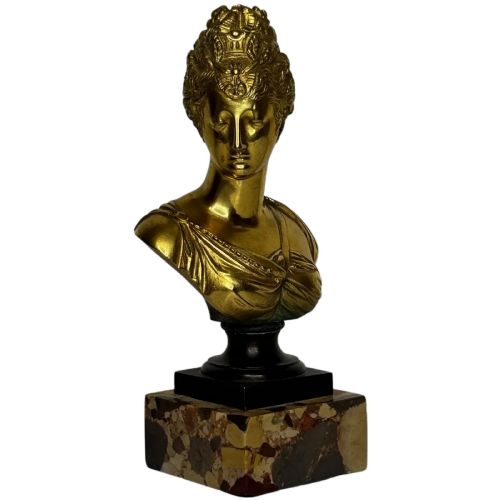
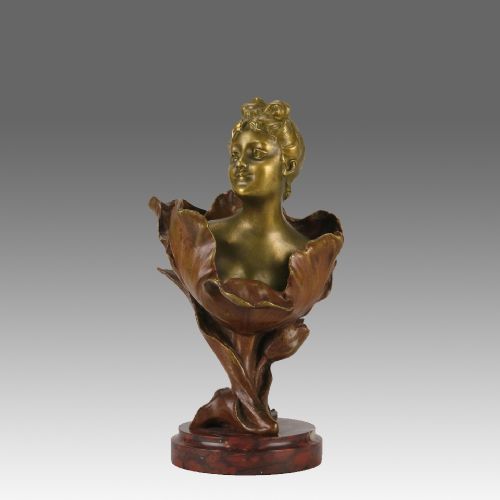
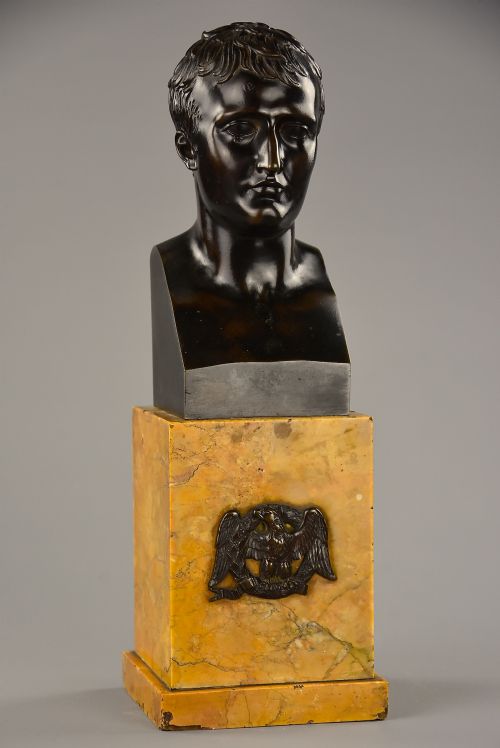
A bronze bust marble base arrangement pairs a cast metal portrait or mythological figure with a heavy stone plinth for stability and display. When buyers search for bronze bust marble base items, they encounter nineteenth-century French salon bronzes, Italian Grand Tour souvenirs, and expressive Art Nouveau studies.
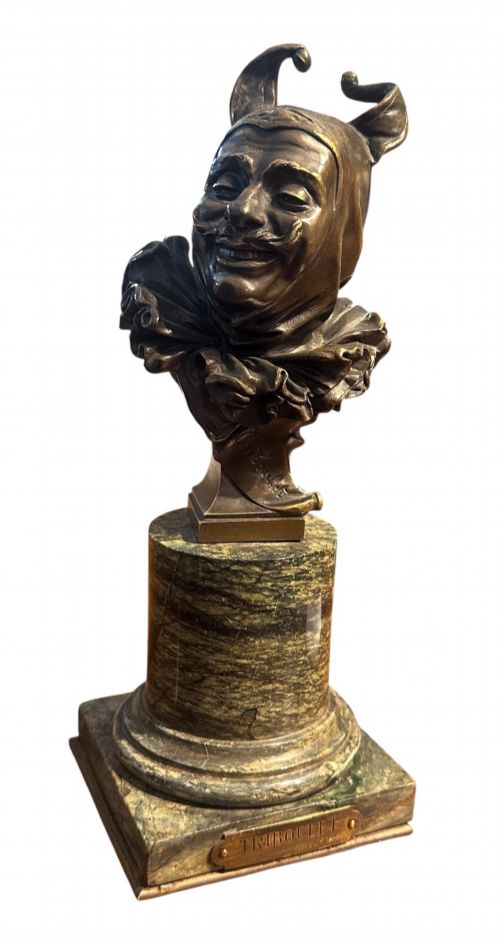
The most common examples on this page are nineteenth-century French and Italian portrait busts of historical figures, literary characters, and classical deities. These sculptures range from small cabinet pieces to substantial library ornaments set upon round or square bases of black, white, or green marble.
Materials and Construction
Foundries produced these portrait sculptures using traditional metal casting methods, frequently applying chemical patination to achieve dark brown, green, or verdigris surface tones. Some works utilised gilt bronze or ormolu to highlight drapery and hair, while lower-cost alternatives employed painted spelter.
The supporting plinths utilise various stones including Portoro marble, Verdi green marble, and plain white or black marble. Sculptors secured the metal castings to these heavy stone bases using threaded bolts or pins inserted through the base underside.
Materials documented across the listings include standard bronze, gilt bronze, brass, spelter, alabaster, and multiple varieties of decorative marble.
Factors That Distinguish Quality
The selection and preparation of the stone base also indicate overall merit. High-grade items feature dense, well-polished marble with attractive natural veining, securely fitted to the bronze without wobbling or visible adhesive gaps.
Henri Godet·Georges-Charles Coudray·Antonio Merente·George Minne·Alajos Strobl·Willems·Emmanuel Villanis·E. Laurent·Richard Aurili·Eutrope Bouret·Georges Van Der Straeten·Gory
The Bronze Bust Marble Base Glossary
- Patina
- The surface coloration and chemical film developed on bronze over time or applied intentionally by the foundry. This finish protects the metal and defines facial contours.
- Ormolu
- Metal gilt with a finely ground gold-mercury amalgam used to create a rich yellow metallic lustre. It frequently appears on nineteenth-century decorative bronzes.
- Grand Tour
- A cultural journey undertaken by wealthy Europeans in the eighteenth and nineteenth centuries, commemorated by purchasing small classical sculpture replicas. These souvenir bronzes often depicted ancient philosophers and deities.
- Spelter
- A zinc alloy utilised as a less expensive substitute for bronze in nineteenth-century decorative manufacturing. It takes patination well but possesses a lighter weight and softer structural strength than copper-alloy bronze.
Bronze Bust Marble Base: Frequently Asked Questions
What periods do these busts come from?
The available selection spans the nineteenth and early twentieth centuries, with a strong concentration of pieces created between 1870 and 1920. These dates encompass Victorian academic sculpture, French salon works, and Art Nouveau productions.
Earlier examples from the beginning of the nineteenth century often reflect Neoclassical tastes, while later pieces adopt flowing organic lines or symbolist themes.
How were these sculptures displayed originally?
In nineteenth-century homes, these portrait busts stood upon library bookshelves, mantelpieces, and dedicated pedestal tables. They served as visible indicators of the owner's literary, historical, and classical education.
The heavy marble base provided the necessary weight to anchor the metal bust securely on domestic furniture without requiring wall fixtures.
How do I distinguish bronze from spelter?
Bronze is heavier, cooler to the touch, and yields a dull metallic ring when gently tapped, whereas spelter feels softer and lighter. Examining the underside or an unobtrusive edge often reveals the warmer, reddish hue of copper beneath a bronze patina.
Spelter frequently shows a greyish or silvery metal colour where the surface coating has worn away through handling.
What subjects do these portrait busts represent?
The subjects range widely from ancient Greek and Roman philosophers, gods, and emperors to literary figures like Dante Alighieri and William Shakespeare. Other works depict historical personalities and imagined female models created during the Art Nouveau period.
Signed artist studies often portray allegorical figures such as sleep, flora, or regional peasant characters.