


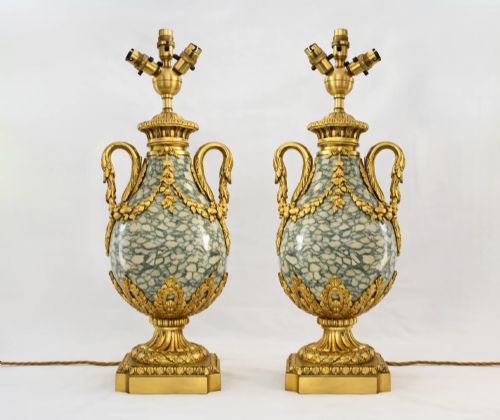

Bronze and Marble Lamp
A bronze and marble lamp pairs solid stone with cast metal to bring weight and proportion to a room.
Bronze and Marble Lamp
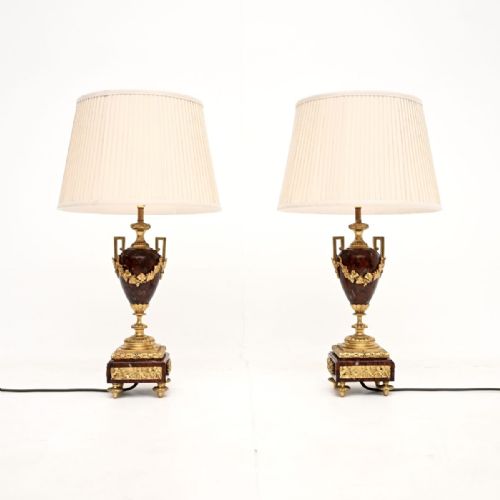
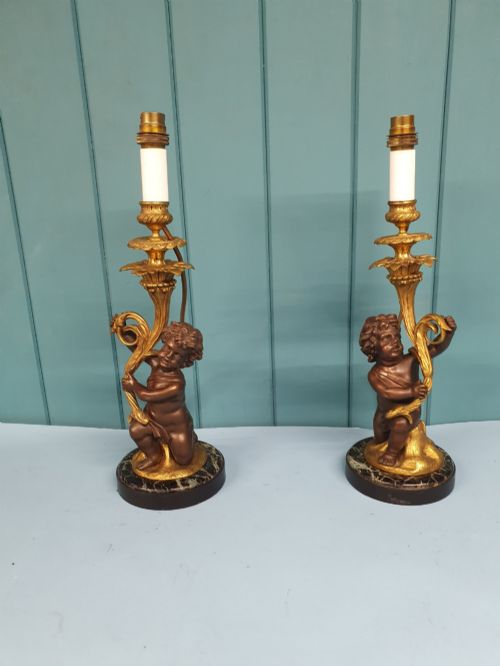
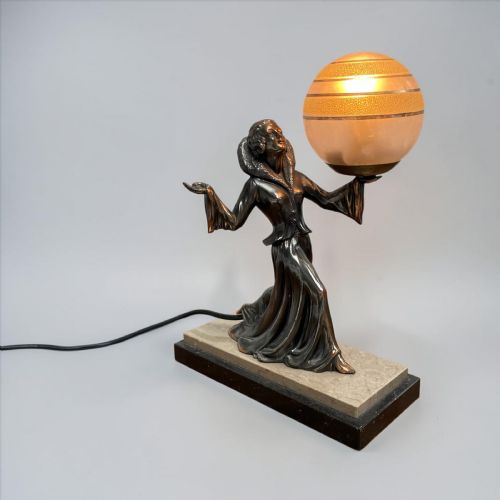
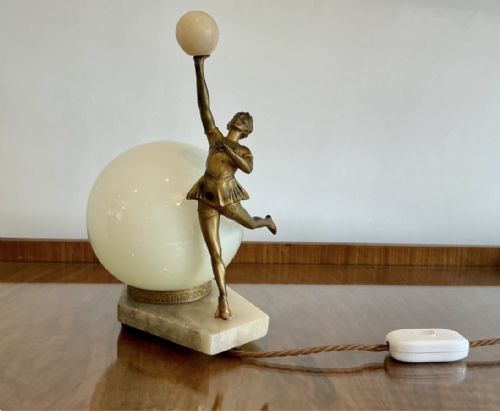
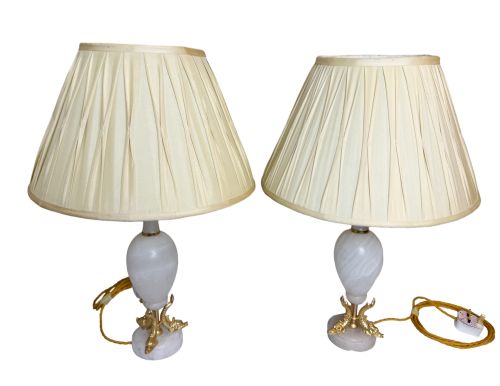
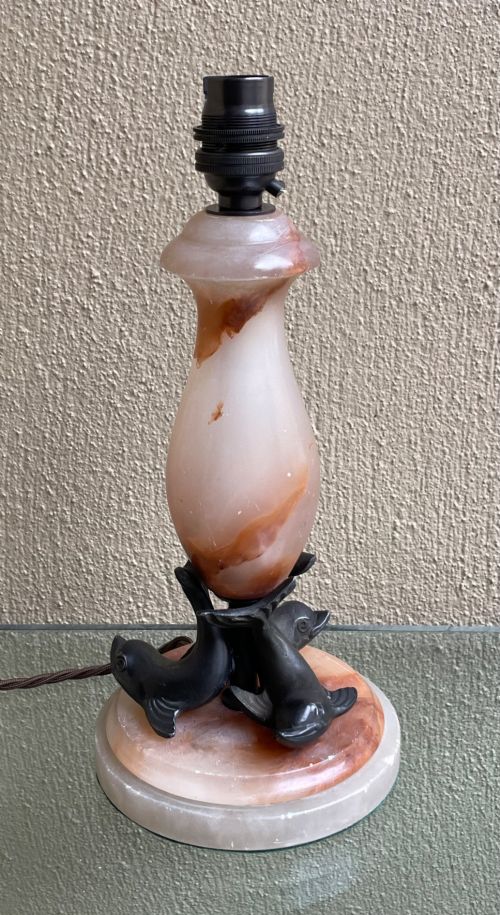
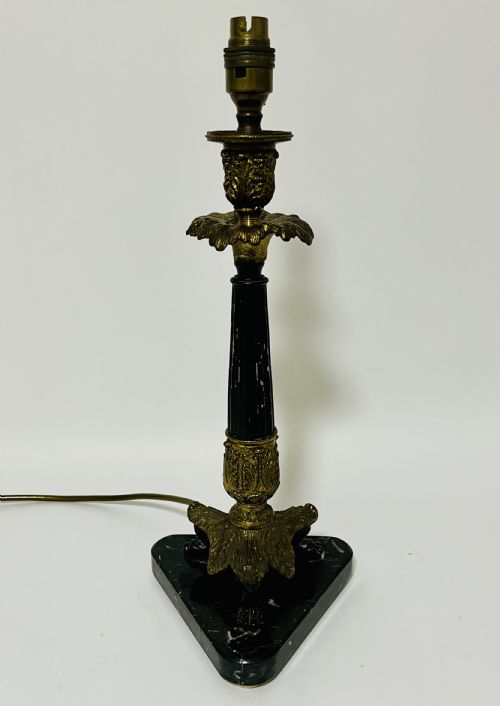
A bronze and marble lamp brings together cast metal figures or mounts with solid stone bases, most often found in French designs spanning the nineteenth century through the Art Deco era. The selection ranges from figural torchieres and cherub statuettes to architectural columns, obelisks, and converted cassolettes.
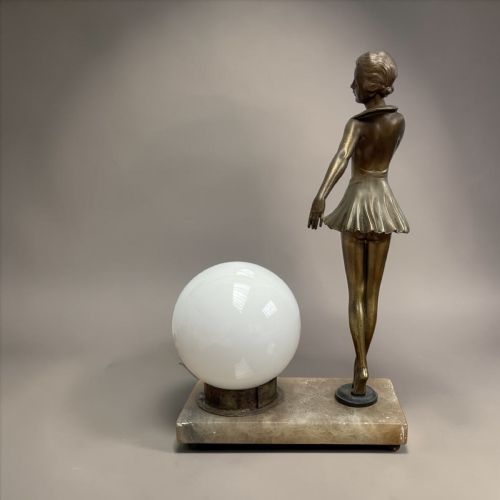
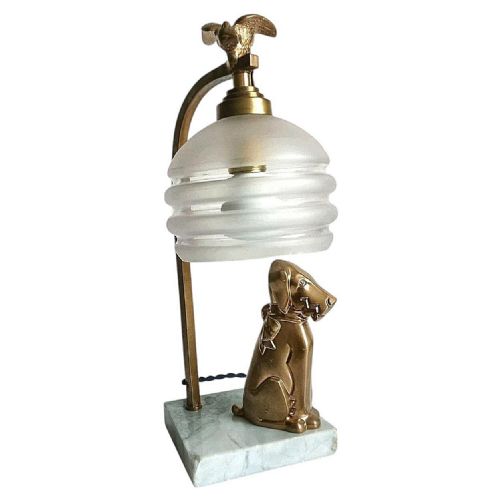
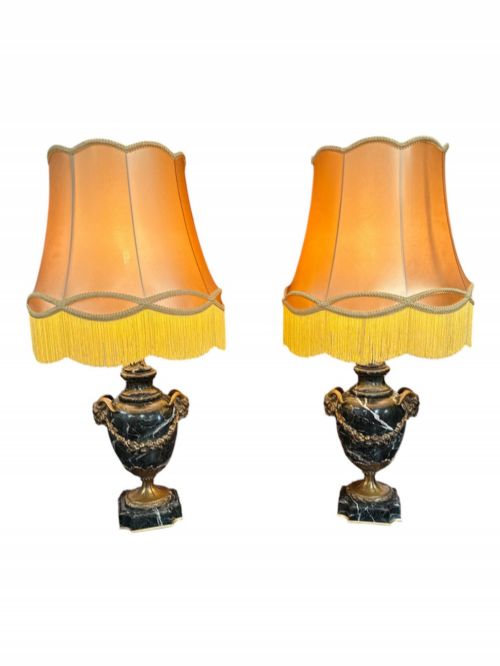
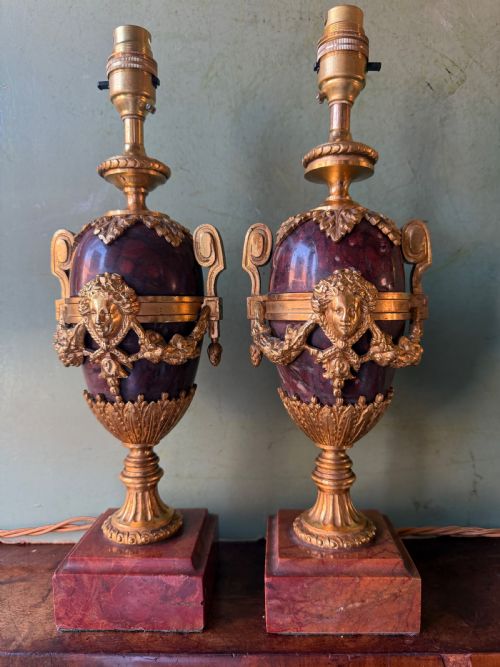
Buyers frequently encounter pairs of urn or column lamps referencing Louis XVI or Empire styles, alongside streamlined Art Deco lady and animal lamps set on marble plinths. These pieces frequently originate from French workshops utilising local ornamental stone and patinated or gilded metals.
Materials and construction
Makers combined natural stone bases, such as rouge or siena marble and onyx, with cast bronze, ormolu, or spelter mounts. Metal components were often cast, chased, and fire-gilded or cold-painted to contrast with the polished stone.
Assembly typically involved threaded rods or bolts securing heavy stone plinths to metal columns or figures, accommodating electrical conversions or original oil lamp fittings.
Art Deco lighting choices include French novelty dogs and parrots sharing space with dancing ladies on marble.
Judging execution
Quality rests in the crispness of the bronze chasing and the density of the marble, where sharper cast details and heavier mineral bases separate finer workshop production from standard commercial output. The weight of the ormolu and the depth of the hand-finishing on figural elements dictate the overall calibre.
Better examples display harmonious proportions between the stone plinth and the metal superstructure, using genuine gilt bronze rather than lesser brass or plated alloys.
F. De Luca
The Bronze and Marble Lamp Glossary
- Ormolu
- Gilt bronze produced by applying a mercury and gold amalgam to cast bronze and firing it. This technique creates a durable, warm golden surface found on nineteenth-century French mounts.
- Cassolette
- A decorative vessel, often reversible, featuring a lid that converts a decorative urn into a burner or lamp. These are frequently mounted in ormolu and paired with marble.
- Spelter
- A zinc alloy used as a less expensive alternative to bronze for figural castings. It is commonly painted or bronzed to imitate heavier metal.
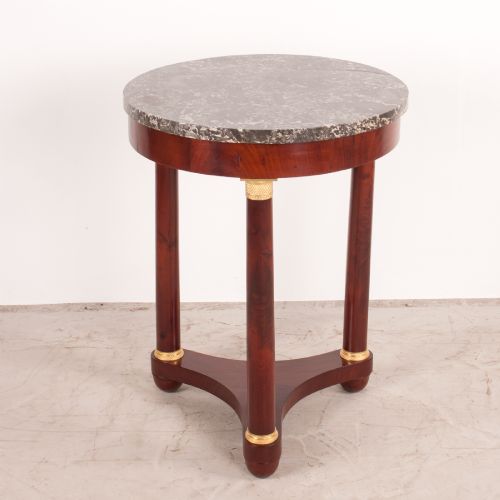
- Gueridon
- A small round table, often with a marble top and gilt bronze mounts, frequently utilised to support lighting. They appear across nineteenth-century French interiors.
- Torchiere
- A tall stand or floor lamp designed to direct light upwards. Antique versions often feature large figural bronze standards on heavy bases.
Bronze and Marble Lamp: Frequently Asked Questions
How do I date a bronze and marble lamp?
Dating relies on stylistic clues like Neoclassical column motifs or geometric Art Deco lines, alongside the manufacturing techniques of the metal and marble.
Examining the wiring, fixings, and casting methods provides further context to place the piece within the nineteenth or early twentieth century.
Are these lamps originally electrified?
Most antique examples began as oil lamps, gas fixtures, or decorative objects such as urns and cassolettes before later conversion to electricity.
Conversions were typically carried out to modern standards while retaining the original metal and stone components.
What is the difference between ormolu and gilt brass?
Ormolu consists of mercury-gilded bronze showing deep warmth and hand-chased detail, whereas gilt brass is typically brighter and stamped rather than hand-finished.
Heavier weight and finer surface articulation generally indicate genuine ormolu mounts.