

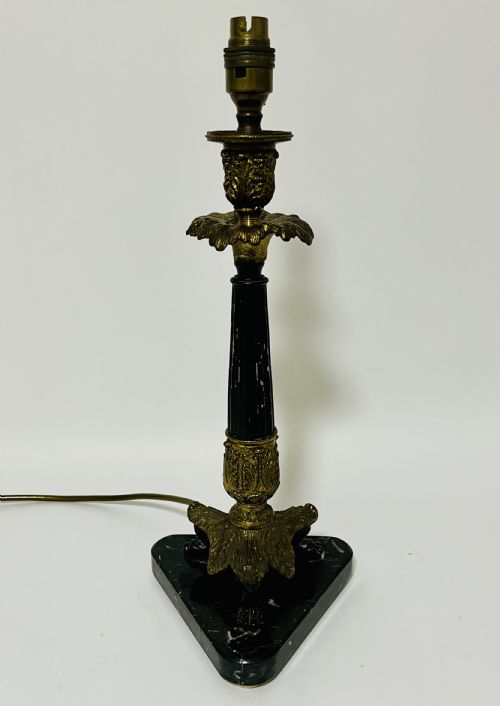
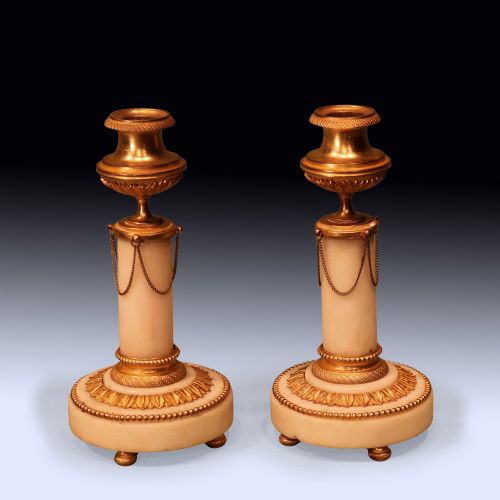


Bronze and Marble Candlesticks
These bronze and marble candlesticks unite heavy mineral plinths with cast metal figures, bringing classical dignity and warm illumination to an interior.
Bronze and Marble Candlesticks
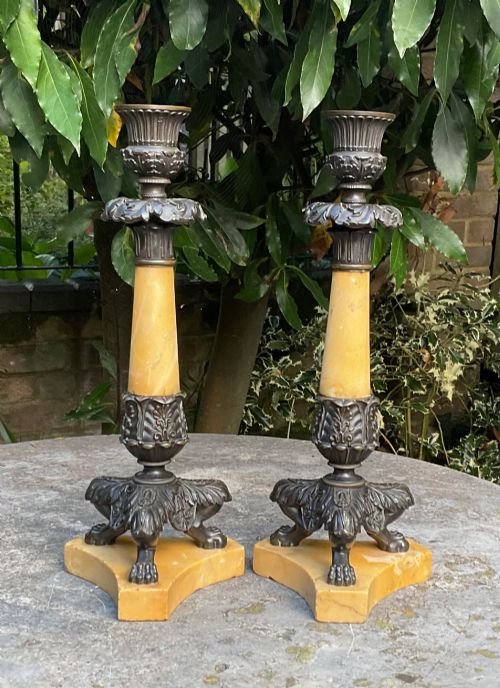
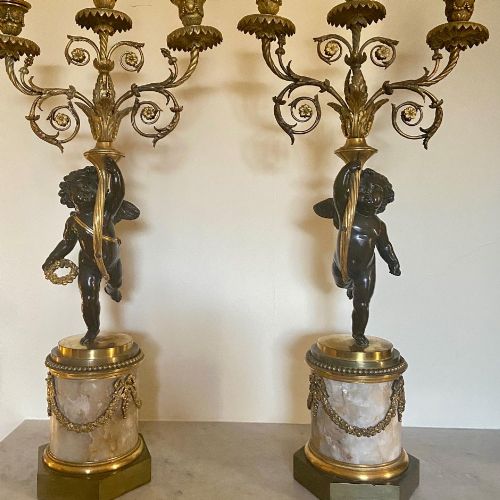
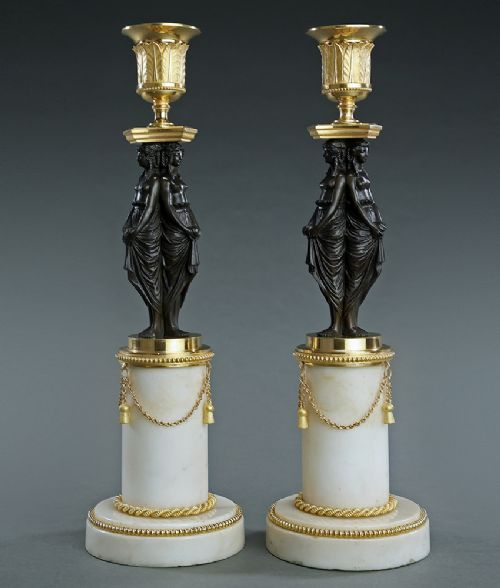
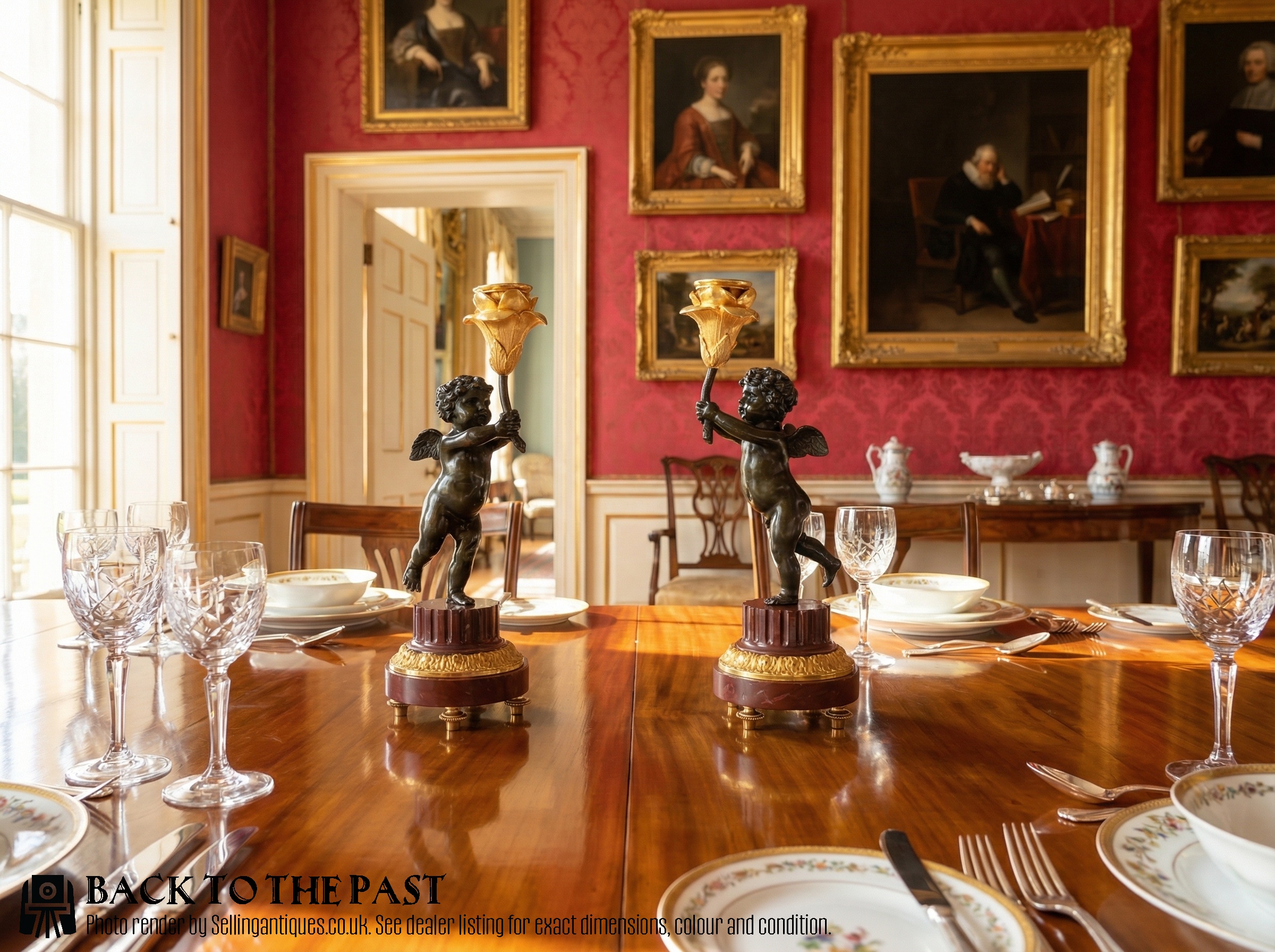
When you search for bronze and marble candlesticks, you encounter a refined class of lighting objects primarily originating from the nineteenth century and the Regency period. The most common iteration on this page is the matched pair, often cast as putti, cherubs, or classical maidens supporting candle sockets above stone bases.
Many examples draw directly upon French Empire, Louis XVI, and Neoclassical design vocabularies, frequently incorporating branching arms to form candelabra. These pieces trace their lineage to Grand Tour souvenirs and formal European drawing rooms where mineral and metal were paired for visual weight.
Materials and Construction
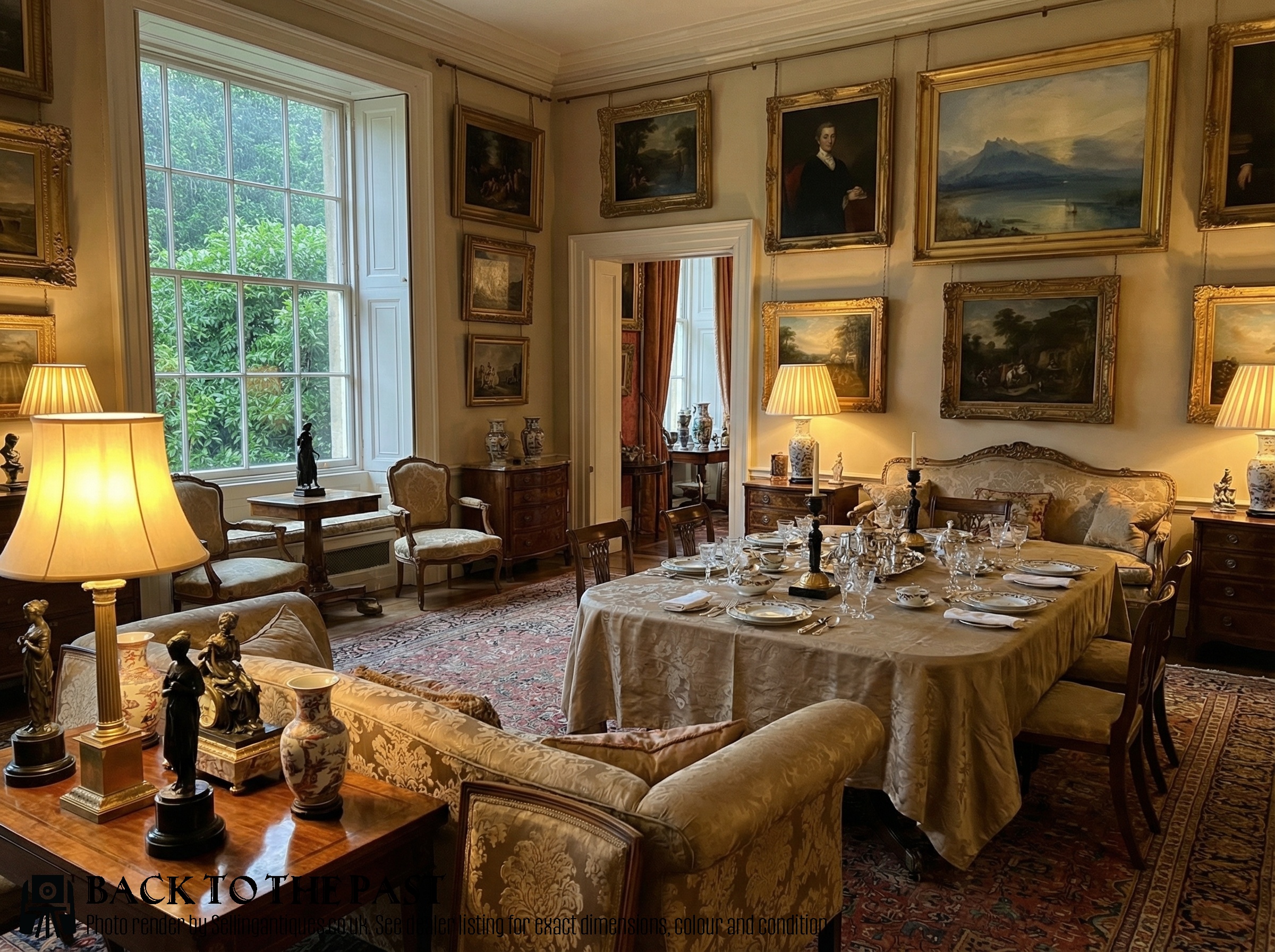
Foundry workers shaped the metal components through traditional casting methods, combining dark patinated bronze with bright ormolu and gilt bronze accents. Artisans turned and polished the marble plinths, which range from white and sienna varieties to dark vert maurin, providing a stable foundation for the heavier metalwork above.
Makers integrated the stone and metal elements using internal threaded rods and securing pins, joining the cold mineral base directly to the warm cast figures. Fire-gilding and hand-chiselling finished the metallic surfaces, while lathe work shaped the cylindrical or square marble columns.
Cast bronze dolphins and winged putti hold up the candle sockets.
Distinctions in Quality
Quality rests upon the crispness of the bronze chasing and the density of the marble selection. Superior examples display sharply defined facial expressions on putti and distinct feather or drapery details that only skilled hand-chasing achieves after casting.
The integration between the stone base and the bronze casting indicates the level of original workshop care. Finer pieces feature precisely fitted mounts with no wobble between the heavy mineral plinth and the metal superstructure, whereas simpler production relies on standard mass-cast components.
Francois Redmond·Dugourc·Claude Clodion·Thomas Hope
The Bronze and Marble Candlesticks Glossary
- Ormolu
- Gilded bronze produced through a mercury-gilding process that leaves a rich, golden surface sheen. This finish resists tarnishing and highlights the chased details of the metal.
- Patinated bronze
- Bronze that has been chemically treated to achieve a dark brown or greenish surface tone. This treatment accentuates the sculptural contours of figures and foliage.
- Candelabra
- A branched lighting fixture designed to hold multiple candles simultaneously. These pieces often feature removable branches to convert multi-light fixtures into single candlesticks.
- Cassolette
- A decorative vessel featuring a reversible lid that functions as a candleholder on one side and a solid vase on the reverse. They share the same bronze and marble construction methods as standard candlesticks.
- Plinth
- The heavy rectangular or columnar base supporting the main vertical structure of the candlestick. In these pieces, the plinth consists entirely of polished natural stone.
Bronze and Marble Candlesticks: Frequently Asked Questions
Were these originally wired for electricity?
None of these pieces were manufactured with internal electrical wiring. They were designed entirely for wax candles or oil combustion during the eighteenth and nineteenth centuries.
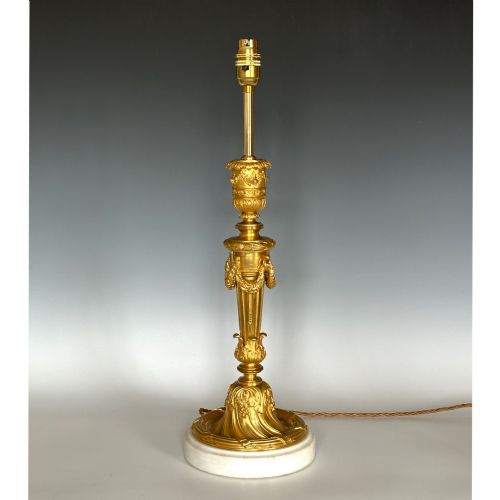
Many modern owners adapt them into table lamps, though conservation-minded collectors often prefer to keep them in their original unmolested configuration.
How do I identify a Regency pair?
Regency examples typically display strict classical restraint, featuring dark patinated bronze paired with sienna or white marble plinths. The decorative motifs draw heavily on ancient Roman and Greek archaeology.
Look for crisp acanthus leaf mounts, sphinxes, or zodiac references that define early nineteenth-century British and French design.
Why do some have detachable branches?
Detachable branches allowed owners to convert a multi-light candelabra into a simpler single candlestick depending on the occasion. This modular construction made cleaning and storage easier for the household staff.
When fitted, the central nozzle drops securely into a receiver socket cast into the primary figure or column.