




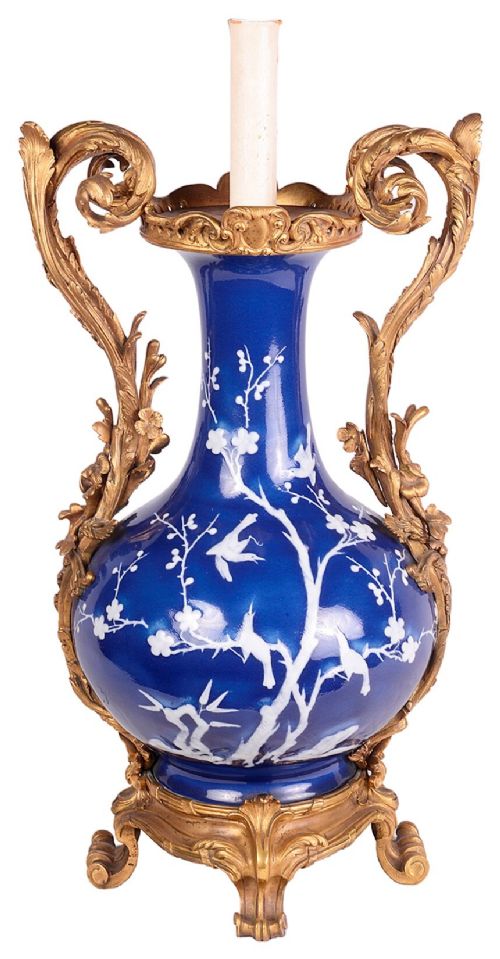


Bronze and Ceramic Lamp
A bronze and ceramic lamp pairs cast metal mounts with glazed pottery bodies to create striking decorative lighting.
Bronze and Ceramic Lamp
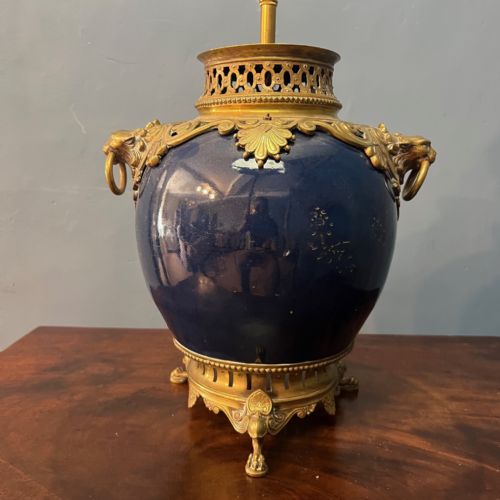
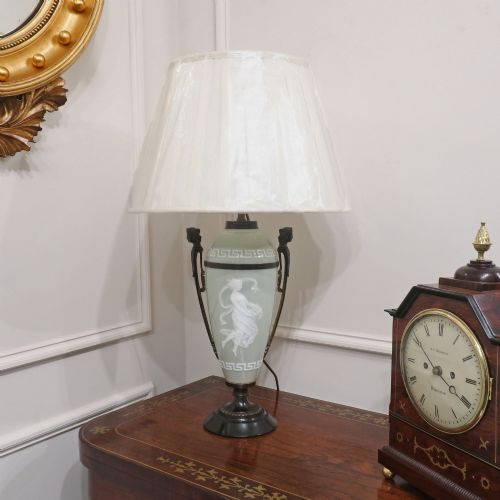
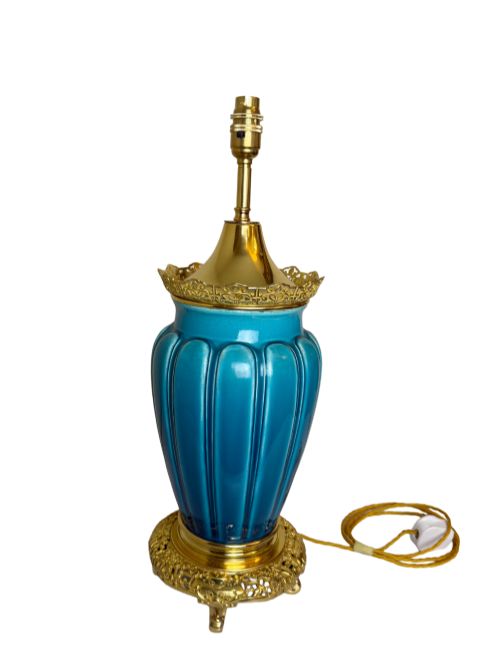
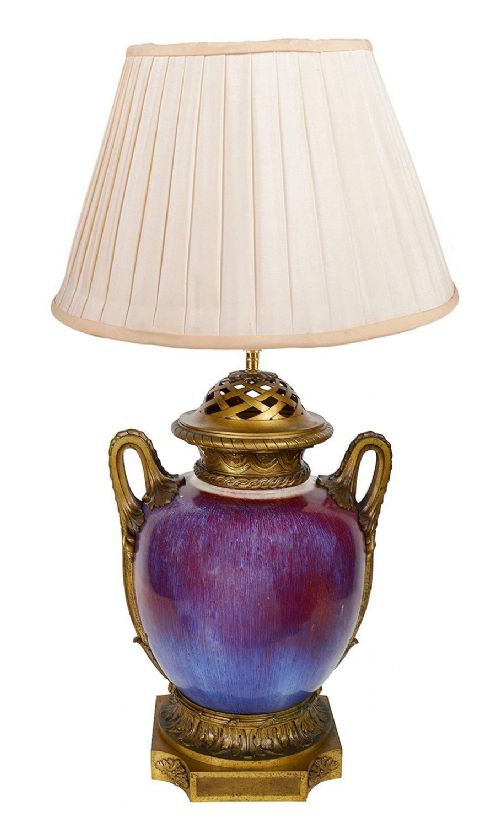
When searching for a bronze and ceramic lamp, buyers encounter pieces that merge historic ceramic vessels with cast metal mounts. These fixtures function as table lamps, utilising bodies originally formed as vases, urns, or jars alongside metal bases and collars.
The ceramic components span Chinese export wares, Japanese Satsuma, and European factories like Sèvres, Paris, and Gien. These bodies are joined with metal fittings, often adapted from earlier oil lamps or created specifically to house electrical components.
Materials and Construction
The ceramic bodies employ porcelain, earthenware, or faience, finished with glazes ranging from celadon and turquoise to blue and white, alongside hand-painted enamel decoration. These pottery forms are paired with metal elements cast in bronze, brass, and ormolu.
Metal mounts are secured to the ceramic vessels through fitted collars, bases, and handles, often incorporating gilt or patinated finishes. Silk and fabric shades frequently complete the assembly, resting on metal harps and fittings attached to the upper mounts.
Bronze and Ceramic Lamp Retail Price Guide 2026
Typical asking prices for bronze and ceramic lamp among the pieces listed under this phrase on Sellingantiques today, from the lower quarter to the upper quarter. They describe what is for sale here now, not the wider market.
Some nineteenth-century vases found a second life as illumination, quietly shedding their original duties as vessels to hold electrical cords instead.
Distinctions in Execution
Quality rests in the harmony between the ceramic vessel and its metal mounts, where custom-fitted ormolu or bronze castings complement the contours of the pottery. Superior examples feature finely chased metalwork and high-grade ceramic bodies with crisp hand-painted details or rich, even glazes.
The provenance and integrity of the conversion from vessel to lamp influence the character of the piece. Retaining the original form of the antique vase without excessive alteration demonstrates careful curation in adapting the ceramic body for lighting.
Sèvres·Gien·Samson
The Bronze and Ceramic Lamp Glossary
- Ormolu
- Gilt bronze fittings applied to the base, rim, or handles of ceramic vessels. This technique involves gilding a bronze mount with a mercury-gold amalgam to produce a rich metallic sheen.
- Celadon
- A pale green jade-like glaze originating in East Asia. It appears frequently on historic ceramic bodies adapted into lighting fixtures.
- Pâte-sur-pâte
- A ceramic decoration technique where liquid clay is applied in successive layers to a dried body to build a low relief design. This method creates cameo-like ornamentation on porcelain surfaces.
- Sang de bouf
- A rich, deep red copper-oxide glaze known as ox-blood. The glaze runs and varies in tone across the ceramic surface during firing.
Bronze and Ceramic Lamp: Frequently Asked Questions
How do I choose the right shade?
Select a fabric shade that complements the scale of the ceramic body and balances the weight of the metal base. Neutral silk or textured fabrics allow the colours of the glaze and the detail of the metal mounts to remain the primary focus.
Ensure the proportions of the shade do not overwhelm the height of the vase or obscure the upper ormolu mounts, maintaining a clear visual line from base to top.
Are these lamps converted vases?
Many examples utilise historic vases, jars, and ewers that were later fitted with electrical hardware and metal mounts. This practice of adaptation has a long history, turning decorative ceramic vessels into functional lighting.
Evidence of this conversion appears in the drilling of bases or the addition of custom collars designed to secure electrical wiring without damaging the core ceramic structure.
How do I care for gilt bronze mounts?
Dust metal mounts gently with a soft, dry cloth to prevent the accumulation of dirt within the chased details. Avoid harsh chemical cleaners or abrasive polishes that can strip the gilt finish from the bronze or ormolu.
Take care during cleaning to keep moisture away from both the metal fittings and the ceramic body, particularly around areas where the two materials meet.
What periods do these lamps represent?
The pieces span decorative styles from the eighteenth century through the nineteenth century and into the early twentieth century. These include French Neoclassical, Napoleon III, Art Nouveau, and Chinese export traditions.
Design influences draw heavily on historical periods such as the Louis XVI reign, incorporating classical motifs alongside Asian ceramic forms imported during earlier trading eras.