






Brittany Landscape Painting
A brittany landscape painting brings the rugged coastal light and pastoral charm of western France directly into a room.
Brittany Landscape Painting
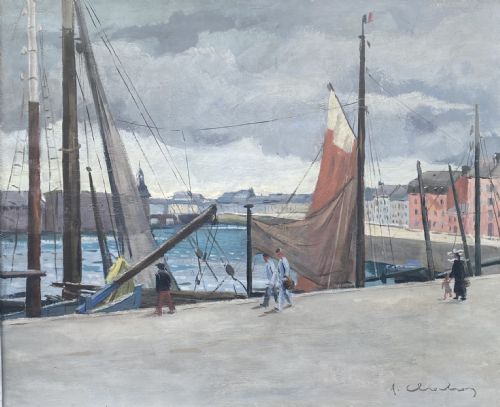
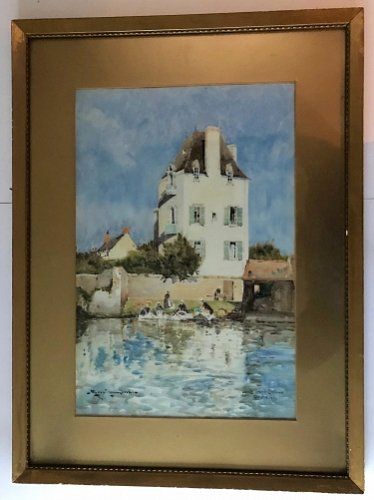
A brittany landscape painting captures the distinctive coastal scenery, historic ports, and rural life of the region through various periods including the nineteenth century and the early decades of the twentieth century. These works frequently depict coastal views, harbour scenes, and local markets rendered in oil or watercolour. Buyers encounter framed oil paintings on canvas alongside delicate watercolours on paper.
The styles range from Edwardian impressionism to post-impressionism and French modernism. Many compositions feature specific locations such as Concarneau, Lannion, Dinan, Port Aven, and the Gulf of Morbihan. The subjects vary from seaweed gatherers and fishing ports to chateaux and pastoral scenes with haystacks.
Artists working in the region applied diverse techniques to interpret the coastal atmosphere and rural traditions. Works span from nineteen hundred through to nineteen fifty, recording the evolving modernist and impressionist approaches to the landscape. Collectors find both intimate watercolours and larger framed canvases representing these scenes.
Materials and techniques
Painters utilised oil paint on canvas stretched over wood frames to achieve rich textures and lasting depth. Watercolours on paper provide lighter, more fluid interpretations of townscapes and coastal air. Gilt frames frequently enclose these works, complementing the palette of the oils and watercolours.
Artists applied brushwork characteristic of impressionism and post-impressionism to capture the changing light on the Brittany coastline. The combination of canvas, oil paint, and wood creates substantial framed objects designed for display.
Brittany Landscape Painting Retail Price Guide 2026
Typical asking prices for brittany landscape painting among the pieces listed under this phrase on Sellingantiques today, from the lower quarter to the upper quarter. They describe what is for sale here now, not the wider market.
Keep an eye out for hidden seaweed gatherers working the tides.
Factors determining quality
The strength of the composition and the handling of light distinguish exceptional works from simpler sketches. The dexterity of the brushwork within post-impressionist or modernist styles dictates the visual impact of the canvas.
The condition of the oil paint or watercolour, alongside the integrity of the canvas and supporting wood frame, influences the overall standard of the piece.
Louis Suire·Joseph W. Milliken·William Tatton Winter·Owen Bowen·Charles Eyres Simmons·Philip Naviasky·Kevin Platt
The Brittany Landscape Painting Glossary
- Post-Impressionism
- An artistic movement extending impressionism while rejecting its limitations, favouring a greater emphasis on symbolic content and vivid colours. Painters applied these ideas to French landscapes.
- Watercolour
- A painting method in which the paints are made of pigments suspended in a water-based solution. These works on paper capture translucent effects.
- Gilt
- Covered thinly with gold leaf or gold paint. Frames often feature this finish.
- Pastoral
- Relating to the countryside or rural life, typically depicted in a romanticised or peaceful manner. These scenes often include agricultural settings.
Brittany Landscape Painting: Frequently Asked Questions
Where were these painted?
These works depict specific locations across the region, including coastal fishing ports like Concarneau, inland towns such as Dinan and Lannion, and the Gulf of Morbihan.
Artists set up their easels near harbours, market squares, and chateaux to record the local architecture and coastal topography.
How should I hang them?
Ensure the artwork is positioned away from direct sunlight to protect watercolours on paper and oil paint on canvas from fading over time.
Pair the framed painting with adequate wall space that allows the composition and period frame to be viewed without visual clutter.
What periods are represented?
The available selection spans the nineteenth century through to nineteen fifty, capturing shifts in artistic approach across several decades.
Early pieces reflect Edwardian impressionist sensibilities, while later examples embrace post-impressionist and modernist techniques.
What mediums were used?
Artists worked primarily in oil on canvas and watercolour on paper, mounted within wood and gilt frames.
The choice of medium often determined the scale and texture of the finished landscape.