




British Watercolour Seascape
A british watercolour seascape captures coastal light and maritime movement through traditional pigment on paper from the Victorian and early twentieth-century periods.
British Watercolour Seascape
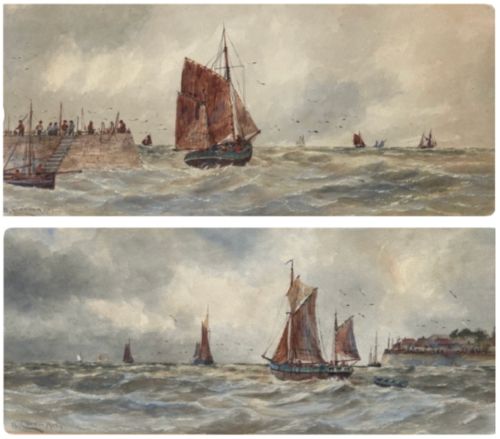
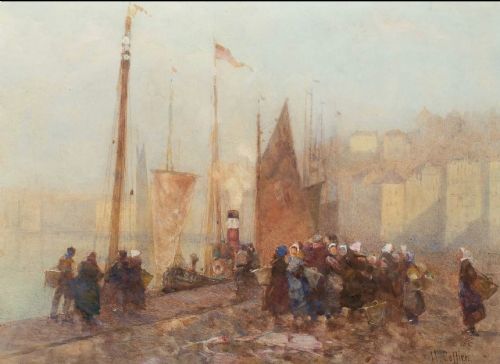
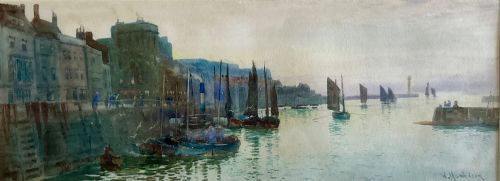
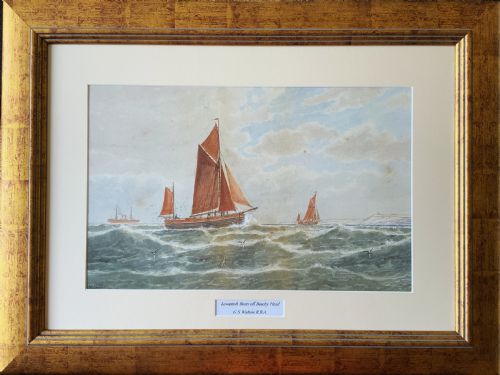
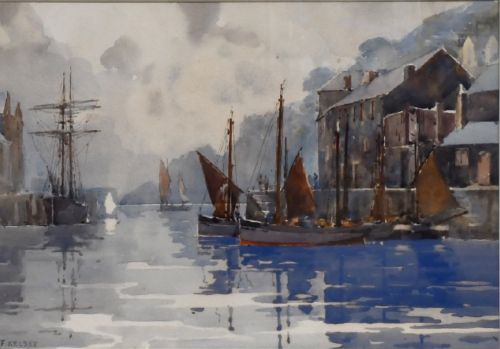
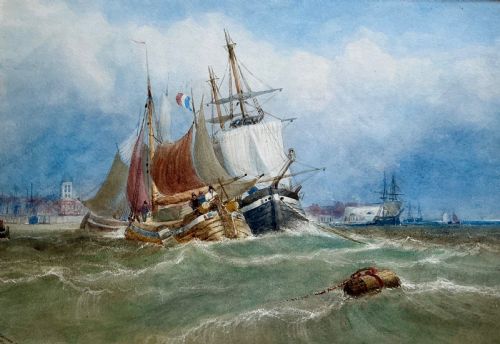
A british watercolour seascape typically depicts coastal harbours, fishing vessels, and open tides rendered by artists working during the nineteenth and early twentieth centuries. These paintings record maritime life along regional shores from Cornwall and Yorkshire to international coastal scenes recorded by British travellers.
The works span Victorian, Edwardian, and early twentieth-century British movements, encompassing detailed marine art and atmospheric coastal landscapes. Buyers will encounter framed watercolours signed by established nineteenth-century artists as well as unsigned works from the period school.
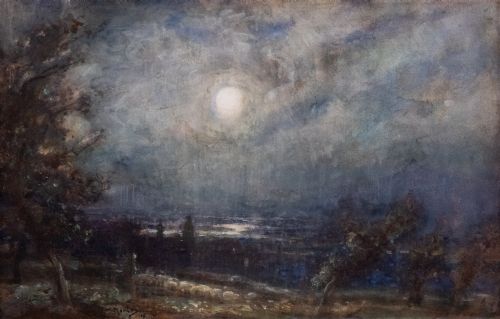
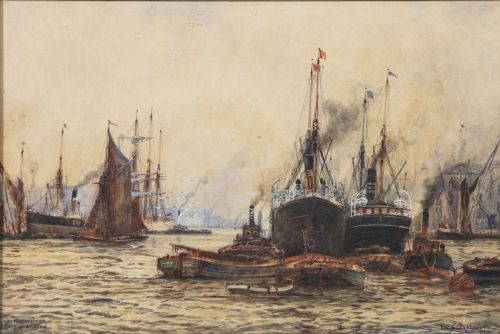
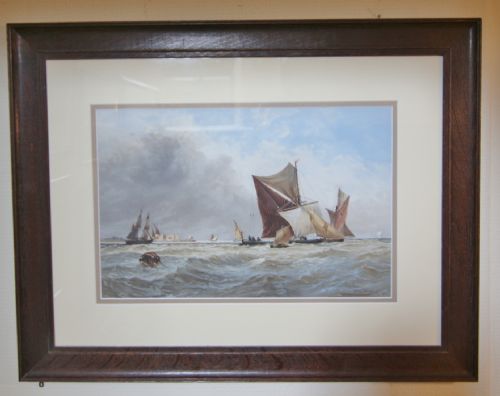
Subjects range from bustling ports and beach fishing boats to quiet estuaries and moonlit coastal views. Works on paper from this genre frequently utilise glass framing to protect the delicate pigment from atmospheric damage.
Materials and construction
Artists painted primarily with watercolour pigment and ink applied directly to paper supports, occasionally incorporating bodycolour or gouache for highlights. The paper absorbs the fluid pigment, creating translucent washes of colour that capture shifting light on the water.
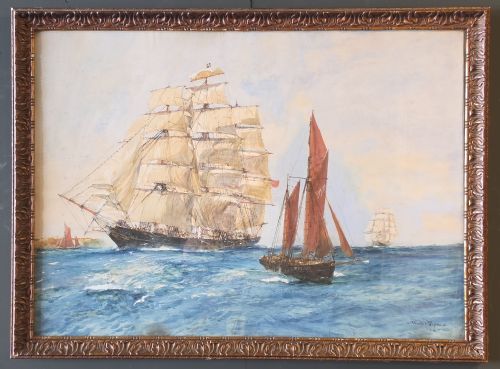
Works are preserved behind glass within wooden frames, frequently incorporating gilt wood moulding typical of the Victorian and Edwardian eras. These traditional mountings safeguard the paper surface while complementing the maritime subject matter.
Artists frequently braved bracing winds and rising tides along the Yorkshire and Cornish coasts just to capture the morning catch.
Factors of quality and execution
Quality rests upon the artist's handling of light, atmospheric perspective, and the fluid movement of the sea. Superior watercolours demonstrate confident brushwork and precise control over pigment transparency, whereas lesser examples rely on heavy, flat washes.
The draughtsmanship in delineating rigging, hull structures, and coastal architecture separates accomplished professional works from standard amateur sketches. Original signatures and inscriptions relating to specific locations further distinguish notable pieces from anonymous school productions.
James Orrock·William Cannon·Charles Edward Dixon·William Banks Fortescue·Thomas William Morley·Frank William Scarbrough·Hector Caffieri·Richard Henry Wright·TB Hardy·William Matthison·George Stanfield Walters·Frank Kelsey·Henry Barlow Carter·William Frederick Settle·Lionel Horsnell·Charles William Adderton·William Lee Hankey·Thomas Bush Hardy·Robert Leslie Howey·John McDougal·Frank H Mason·Sir William Russell Flint·Frederick William Hattersley·John Mitchell·Kate E Booth
The British Watercolour Seascape Glossary
- Watercolour pigment
- Finely ground colour particles suspended in a water-soluble binder, applied to paper to create translucent washes. This medium allows artists to build delicate layers that mimic the luminosity of sea and sky.
- Gilt wood
- Wood framing treated with a thin layer of gold leaf or metallic gilt paint. This traditional finish was frequently used to frame Victorian fine art paintings.
- Marine art
- Artistic representations of the sea, ships, and coastal environments. The genre encompasses both commercial shipping scenes and dramatic coastal weather.
- Bodycolour
- Watercolour paint mixed with a white pigment to render it opaque rather than translucent. Artists used this to add bright highlights to waves and cloud formations.
British Watercolour Seascape: Frequently Asked Questions
How do I date a watercolour seascape?
Dating relies on artist biographical records, framing styles, and inscriptions written on the mount or verso. Victorian works often feature heavier gilt wood frames and detailed naturalist compositions.
Paper quality and signature styles also provide chronological markers. Twentieth-century examples frequently adopt looser brushwork associated with British Impressionism.
Where should I hang these paintings?
Watercolours require placement away from direct sunlight to prevent fading of the delicate pigments on paper. Normal indoor humidity in reception rooms or hallways suits them when glazed correctly.
Ensure the wall space remains stable in temperature to protect the antique paper support and original wooden frame.
What subjects are most common?
Fishing boats, harbour mouths, and coastal trading vessels dominate the maritime scenes recorded by artists of this period. Coastal landmarks such as chalk cliffs and piers also appear frequently.
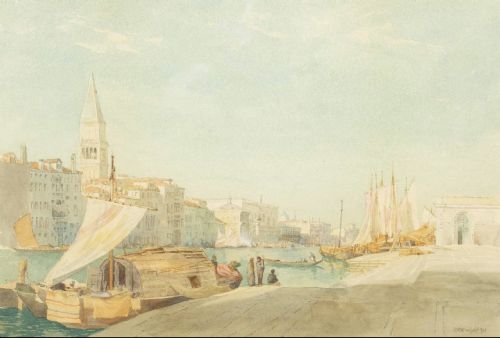
Venetian canals and estuary views provide alternative topographical subjects within the broader category of British marine painting.
How do I care for antique paper art?
Maintenance involves keeping the framed piece in a dry environment protected behind glass with acid-free backing materials. Avoid reframing unless necessary, as original mounts often bear contemporary artist inscriptions.
Professional conservators should handle any cleaning or paper stabilization to preserve the integrity of the watercolour pigment.