




British Seascape Watercolour Painting
A british seascape watercolour painting captures the changing light and coastal weather of nineteenth and twentieth-century shores with fluid pigment on paper.
British Seascape Watercolour Painting
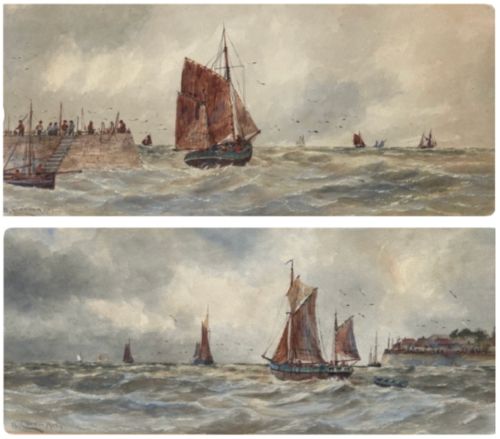
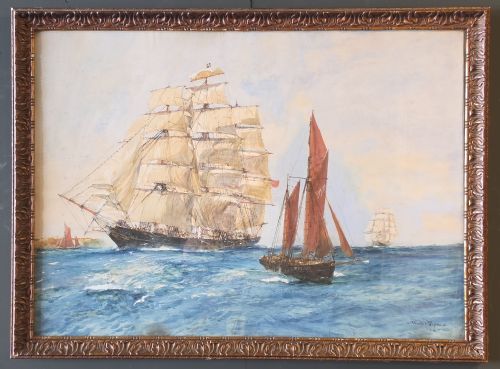
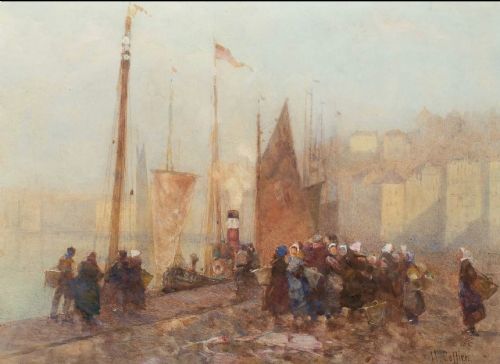
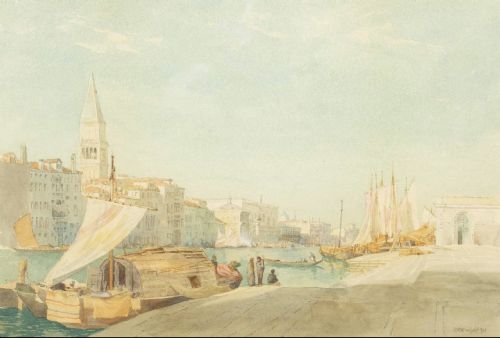
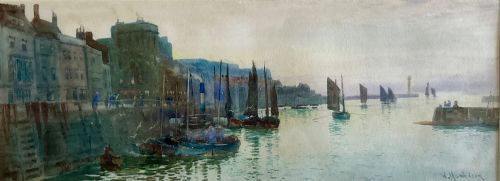
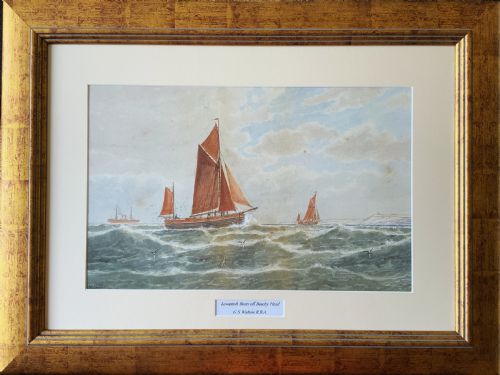
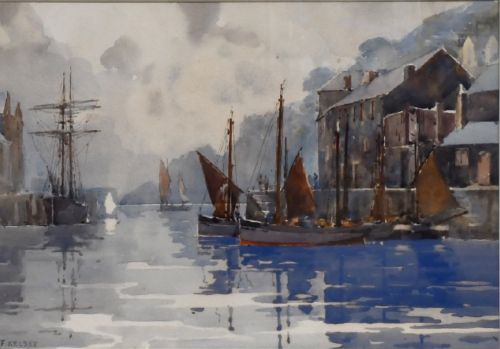
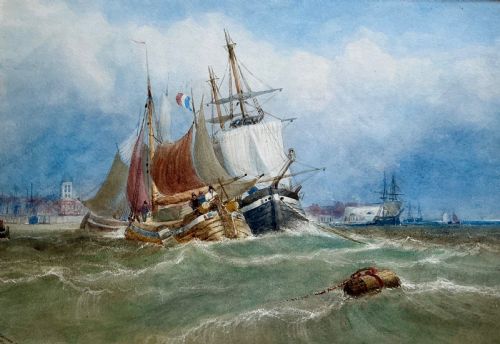
A british seascape watercolour painting depicts coastal scenes, harbours, and shipping, most frequently originating from the nineteenth and early twentieth centuries. These works range from detailed depictions of working fishing boats in Cornish ports to atmospheric views of Venetian canals and stormy northern waters.
Buyers encounter subjects tied directly to maritime life, including coastal villages, piers, and vessels at anchor. The selection spans the Victorian period through to the interwar decades, reflecting enduring artistic engagement with the British coastline.
How They Were Made
Artists applied watercolour pigment onto paper, frequently using ink and occasionally gouache to build contrast and detail. Washes created transparent effects for water and sky, while more opaque applications defined shipping rigging and architectural elements.
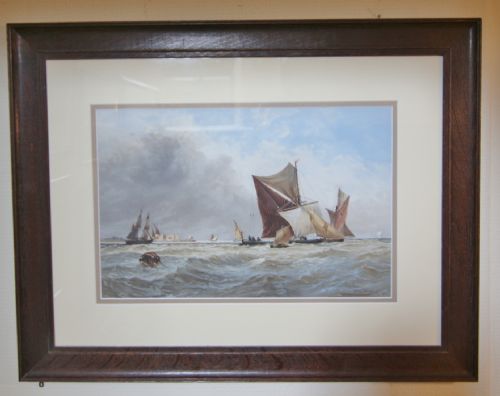
Framed works utilised wood and gilt wood surrounds, often protected behind glass to preserve the delicate water-soluble pigments from moisture and light damage over generations.
Listings feature works executed on paper using watercolour pigment, ink, and occasionally gouache, dating from the nineteenth and twentieth centuries.
What Varies in Quality
Quality rests upon the artist's handling of light and atmospheric conditions, distinguishing observational dexterity from formulaic studio production. Stronger examples demonstrate confident brushwork that captures transient weather, movement in water, and precise architectural or maritime detail.
Condition also influences standing, as works preserved without heavy fading or foxing retain the vibrancy intended by the painter. The strength of provenance, signature visibility, and original framing elements further distinguish individual pieces.
James Orrock·William Cannon·Charles Edward Dixon·William Banks Fortescue·Thomas William Morley·Frank William Scarbrough·Hector Caffieri·Richard Henry Wright·Thomas Bush Hardy·William Matthison·George Stanfield Walters·Frank Kelsey·Henry Barlow Carter·William Frederick Settle·Lionel Horsnell·Charles William Adderton·William Lee Hankey·Robert Leslie Howey·John McDougal·Frank H. Mason·Sir William Russell Flint·Frederick William Hattersley·John Mitchell·Kate E Booth·Ernest F. Hill
The British Seascape Watercolour Painting Glossary
- Watercolour pigment
- Finely ground colour particles mixed with a binder that dissolves in water. This medium allows for transparent washes that mimic the luminosity of sea and sky.
- Gouache
- An opaque watercolour paint containing an added inert white pigment. Artists utilised it to create highlights and solid areas of colour within maritime scenes.
- Foxing
- Brown spots and discolouration caused by chemical reactions in ageing paper. It is a common occurrence in antique works kept in humid conditions.
- Wash
- A thin, fluid layer of diluted watercolour spread across paper. It forms the broad expanses of tone found in sea and sky depictions.
- Provenance
- The documented history of ownership for an artwork. It provides a verifiable record tracing a piece back to its creator or initial exhibition.
British Seascape Watercolour Painting: Frequently Asked Questions
How should I hang a watercolour painting?
Keep works away from direct sunlight to prevent the pigments from fading over time. UV-filtering glass provides essential protection for antique paper.
Position pieces on interior walls where temperature and humidity remain stable. Avoid damp spaces such as unheated exterior walls.
What subjects appear in these paintings?
Artists focused heavily on working harbours, fishing boats, and coastal towns around Britain and Europe. Scenes often capture daily maritime labour, including landing catches and spreading nets.
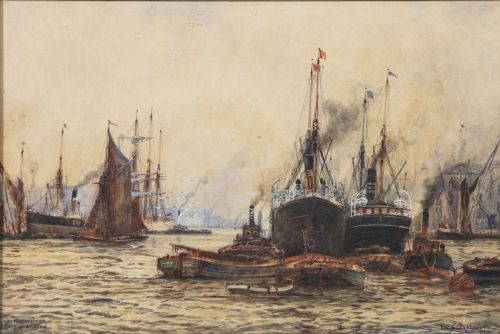
In addition to local ports, depictions of Venetian canals and shipping on rivers like the Humber and Thames frequently occur. These compositions record the industrial and commercial maritime activity of the period.
How do I identify the period of a painting?
Examine the clothing of figures, the types of shipping vessels, and any visible signatures or dates. Costume details often provide a reliable timeframe for Victorian and Edwardian scenes.
Frame styles and backing materials can also offer clues, though frames are frequently replaced later. Inscribed titles verso often record locations and dates associated with the artist's travels.
Are these works signed by the artists?
Many examples bear the artist's signature or monogram, frequently placed in a lower corner. Signatures were sometimes accompanied by dates or inscribed location names.
Unsigned works also appear, occasionally attributed through style or inscriptions on the reverse. Documentation and archive records help link unsigned pieces to known hands.